


How to Avoid Weed Scams Online UK: Safe Buying Guide
Introduction
Online cannabis scams catch out more UK buyers than many expect. Working out how to avoid weed scams online UK can feel messy when every site claims to be discreet and premium. One wrong click and hard‑earned money disappears with nothing in the post.
Fraudsters build slick websites and busy Telegram or Instagram pages, then vanish after payment. According to Action Fraud, online shopping scams account for a large share of reported fraud cases across the UK each year. Cannabis buyers sit right inside that risk zone because scammers know many people feel awkward speaking up when something goes wrong.
“If something sounds too good to be true, it probably is.” — Action Fraud consumer advice
This guide gives clear, calm steps on how to avoid weed scams online in the UK. You will see how the classic scam pattern works, the red flags to spot before you pay, how to check if a retailer is real, and what to do if money has already left your account. BudBuddies will act as a benchmark for what a genuine, privacy‑minded cannabis shop looks and feels like.
Take a few minutes to read this through once, then keep it open whenever a new weed site or social account catches your eye.
How Do Cannabis Scams Actually Work?

Cannabis scams online usually work in a repeatable way that starts with a tempting offer and ends with silence — a pattern explored in research on domestic cannabis cultivation and the illicit market in the UK. Knowing that pattern makes it much easier to stop a cannabis scam before it touches your bank balance.
Most fraud starts with a good‑looking shopfront. You might see a sponsored post on Instagram, a Telegram channel link, a Snapchat story, or a clean‑looking website promising strong weed, carts or edibles. Prices often look lower than trusted names such as BudBuddies, the photos look sharp, and there is lots of talk about fast, discreet delivery.
Once the scammer has your attention, the next step is simple. They push you to pay quickly, often by bank transfer, PayPal Friends and Family, or cryptocurrency to a fresh wallet. According to UK Finance, bank transfer fraud now accounts for hundreds of millions of pounds in losses each year, so scammers love payment methods that are hard to reverse.
Here is how a typical weed scam often unfolds in practice.
You spot a tempting advert or channel promising powerful flower, carts or edibles. The branding looks clean and the menu reads like a greatest‑hits list of famous strains. There might be fake screenshots of supposed happy customers to give you confidence.
You place an order and send the first payment. A confirmation message arrives, sometimes with a made‑up tracking number that looks like something from Royal Mail or DPD. On the surface it feels like a normal online purchase.
Shortly after, a new message appears saying there is a problem. The scammer claims a courier fee, customs charge, address correction cost or insurance payment is needed before dispatch. The tone often switches from friendly to pushy, with hints that you will lose the package if you do not pay.
If you send the extra money, the story may repeat with yet another excuse. If you refuse or ask for a refund, replies slow down and then stop. The Telegram account, Instagram page or website may block you or vanish entirely.
Scammers focus on this space because it is unregulated and emotionally sensitive. Many buyers feel embarrassed, so they stay quiet rather than complain. Research from the National Cyber Security Centre shows millions of suspicious emails and URLs get reported each year, yet fraud is still widely under‑reported. That silence is exactly what keeps these cannabis scams going.
What Are the Red Flags of a Fraudulent Cannabis Website?

The clearest red flags of a fraudulent cannabis website are unrealistic prices, risky payment methods, pressure to act quickly, weak information, missing reviews, and any demand for extra money after you pay. Spotting even two or three of these together should make you walk away.
Fraud sites often look polished on the surface but fall apart when you check the details. They lean heavily on buzzwords, glamour photos and huge effects claims instead of clear information about strains, cannabinoids or terpenes. Many operate purely through Telegram, Instagram or Snapchat, where accounts can vanish in seconds. According to Ofcom, most UK adults receive suspicious calls or texts over just a three‑month period, so scammers know messaging apps are fertile ground.
“Scammers often create a sense of urgency to pressure you into making a quick decision.” — Which? consumer advice
Here are the main warning signs to watch for before you send a penny.
Prices look far lower than everywhere else. Scam sites throw out ounce and cart prices that undercut established names by a huge margin. Honest shops like BudBuddies work within real supply and testing costs, so their pricing might be keen but never absurdly cheap. If a menu reads like luxury weed at budget supermarket prices, treat that as a bright red flag.
Payment is only accepted by unprotected methods. Fraudsters often push bank transfer to a personal account or crypto to a fresh wallet, with no option for card or trusted gateway. That helps them disappear cleanly once the money lands. With a verified retailer, crypto or bank transfer can be part of a secure setup, but with a stranger online it removes almost every safety net.
You feel rushed into paying. Countdown timers, “last few left” banners and aggressive Telegram messages are all classic pressure tricks. Scammers know that if you take even ten minutes to research, the spell often breaks. Research from Which? shows that pressure and time limits are common hooks in many shopping scams, not just cannabis.
Product information is vague or copy‑pasted — and in the illicit market, this vagueness can mask serious safety risks, as documented in research on hidden dangers of illicit cannabis sold outside regulated channels. Fraud pages often use the same blurb across ten strains, with no cannabinoid percentages, no terpene notes and no mention of batch testing. Genuine retailers, including BudBuddies, give you proper strain descriptions, expected effects, and potency ranges so you can pick with confidence.
There are no verifiable reviews. A scam website might show glowing “reviews” on its own pages, yet have nothing on Trustpilot, Google Reviews or any real forum. A quick search of the name plus words like “review” or “scam” can reveal a trail of unhappy buyers, or complete silence, which is just as telling.
Extra fees appear after checkout. Any seller who asks for more money once you have paid is waving one of the loudest warning flags possible. Honest cannabis shops build delivery and any other costs into the checkout flow. Post‑payment requests for courier insurance or customs handling are classic scam tools and should never be accepted.
Social media and messaging‑app dealers sit at the very top of the risk list. Once a Telegram handle or Instagram page vanishes there is almost zero recourse. If a seller insists everything must move to DMs and will not point you to a transparent website like BudBuddies, treat that as your cue to leave.
How to Verify Whether an Online Cannabis Retailer Can Be Trusted
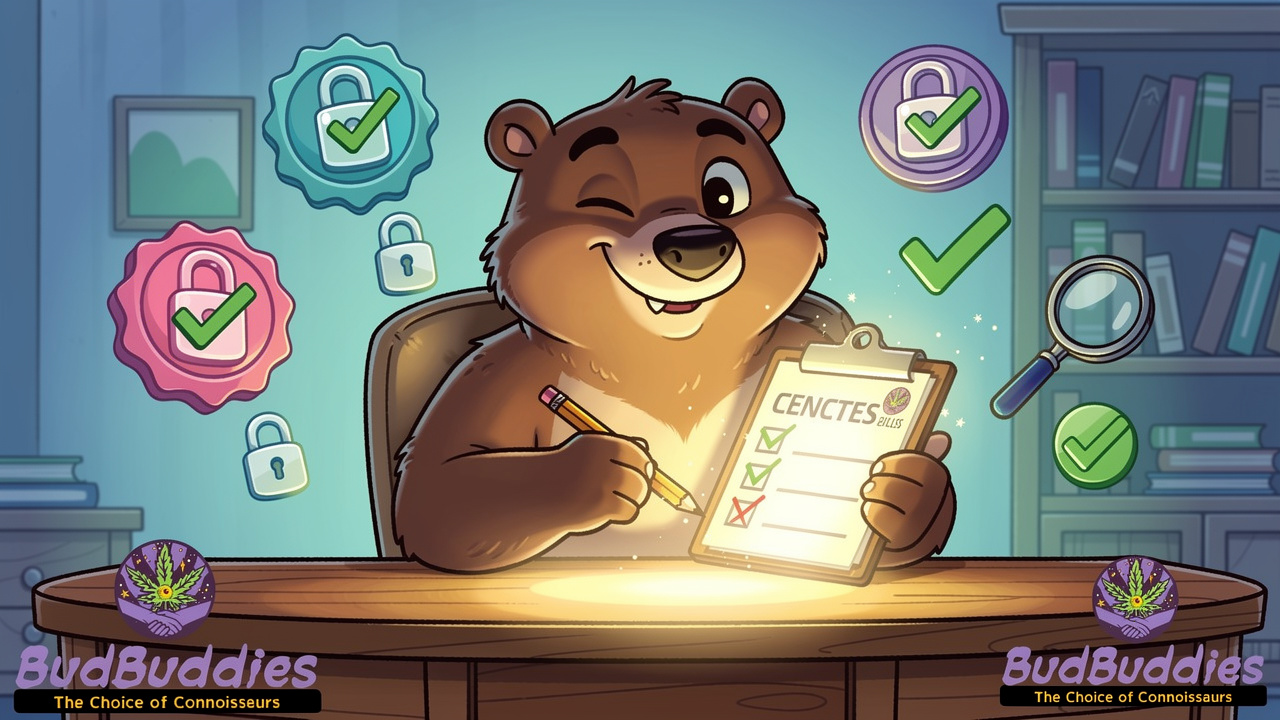
Checking whether an online cannabis retailer can be trusted comes down to a simple pre‑purchase checklist. Look for independent reviews, real contact details, clear product information with lab results, sensible payment options, and straightforward delivery and returns.
When you follow the same checks every time, you move from guessing to judging each shop by the same standard. That keeps you safer whether you are a curious newcomer or a seasoned flower fan. Consumer research from BrightLocal shows that almost all shoppers now read online reviews before trying a new business, so structured checking is normal, not paranoid.
“Almost every consumer now reads online reviews when researching a business.” — BrightLocal, Local Consumer Review Survey
Use this quick process before you place any order.
Search for honest reviews away from the site. Type the shop name into Google alongside “review” and “scam” and see what comes up. Platforms such as Trustpilot and Google Reviews, plus cannabis forums, help you spot patterns across many buyers. BudBuddies customers, for example, regularly mention consistent quality, proper packaging and fast tracked delivery.
Read the product pages with care. A trustworthy site explains what each product is, how strong it is, and what you are likely to feel. BudBuddies lists THC and CBD percentages, terpene notes and effect guidance for flower, edibles and vapes. Scam shops tend to use the same couple of lines of marketing fluff for everything, with no real detail at all.
Look for public lab results — adulteration of cannabis products is a documented problem, as shown by prevalence and patterns of cannabis adulteration analysed through WEDINOS data, making independent lab certificates an essential trust signal. Proper cannabis brands publish certificates from independent labs so you can see cannabinoid profiles and purity for yourself. BudBuddies does this through the dedicated lab testing portal on the main site, linked from the BudBuddies lab testing page. Double potency checks on every strain act as a further safety layer.
Check delivery, returns and contact information. Before you pay, you should see clear delivery times, refund terms and at least one working way to reach customer support. BudBuddies sets this out in plain English on the BudBuddies quality assurance and BudBuddies refunds pages, backed by email, phone and live chat support. Scam operations rarely bother to offer anything similar.
Judge the payment setup. Look for SSL padlock symbols in your browser and payment pages that feel standard rather than improvised. BudBuddies processes bank transfers and cryptocurrency payments such as BTC, LTC and XMR through encrypted, PCI DSS compliant checkout flows with a clear order summary. Scam sellers often ask you to send money to fresh details in a chat window instead.
Send a small pre‑purchase question. A quick email or live chat message about strain effects, dosing or delivery is a simple test. Real teams reply in a human, helpful way. Scam operations dodge questions or reply with copy‑pasted lines that never quite match what you asked.
If a new site fails more than one of these tests, the safest move is to back out and stick with a verified retailer such as BudBuddies, where transparency and discretion are built into the whole experience.
What Should You Do If You Have Already Been Scammed?
If you have already been scammed buying weed online, the most important actions are to speak to your bank quickly, report the fraud, and warn others. Acting fast gives you the best chance of limiting the damage.
Plenty of people in the UK have fallen for convincing online scams, so you are far from alone. According to UK Finance, financial fraud strips away well over a billion pounds from consumers every year across cards, remote banking and transfers. Feeling foolish is natural, but silence only helps the fraudsters.
“Reporting a scam could stop someone else from falling for the same trick.” — Action Fraud guidance
Here is a calm, practical order of steps to follow.
Contact your bank without delay. If you paid by card, ask about chargeback options and what can be done to stop any further payments. If you paid by bank transfer, give your bank the account details you sent money to so their fraud team can attempt to flag or freeze it. Many high street banks such as Barclays, HSBC and Lloyds Banking Group have dedicated scam lines for this reason.
Report the fraud through the right UK channels. In England and Wales, online fraud reports go through Action Fraud, now branded Report Fraud, on 0300 123 2040 or via the website. In Scotland, reports go directly to Police Scotland. These reports help bodies such as the National Crime Agency build cases against repeat offenders.
Flag the website, adverts and messages. Forward phishing‑style emails to the National Cyber Security Centre using the address report@phishing.gov.uk. Scam texts can be sent to 7726, a free reporting number used by mobile networks. Misleading adverts you saw on Google, Bing, Facebook or Instagram can be reported through the platform tools and to the Advertising Standards Authority.
Warn others in the community. Leaving honest reviews on Trustpilot, Google and cannabis forums helps the next person searching that shop name. Consumer groups such as Which? stress that sharing real scam stories is one of the strongest defences the public has. A short post can stop several people losing money the same way.
Watch out for recovery room scams. The Financial Conduct Authority highlights recovery room scams as a major follow‑up threat. Fraudsters buy lists of previous victims then pose as investigators or claims handlers, promising to get your money back for an upfront fee. No genuine body will ask you to pay to recover scam losses, so treat any such offer as another scam.
Once you have taken those steps, you can reset and move towards safer buying habits. When you are ready to try cannabis products again, choosing a transparent shop such as BudBuddies can help you feel back in control.
Putting It All Together
Putting all this together means knowing the warning signs, checking every new retailer with a clear process, and reacting quickly if something feels wrong. If you keep those three habits in mind, you dramatically cut your risk of running into weed scams online in the UK.
BudBuddies exists to give you a safer, smoother alternative to faceless Telegram handles and throwaway websites. With double‑checked lab results, discreet tracked delivery, clear product pages and responsive support, the whole experience feels organised rather than risky or rushed.
Conclusion
The heart of staying safe is simple. Learn the red flags, verify before you pay, and speak up fast if a deal turns sour. When you want flower, edibles, vapes or CBD from a source you can actually trust, BudBuddies on budbuddies.cc is built to give you that peace of mind.
Frequently Asked Questions
Question: How can I tell if a cannabis website is genuine before I pay?
Answer: You can spot a genuine cannabis website by checking for independent reviews, working contact details, clear returns information and proper product descriptions. Trusted shops also show all costs, including delivery, before you reach the payment screen so there are no surprise charges later.
Question: Is it safe to pay for cannabis products with cryptocurrency online?
Answer: Paying with cryptocurrency is only safe when you already trust the retailer. With BudBuddies, crypto payments go through SSL‑encrypted, PCI DSS compliant pages and even attract a ten percent discount on BTC, LTC and XMR orders. With an unknown seller, crypto is extremely risky because payments are almost impossible to reverse.
Question: What should I do if a cannabis website asks for extra money after I’ve already paid?
Answer: You should refuse any extra payment request after checkout, because this is a classic scam move. Do not send more money, stop all contact, speak to your bank immediately and report the website through channels such as Action Fraud and the National Cyber Security Centre.
Question: Are cannabis delivery services on Telegram or Instagram safe to use?
Answer: Cannabis delivery services run purely through Telegram or Instagram are some of the riskiest options you can pick. Accounts can vanish in seconds, leaving you with no delivery and nobody to contact. Established retailers with proper websites, order tracking and support teams, like BudBuddies, are far safer choices.
Question: What makes BudBuddies different from an unverified cannabis seller?
Answer: BudBuddies backs every product with third‑party lab results, full cannabinoid and terpene profiles, and double potency checks. Orders arrive in plain, vacuum‑sealed, tracked packaging, and support is available by email, phone and live chat. Scam operations cannot match that mix of transparency, privacy and customer care.

