


Smoking Weed After Studying: Timing, Strains, Dosage
Introduction
Smoking weed after studying can feel like the perfect reward, yet you might worry it is undoing your revision. The science around cannabis, memory, and timing can seem confusing and even a bit alarmist.
The short answer is that using cannabis after you work, rather than before or during, is usually far kinder to your memory. When you let your brain store the material first, smoking weed after studying tends to disturb learning far less. This guide breaks down how memory works, what timing means for your brain, and how to pick products that fit a calm post-study routine.
Keep reading to see how timing, strain choice, and dose fit together, along with clear examples from the BudBuddies range. With a few simple tweaks, you can protect your progress and still enjoy your evening.
Does Timing Actually Matter When You Smoke After Studying?
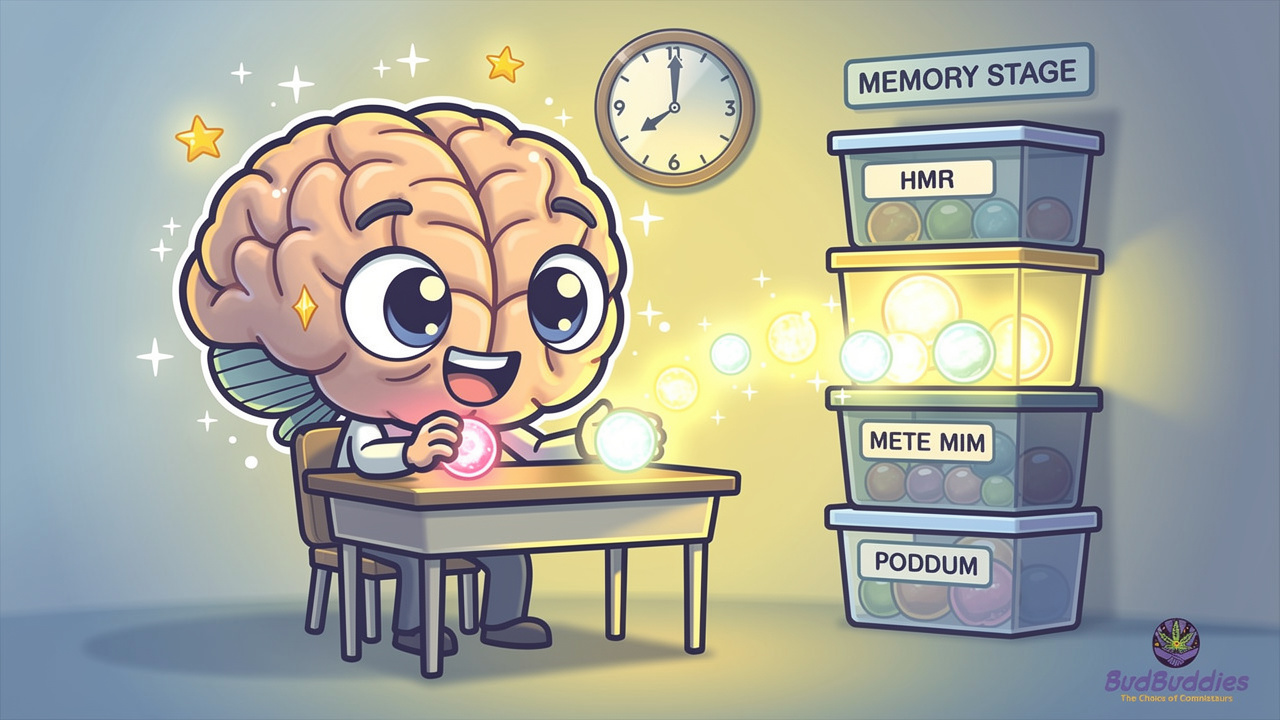
Timing matters a lot when you use cannabis around revision because your brain stores information in stages, as explored in research on From fried to focused? — a daily diary study examining after-work cannabis use and its downstream performance effects. Smoking weed after studying with a short gap is very different from lighting up before you even open your notes. Before and during study, THC makes it harder to focus, process information, and build new memories. After study, the main risk is whether you cut into the period when those memories are being stored.
When you learn something, your brain first holds it in short term storage. Over the next few hours it slowly moves that material into long term storage, a process often called memory consolidation. The hippocampus and surrounding networks replay patterns from your revision and stabilise the connections. THC interacts with CB1 receptors in this area and can disturb that process if it is present at the wrong moment.
Sleep is a big part of this story. According to the Sleep Foundation, most adults function best on seven to nine hours of sleep each night because deeper stages of sleep help the brain organise the day. Those sleep cycles are when a lot of consolidation takes place.
“Most adults should get between seven and nine hours of sleep per night.” — Sleep Foundation
If cannabis disrupts your sleep too much, your memory for what you studied can feel patchy the next day.
Using cannabis before or during study adds THC right when your brain is trying to pay attention and set down the first trace of the material. That is why so many people notice slower thinking, lost focus, and weaker recall when they revise while high. Smoking weed after studying is generally kinder to memory if you:
Finish your work with a quick recap.
Wait at least thirty to sixty minutes, and ideally one to two hours.
Avoid using right as you climb into bed.
That way the first part of consolidation can start before cannabis enters the picture.
How Cannabis Can Actually Support Your Post-Study Wind-Down
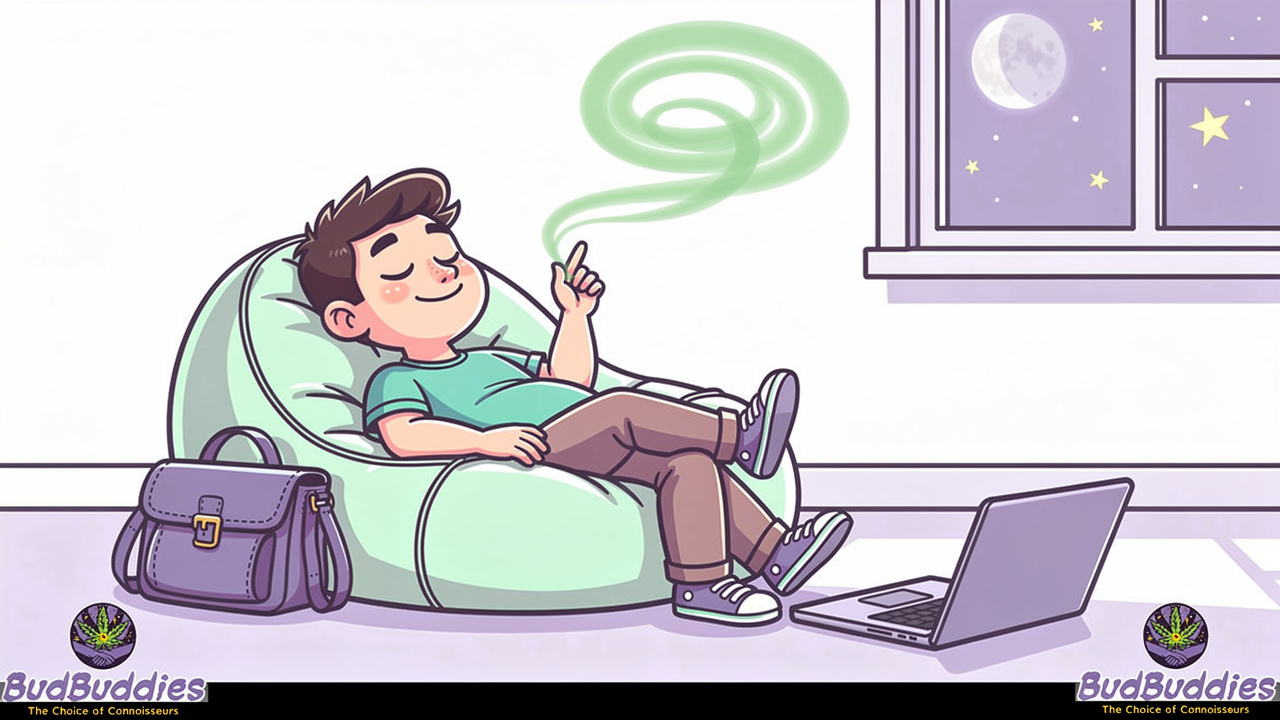
Used thoughtfully, cannabis after a study session can support your wind-down rather than harm it. The key is that you let your brain do the heavy lifting first, then use cannabis to help you relax, sleep, and reset. Many adults find that an evening session becomes a clear signal that work is finished for the day. That mental line can reduce the rumination that often follows intense revision.
Revision and exams push stress hormones like cortisol up and leave your nervous system on high alert. Research from Harvard Medical School explains that long periods of raised cortisol can interfere with the hippocampus, which looks after memory.
“Chronic stress can impair brain function, including memory.” — Harvard Medical School
For some people, modest THC or CBD after work softens that stress response and helps the body relax. When your stress level drops, it becomes easier to fall asleep and stay asleep.
There is also a simple motivation angle, and Work-Related Implications of After-Work cannabis use from the Academy of Management Proceedings highlights how patterns of after-work consumption intersect with productivity and engagement. Treating your evening smoke as a reward that only comes after you have ticked off your study goals can make it easier to sit down at your desk. Over time your brain links finishing a session with a pleasant, predictable reward. That can support more regular study habits and reduce the stop–start pattern where motivation spikes then crashes.
Sleep quality still matters, so product choice is important. Gentle indica-leaning flower or a CBD-heavy vape from BudBuddies can relax your body without leaving you wired. Many learners prefer lower THC in the evening so they feel fresh the next morning. By matching your product to your goals, cannabis becomes one part of a wider self-care routine rather than the main event.
Which Products And Strains Work Best After Studying?
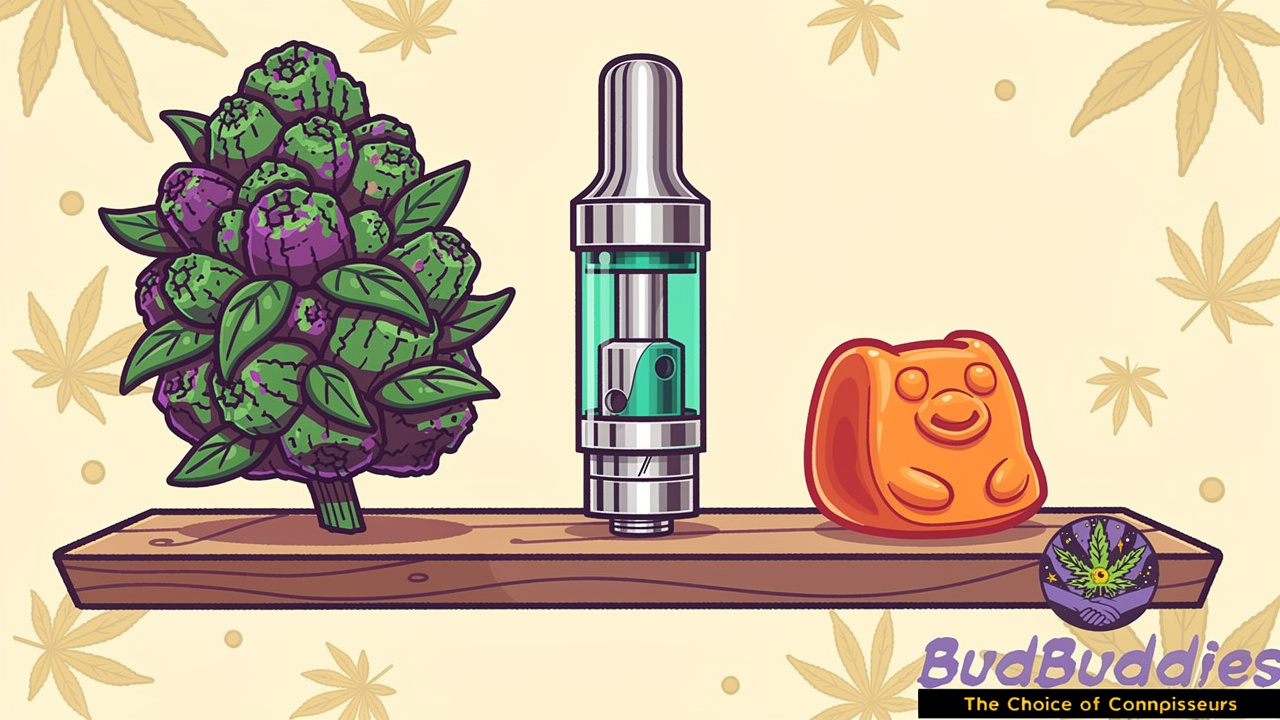
Which products and strains work best after studying depends on how you want to feel for the rest of the evening. The mix of THC, CBD, and terpenes in your chosen product shapes both your mood and your sleep. BudBuddies keeps the range focused so you can match flower, vapes, and edibles to your post-study routine without guessing.
Indica, Sativa, Or Hybrid – What Should You Reach For?
Strain type has a big influence on whether cannabis supports your evening wind-down. Indica-dominant strains are usually linked with body relaxation, quieter thoughts, and a heavier, sleepy feeling. That makes them popular after late revision sessions, especially when you want to drift towards sleep rather than start new tasks. Terpenes such as myrcene and linalool often feature here and many people associate them with calm, cosy effects.
Sativa-dominant strains tend to feel lighter, brighter, and more energetic. Some people enjoy them earlier in the day for creative work, but they can sometimes raise anxiety or leave your mind racing in bed. For late evening use they are often less helpful, particularly if you struggle to switch off. Balanced hybrids sit between the two, and BudBuddies favourites like Gelato, Amnesia, and Blueberry Haze can give mood lift without pushing you wide awake.
High-CBD, low-THC strains or CBD flower give another path. These options can ease tension and help you unwind without a strong high or fuzzy head. They also carry far less risk of disturbing memory consolidation because CBD does not impair recall in the same way as THC. Newer consumers often feel more comfortable starting here before trying stronger THC-rich strains.
Flower, Edibles, Or Vapes – Does Format Make A Difference?
Format matters because it changes how fast effects appear, how long they last, and how easy dosing feels. According to the Sleep Foundation, THC can shorten the time it takes to fall asleep yet often reduces REM sleep, the stage linked with memory processing. After a study session you might want quick relief, or a slower, longer glide through the evening. BudBuddies stocks flower, THC vape cartridges, edibles, and CBD products, each with clear lab-tested strength so you can pick what fits your plans.
Flower is the classic choice and works well when you want fast feedback from a small amount. You feel the effects within minutes, so it is easier to pause once you reach a comfortable level. For post-study use, many people take one or two gentle bowls and then put the pipe away. This format also makes it simpler to finish smoking at least an hour before bed.
Vapes offer quick onset with far less smell and irritation than smoke. BudBuddies THC cartridges heat the extract to a controlled temperature, which helps you take small, measured puffs. Many students and professionals like this for discreet evening use that will not cling to clothes. Because the effects build over a few minutes, it is easier to stop at a light, clear high.
Edibles take longer to start, often between sixty and ninety minutes, but they last several hours. That slower pattern can be ideal if you plan an evening of films or gaming after revision. BudBuddies labels each edible with precise milligrams of THC, and newer users are often advised to start around 2.5–5 milligrams. Patience matters here because the full effect may not appear straight away.
CBD oils, capsules, and CBD flower suit people who want to unwind without a strong high. These products focus on calm, muscle ease, and a quieter head rather than euphoria. Many readers find a CBD vape or tea-like session after studying takes the edge off stress while keeping them clear for the morning. Because there is little or no THC, impact on memory and sleep architecture is far milder.
Practical Tips For Getting The Most Out Of Post-Study Cannabis Use
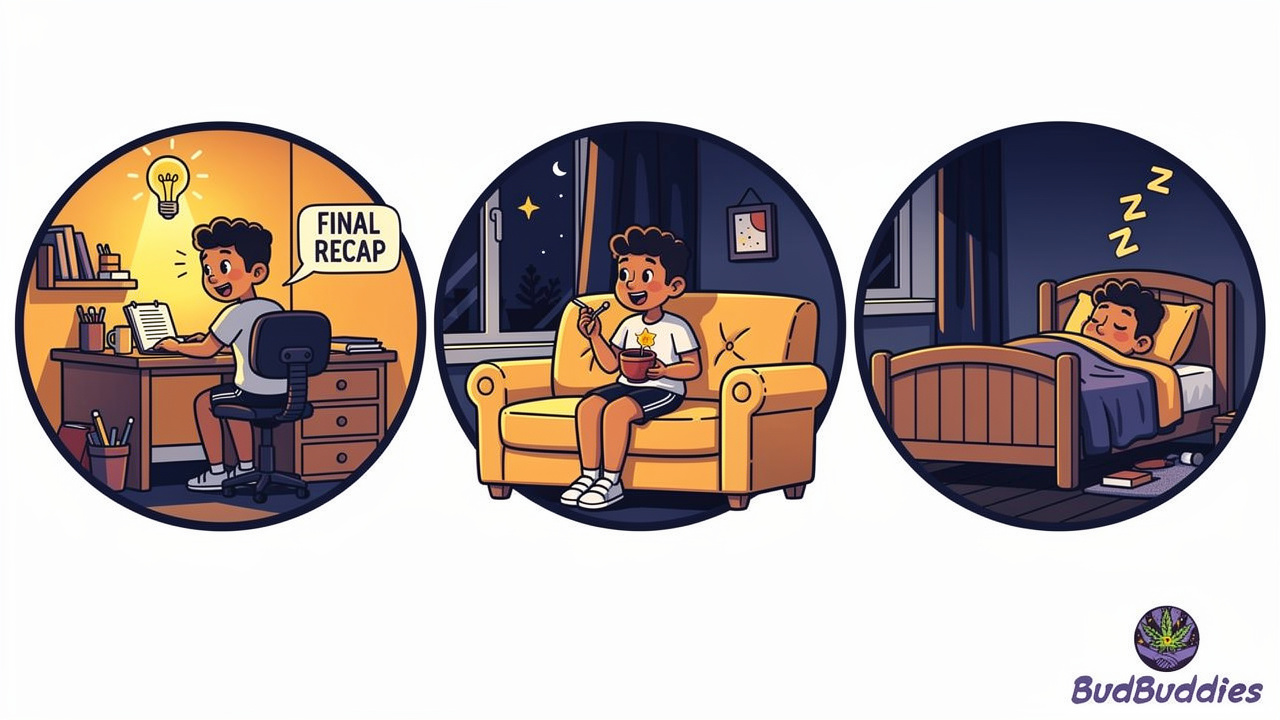
Practical habits make more difference to your learning than any single strain. If you plan your sessions, smoking weed after studying can sit neatly alongside strong grades and sharp mornings. The tips below bring together what research says about memory with BudBuddies experience of how customers use cannabis around work and revision, drawing on findings such as the From fried to focused? diary study, which tracked how after-work cannabis use shapes next-day performance. According to the National Institute on Drug Abuse, around thirty percent of people who use cannabis may develop some level of use disorder, which is another reason to build mindful habits.
“Neurons that fire together wire together.” — Donald Hebb, psychologist
That saying captures why what you do during and right after revision matters most for memory. Cannabis fits in best once that wiring work has already started.
Finish your study session fully before you touch cannabis. Close your books, tidy your notes, and do a quick recap of key points. That short review signals to your brain that learning time is over and helps fix material in memory. Then wait at least one to two hours before using anything, so the first phase of consolidation has already begun.
Keep your dose modest, especially if you use cannabis most days. Heavy daily intake can blunt focus and memory even when you feel sober. Smaller, measured doses after work give you the pleasant side without dragging energy into the next morning. If you notice you always need more to feel the same, treat that as a sign to step back.
Protect your sleep because that is when a lot of memory work happens. Try to time your last smoke or vape at least an hour before bed, and avoid repeated top-ups late at night. Many people find that switching to CBD-only products closer to bedtime keeps them settled without grogginess. Remember that good sleep habits like a dark room and regular schedule help just as much as cannabis choice.
Choose strains that fit the evening, not just your favourite flavour. Indica-dominant flower or balanced hybrids with myrcene and caryophyllene tend to suit winding down. Check the terpene and effect information on BudBuddies product pages to see how other customers describe the feel. If a strain leaves you wired or anxious, save it for daytime and pick something softer for nights.
Look after your body with water and simple food before you light up. Cannabis can dry your mouth and change your sense of hunger, which feels rougher if you already skipped meals. Mixing high doses of alcohol and cannabis often leads to a foggy head and broken sleep. For study-heavy days, keeping cannabis and alcohol separate usually gives a smoother, more predictable outcome.
Take short tolerance breaks if you notice that cannabis feels less effective or your thinking feels dull. Even a few days off can refresh how your brain responds, especially after a run of intense use. Many regular BudBuddies customers plan light weeks during exam periods and then return to normal patterns afterwards. This kind of rhythm lets you keep cannabis enjoyable without it creeping into every evening.
The Bottom Line

The overall message is simple. Smoking weed after studying is far kinder to your learning than smoking before or halfway through your revision. If you give yourself a buffer of at least an hour, pick calm, well-suited products, and protect your sleep, cannabis does not have to clash with your goals. The biggest risks come from high doses, rushed timing, and poor rest, not from the idea of a post-study smoke itself.
BudBuddies exists for readers who want that balance. The curated range of flower, vapes, edibles, and CBD options is built around clear lab testing, terpene detail, and discreet, reliable service on BudBuddies. When you understand timing, strain type, and dose, you can explore the menu with confidence and treat cannabis as a thoughtful part of your routine.
Frequently Asked Questions
Question: How long should I wait after studying before smoking weed?
Waiting at least one to two hours after studying before smoking weed is a good rule. That gap lets your brain start consolidating what you learned and reduces the chance that THC interferes with the first storage phase. If you can, finish smoking at least an hour before sleep as well.
Question: Does smoking weed after studying affect sleep?
Smoking weed after studying can help you fall asleep but may change sleep quality, especially with high THC. THC often reduces REM sleep, which supports memory. To protect sleep, keep doses modest, choose relaxing indica or CBD-rich products, and avoid using right before you get into bed.
Question: Is CBD a better option than THC after studying?
For many people, CBD is a gentler option than THC after studying. CBD can ease tension and anxiety without a strong high or fuzzy head. Because it does not impair memory in the same way, CBD oils, capsules, or CBD flower work well for readers who want recovery without next-day fog.
Question: Can smoking weed after studying become a bad habit?
Yes, smoking weed after studying can become a problem if it turns into heavy daily use. Over time that pattern may dull motivation and slow thinking even when you feel sober. Keeping doses small, planning regular days off, and checking in with how you feel helps you stay in control.
Question: Which strains are best for relaxing after a study session?
Indica-dominant or balanced hybrid strains usually work best for relaxing after a study session. Look for terpene profiles rich in myrcene and linalool, which many people link with calm and body ease. BudBuddies product pages let you filter by those terpenes so you can pick a strain that suits your evenings.
Conclusion
Bringing cannabis and learning together does not have to feel like a conflict. When you keep your sessions for after revision, give yourself a buffer, and choose calmer products, smoking weed after studying can sit comfortably inside a healthy routine. The real foundation is still good notes, spaced practice, movement, and consistent sleep, with cannabis as a gentle extra rather than the star.
BudBuddies is set up for adults who want that kind of thoughtful approach. With clear lab reports, terpene detail, and a focused range of flower, vapes, edibles, and CBD options, the site makes it easy to plan evenings that respect both your mind and your downtime. Explore BudBuddies when you are ready to match your study habits with a smarter way to unwind.

