


Does a Dry Herb Vape Set Off a Smoke Alarm?
Introduction
Wondering if a dry herb vape will set off a smoke alarm at home, in a flat, or in a hotel room? That question sits behind a lot of indoor cannabis use.
The worry is simple enough. Nobody wants sirens, awkward conversations, or a frazzled evening because of one relaxed session.
The honest answer has a few layers. A dry herb vape can trigger a smoke alarm, but it is much less likely than a joint, and the risk is easy to manage with good ventilation, the right temperature, and a quality device from brands such as BudBuddies. This guide explains how alarms work, how vapour behaves, and what to do in real rooms, not lab conditions.
Keep reading to understand the real risk and how to keep your sessions calm and discreet.
How Smoke Alarms Actually Work And Why Vapour Can Still Trigger Them
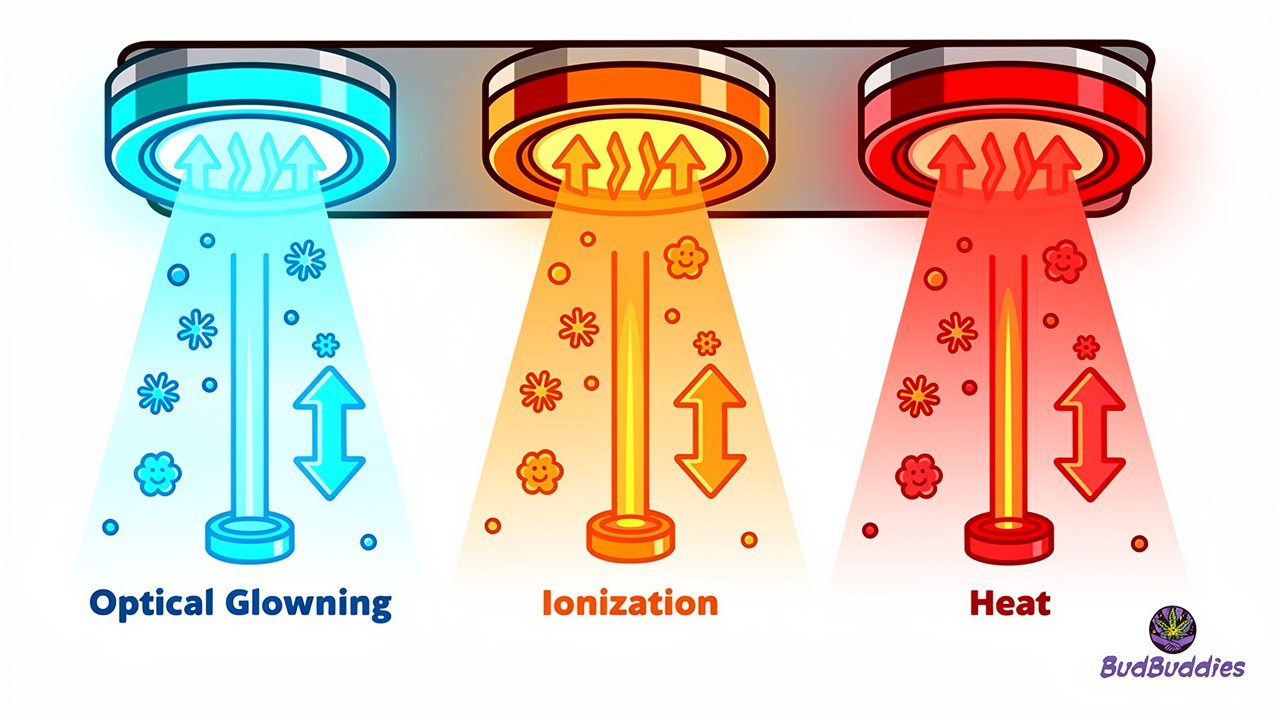
Smoke alarms react to particles or heat in the air, so vapour from a dry herb vaporiser can trigger them in some situations. The chance is highest with modern optical alarms and thick indoor clouds.
Most home alarms fall into three groups:
Photoelectric (optical) alarms use a small light beam inside the unit. When particles scatter that light, the sensor reacts and the alarm sounds. Steam from a shower, a smoky frying pan, or a dense vapour cloud all scatter light inside this chamber.
Ionisation alarms use a tiny electrical current between two plates. When particles interrupt that current, the alarm sounds. They react quickly to hot flaming fires but are slower with smouldering ones.
Heat alarms monitor temperature, not smoke or vapour. They trigger when surrounding air reaches a set temperature or rises very quickly.
According to the National Fire Protection Association, photoelectric and ionisation alarms are the standard types in homes worldwide.
Photoelectric alarms are the most sensitive for vapers, and research confirms that indoor e-cigarette use can set off smoke detectors, making it important to understand how each alarm type responds to aerosol particles. That is why these alarms often sit in hallways and living spaces in modern UK flats. If you sit directly under one and blow big clouds, it may react even though nothing is burning.
Ionisation alarms usually need a thicker cloud before they respond. Vapour can still set them off if it reaches the sensor in a dense stream, but light, well dispersed clouds are far less likely to trigger a response.
Heat alarms sit in places where steam and light smoke are normal, such as kitchens and garages. A dry herb vape does not change room temperature enough for that, so heat alarms are effectively immune to vapour.
As the BudBuddies team often tells customers, “If vapour can reach your alarm in a visible cloud, it has a chance of setting it off.”
Photoelectric Vs Ionisation: Which One Is In Your Home
Knowing which alarm you have gives you a clearer sense of risk from indoor dry herb vaping. Photoelectric alarms are more reactive to vapour, while ionisation alarms tend to be a little more forgiving.
Many newer UK rented flats and purpose built apartments use optical alarms as standard, often linked together so that one triggered unit sets off all the others. Guidance from the Home Office notes that linked systems give earlier warning across a whole property, which is good for safety but can be noisy if an alarm triggers by mistake during a session.
Older houses and long term family homes often still use ionisation units. These might have the word ionisation or a small radiation symbol on the casing. They still react to thick vapour, but light clouds that drift across the room are less likely to cause trouble.
You can usually tell what you have by checking:
The label on the front of the alarm (look for optical, photoelectric, or ionisation).
The instruction leaflet or any sticker inside the battery compartment.
The age of the unit – newer, interlinked alarms in UK rentals are commonly optical.
If the front of the alarm casing says optical or photoelectric, treat it as highly sensitive to vapour. If it looks older with no clear label, assume it behaves more like an ionisation unit and give it some distance all the same.
Does Dry Herb Vapour Actually Differ From Smoke
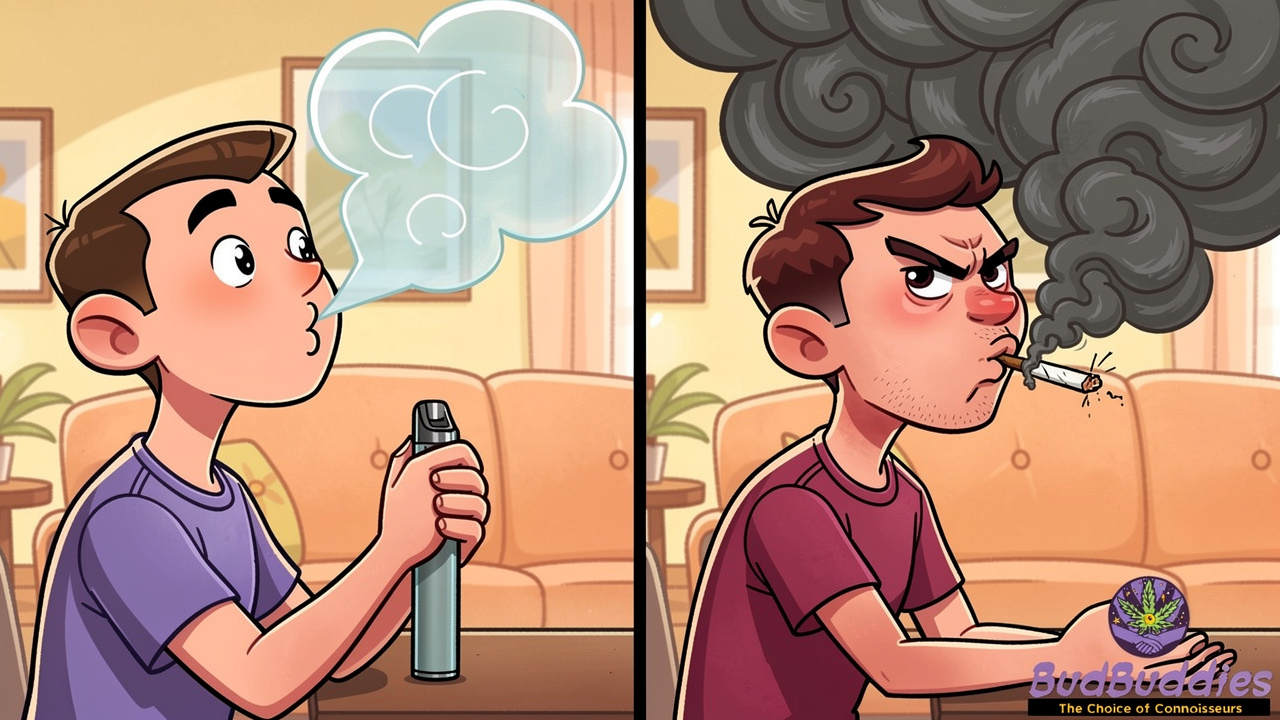
Dry herb vapour and smoke feel similar at first glance, but they behave quite differently in the air. Vapour is lighter and fades faster, while smoke is dense and clings to surfaces.
A dry herb vape heats cannabis flower to a point where cannabinoids and terpenes turn into an aerosol without setting the plant on fire. At these temperatures the device releases active compounds into tiny droplets suspended in warm air. No paper burns, no glowing cherry forms, and the chamber remains enclosed.
Smoke from a joint or pipe comes from actual combustion. Plant matter and paper burn, which creates hot gases loaded with solid carbon particles, tar, and a wide mix of byproducts. These particles are larger and heavier than those in vapour. They hang in the air longer, stick to fabric and paint, and leave that familiar stale smell.
In simple terms:
Vapour
Mostly tiny liquid droplets.
Spreads quickly and clears faster.
Leaves less lingering smell.
Smoke
Packed with solid particles and tar.
Hangs in the air and sticks to surfaces.
Leaves stronger, longer lasting odour.
From a smoke alarm’s point of view, the fine detail does not matter. The sensor simply sees particles passing through its chamber or blocking its light path. Vapour clouds usually contain fewer solid particles and more tiny droplets, which means they disperse more quickly. That is why vaping a small bowl on a moderate temperature is far less likely to trigger an alarm than filling a room with joint smoke.
Health research supports the basic idea that vapour carries fewer combustion byproducts. A well known evidence review from Public Health England on nicotine products concluded that vaping is far less harmful than smoking tobacco, largely because there is no burning. The same principle applies when you compare dry herb vapour with cannabis smoke, even though the products are different.
The key point is simple though: smoke alarms care about how dense the particles are, not whether those particles come from vapour or fire.
Practical Ways To Vape Indoors Without Setting Off The Alarm

Indoor dry herb sessions can stay quiet if you manage vapour and airflow carefully. The aim is to keep clouds thin, cool, and far from the alarm sensor.
A few simple habits make a big difference in most UK homes and flats:
Use fresh air to thin out the vapour. Sitting near an open window or back door lets you breathe out directly towards outside air so clouds thin before they spread across the ceiling. A fan pointing out of the window helps pull vapour away from the alarm and speeds up how fast the room clears. Research highlighted by the US Fire Administration shows that better ventilation reduces smoke and vapour build up in small rooms, which is exactly what you want during a session.
Control where your exhale travels. If you sit right under an alarm and aim each breath upwards, vapour will reach the sensor thick and warm. Sitting on the other side of the room, facing an open window, gives the cloud more space to thin out. Some people also breathe out slowly into a cushion or sleeve so fabric absorbs part of the vapour trail before it drifts upwards.
Keep sessions gentle instead of chasing clouds. High temperature hits and rapid back to back draws create the thickest vapour. Starting low, waiting a few seconds between pulls, and stopping when the flavour fades will keep output light. Guidance from Public Health England on nicotine devices notes that lower power settings reduce vapour volume and visible cloud size, and the same idea holds for dry herb setups.
As the BudBuddies team likes to put it, “Treat vapour like steam: you want it moving, thinning out, and heading for an open window, not the ceiling.”
Good habits take you most of the way. The last piece of the puzzle is the device itself.
Why Device Quality And Temperature Control Matter Most
The cleaner and more consistent your vape, the less risk you have of setting off a smoke alarm. Good temperature control keeps herb in the vapour range instead of tipping into scorching that behaves more like smoke.
High quality vapes such as the BudBuddies Elite Pro give you single degree temperature steps, a clear OLED screen, and a hybrid heating system that stays stable through a session. That control lets you sit in a sweet spot where vapour feels smooth and flavourful without turning the bowl into a tiny oven. A steady device produces repeatable, light clouds rather than random spikes that might push more dense particles into the room.
Cheap or badly built hardware can overshoot its set temperature, burn the load, and create harsh, thick output. At BudBuddies we focus on devices with consistent heating and clear displays, so you can see exactly what the chamber is doing. The dry herb vapes in our curated range at budbuddies.cc are chosen with this predictability in mind, because it matters for flavour, comfort, and quiet indoor use.
What You Should Never Do And A Note On Hotels And Shared Spaces

Disabling or covering a smoke alarm so you can vape indoors is never worth the risk. A working alarm is one of the simplest safety devices in any home.
Fire services repeat a very simple point. When alarms work, people wake up and leave a property faster. Guidance from London Fire Brigade explains that working smoke alarms roughly double a person’s chance of surviving a house fire. Removing batteries, covering the unit with plastic, or taping over vents takes that early warning away, even after your session ends.
As national fire safety campaigns often say, “Smoke alarms give you vital early warning so you can get out, stay out, and call the fire service.”
If your alarm triggers often when you use a dry herb vape, treat that as feedback from the room rather than something to silence. Sit further from the unit, reduce your temperature, open windows, and keep the device clean so vapour stays light. Upgrading tired hardware to a precise vape from BudBuddies can also reduce the chance of scorchy bowls that behave like smoke.
Hotels need alarms that pick up small amounts of smoke or vapour, so they often combine photoelectric sensors with linked systems. That means a short burst of thick vapour can set off sounders in corridors as well as in the room itself. Many hotels add cleaning fees or penalties when staff notice signs of vaping inside, so designated outdoor areas nearly always offer a calmer option.
In shared homes or rented flats, other people’s comfort matters as much as alarms. Even light vapour has a herbal scent, and regular sessions in small rooms can linger for housemates. Positioning yourself by a window, keeping temperatures moderate, and choosing cleaner devices from budbuddies.cc helps you enjoy flower while keeping neighbours, partners, and flatmates happy.
The Bottom Line
Yes, a dry herb vape can set off a smoke alarm, but it is far less likely than with joints or pipes when you use it thoughtfully. Vapour holds fewer solid particles than smoke, spreads more quickly, and becomes harmless to most alarms once it thins.
Your real risk depends on three things:
Alarm type – photoelectric units are the most sensitive to vapour.
Cloud density and temperature – hotter, thicker clouds are more likely to be noticed.
Ventilation and position – open windows, fans, and sitting away from alarms all help.
A precise, well maintained vaporiser from BudBuddies, such as the Elite Pro, keeps you in that lighter vapour zone where alarms rarely react. Pair that with open windows, moderate temperatures, and relaxed pacing, and indoor sessions in UK homes become smooth, quiet, and far less stressful. To explore devices picked with this kind of real world use in mind, visit budbuddies.cc and browse the dry herb vape range.
Frequently Asked Questions
Can Vapour From A Dry Herb Vape Trigger A Hotel Smoke Alarm?
Yes, vapour from a dry herb vape can trigger a hotel smoke alarm, and the chance is often quite high. Many hotels use sensitive photoelectric or linked systems that react to even modest indoor clouds. To avoid loud alarms, awkward talks with staff, and penalty charges, stick to designated outdoor areas or smoking zones.
Does Vaping Weed Smell As Much As Smoking It Indoors?
No, dry herb vapour does not smell as strongly or as long as smoke from a joint. Vapour has a lighter, fresher herbal scent that fades more quickly from fabrics and walls. Using moderate temperatures, smaller bowls, and opening windows reduces odour even further during and after a session.
Is A Dry Herb Vape A Fire Risk?
A modern dry herb vape has a very low fire risk compared with smoking. Herb sits in a closed chamber with no open flame, no ash, and controlled temperatures. Incidents linked to quality devices are rare, and the risk is similar to other battery gadgets in the home when you follow the manufacturer’s charging and usage guidance.
Will An Ionisation Smoke Alarm Go Off From Vaping?
An ionisation smoke alarm is less likely to react to vapour than an optical unit, but it still can. Dense clouds blown directly towards the alarm, especially in small, still rooms, may trigger it — a finding consistent with studies showing that indoor e-cigarette use can set off smoke detectors even with alarm types considered less vapour-sensitive. Keeping distance, lowering temperature, and improving airflow keeps that chance low.
Does Keeping Your Vape Clean Actually Reduce Alarm Risk?

Yes, a clean vape reduces alarm risk because it produces lighter, more consistent vapour. Residue in the chamber and mouthpiece can overheat and create thicker, smoke like clouds. Regular cleaning of the bowl, screen, and air path keeps flavour fresh and clouds gentle, which suits indoor use and helps keep alarms quiet.

