


Edible Kicked In During Lecture? What To Do Now
Introduction
Your heart pounds, the slides blur, and your edible kicked in during lecture far harder than planned. It feels intense, public, and very hard to hide.
That mix of long‑lasting edible effects, bright projector lights, and silent rows of students can push anxiety sky high.
When an edible kicks in mid‑lecture, the key fact is that you are safe and the feeling will pass. This guide explains why it hit now, what to do in the next few minutes, how to avoid a repeat, and how BudBuddies products make timing and strength easier to predict.
Take a slow breath, keep reading, and use this as a calm, practical guide while things settle—whether you are in the middle of a wobble or just planning ahead.
Why Did Your Edible Hit You Mid Lecture?
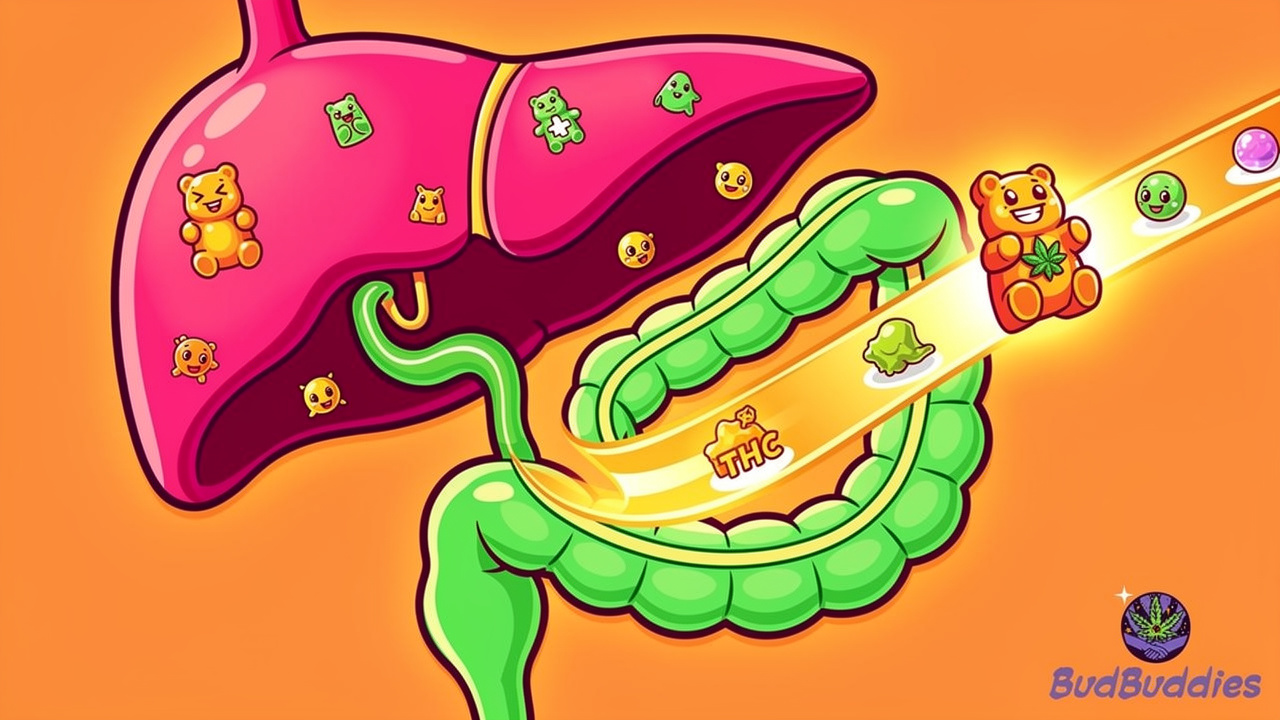
When an edible suddenly hits you mid‑lecture, the reason sits in how your body processes cannabis edibles. They travel through your stomach and liver before they reach your brain, so the high arrives late and often feels stronger. Once you understand that route, an edible kicked in during lecture moment feels less random.
After you swallow a brownie or gummy, THC moves from your stomach into the small intestine, then into the bloodstream. In the liver it changes into another form called 11‑hydroxy‑THC. Research from the National Institute on Drug Abuse notes that this form reaches the brain more easily, which helps explain why edible highs often feel heavier and longer — a pattern consistent with findings on how food palatability influences Frontiers | Brain activity and cognitive processing.
Because of that route, the first clear effects can take a while. Guidance from Health Canada shows that edibles may:
take anywhere from 30 minutes to 4 hours to peak
have total effects that often last 4 to 8 hours or more
That wide window is why an evening treat can still be active when you sit down for a morning lecture.
Health Canada sums it up simply: “Start low and go slow with cannabis edibles.”
On top of timing, your own body adds extra twists. Factors such as:
how much you ate that day
your body weight
your metabolism
how tired or stressed you feel
how often you use cannabis
all change how fast THC moves and how strong it feels. Even the product format matters, because drinks and sublingual oils usually reach the bloodstream faster than dense brownies.
BudBuddies product pages talk about onset ranges and duration in plain English so you can match your dose to your day. When you know that an edible can still be active hours later, the shock of an edible kicked in during lecture story starts to fade into something you can plan around.
Common Triggers Behind The Timing Mistake
Once you know how edibles move through your system, the classic timing mistakes make more sense. Many stories that end with an edible kicked in during lecture trace back to the same few habits. Spotting these patterns helps you avoid a repeat next term.
Taking more because you think it failed is what many people call dose stacking. You swallow one gummy, feel nothing after forty minutes, and chew another. The problem is that both portions are still moving through your stomach, so they can hit together like one large dose.
Forgetting how long edibles last leads to the classic night‑before problem. You take a stronger dose while streaming a film and assume you will feel fine by your 9 a.m. seminar. Many people still feel dreamy or heavy well into the next morning, especially after higher amounts.
Using products with unclear strength makes timing almost guesswork. If a brownie or sweet has no clear milligram amount, it is very easy to eat far more THC than fits your comfort zone. Inconsistent batches also mean one piece of the same bar can hit harder than another piece.
What To Do Right Now If You Are Feeling It
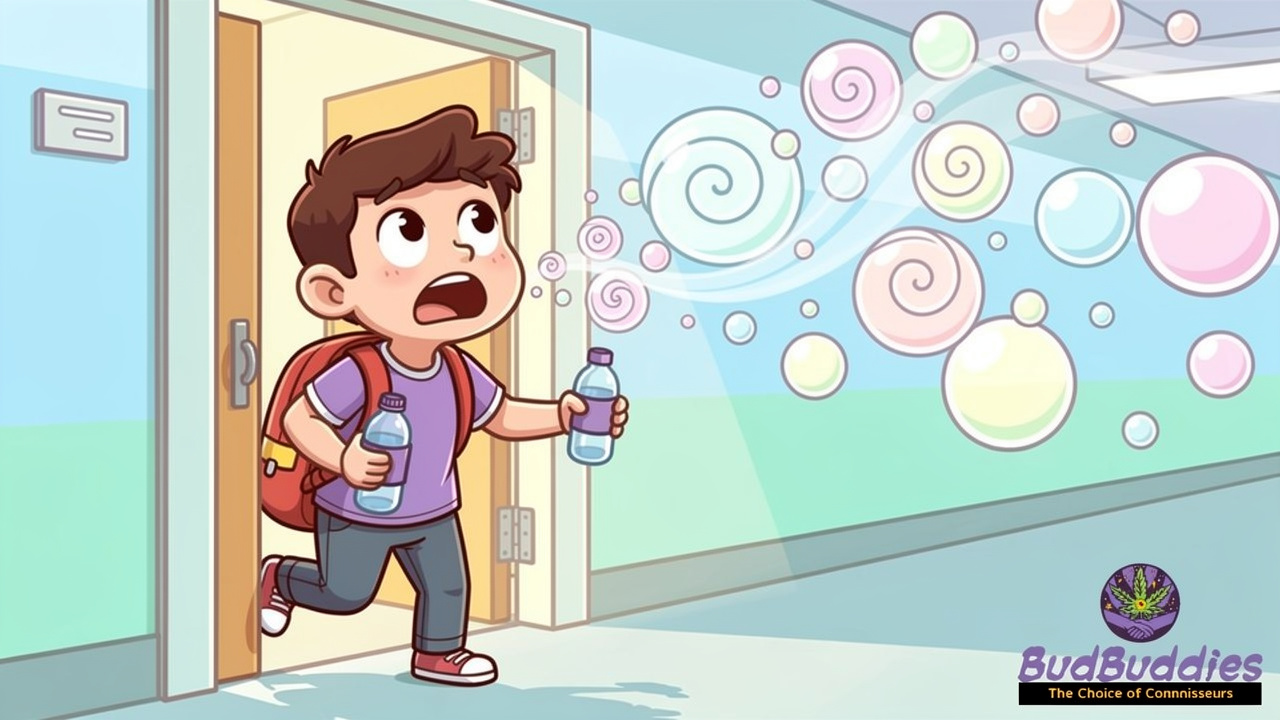
When an edible hits hard in the middle of a lecture, the best move is to reduce pressure and calm your body. That usually means leaving the room if you can. You then ground yourself with breathing and water, and remind yourself that this peak will fade.
Cannabis can make your heart race and thoughts swirl, but for most healthy adults it does not usually threaten breathing in the way many people fear. Research summarised by the NHS notes that short‑term cannabis effects mainly touch memory, attention, and mood. Knowing that the main risk is discomfort, not lasting harm, takes some heat out of the panic.
Tip from the BudBuddies team: “When you feel too high in public, shrink your world. Focus on one simple task—breathing, sipping water, or reading a single sentence—rather than the whole room.”
If your edible kicked in during lecture in the last few minutes, start by moving slowly. Gather your things, stand up carefully, and walk out as if you simply need the toilet. Even two minutes of quiet in the corridor, bathroom, or outside space often reduce the sense that everyone is watching you.
Once you are in a calmer spot, focus on a few simple actions:
Sip water. Dry mouth eases, and the simple act of drinking gives your hands a job.
Have a light snack. Something with carbohydrates, like a biscuit or piece of fruit, can make you feel more steady and present.
Cool your body. Splash your face with cold water or step outside if possible; a slight temperature change often makes your head feel clearer.
Some people like to keep a small CBD oil or gummy in their bag for these moments. Early research collected by Harvard Health Publishing suggests that CBD may soften certain THC effects for some users. If you know CBD sits well with you, a modest amount might help take the edge off, although time still does most of the work. This is not a cure and does not replace medical advice.
While you wait, speak kindly to yourself in your head. Tell yourself that you know exactly why you feel odd, that your body is processing THC, and that every minute brings you closer to baseline. If a trusted friend is nearby, quietly let them know what happened so they can sit with you or walk you home.
Step By Step Grounding Yourself In A Public Setting
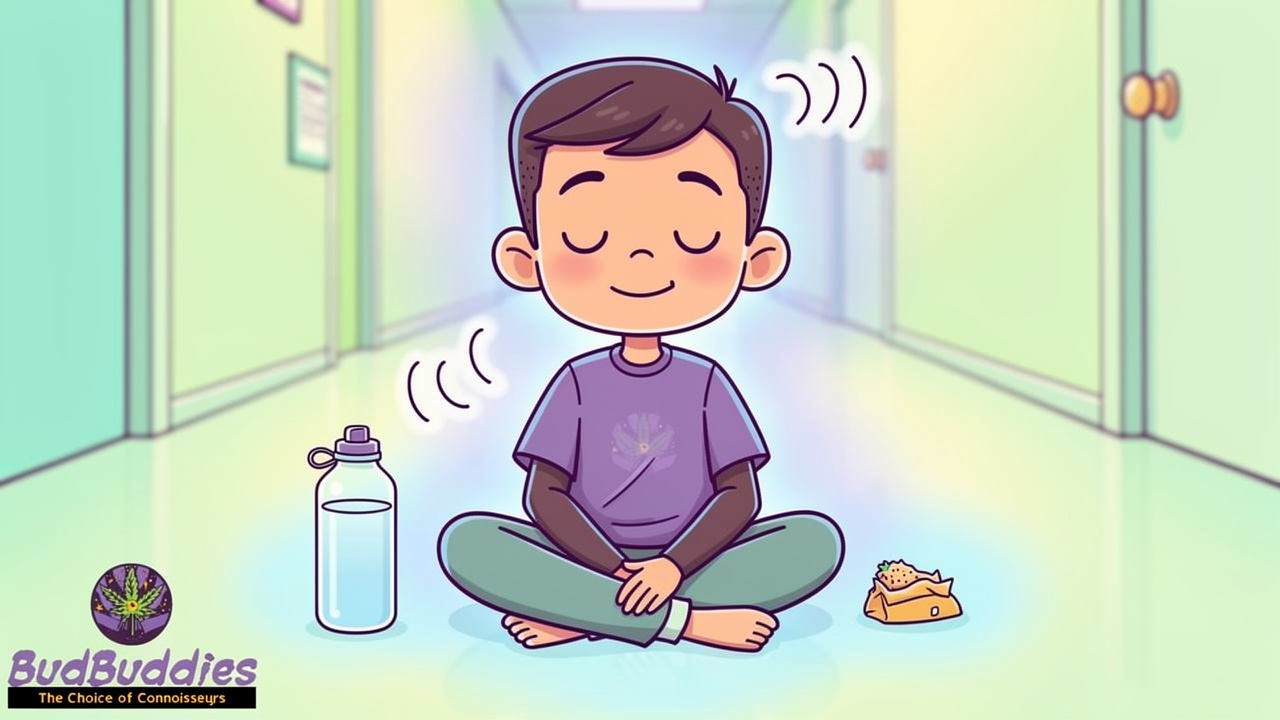
When you notice an edible kicking in while you are still in a public place, having clear steps helps more than vague advice. The actions below keep you safer, reduce anxiety, and give you simple tasks to focus on. Read through them once now so they are in your mind if you ever need them again.
Leave the lecture room calmly if you are able. Gather your bag, stand up slowly, and walk out as if you simply need the toilet. Fresh air or even a quieter hallway quickly lessens the feeling of being on display.
Find a place to sit or lean, then sip water. Focus on the feeling of the liquid, the temperature, and the act of swallowing. This anchors your attention in your body instead of your racing thoughts.
Use a simple breathing pattern you can remember. Breathe in through your nose for four slow counts, hold for four, then breathe out through your mouth for four. Repeat this several times, keeping your shoulders loose and your jaw relaxed.
If you cannot leave the lecture, give your mind an easy task. Copy what is written on the slides word for word, or draw small shapes in the corner of your notes. The aim is not to learn right now but to pass time until the peak eases.
Avoid adding other substances on top, especially caffeine or alcohol. Both can make your heart race even more and confuse your sense of how high you actually feel. Water or a soft drink without caffeine is a far safer pick.
If a friend you trust is nearby, let them know you feel too high. You do not need to give details to everyone, just one person who can walk with you or sit beside you. Knowing someone else understands what is going on lightens the load.
How To Dose Edibles So This Never Happens Again
To stop a repeat of an edible kicked in during lecture moment, your future doses need to match both your body and your timetable. The most reliable way to do that is to start with small amounts, wait long enough, and only increase slowly over several sessions.
For many adults, a gentle starter range sits around 2.5 to 5 milligrams of THC — an approach aligned with broader research on What Shall We Cook Tomorrow’s sustainable food and novel substance education frameworks, which emphasise informed, measured consumption. Guidance reviewed by Health Canada notes that new users often feel clear effects from amounts in this band. Going higher early does not make the experience clever or brave; it just raises the chance of spending a whole afternoon feeling overwhelmed.
As many harm‑reduction educators like to say: “You can always take more later, but you cannot take less.”
In practice, that means eating one low‑dose gummy or square of chocolate, then leaving it alone for a decent stretch. Do not treat the first hour as a test you need to pass. Your stomach and liver are already doing their work long before you feel it in your head.
Timing around your schedule matters just as much as the number on the label. Try to give yourself at least six to eight clear hours after an edible before anything that needs focus, such as lectures, work shifts, or driving. According to the National Institute on Drug Abuse, edible effects often last longer than smoked cannabis, so extra space keeps you comfortable even if the high runs on.
BudBuddies makes this easier by offering low‑dose options across gummies, chocolates, capsules, and drinks, all with clear per‑piece milligram figures. Many regulars keep one strength for relaxed evenings and a much smaller strength for times when they may need to stay more aware. With steady products and simple numbers, you can build a routine that feels calm rather than random.
The Two Hour Rule And Why It Matters
The two hour rule sits at the heart of safer edible dosing. It means you never take more THC within two hours of your first bite, no matter how weak the effects seem so far. This single habit prevents many edible kicked in during lecture stories.
The reason is simple. Edibles can take a long time to reach full speed, so a second piece added too soon often lands right as the first one crests. What felt like a cautious top‑up can suddenly feel like twice the planned dose.
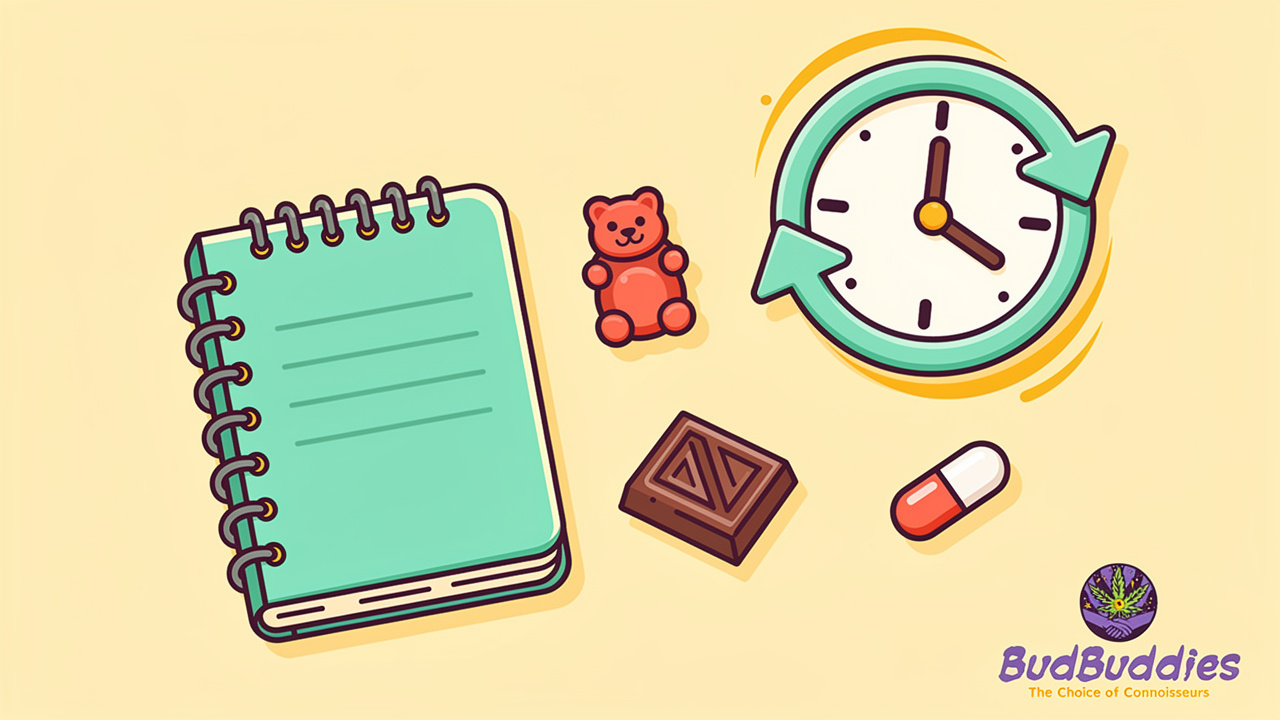
BudBuddies talks about the two‑hour gap across product pages, blog posts, and dosing guides because it protects both new and experienced users. Many people also like to keep a simple dosing journal on their phone, logging:
what they took (product and THC or CBD amount)
the time they took it
what and when they last ate
how it felt over the next few hours
After a few sessions, patterns appear and your own safe range becomes clearer.
Choosing The Right Edible For An Unpredictable Schedule
Choosing the right edible for an unpredictable schedule means thinking about onset speed, duration, and how precisely you can control your dose. Someone whose edible kicked in during lecture once often values formats that feel steadier and easier to judge.
Different formats behave differently:
Classic baked goods and dense chocolates often take the longest to kick in. They sit in the stomach while your body breaks down the food, so the THC moves more slowly into your blood. The high from these can feel cosy and long‑lasting, which is great for film nights but far less helpful the morning after.
Smaller gummies and infused drinks tend to show effects a little sooner, especially when sipped over time rather than swallowed at once. They still go through the digestive system, but there is usually less heavy food to slow things down.
Sublingual oils and similar products, which you hold under the tongue for a short while before swallowing, can start working within thirty to forty‑five minutes for many people. According to Health Canada, products that absorb through the mouth often show effects sooner than those that pass only through the stomach.
For anyone with a busy diary, the most helpful trait is predictable dosing. BudBuddies focuses on clearly scored chocolates, single‑piece gummies, and measured capsules, so you are never guessing how much is in a bite. There are also CBD‑only edibles for readers who want some calm without any noticeable high at all, which can be a smarter pick before full days of lectures.
On top of formats, many BudBuddies customers care strongly about privacy, and being informed about your choices — much like the student-focused guidance explored in Quick wins to enhance the student experience — can meaningfully reduce anxiety around use. Orders arrive in plain, unbranded packaging, sent through tracked services such as Royal Mail, so your treats reach you discreetly and on time. Knowing that the supply side feels smooth gives you space to pay attention to timing and dose instead.
The Bottom Line
An edible kicked in during lecture story feels awful in the moment, but it is far more common than people admit. The big ideas are that you are safe, the peak will fade, and next time can feel far easier.
Understanding delayed onset, using the two hour rule, starting with low doses, and keeping edibles away from lecture days almost removes the chance of a repeat. BudBuddies helps by offering low‑dose, clearly labelled products, calm guides, and discreet delivery across the UK and Northern Ireland. When you are ready, explore budbuddies.cc to plan an experience that fits your own pace.
Frequently Asked Questions
How Long Does An Edible Take To Kick In?
A typical edible takes between 30 minutes and 2 hours to produce noticeable effects. The exact timing depends on your metabolism, body weight, what you ate that day, and the format you used. Drinks and sublingual oils often act sooner than brownies or cookies. Because the window is so wide, waiting the full two hours before taking more is the safest habit.
Can You Sober Up Faster If An Edible Has Kicked In?
You cannot fully switch off an edible once your body has absorbed it, so time does most of the work. What you can do is lower the intensity. Drink water, eat a light snack, breathe slowly, and move to a calmer place. Some people find CBD helps soften the edge, but it does not erase the high.
Is It Dangerous To Be High During A Lecture?
For most healthy adults, being high during a lecture is uncomfortable rather than medically dangerous. The main effects touch memory, attention, decision‑making, and anxiety levels. That means you are unlikely to remember much of the content and may feel on edge. If you notice chest pain, trouble breathing, or faintness, seek medical help straight away.
What Is The Right Starting Dose For Edibles?
For most newcomers, a starting dose of 2.5 to 5 milligrams of THC is sensible. This amount lets you feel how your body reacts without pushing you far past your comfort zone. BudBuddies offers gummies, chocolates, and capsules in this lower range, with clear per‑piece labels. Always wait a full two hours before you think about more.
Why Does The Same Edible Hit Differently Each Time?
The same edible can feel different because your body is not the same every day. Factors such as how much sleep you had, what you ate, your stress level, hydration, and hormone cycles all change your response. Faster digestion can send THC to the liver sooner, while a big meal slows it. This natural variation is why careful dosing, patience, and the two hour rule matter.

