


University Caught Me With Weed UK: What Happens Next?
Introduction
If your university caught you with weed UK, the panic hits fast and hard. Your heart races, and your brain fills with worst‑case scenarios.
That rush of fear is normal, but it often makes everything feel bigger than it really is. Most students in this spot worry about being kicked out, parents finding out, or their future being ruined. In reality, the response is usually more measured, especially for a first incident.
This guide breaks down what usually happens when your university gets involved, how police outcomes work in plain English, and what actually ends up on your record. You will also get clear steps you can take right now and a safer way to move forward, including support from BudBuddies.
Take a breath, keep reading, and start turning “university caught me with weed UK” into a problem you can manage rather than a crisis.
What Actually Happens When Your University Catches You With Weed

When a university catches a student with weed, the first response is usually a conversation and a warning, not instant expulsion. Most universities use staged processes that start with a chat and only move to tougher action if things repeat or look more serious.
Most cases begin in halls or shared houses. Someone notices a smell, or security sees something during a round. According to research by the National Union of Students, worries about being reported are common among students who use drugs, often more than worries about health. So if you feel on edge after the knock on your door, you are far from alone.
Here is how the first round often works in practice:
You usually get an email or note from accommodation or student conduct. It invites you to a meeting and sets out that a report has been made. At this stage, the tone is often neutral and focuses on fact‑finding rather than punishment.
A meeting with a residential officer or manager is the next step. They ask what happened, explain the halls rules, and may give you a verbal warning. For a first time where only a small amount was involved, this is where many “university caught me with weed UK” stories stop.
If there is clear evidence, or if this is not the first concern, the issue can move to a formal conduct panel. That panel can add a written warning, a fine, required meetings with support staff, or in repeat or serious supply cases, removal from halls.
Sometimes you might also be referred to wellbeing or drug and alcohol services on campus. That is not the same as punishment; it is more about harm reduction and checking you are safe.
Universities and police follow separate paths. You can face a halls meeting without any police contact at all, and many students do. The next question most people have is what part of this stays on the record.
What Goes On Your University Record
When your university deals with cannabis use, only some outcomes sit on a central student record. A chat in halls that ends with a quiet warning is usually logged inside the accommodation system, not on your main academic file.
If your case moves into a formal student conduct process, the outcome is normally recorded in a central database — a process shaped by the procedures of investigating academic misconduct at UK institutions. That might be called a conduct note or a behaviour warning. It guides the university if something similar happens again, but it rarely affects your grades directly or gets printed on your degree certificate.
For repeat issues or suspected supply, stronger actions such as suspension from halls or the course can appear in internal notes. Even then, most standard employer references focus on your course dates and grades, not old conduct cases.
So while it matters, one “university caught me with weed UK” moment does not usually follow you in bold red letters for life, especially if there is no pattern of behaviour afterwards.
What The Police Can Actually Do – And What Shows Up On Your Record
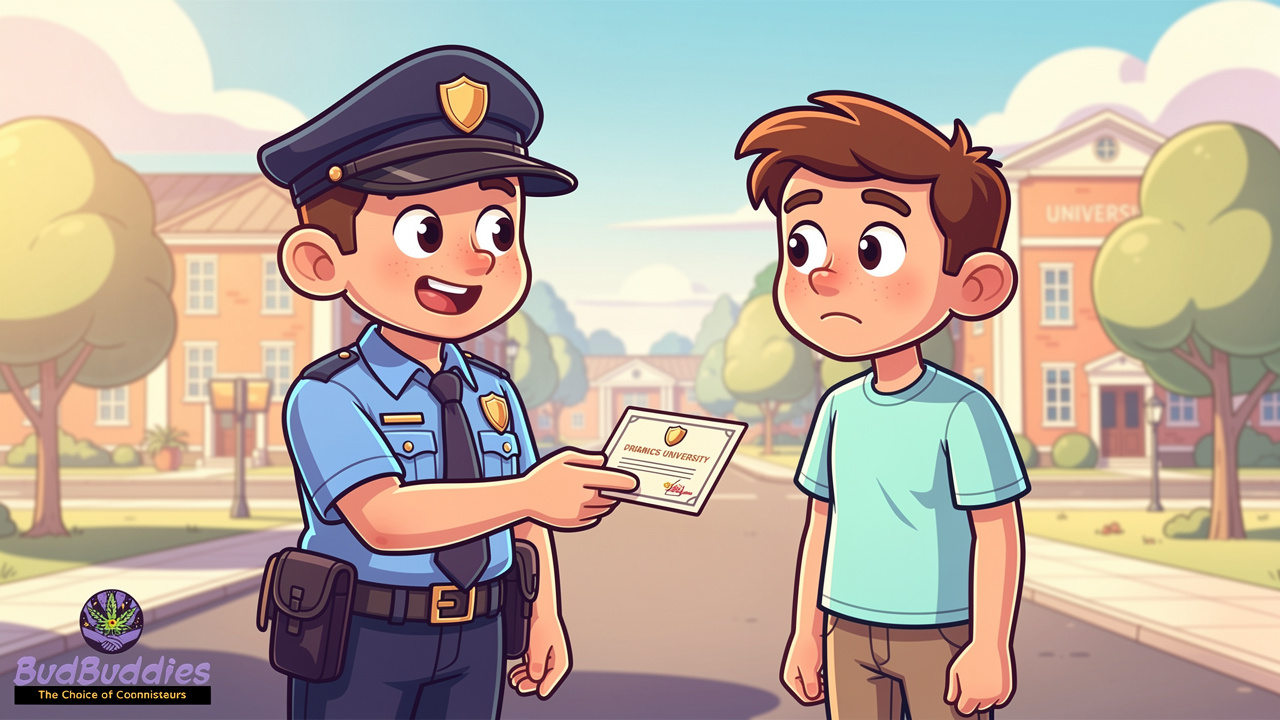
When police become involved after weed is found, there are three broad outcomes for most adults. These range from nothing recorded beyond an internal note, through a low‑level warning, up to a formal record that employers may see.
No Further Action (NFA): This can happen if nothing is found on you, or if officers decide not to take things further. The stop may be logged on their system, but it usually does not appear on standard background checks.
Informal Or Simple Warning: The officer notes that a small amount, clearly for personal use, was found and taken. This is recorded on police systems as a warning rather than a formal conviction. It rarely appears on basic checks, though it can sometimes be mentioned on deeper checks for sensitive jobs.
Formal Caution Or Charge: This usually happens where there are repeat incidents, larger amounts, or concerns about supply. A caution sits on your record in a way that more employers can see, especially those in teaching, healthcare, social care, or security.
So how does this connect back to your studies and that “university caught me with weed UK” fear spiral you might be stuck in?
If police speak to you in a public place near campus, they do not normally contact your university as a matter of routine. The incident often stays between you and them unless something serious happens.
If police are called directly to halls or a campus flat, staff will usually know the outcome because everyone is in the same room. In those cases, university and police processes run in parallel.
According to the Disclosure and Barring Service, several million DBS checks are processed for employers each year. Only the more formal police outcomes are likely to appear on those, and even then, relevance to the role matters.
For most students, a one‑off warning is terrifying on the night, then slowly fades into the background. A pattern of incidents is what turns into bigger record problems.
A Note For International Students
If you study in the UK on a visa, any contact with police about weed needs extra care. A simple warning may still cause questions if you later apply for new permission to stay or move into a route that needs very clean records.
A formal caution or charge is even more sensitive, particularly given research on risk, discretion and stigma faced by individuals with any kind of recorded contact with authorities when navigating institutional processes. It can lead to extra checks when you renew or move to work routes, especially for regulated professions. That is why “university caught me with weed UK” can feel heavier for international students than for most home students.
If this is you, speak soon to both your university’s international support team and an independent adviser who understands visas. They can:
Explain how serious your outcome is for future applications.
Help you decide what to say if a visa form asks about police contact.
Suggest what documents you should keep in case you are asked about the incident later.
Practical Steps To Take Right Now If You Have Been Caught

When the shock is fresh, it is easy to freeze or say more than you planned. The best response is calm, simple, and organised so that one “university caught me with weed UK” experience stays exactly that, a one‑off.
Start by slowing everything down. You do not have to pour out every detail to the first person who asks. Answer questions honestly but briefly, and avoid guessing when you do not know something. You can always say you need time to read the email or letter before responding fully.
“You cannot change what has already happened, but you can control what you do next.”
— Student support tip often shared in university wellbeing workshops
Next, get clear on the rules that actually apply to you. Your accommodation contract and student code of conduct explain what staff can do, what counts as a breach, and what their staged responses are. Research on building consensus for harm reduction approaches in UK universities confirms that many institutions now build in support meetings and harm reduction advice rather than jumping straight to harsh penalties.
When you feel ready, move into action:
Read every email or letter carefully from start to finish. Note dates, times, and who has invited you to any meeting. This stops you missing deadlines or turning up unprepared, which can make staff think you do not care.
Go to every meeting you are asked to attend. Turning up on time, calm and respectful, usually works in your favour. Many residential staff are trained to look for cooperation and signs that you understand the impact on others in your flat.
Think about the practical side of smell and storage. Cannabis odour sticks to fabric, carpets, and corridors, which is often how “university caught me with weed UK” stories start. Moving any remaining product out of shared spaces and airing out rooms reduces fresh complaints.
If police were involved, write down as much as you can remember while it is still clear. Names, badge numbers, where it happened, and what was taken all matter later if you choose to ask what sits on file.
What A Subject Access Request Can Tell You
A Subject Access Request (often called a SAR) is a way to ask an organisation what personal data they hold on you. In the context of cannabis, that often means asking a police force which stops, warnings, or outcomes are recorded in your name.
You send the request to the relevant force, usually through an online form or email. It does not cost money, and you can ask for notes, body‑cam records, or decision letters linked to your name and date of birth. According to the Information Commissioner’s Office, organisations normally respond within one month.
For someone who keeps thinking “university caught me with weed UK, is this going to appear later?”, a SAR can be calming. You move from guessing to having a clear print‑out of what is on record before you apply for courses, jobs, or schemes that involve background checks.
How To Reduce Your Risk Going Forward – Without Giving Up On Cannabis

Reducing your risk after a scare is about where you use cannabis, how visible you are, and how you source it. Many students who think “my university caught me with weed UK, never again” are really saying they want less drama, not that they will never touch the plant.
First, rethink location and timing. Using strong‑smelling flower in halls kitchens, stairwells, or shared balconies is almost guaranteed to draw attention. If you continue, keep it away from shared areas, and think about formats like edibles or vapes that do not leave the same heavy cloud in the air.
Second, reconsider how you buy. Street‑level pickups around campus carry obvious risks that have nothing to do with the product itself. People see faces, cars, and handovers, which is often how “university caught me with weed UK” moments begin. Moving to a trusted delivery service removes the need for those public meetings.
This is where BudBuddies comes in as a calmer option. At budbuddies.cc, every order turns up in plain, unmarked packaging with vacuum‑sealed, smell‑proof inner bags. Couriers and flatmates just see a regular parcel, and tracked delivery lets you plan around lectures rather than leaving boxes sitting around.
The range is curated rather than chaotic. BudBuddies stocks AAAA+ grade cannabis flower, carefully dosed edibles, vape cartridges, concentrates, and CBD products, backed by lab reports and Certificates of Analysis. Product pages explain strength, flavour, and expected effects in clear, straightforward language so you can pick something that matches your tolerance, not just the strongest thing on the menu.
Value still matters, especially for students:
Bundle packs and ounce specials help bring prices down.
Free next‑day delivery is available above a set spend.
There is a built‑in 10 percent discount when you pay with cryptocurrency.
Orders placed before the 3 pm cut‑off usually leave the same day, so you avoid hanging around or making repeat trips. Recent figures from the Office for National Statistics show cannabis is the most used drug among young adults in Great Britain, so you are not strange for wanting it, but you can be smarter about how you get it.
Put that together, and the choice becomes clearer. You can keep risking random street meets and smoky halls kitchens, or you can move to a quiet, curated home‑delivery model with BudBuddies that fits around student life rather than exploding inside it.
Wrapping Up

A single “university caught me with weed UK” incident feels huge in the moment, but for most students it becomes a sharp lesson, not the end of their degree. Universities tend to start with warnings and conversations, and many police outcomes stay low level if you avoid repeat trouble.
The real shift happens in what you do next. Read your emails, attend your meetings, understand what sits on your record, and then rethink how and where you use cannabis. If you choose to keep it in your life, BudBuddies at budbuddies.cc offers a more private, better organised way to do that, with premium products and discreet delivery designed for adults who want less stress and more control.
Frequently Asked Questions
Question 1 Will My University Tell My Parents If I Am Caught With Weed
Most universities do not routinely tell parents when an adult student is caught with weed. They usually treat you as an independent adult and handle matters directly with you, unless there is a serious wellbeing concern or you are under eighteen.
If you are worried about parents finding out indirectly, focus on:
Keeping on top of emails and meetings so things do not escalate.
Speaking to a student adviser about how information is shared in your case.
Question 2 Can The University Search My Room Without Permission
Accommodation contracts often give staff limited rights to enter rooms for checks or safety reasons, sometimes with notice. They are not police and cannot force a full search in the same way.
Reading your tenancy agreement is the best way to see exactly what you agreed, including:
When staff can enter your room.
Whether they must give notice.
What happens if they believe you are breaking rules.
Question 3 What Happens If I Am Caught With Weed Near Campus But Not On University Property
If you are stopped with weed on a public street near campus, the matter usually stays between you and the police. Universities are not automatically informed in most cases, so there is often no student conduct process unless staff were directly involved or the incident is serious enough to attract wider attention.
It is still worth making a note of what happened and considering a Subject Access Request later if you want to know exactly what was recorded.
Question 4 Can Being Caught With Weed Affect My Student Finance
A simple warning or No Further Action outcome normally has no impact on Student Finance payments. Standard maintenance loans are not usually linked to conduct.
More serious outcomes linked to behaviour can sometimes affect:
Certain scholarships.
Professional bursaries.
Sponsorships from employers or external bodies.
It is worth checking the detailed conditions for any extra funding you receive, and speaking to a student money adviser if you are unsure.
Question 5 Is CBD Allowed To Use In University Accommodation
CBD products that follow UK standards are widely sold on high streets and online, and they do not carry the same legal risks as high‑THC weed. Whether they are allowed in halls depends on your contract and any local rules on vaping or smoking.
Always:
Check your accommodation handbook.
Keep any packaging that shows THC content if you are challenged.
BudBuddies offers a full range of lab‑tested CBD products at budbuddies.cc, which can be a lower‑risk option for students who want some of the effects of cannabis without the same level of legal concern.

