


University Halls Smoke Alarm Fine: Student Guide
Introduction
One unexpected university halls smoke alarm fine can wipe out a month of student cash in seconds.
Sensitive detectors, crowded corridors and late‑night cooking all stack the odds against a quiet life.
A university halls smoke alarm fine is the charge your accommodation team adds when detectors sound and the cause looks avoidable, such as indoor smoking or careless cooking. This guide explains what actually sets alarms off, how much fines usually cost, what happens once the alarm rings, and how smoke‑free cannabis formats from BudBuddies remove detector risk while keeping things discreet.
So let’s break everything down clearly before that next beep turns into a bill.
“Fire alarms don’t go off ‘for no reason’ — there’s almost always something in the air that set them off.” — common reminder in university fire safety briefings
What Actually Triggers A Smoke Alarm In University Halls?
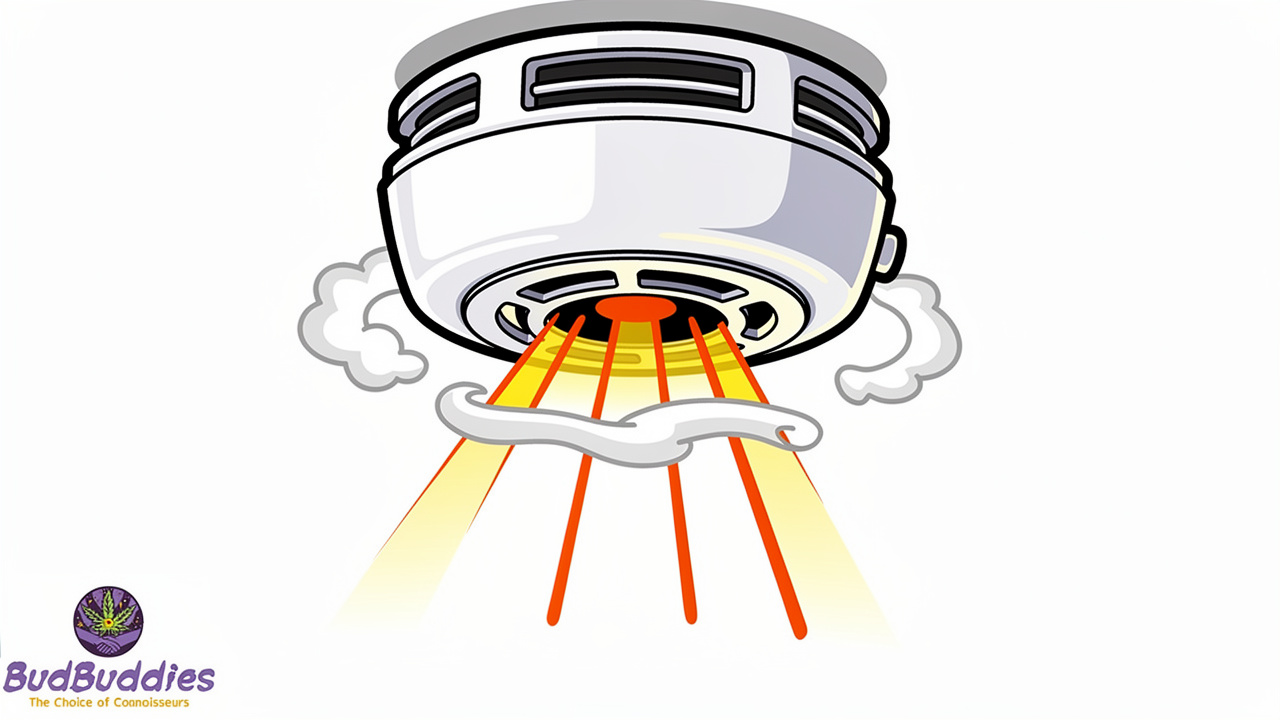
What triggers a smoke alarm in university halls is any smoke, vapour or dense aerosol that reaches its sensor, even in tiny amounts. University accommodation detectors react far faster than the alarm in a typical family home.
Most modern halls use linked optical detectors designed for busy, high‑rise living. They react to particles from smoke, vapour and steam rather than just visible flames. According to the Home Office, false fire alarms account for around forty percent of incidents that fire and rescue services attend in England. That shows how often small indoor mishaps set systems off.
Cannabis smoke creates a particular issue in this setting — research on Assessment of fire safety in student halls confirms that smoking-related behaviours are among the leading causes of alarm activations in university residences. It is dense, clings to fabrics and drifts under doors and through shared ventilation. A quick joint by the window can still send enough smoke past a ceiling sensor to start a full evacuation and a university halls smoke alarm fine. The smell then lingers in corridors long after the alarm stops.
Vape clouds are not harmless either. Optical detectors in new buildings at places like the University of Leeds or King’s College London can read vape aerosol almost as easily as cigarette smoke. Add in corridor traffic, extractor fans and open doors, and even a careful session can end with the whole block outside in their pyjamas.
Common Triggers Students Don’t Expect
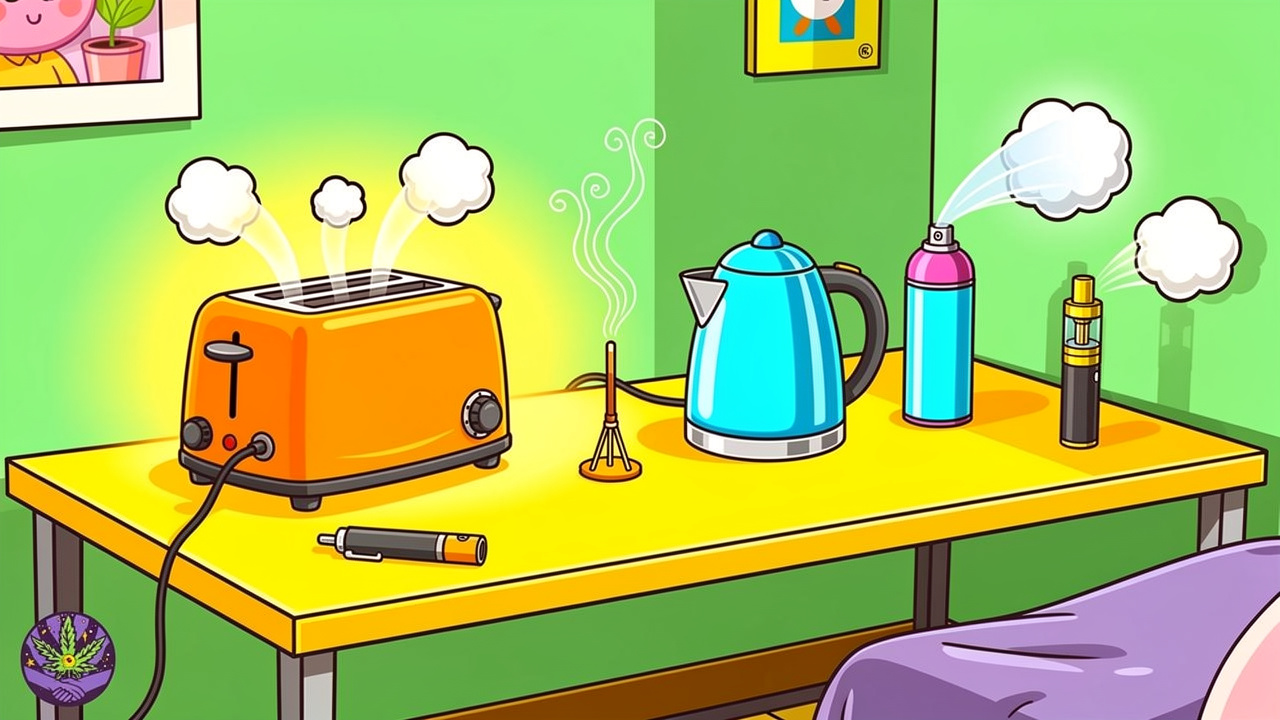
Common triggers students don’t expect in university halls include very ordinary daily habits that feel safe at home but behave differently in packed accommodation. Once you know these, it becomes much easier to avoid an avoidable bill.
Burnt toast or smoky frying easily sends a burst of particles straight into the nearest detector. A grill pan left unattended for only a minute or two can be enough. If the room is small, the sensor has nowhere else to look, and a loud alarm often follows.
Steam from hot showers or boiling kettles can drift up towards a ceiling unit and confuse it. When a bathroom door stays open and the fan stays off, thick steam can pool near detectors and mimic smoke. That short cloudy spell after a long shower is exactly when alarms often sound.
Aerosol sprays — for example deodorant, dry shampoo or hairspray — release fine particles the sensor can read. Spraying these directly beneath a detector concentrates the mist right where the unit listens. A quick tidy‑up before a night out has set off many a corridor alarm.
Vape pens and e‑cigarettes push warm aerosol into the room, which spreads then rises. In a small bedroom with a low ceiling, that haze can reach the detector in seconds. Even if smoke is not visible, the particles still sit there for the sensor to catch.
Incense sticks and candles not only give off smoke but also glow with open heat. Many halls at universities such as the University of Birmingham or University of Glasgow list them as banned items for that reason. A forgotten candle near curtains can become a serious hazard very quickly.
Cannabis smoke mixes thick particles with heavy scent that hangs around for hours. Even a short session can soak carpets and soft furnishings, which then slowly release smell into the corridor. That combination of detector activation and odour often leads straight to a university halls smoke alarm fine and follow‑up checks.
“If it makes smoke or a visible mist, keep it away from detectors.” — standard message in many student fire safety talks
How Much Is The Fine For Setting Off A Smoke Alarm In Halls?
The typical fine for setting off a smoke alarm in halls sits between fifty and five hundred pounds per incident. The exact figure depends on the university, the cause and whether it has happened before.
Across the UK, accommodation handbooks from universities such as the University of Bristol and University of Nottingham list charges that start around fifty pounds for a basic false alarm. Smoking or cannabis‑related activations often appear at the top end of the range because staff view them as clearly avoidable, a pattern consistent with findings on Yükseköğretim Öğrenci Yurtlarında Yangın (fire hazards in student dormitories), which identifies smoking behaviours as a primary risk factor driving stricter institutional penalties. According to Universities UK, more than half a million students live in purpose‑built student accommodation, so estates teams build firm systems to manage risk.
The painful part is that a university halls smoke alarm fine rarely arrives alone. There may be extra charges if the local fire and rescue service attends. Corridors sometimes share the cost if staff cannot pin down the exact room that caused the problem. Repeat incidents almost always trigger formal meetings with residence staff, and in the worst cases students have to find new accommodation mid‑year.
For context, the 2023 Save the Student money survey places average student rent at roughly five hundred pounds per month. A single higher‑band fire alarm charge can match that entire rent payment, which is why a little prevention around smoke and vapour makes such a big difference.
As one students’ union advice centre often tells freshers: “Treat fire safety fines like extra rent you’ll never want to pay.”
Fine Breakdown By Offence Type
Fine levels for smoke alarm activations in university halls tend to follow a clear pattern that many residence guides share. While figures vary, the shapes look very similar.
Standard false alarms that come from cooking or steam often attract charges between fifty and one hundred and fifty pounds. Staff may treat a first incident as careless rather than deliberate, yet they still use a noticeable sum so residents pay attention next time.
Smoking‑related activations, whether tobacco or cannabis, usually sit between two hundred and five hundred pounds. These cases appear as higher risk because they mix open combustion with strong odour and can be very unpopular with neighbours who have to evacuate.
Fire brigade callout charges can add another three hundred to five hundred pounds on top, where universities pass those costs through. Each visit takes up local crew time according to the National Fire Chiefs Council, so estates teams take them very seriously.
Deliberate detector tampering, such as covering or removing a unit, often brings fines between one hundred and fifty and five hundred pounds or more. In many residence rulebooks, that behaviour also triggers an immediate review of whether the student can stay in halls at all.
Repeat offences push the total higher each time, sometimes with fines that double or triple. Once a student gains a reputation for regular activations, later incidents are more likely to lead to loss of accommodation rather than another warning.
Shared responsibility systems exist in some blocks where staff cannot identify one source. In those cases the corridor or flat splits the fine, which creates strong social pressure not to risk another university halls smoke alarm fine for everyone.
What Happens After The Alarm Goes Off: The Process Explained
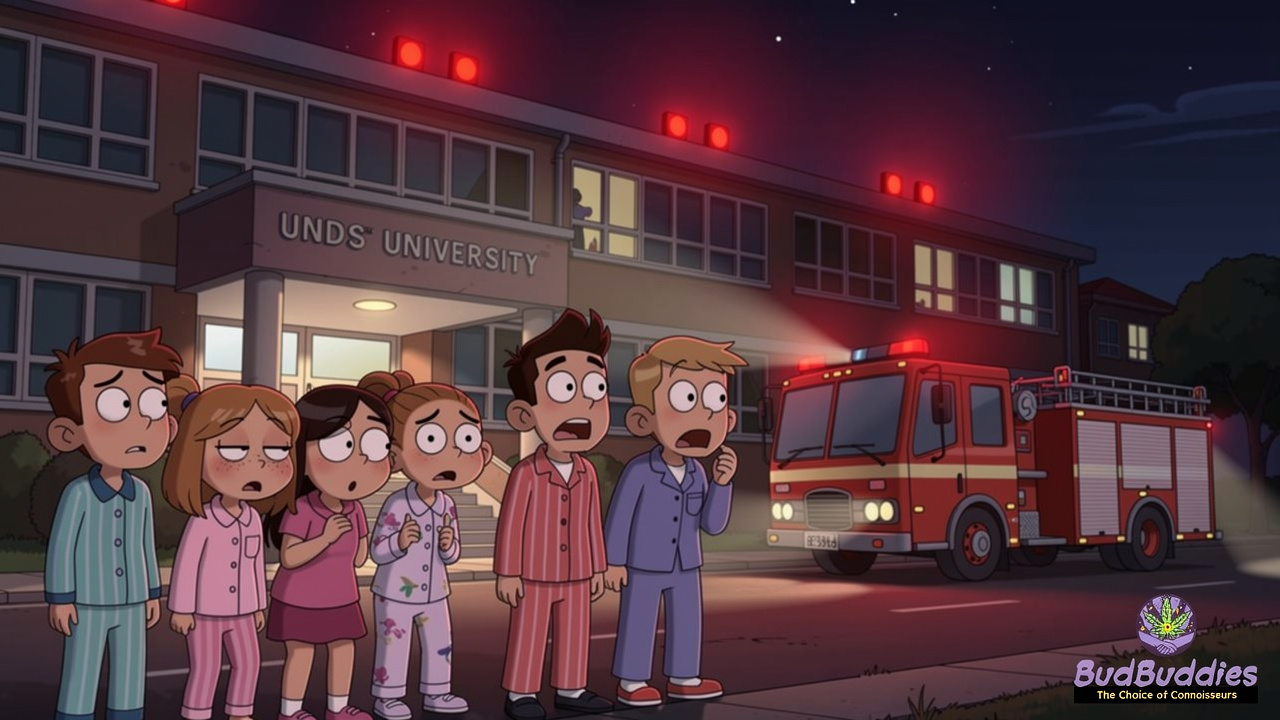
What happens after a smoke alarm goes off in university halls is a fixed chain of events that students cannot stop once it starts. The system moves from alarm to evacuation to investigation, then finally to any fine or follow‑up action.
When a detector senses particles, it signals the building control panel and sounds the alarm across the block. Many modern systems link straight to the local fire and rescue service at the same time, so crews start to prepare while residents line up outside. According to the Home Office, fire and rescue services attend hundreds of thousands of incidents each year, so they rely on clear information from these automatic systems.
For students, the first impact is social rather than financial. A 2am evacuation in winter is not popular, and word spreads quickly about which room security walked towards. One university halls smoke alarm fine can easily become the story everyone repeats for the rest of term.
After that loud first stage, the process tends to follow the same steps.
Automatic Alert
The detector sends a signal to the fire panel, which triggers alarms throughout the building. In many purpose‑built blocks, the panel also routes details to the security office or a central estates control room. No one on the corridor has any power to mute the system once that signal goes through.Full Evacuation
Residents leave their rooms and gather at the agreed assembly point outside. Even if people suspect it is another false alarm, staff still expect everyone to move. Over time, frequent false activations wear down trust in the system, which is one reason universities attach real costs to repeat incidents.Warden And Security Attendance
On‑duty staff head towards the room or zone that triggered the alarm. They usually knock, enter if needed and check for signs of smoke, vapour or flames. If they notice the smell of tobacco or cannabis, ash in a bin or a window pushed wide open with a towel by the door, they add these details to an incident report — a process that mirrors the investigative frameworks documented in research on Assessment of fire safety practices in student accommodation, where post-alarm documentation plays a key role in enforcement.Fire Service Attendance
If the call went through to the local fire and rescue service, crews arrive to check the building. They confirm that there is no active fire and may reset the alarm panel. Staff sometimes speak with them about the likely cause, especially where they suspect repeated indoor smoking.Written Notification
Within a day or two, the student normally receives an email or letter from the accommodation office. This sets out what staff believe happened, outlines any university halls smoke alarm fine attached to the incident, and may invite the student to a meeting. Some messages go to the whole flat or corridor if the cause is unclear.Appeals Process
Most universities give a short window, often ten to fourteen days, for students to challenge the charge. Appeals that show a genuine accident, such as a faulty toaster, stand a better chance than anything that links to smoking. That is why prevention, especially around cannabis use, matters far more than clever arguments after the event.
“Once the alarm is sounding, there is no ‘talking it down’ — the system has to run its course.” — common point made in residence induction talks
Smarter Choices: Cannabis Formats That Won’t Trigger Your Smoke Alarm
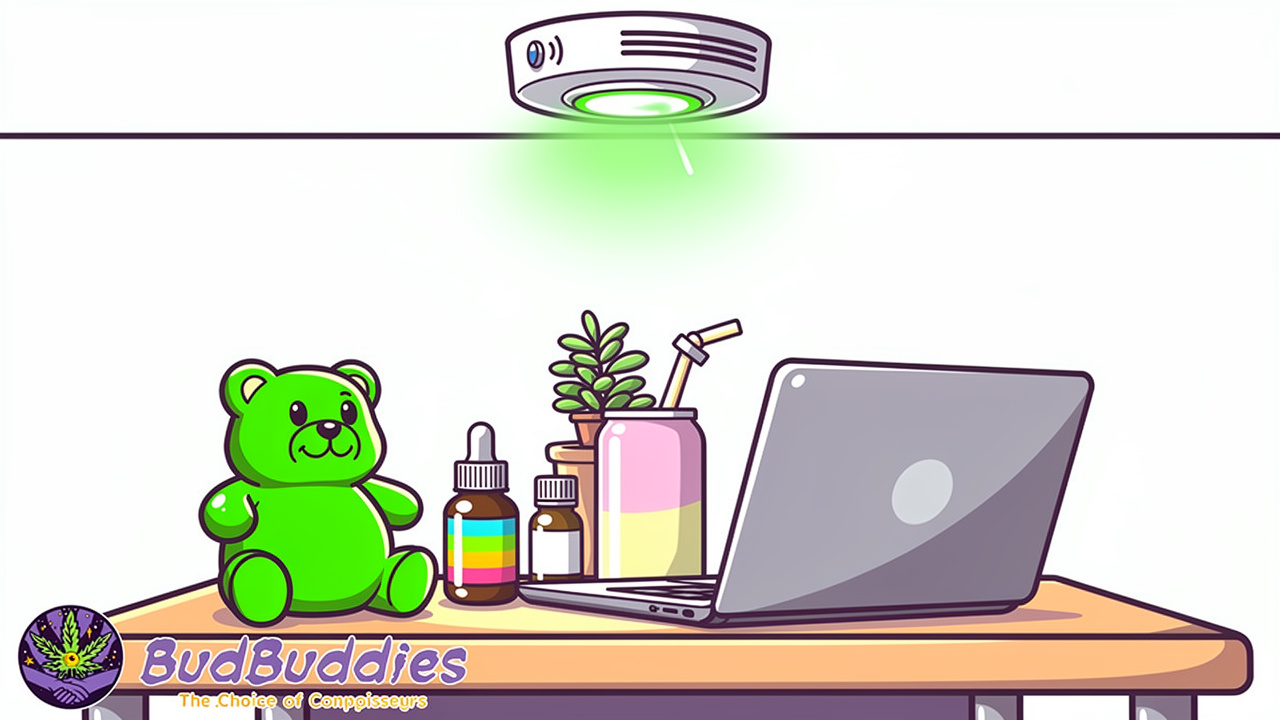
Smarter cannabis choices that will not trigger your smoke alarm focus on formats that create no smoke, no vapour and no airborne particles. Edibles, THC drinks and tinctures allow adults to enjoy cannabis effects without any detector risk at all.
The key detail is that detectors listen to the air, not the cupboard. When you swallow a gummy or sip a cannabis‑infused drink, nothing drifts up to a ceiling unit. This makes edibles and drinks a strong match for students in shared halls who want to relax without inviting a university halls smoke alarm fine or awkward corridor chats. At BudBuddies we design our range with exactly these living spaces in mind.
Edibles such as gummies, brownies or capsules take longer to work than a joint, usually between forty‑five and ninety minutes. The effects often last several hours, so a low first portion makes sense, especially for new users. Many BudBuddies products on budbuddies.cc start with clear, gentle doses and come with plain‑English guidance so readers can pick a level that fits their plans.
“Start low and go slow” is standard advice for anyone trying cannabis edibles for the first time.
Tinctures and oils sit under the tongue for a short period before swallowing, which gives a quicker onset than a baked snack. They are simple to store in a drawer, make no smell and need no equipment or lighter. For anyone who still prefers inhaled formats, THC vapes from BudBuddies offer far lower odour than flower, yet the safest plan is to use them outdoors and keep indoor rooms smoke‑free.
Because BudBuddies treats the whole experience as one smooth path, every order arrives in plain packaging with smell‑proof inner seals and tracked delivery. No logos, no bright colours and no hints appear on the outer box, so picking up a parcel from a busy halls reception desk feels like collecting any other online order.
How Common Formats Compare On Risk
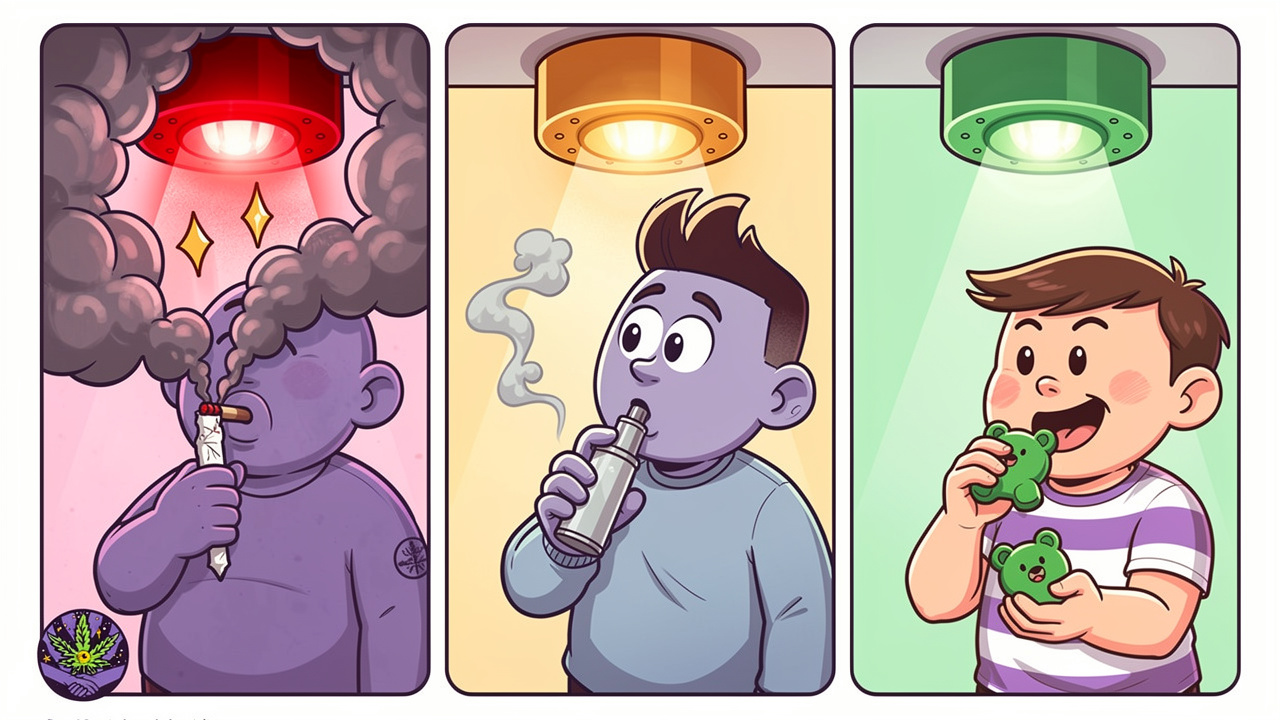
Different cannabis formats carry very different levels of smoke alarm and smell risk in university halls. A quick comparison helps students match their habits to their living space.
High‑risk methods such as joints, pipes and bongs create dense smoke and strong odour that clings to fabric. Even with a window open, the particles rise straight towards a detector in a small room. Hotboxing or sitting in a steamy bathroom with a joint multiplies that problem.
Moderate‑risk methods include vape pens and dry‑herb vaporisers that still send aerosol into the air. Vapour smells less than smoke, yet clouds in a compact bedroom can drift towards a sensor and lead to a university halls smoke alarm fine. Using these outdoors, away from buildings, keeps that risk lower.
Lowest‑risk formats are edibles like gummies, brownies and capsules, THC drinks and sublingual tinctures or oils. These sit in a cupboard, then move straight into the body with no smoke or vapour stage at all. BudBuddies edibles and THC drinks combine that minimal environmental footprint with consistent, lab‑tested dosing so adults can enjoy their evening without any alarm drama.
After that, BudBuddies backs everything up with plain, unmarked packaging and real‑time tracking, which works well for privacy‑minded students who share post rooms or communal letterboxes.
The Bottom Line
Smoke alarms in halls respond to far more than obvious flames, which means a burnt snack, a quick vape or a sneaky joint can all end in a loud evacuation. Once the system activates, wardens, security and sometimes the fire service follow a set process that often finishes with a university halls smoke alarm fine.
For students already juggling rent, food and course costs, a few hundred pounds for one incident feels heavy. The simplest fix is to keep smoke and vapour out of bedrooms and corridors. When cannabis enters the picture, that points towards edibles, THC drinks and tinctures — exactly the formats BudBuddies highlights on budbuddies.cc for discreet, hall‑friendly use.
Frequently Asked Questions
Question 1: Can A Vape Pen Set Off A Smoke Alarm In University Halls?
Yes, a vape pen can set off a smoke alarm in university halls. Modern optical detectors read tiny aerosol particles, not only thick smoke. In a small bedroom, even a modest vape cloud can reach the sensor. Many universities treat vape‑related activations in the same way as smoking incidents.
Question 2: What Should I Do If I Receive A Smoke Alarm Fine From My University?
If you receive a smoke alarm fine, read the message carefully, note the amount and check the appeals deadline. Collect any evidence that shows a genuine accident, such as faulty equipment or maintenance reports. Many students also speak with their students’ union advice team before they reply to accommodation staff.
To keep stress down, it helps to:
Respond within the stated time limit
Stay polite and factual in your explanation
Avoid repeating behaviour that might trigger another alarm
Question 3: Can I Be Evicted From Halls For Triggering A Smoke Alarm?
Yes, eviction from halls can follow repeated or serious smoke alarm incidents. Standard cooking‑related activations rarely lead to instant removal, especially for a first case. Incidents linked to smoking indoors or tampering with detectors draw far sharper responses and can fast‑track a student towards finding new accommodation.
Question 4: Do Edibles Smell When You Consume Them In Your Room?
Quality edibles such as gummies, capsules or brownies produce no noticeable smell at the moment you eat them. There is no smoke, vapour or cloud drifting into the room, and any scent from the product itself is similar to ordinary sweets. That makes BudBuddies edibles a very discreet choice for shared student spaces.
Question 5: Is Discreet Delivery Of Cannabis Products Available To Halls Addresses?
Yes, BudBuddies provides discreet delivery to halls addresses across the UK. Every order arrives in a plain, unmarked box with no cannabis branding and no hint of the contents. Inner packaging is smell‑proof and heat‑sealed, and tracked shipping lets students collect parcels from busy post rooms without drawing extra attention.

