Can Student Accommodation Enter Your Room? UK Guide
Introduction
If you are wondering can student accommodation enter your room, the honest answer is yes, in some situations. Your room feels like your home, yet staff still hold keys and sometimes need access. That mix can feel uncomfortable when you value privacy and personal space.
The good news is that access is usually limited to clear reasons like emergencies, maintenance, and agreed inspections, with notice for almost everything. This guide explains when staff can come in, what reasonable notice usually looks like, and how to protect your privacy day to day. You will also see how to keep deliveries and personal items low profile, which matters even more if you enjoy cannabis.
By the end, you will know what to expect from your accommodation and how services like BudBuddies help you keep things discreet. Let us start by clearing up exactly when student accommodation can enter your room.
When Can Student Accommodation Enter Your Room?
When you ask can student accommodation enter your room, you are really asking where the boundary sits between your privacy and their access. Staff can enter, but only for limited reasons, and most of the time you should know about it in advance. Emergencies are the main exception.
In genuine emergencies, staff usually come in without notice. That includes situations like fire alarms, strong smell of smoke, flooding from a burst pipe, or a serious welfare concern where you are not responding. According to Student Minds, around 1 in 4 students report mental health difficulties during their studies, so welfare checks are now a normal part of many residence systems.
For everything routine, the standard is advance notice, usually at least 24 hours in writing. That covers:
planned maintenance
health and safety checks
termly room inspections
These visits should happen at a reasonable time of day, not very early in the morning or late at night, and staff should knock, wait, then come in if they get no reply.
Here is the key point: day to day, staff are not meant to appear randomly in your space. If you feel staff are ignoring notice or turning up repeatedly without a clear reason, you can challenge that calmly and ask for an explanation. You might still ask yourself can student accommodation enter your room with no warning, but outside emergencies that should be rare.
What Your Accommodation Contract Actually Says
Your accommodation contract is the document that quietly sets most of the rules around room access. In university halls you often sign a licence agreement, while in private blocks and shared houses you usually sign a tenancy. Both give you a private space, but the wording around staff access can differ.
You want to look for a section that talks about access or entry. It should explain:
why staff can enter
how much notice they normally give
how often inspections happen
Guest rules are usually nearby too, which also affect how staff deal with your room.
If something feels vague before you move in, ask questions. Many student unions have housing advisers who can help you read the contract in plain language so you are not guessing what you are agreeing to.
Tip: Read your contract once when you sign it, and again a few weeks after you move in. The second read often makes more sense once you have seen how the building actually runs.
University Halls Vs Private Student Accommodation: Does It Make A Difference?
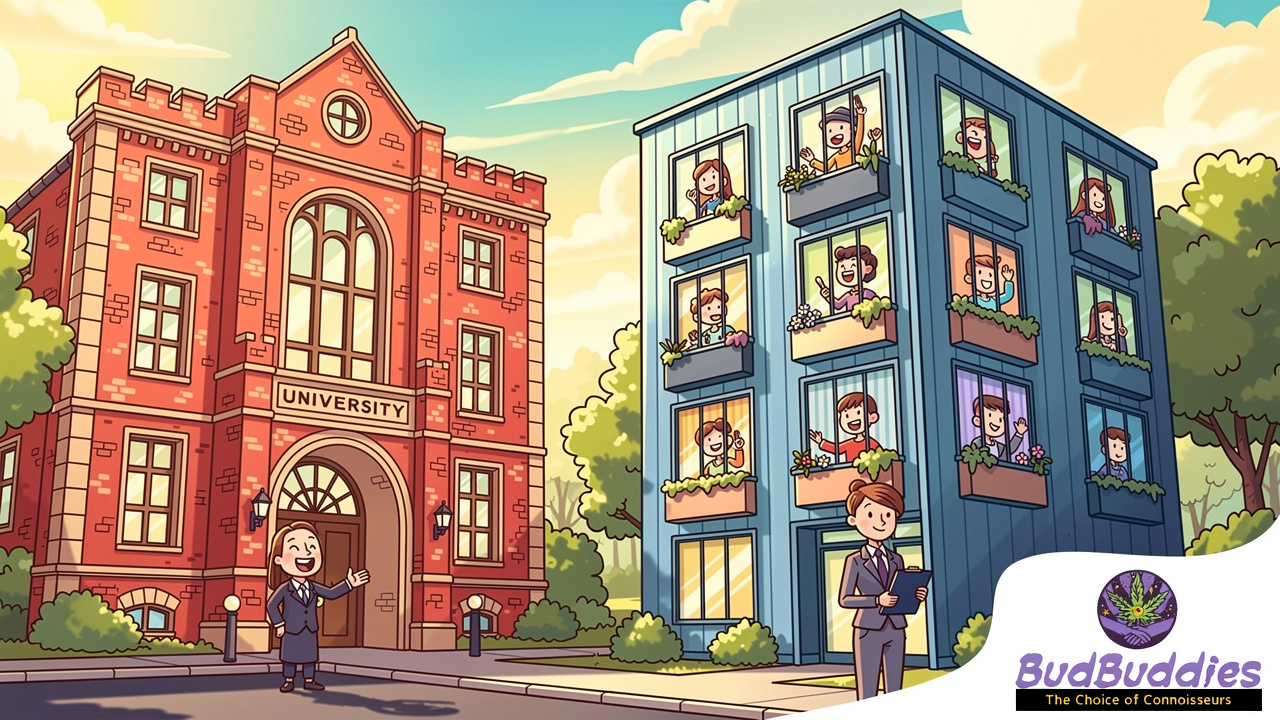
University halls and private blocks both answer the same basic question can student accommodation enter your room, but they often handle it slightly differently. The paperwork type, and how the building is run, shapes how staff behave. Understanding the difference helps you know what to expect.
In university halls, the residence team acts as both manager and support service. You might sign a licence that gives a bit more flexibility for staff to enter for welfare, fire safety and hall management. In practice, most universities publish clear policies that say when staff will come in, how they give notice, and how welfare checks work. According to UCAS, hundreds of thousands of students move into halls each year, so universities have well‑rehearsed systems.
In private student accommodation, your agreement usually looks closer to a normal tenancy. Staff still need access for repairs, inspections and emergencies, but the expectations around notice and reasonable times tend to match those used in the wider rental market. Large providers often follow national codes of practice and send detailed emails before inspections or planned works.
So, does one type mean less privacy than the other? Not really. In both settings, your room is treated as your space and most entry is planned. The main difference is that university teams lean more on welfare checks, while private blocks lean more on standard property management routines.
What Triggers A Room Inspection Or Welfare Check?
When you worry can student accommodation enter your room, you probably want to know what actually triggers a knock on the door. Staff rarely choose rooms at random. There is usually a simple reason, even if they do not always explain it in detail at the time.
Routine room inspections are often scheduled each term to check damage, cleanliness and safety equipment. You normally get an email or notice explaining the week or day they will visit, and sometimes a time window. Fire alarm testing can also lead to quick checks if staff think someone stayed in their room during an evacuation.
Unplanned visits are different. They usually happen when something has been reported or noticed. Here are common triggers students mention:
A very strong smell coming from a room that drifts into corridors or communal areas. That could be smoke, incense, food or cannabis, but smell is one of the fastest ways staff notice what happens behind doors, especially if neighbours complain.
Noise that continues after quiet hours or after someone has already knocked once. Loud music, parties or repeated shouting often push staff to check what is going on, especially if other residents keep raising it.
A welfare worry where you have not been seen for a while or stopped responding to messages. Research from Student Minds highlights that students often struggle in silence, so many universities now treat no contact as a reason to check if someone is safe rather than leave them alone.
For cannabis consumers, smell and visible items in shared spaces are usually the biggest triggers. If rolling papers, grinders or packaging sit out in the kitchen, staff or cleaners are more likely to make a note and follow up.
How To Protect Your Privacy And Keep Your Deliveries Discreet
Protecting your privacy is not only about the question can student accommodation enter your room. It also covers how you handle stuff that arrives at your block, and what lies in plain sight once you bring it in. A few simple habits make a big difference.
Start with information. Know when cleaners, maintenance staff and routine inspections are due — research into methods to optimise dormitory environments based on behaviour regulation shows that awareness of staff routines significantly reduces unexpected encounters and helps residents plan their space accordingly. Most residence teams post schedules by email or in reception. Mark those dates in your phone so you are not surprised. When you report a repair yourself, ask roughly when someone will attend, and tidy personal items off desks and beds before they arrive.
Next comes how you store and use anything you would rather keep private. That includes sex toys, valuables, and of course cannabis products. Small lockable boxes or drawers keep items away from casual view. If you enjoy flower, think about smell control, because lingering odour is what other people notice first.
Tip: Before you leave for the day, take ten seconds to scan your room. Anything you would not want a stranger to see can go into a drawer or box.
Deliveries deserve special attention. According to Ofcom, around 9 in 10 UK adults buy goods online, which means parcels left in communal post rooms are now normal. That also means more chances for other people to see, move or even open boxes.
To keep deliveries discreet:
Use tracked delivery so you know when a parcel arrives and can collect it quickly. BudBuddies orders include tracking details by email, which lets you time your trip to the post room or reception so parcels do not sit around.
Choose services that focus on plain packaging. BudBuddies sends products in plain, unmarked outer packaging with no logos or cannabis words, and uses vacuum‑sealed inner bags to hold smell in. To flatmates and staff, it just looks like any standard online order.
Think about the format you buy if you live in close quarters. Edibles from BudBuddies give you a way to enjoy THC with no consumption smell at all, and the vape cartridges leave far less lingering odour than smoking flower. That makes it easier to relax without filling the corridor with scent.
BudBuddies builds its whole experience around privacy, from careful parcel design to clear product information on budbuddies.cc, so you can focus on enjoying your evening rather than worrying about who handled your box.
What To Do If Your Room Is Entered Without Proper Notice
Sometimes you feel something is off. You come back, the door feels different, or items are not exactly where you left them. If you think staff entered without proper notice and it was not an emergency, the question can student accommodation enter your room suddenly feels very personal.
Start by checking the information you already have. Look at your contract, welcome booklet and any recent emails about inspections or repairs. You may find an explanation that you missed on a busy day. If you still think the visit did not follow the normal rules, write down what you noticed, along with date and time. Keeping a brief log helps if you raise the issue later.
The next step is to raise it calmly with your accommodation office or residence team — digital platforms designed for managing maintenance complaints in hostels, such as those documented in research like StudentConnect: A Digital Solution for managing late permissions and maintenance complaints, show that formal, traceable complaint channels are increasingly considered best practice in student housing management. An email works well, because you have a written record. Explain what you think happened, why it worried you, and ask them to clarify their side. According to the Office for Students, clear complaints processes are now a standard part of student housing, so you should not feel awkward using them.
If the situation continues or you feel brushed off, your student union advice centre can usually talk things through and help you decide what to do next.
Tip: Stick to the facts when you complain – dates, times and what you saw. It is much easier for staff (and you) to deal with a clear, factual account than with vague feelings.
Wrapping Up
So, can student accommodation enter your room? Yes, but usually only for emergencies, agreed checks, or planned maintenance with fair notice. Your contract and local policies set the details, while everyday habits around smell, noise and guests often decide how much attention your room gets.
When you care about privacy, small decisions add up. Knowing inspection times, keeping personal items out of sight, and using discreet deliveries all give you more control. BudBuddies supports that by sending tracked, unbranded parcels and offering low‑odour options like edibles and vapes at budbuddies.cc, so your downtime stays your business.
Frequently Asked Questions
Question 1: Can my university enter my room without telling me?
Universities only enter without telling you first in real emergencies where safety is at risk. For everything routine, standard practice is to give at least 24 hours’ notice in writing and visit at a reasonable time, often as part of planned maintenance or inspection schedules.
Question 2: Can accommodation staff search through my belongings?
Accommodation staff cannot rummage through your private belongings like drawers or bags during a visit. They are usually allowed to enter for agreed reasons and take note of anything clearly visible, but detailed searching is not part of their role and should not happen in normal circumstances.
Question 3: What is a welfare check and can they enter for one?
A welfare check is when staff visit to see if you are safe after concerns have been raised. If you have not been seen or answered messages for a while, they may knock and, if you do not respond, enter your room to check on you. This is normally written into residence policies.
Question 4: How do I receive a delivery discreetly in student accommodation?
The best approach is to use tracked delivery so you can collect parcels quickly yourself. BudBuddies orders arrive in plain, unmarked packaging with no logos or cannabis words, and the products sit inside smell‑tight bags, so your box looks and feels like any ordinary online purchase in the post room.
Question 5: Are edibles or vapes more discreet than flower in student accommodation?
Yes, both options are usually more discreet. Edibles from BudBuddies create no inhaled smell at all when you use them, while the vape cartridges give off much less lingering odour than smoked flower. Many students in shared or no‑smoking housing find these formats easier to enjoy without drawing unwanted attention.