Weed Smell Complaints in University Accommodation
Weed smell in uni halls can turn a relaxed night into flat‑wide tension. A weed smell complaint in university accommodation usually starts with one person noticing the scent and wondering what to do next. Whether you are the one using cannabis or the one affected by the smell, the situation can feel awkward fast.
The stress builds when the odour keeps drifting through thin walls and shared corridors. Flatmates worry about their rooms, their belongings, and their standing with accommodation staff. Nobody wants passive drama every evening.
This guide explains what a weed smell complaint in university accommodation actually is, what usually happens after a report, how to handle flatmate conversations, and how to avoid complaints altogether by choosing low‑odour formats such as vapes and edibles. BudBuddies steps in here with discreet, odour‑light options that fit shared student living.
Ready for some calm, clear answers about this whole situation? Here is how it usually works in practice.
What Is A Weed Smell Complaint In University Accommodation?
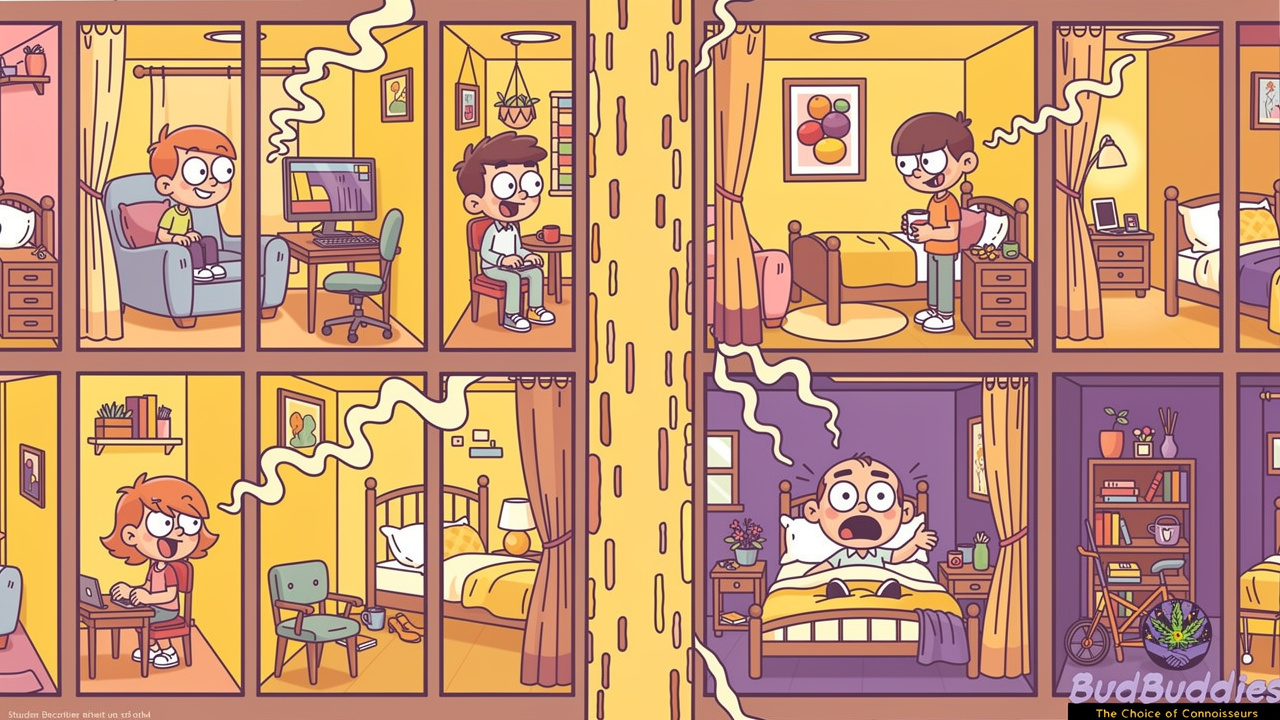
A weed smell complaint in university accommodation is a report about cannabis odour drifting through student halls. It usually comes from someone who feels the smell is invading their space and wants accommodation staff to step in. In shared halls this moves quickly from one person’s habit to a whole flat issue.
Student rooms sit close together, with light doors, shared corridors and often linked ventilation — and research on Associations between Volatile Organic compounds and indoor air sensation helps explain why even low-level cannabis odour can feel so intrusive in shared spaces. Cannabis smoke does not stay politely in one corner. It clings to bedding, carpets and clothes, then seeps under doors and into the hallway. According to UCAS, many first‑year students start out in this kind of communal housing, so small habits often affect a lot of people.
Complaints tend to come from a few places. A flatmate might email the reception team after smelling weed in their own room several evenings in a row. A resident adviser can notice the scent while doing a welfare check. Sometimes a whole corridor smells strongly when staff pass through, so they log an internal note even before anyone complains.
Shared living also makes the situation feel bigger than one person. Research from the National Union of Students highlights how noise, mess and unwanted smells are among the most common hall flashpoints. A simple choice to smoke in one room can quickly become a formal weed smell complaint in university accommodation that drags the whole flat into the conversation.
“An ounce of prevention is worth a pound of cure.” — Benjamin Franklin
Sorting small issues early is much easier than dealing with flat‑wide tension later on.
What Happens After A Weed Smell Complaint Is Raised?

Once a weed smell complaint in university accommodation is raised, staff usually follow a clear series of steps. The process is meant to protect everyone’s comfort while keeping the building running smoothly. Knowing the pattern helps you stay calm, whether you are the one reported or just share the flat.
Here is how that path usually looks.
Initial Contact From Staff. Accommodation staff or a resident adviser will often send an email or knock on doors to check what is going on. They might frame it as a general reminder about smoking rules, rather than naming anyone straight away. At this point they usually just want the smell to stop and to give you a chance to sort it yourself.
Wider Checks Around The Flat. If the smell keeps returning, staff may visit the corridor more often, especially during evenings. They look for patterns, such as the scent always being strongest outside one specific room. Discussions on The Student Room show that many students first realise a complaint exists when they see staff doing repeated walk‑throughs.
Formal Warning And Record. When staff feel sure about the source, they may log a written warning and arrange a meeting. This is where you talk through what has been happening and how it affects others. A written note on your accommodation record can also follow, which matters if there are future issues.
Possible Move Or Financial Impact. If the smell keeps appearing after clear warnings, staff may start talking about moving you to different accommodation or asking you to leave halls. At end‑of‑year inspections, they can also charge for extra cleaning if the scent still lingers in carpets or curtains. Shared flats often face collective charges here if nobody is clearly identified.
Collective responsibility is a big worry for non‑using flatmates. Providers such as Unite Students and university‑run halls often highlight in their welcome guides that if no one accepts responsibility, whole flats can receive group emails and cleaning costs. Exact steps vary between providers, so always read your own accommodation handbook or website for the specific process in your halls. That is one reason many students want to solve problems early, before things reach formal complaint stage.
How To Handle A Weed Smell Complaint As A Flatmate

Handling a weed smell complaint in university accommodation as a flatmate starts with one choice. You can either let frustration lead the way or treat it as a shared living problem that needs a calm fix. A steadier approach nearly always leads to a better outcome for everyone in the flat.
If you are the one who smokes or vapes, the first step is to listen. A flatmate raising the issue is not automatically judging you as a person. They are usually reacting to their own room smelling like weed, or to worries about staff walking past. Research from the National Union of Students notes that most students simply want a peaceful place to sleep and study.
If you are the one affected by the smell, a direct chat is often the best first move. Many students on The Student Room describe issues clearing up after one honest conversation. When you feel safe to do so, knock at a sensible time and keep the tone practical rather than moral.
“The single biggest problem in communication is the illusion that it has taken place.” — George Bernard Shaw
Spelling out how the smell affects you avoids that gap.
Useful points to cover in that chat include:
How often the smell reaches your room. Be specific about evenings, study times or nights when it stopped you sleeping. Clear, real examples feel less like an attack and more like information they can act on. Mention that you want the flat to work for everyone, not to get anyone in trouble.
The effect on your belongings and comfort. Explain if your clothes, bedding or course materials now smell of weed. Say honestly if you feel anxious about staff visits or room inspections. When you focus on impact, rather than labels, most people can see why a change would help.
Possible changes that might work. For example, they might choose to step outside, move to a friend’s flat, or switch to edibles that have no odour. If you know about low‑odour options such as BudBuddies THC vapes, you can mention them as a quieter way to keep using without filling the flat with smoke.
If the smell carries on after a fair chat, or you do not feel safe speaking directly, formal reporting becomes more reasonable. Make a brief note of dates and times when the scent has been strongest and where it spread. That kind of simple record helps accommodation staff see that the weed smell complaint in university accommodation is not a one‑off grumble but a repeating problem that needs action.
How To Avoid A Weed Smell Complaint Altogether
The easiest way to avoid a weed smell complaint in university accommodation is to stop the strong odour at its source. In practice that means changing how you consume cannabis when you live in halls. Moving away from smoking flower indoors makes the single biggest difference to what your flatmates can smell.
Smoke from joints or pipes sticks to everything — findings on Following the smell: terpene emission profiles throughout the cannabis life-cycle confirm that cannabis releases persistent aromatic compounds at multiple stages, making containment in a shared room particularly difficult. It hangs in the air, seeps under doors and lingers in soft furnishings for hours. Vaping creates far less scent and that scent fades faster, while edibles produce no smell during use at all. According to BudBuddies guidance on odour, flower smoke can hang around for several hours, whereas their THC vape scent usually disappears within fifteen to thirty minutes and edibles add no scent at all.
Ventilation tricks such as open windows, fans, covers around the door or spraying air freshener only hide a fraction of the smell. Shared corridors and linked ventilation carry the rest through the building, which is often when complaints begin. The most reliable way to protect your privacy and keep flatmates happy is to use formats designed to be discreet from the start.
Edibles fit that brief well. Gummies, chocolates and capsules from BudBuddies sit quietly in a drawer and give no hint of their contents. You take one piece, wait for the effects, and there is nothing for anyone to smell in the corridor. For many privacy‑minded students this one change almost removes the risk of complaints by itself.
Tip: If you do smoke, doing it off‑site and changing clothes when you get back reduces how much smell clings to your room and shared areas.
Why BudBuddies Is The Discreet Choice For Student Consumption
BudBuddies is set up for people who need their cannabis use to stay low‑key, which describes many students in halls. Every part of the experience is built with privacy, odour control and ease of use in mind. That makes it a natural fit if you want to avoid hassle with flatmates or accommodation staff.
Plain Packaging That Blends In. BudBuddies parcels arrive in simple brown boxes or mailer bags with no logos or cannabis words. Inside, products sit in sealed, smell‑proof bags that keep odour locked away even if you store them in a shared cupboard. Delivery staff, reception teams and flatmates just see another standard online order.
Tracked, Fast Delivery Across The UK. Orders placed before mid‑afternoon usually go out the same day, with free next‑day options above a sensible spend level. Parcels move with trusted carriers such as Royal Mail, so you can follow every step on your phone. That means you can plan to collect your order yourself, rather than leaving it with a porter or neighbour.
Payment Options That Respect Privacy And Budget. Alongside regular card payments, BudBuddies accepts cryptocurrency such as Bitcoin, Litecoin and Monero, with an extra discount for choosing that method. The site keeps your details secure and does not plaster cannabis branding over your emails or bank statements. For students watching their spends, loyalty rewards and fair pricing on multi‑packs add extra value without loud bargain talk.
When you combine low‑odour THC vapes, odourless edibles and discreet delivery, the risk of a weed smell complaint in university accommodation drops sharply. You keep your own routine while keeping shared spaces comfortable, which is exactly what most flatmates want.
What To Do If You Receive A Formal Complaint Or Disciplinary Notice

Receiving a formal weed smell complaint in university accommodation feels intense, but it does not have to spiral. The key is to respond quickly, understand what is being said, and show that you are ready to change how you consume. That calm response often matters more than the original mistake.
Start by reading every email or letter from accommodation staff from beginning to end. Look for where they describe the issue, which dates they mention and what next steps they expect from you. Guidance from the Office for Students stresses that early communication with providers usually leads to better outcomes when problems arise in halls.
Next, dig out your accommodation agreement. Find the sections about smoking, conduct in shared areas and what happens when complaints are made. Knowing the exact words you agreed to helps you prepare for any meeting or written reply, and stops the conversation turning into guesswork.
Before any formal meeting, it is worth speaking to your students’ union advice team. They sit separately from the university and support students for free. They can read the letter with you, talk through what has happened and suggest how to explain your side in a clear, steady way.
When you reply, keep your tone honest and practical. Acknowledge the smell, accept that it affected others and explain what you will do differently from now on. Being able to say you have already switched to low‑odour formats such as BudBuddies THC vapes or completely odourless edibles shows concrete change, not just promises. Accommodation staff want to feel confident that the weed smell complaint in university accommodation will not return, and real adjustments help them believe that.
The Bottom Line
Weed smell complaints in student halls usually start with something simple. One person smokes in their room, the scent drifts further than expected, and flatmates grow tired of living with that smell. Once staff step in, the whole flat can feel the impact through emails, meetings and possible extra cleaning costs.
The most effective way to avoid a weed smell complaint in university accommodation is to reduce or remove the odour altogether. That means moving away from smoky flower indoors and choosing formats that either smell very little or not at all. BudBuddies makes that easy with clearly dosed edibles and low‑odour THC vapes that fit neatly into shared accommodation life.
If you want your time in halls to stay relaxed, focus on discretion, communication and smart product choices. With a bit of thought now, you can enjoy your cannabis use quietly while keeping flatmates, and staff, on side.
Frequently Asked Questions
Question: Can my flatmates get in trouble if I smoke weed in my university room?
Answer: Flatmates can be affected by group emails, flat‑wide warnings and shared cleaning charges if nobody is identified. They are usually not personally blamed if they were not involved, but the stress of inspections and the general atmosphere still hits everyone. Sorting the smell early protects the whole flat.
Question: Does vaping cannabis smell as much as smoking it?
Answer: Vaping smells far less than smoking flower and the scent fades more quickly. BudBuddies THC vapes usually leave only a light smell that disappears within fifteen to thirty minutes. In contrast, smoke from joints can cling to fabrics and corridors for several hours, which is when complaints often start.
Question: What are edibles and why do they produce no smell?
Answer: Edibles are cannabis‑infused food products such as gummies, chocolates or capsules that you swallow. Nothing is burned, so there is no smoke in the room and no tell‑tale scent in the corridor. BudBuddies edibles are precisely dosed at around five to ten milligrams per piece and arrive sealed with zero odour.
Question: How discreet is cannabis delivery to a university address?
Answer: BudBuddies sends every order in plain, unmarked packaging that looks like any other online parcel. Products sit inside sealed, smell‑proof bags so nothing escapes while the box sits with reception or in your room. Tracked next‑day delivery helps you collect it yourself at a time that suits you.
Question: What should I do first if I receive a weed smell complaint at university?
Answer: Start by reading the message carefully and replying within any deadline they give. Then check your accommodation agreement, speak to your students’ union for advice, and think about how to change your habits. Switching to odour‑light BudBuddies THC vapes or completely scent‑free edibles shows you take the complaint seriously.