


CBD for Sleep UK: Choosing the Right Product
Sleep troubles affect millions across the UK, leaving many searching for natural alternatives to traditional sleep aids. In recent years, the use of CBD for sleep has become popular in the UK. While debates around topics like THC vs CBD for arthritis continue, CBD’s potential for supporting healthy sleep patterns has captured significant attention from both researchers and sleep-deprived individuals alike.
The connection between CBD and better sleep lies within your body’s endocannabinoid system, a complex network that helps regulate sleep-wake cycles. From CBD oils that provide steady overnight relief to fast-acting vapes for immediate bedtime relaxation, different formats offer unique advantages for various sleep needs.
Understanding how full-spectrum, broad-spectrum, and isolate CBD variants interact with your sleep receptors can help you make informed choices. The timing and dosage of your evening CBD routine play crucial roles in effectiveness, while calming terpenes add another layer of sleep-supporting benefits.
BudBuddies has established itself as a trusted provider of premium, lab-tested CBD products with discreet 48-hour delivery across the UK. Whether you’re exploring CBD gummies for sustained sleep support or seeking fast-acting solutions, having access to quality-tested products can make all the difference in your sleep improvement journey.
How CBD Interacts with Your Sleep Cycle

Your endocannabinoid system operates as your body’s internal balance keeper, maintaining homeostasis across numerous functions including your sleep-wake cycle. This sophisticated network relies on naturally occurring compounds called endocannabinoids, particularly anandamide and 2-AG, which help signal when it’s time to wind down and when to feel alert.
CBD appears to work with this system by preventing the breakdown of these beneficial endocannabinoids, potentially extending their calming effects. Rather than directly binding to CB1 and CB2 receptors like THC, CBD seems to modulate receptor activity in more subtle ways, which may explain why it doesn’t produce intoxicating effects while still supporting relaxation.
The interaction extends beyond the endocannabinoid system itself. CBD also engages with serotonin receptors, which play important roles in mood regulation and sleep quality. Additionally, it interacts with TRPV1 receptors, which are involved in pain perception and temperature regulation during sleep.
“CBD’s interaction with multiple receptor systems makes it a unique compound for sleep support. Unlike traditional sleep aids that target single pathways, CBD appears to work through several mechanisms simultaneously.” – Dr. Ethan Russo, neurologist and cannabis researcher
Many people find CBD helpful for sleep not necessarily because it acts as a direct sedative, but because it may address underlying factors that interfere with rest. By potentially reducing anxiety, easing physical discomfort, and promoting a general sense of calm, CBD might create better conditions for natural sleep to occur.
Current research on CBD’s direct impact on specific sleep stages, including REM sleep, remains limited but promising. Some studies suggest CBD might help people fall asleep faster and experience fewer sleep disruptions, though more research is needed to fully understand these mechanisms.
Choosing the Right CBD Format for Sleep: Oils, Gummies, and Vapes
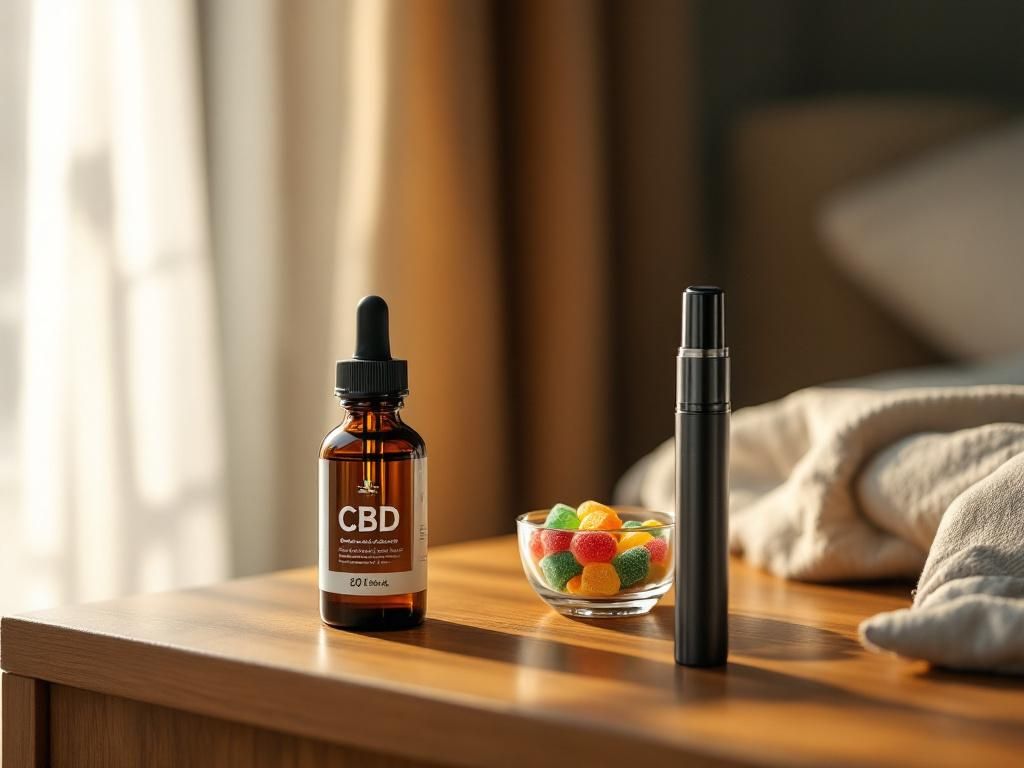
CBD oils represent one of the most versatile options for sleep support, offering sublingual absorption that typically produces effects within 15-30 minutes. When held under the tongue, CBD oil bypasses the digestive system, allowing for more predictable absorption and dosing control. This format excels for those who want to fine-tune their evening dose or prefer effects that build gradually and last throughout the night.
The main advantages of CBD oil include:
- Precise dosage control
- Fast onset (15-30 minutes)
- Predictable absorption
- Easy dose adjustment
However, some disadvantages include:
- Natural hemp taste may be unappealing
- Absorption rates vary based on food intake
For sleep purposes, CBD oil for insomnia UK applications work particularly well when taken 30-60 minutes before your intended bedtime. This timing allows the effects to develop as you’re preparing for sleep, potentially supporting both the process of falling asleep and staying asleep through the night.
CBD gummies sleep UK options offer a convenient and discreet way to incorporate cannabidiol into your bedtime routine. These pre-dosed options eliminate guesswork around serving sizes, making them particularly appealing for beginners. The oral ingestion route means slower onset of effects, typically 30-90 minutes, but the trade-off is longer-lasting relief that can support sleep throughout the night.
The convenience factor of gummies cannot be overstated. They’re easy to travel with, taste pleasant, and don’t require any preparation or measurement. However, they do have lower bioavailability due to first-pass metabolism in the liver, meaning you may need a higher dose to achieve the same effects as sublingual oils.
For sleep support, CBD gummies work best when taken 1-2 hours before bedtime, allowing time for digestion and absorption. The extended duration of effects makes them ideal for people who have trouble staying asleep rather than just falling asleep.
CBD vapes provide the fastest onset of effects, typically within minutes of inhalation. This immediate availability makes vaping particularly useful for those moments when you need quick relaxation before bed or if you wake up in the middle of the night feeling restless.
The rapid absorption through the lungs means you can gauge effects almost immediately and adjust accordingly. However, the effects typically don’t last as long as other formats, usually 2-4 hours, which may not provide coverage for a full night’s sleep.
Some people have concerns about inhaling vapours, particularly for regular use. While CBD vapes are generally considered safer than smoking, those with respiratory sensitivities might prefer other formats for nightly use.
| Format | Onset Time | Duration | Best For |
|---|---|---|---|
| Oils | 15-30 mins | 4-6 hours | Precise dosing |
| Gummies | 30-90 mins | 6-8 hours | Convenience |
| Vapes | 2-5 mins | 2-4 hours | Quick relief |
BudBuddies offers a carefully curated selection of lab-tested CBD products across all these formats, ensuring you can find options that match your preferences and sleep needs. Their commitment to quality testing means you can trust the potency and purity of whatever format you choose.
Understanding Full-Spectrum, Broad-Spectrum, and Isolate CBD for Sleep

The type of CBD extract you choose can significantly impact your sleep experience. Full-spectrum CBD contains all the naturally occurring compounds found in hemp plants, including trace amounts of THC (under 0.2% in the UK), other cannabinoids, terpenes, and flavonoids. This combination creates what researchers call the “entourage effect”, where these compounds work together synergistically.
For sleep purposes, full spectrum CBD sleep applications might offer enhanced benefits because it includes other sleep-supporting compounds. Minor cannabinoids like CBN (cannabinol) and CBG (cannabigerol) may contribute additional calming effects, while terpenes like myrcene and linalool have their own relaxation properties.
The small amount of THC in full-spectrum products won’t produce intoxicating effects but might contribute to the overall calming experience. However, people subject to drug testing should be aware that regular use of full-spectrum CBD could potentially result in detectable THC levels.
Broad-spectrum CBD offers many of the same benefits as full-spectrum but with all THC removed. This format still contains the beneficial terpenes and minor cannabinoids that contribute to the entourage effect, making it a good middle ground for those who want comprehensive benefits without any THC concerns.
For sleep support, broad-spectrum CBD can be particularly appealing because it maintains the complexity of the hemp plant while eliminating any THC-related concerns. This makes it suitable for people who want to avoid THC entirely while still benefiting from other plant compounds.
CBD isolate represents the purest form of CBD, containing 99% pure cannabidiol with all other compounds removed. While this eliminates the entourage effect, it offers the most predictable and consistent experience. Some people prefer isolate because they want to know exactly what they’re consuming and how much.
For sleep, CBD isolate might work well for people who are sensitive to other cannabinoids or terpenes, or those who want to combine CBD with other sleep aids without worrying about interactions. It’s also typically the most affordable option per milligram of CBD.
Finding Your Sweet Spot: Optimal CBD Dosage for Evening Use

Determining the right CBD dosage for sleep represents one of the most individualized aspects of using cannabidiol. Unlike many conventional sleep aids with standardized dosing, CBD dosage sleep effectiveness depends on numerous personal factors including body weight, metabolism, severity of sleep issues, and individual endocannabinoid system sensitivity.
Starting with a low dose approach proves most effective for most people. Beginning with 10-20mg of CBD about an hour before bedtime allows you to assess how your body responds without overwhelming your system. This conservative approach helps you avoid potential next-day grogginess while establishing a baseline for your individual needs.
Body weight influences CBD dosage requirements, with larger individuals typically needing higher doses to achieve the same effects. However, this relationship isn’t strictly linear, and some smaller individuals may require more CBD than expected due to faster metabolism or other factors.
The severity of your sleep issues also plays a role in dosage determination. People with mild occasional sleeplessness might find relief with smaller doses, while those dealing with chronic insomnia may require higher amounts. Additionally, if underlying conditions like anxiety or chronic pain contribute to sleep problems, addressing these issues might require different dosing strategies.
Consistency in timing and amount helps your body establish a routine around CBD use. Taking your chosen dose at the same time each evening, typically 30-90 minutes before bed depending on the format, allows your endocannabinoid system to anticipate and respond to the CBD more predictably.
Many people find their optimal dose through gradual experimentation over several weeks. After establishing a baseline dose, you can increase by 5-10mg increments every few nights until you find the amount that provides the desired sleep support without unwanted side effects.
The dosage determination process follows these steps:
- Start with 10-20mg CBD
- Take at same time each evening
- Assess effects after 3-4 nights
- Increase by 5-10mg if needed
- Continue until optimal dose found
Higher doses don’t always translate to better sleep. Some people experience what’s called a “biphasic effect” with CBD, where moderate doses promote relaxation and sleep, but higher doses might actually increase alertness or cause next-day drowsiness.
The concept of a “sweet spot” with CBD dosing refers to finding the minimum effective dose that provides the desired benefits. This approach maximizes cost-effectiveness while minimizing the risk of tolerance development or unwanted effects.
The Role of Calming Terpenes in Sleep-Supporting CBD
Terpenes represent aromatic compounds found naturally in many plants, including hemp, that contribute significantly to CBD’s sleep-supporting properties. These compounds work alongside cannabinoids to enhance the overall therapeutic effect, making them crucial considerations when choosing CBD products for sleep.
Myrcene stands out as one of the most sleep-relevant terpenes, known for its sedating and muscle-relaxing properties. Often found in high concentrations in indica-dominant hemp strains, myrcene may help promote the deep, restful sleep that leaves you feeling refreshed rather than groggy.
“Terpenes are the unsung heroes of cannabis therapeutics. Myrcene, in particular, has shown remarkable sedative properties that complement CBD’s sleep-supporting effects.” – Dr. Jeffrey Raber, cannabis chemist and founder of The Werc Shop
Linalool, also found in lavender, brings well-documented calming and anti-anxiety effects that can help quiet racing thoughts before bedtime. This terpene may also have mild sedative properties, making it particularly valuable for people whose sleep issues stem from stress or anxiety.
Terpinolene offers another sleep-supporting profile, though it’s less common in hemp products. This terpene has demonstrated sedative effects in studies and may help extend sleep duration, making it valuable for people who fall asleep easily but wake up frequently during the night.
Beta-caryophyllene interacts directly with CB2 receptors in the endocannabinoid system, potentially offering anti-inflammatory effects that could help with sleep-disrupting discomfort. This terpene also appears in black pepper and cloves, contributing to its distinctive spicy aroma.
When selecting CBD products for sleep, looking for those with terpene profiles that complement your specific needs can enhance effectiveness. Some products specifically blend terpenes to create sleep-focused formulations, while others preserve the natural terpene profiles from specific hemp strains.
The interaction between CBD and terpenes illustrates why many people find full-spectrum or broad-spectrum products more effective for sleep than isolate. This synergistic relationship, known as the entourage effect, may provide more comprehensive sleep support than CBD alone.
Timing Your Evening CBD Routine for Maximum Effectiveness

The timing of your CBD intake can significantly influence its effectiveness for sleep support. Understanding how different CBD formats work with your body’s natural rhythms helps optimize their sleep-promoting benefits.
For CBD oils taken sublingually, taking your dose 30-60 minutes before your intended bedtime typically works best. This timing allows the CBD to begin taking effect as you’re winding down from the day, potentially supporting both the mental transition to sleep and the physical relaxation needed for rest.
CBD gummies and other edibles require more advance planning due to their slower onset. Taking these products 1-2 hours before bedtime accounts for digestion and absorption time, ensuring the effects align with your sleep schedule rather than kicking in after you’ve already fallen asleep.
Vaping CBD works well for immediate pre-sleep relaxation or for middle-of-the-night wake-ups. The rapid onset means you can use it as part of your bedtime routine or keep it nearby for occasional sleep disruptions.
Creating a consistent evening routine around CBD use helps train your body to anticipate sleep. This routine might include:
- Dim lights
- Reduce screen time
- Take CBD dose at consistent time
- Create multiple sleep cues
Some people find splitting their CBD dose effective, taking a smaller amount earlier in the evening to begin the relaxation process, then taking the remainder closer to bedtime for sustained effects. This approach works particularly well with oils, where precise dosing is easier to manage.
Your natural chronotype, or whether you’re naturally a morning person or night owl, might influence optimal CBD timing. Night owls might benefit from taking CBD earlier in the evening to help shift their sleep schedule, while morning people might prefer taking it closer to their natural bedtime.
Environmental factors also play a role in timing effectiveness. Taking CBD in a cool, dark, quiet environment may enhance its sleep-supporting properties, while bright lights or stimulating activities might counteract its calming effects.
Conclusion
“The endocannabinoid system is like the body’s master regulator, and CBD appears to fine-tune this system rather than overwhelm it. This makes it particularly interesting for sleep applications.” – Dr. Michael Breus, sleep specialist and author of “The Power of When”
CBD shows considerable promise as a natural sleep aid for people across the UK seeking alternatives to traditional sleep medications. Understanding how CBD interacts with your sleep cycle through the endocannabinoid system provides the foundation for making informed decisions about incorporating it into your evening routine.
The choice between oils, gummies, and vapes depends on your specific sleep needs, lifestyle preferences, and desired onset time. Whether you need quick relief to fall asleep or sustained support to stay asleep through the night, different formats offer distinct advantages that can be matched to your individual requirements.
Finding the right dosage requires patience and experimentation, but starting low and gradually increasing while maintaining consistency gives you the best chance of discovering your optimal amount. Remember that the goal is finding the minimum effective dose that provides the sleep support you need without unwanted side effects.
BudBuddies remains committed to providing premium, lab-tested CBD products with discreet 48-hour delivery across the UK. Their carefully curated selection ensures you have access to quality-tested options whether you’re exploring CBD for the first time or seeking to optimize your existing routine.
“As we learn more about CBD’s mechanisms, it’s becoming clear that its value for sleep isn’t just about sedation—it’s about creating the right conditions for natural, restorative sleep to occur.” – Dr. Ryan Vandrey, Johns Hopkins School of Medicine
The potential of CBD for improving sleep quality continues to grow as more people discover its benefits and researchers deepen our understanding of how cannabinoids support rest. With the right approach to product selection, dosing, and timing, CBD might help you achieve the restorative sleep that supports better health and well-being.


