


Why the Best Weed Syncs with Your Endocannabinoid System
Shop the Best Weed for a Happier Endocannabinoid System
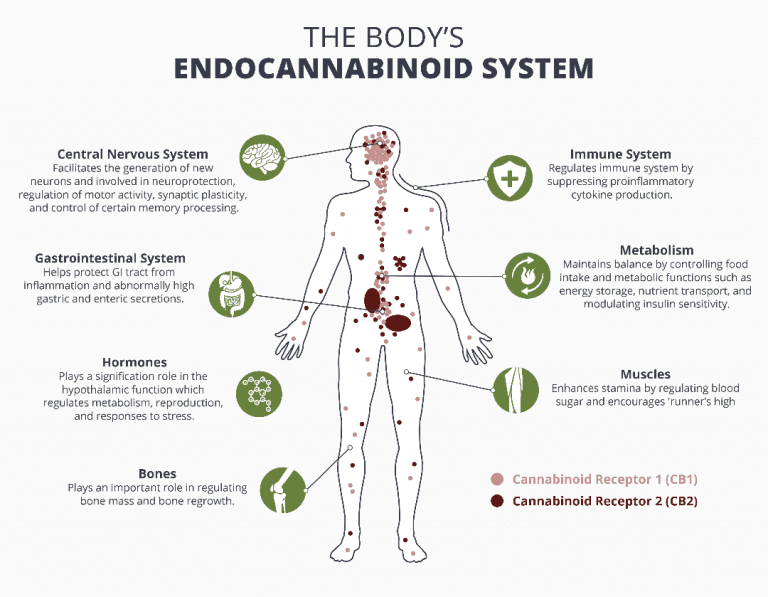
1 ECS 101 – Why Cannabis Works
The best weed often interacts with the endocannabinoid system (ECS), a cell-signaling network that predates mammals, steering mood, memory, pain, appetite, and immunity. Its two flagship receptors—CB1 and CB2—were first mapped in 1988 by Devane et al. while the inaugural endocannabinoid anandamide was isolated in 1992 by Mechoulam et al.
Evolution in One Line
Every vertebrate—and even some invertebrates—run on an ECS; only insects are hold-outs, awaiting the interaction with the best weed.
2 Deep-Dive: Anatomy of the Human ECS
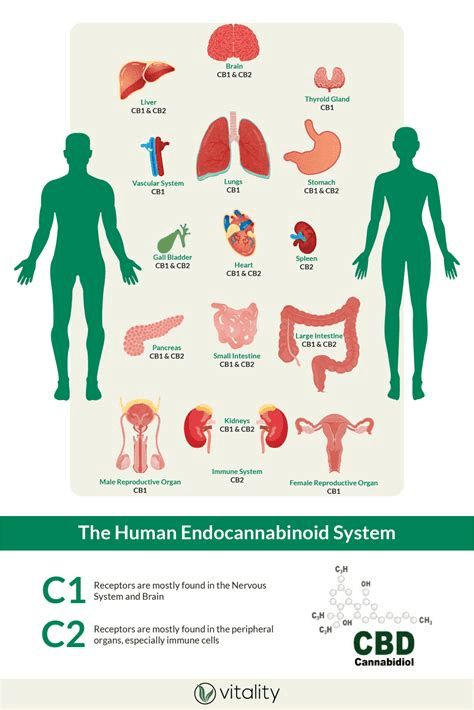
| Component | Where it lives | What it does | Best Weed angle |
|---|---|---|---|
| CB1 (GPCR) | Brain, spinal cord, gut | Modulates neurotransmitter release & neuro-plasticity | THC-rich flower → euphoria, pain relief |
| CB2 (GPCR) | Immune cells, bone, skin | Tames inflammation & bone turnover | β-Caryophyllene-heavy strains shine for gut & joint comfort |
| Endocannabinoids | Anandamide (AEA), 2-AG | Made “on-demand”, retrograde signaling | Exercise, massage and certain terpenes (limonene) boost AEA |
| Off-switch enzymes | FAAH, MAGL | Degrade AEA & 2-AG | CBD slows FAAH ➜ longer-lasting bliss |
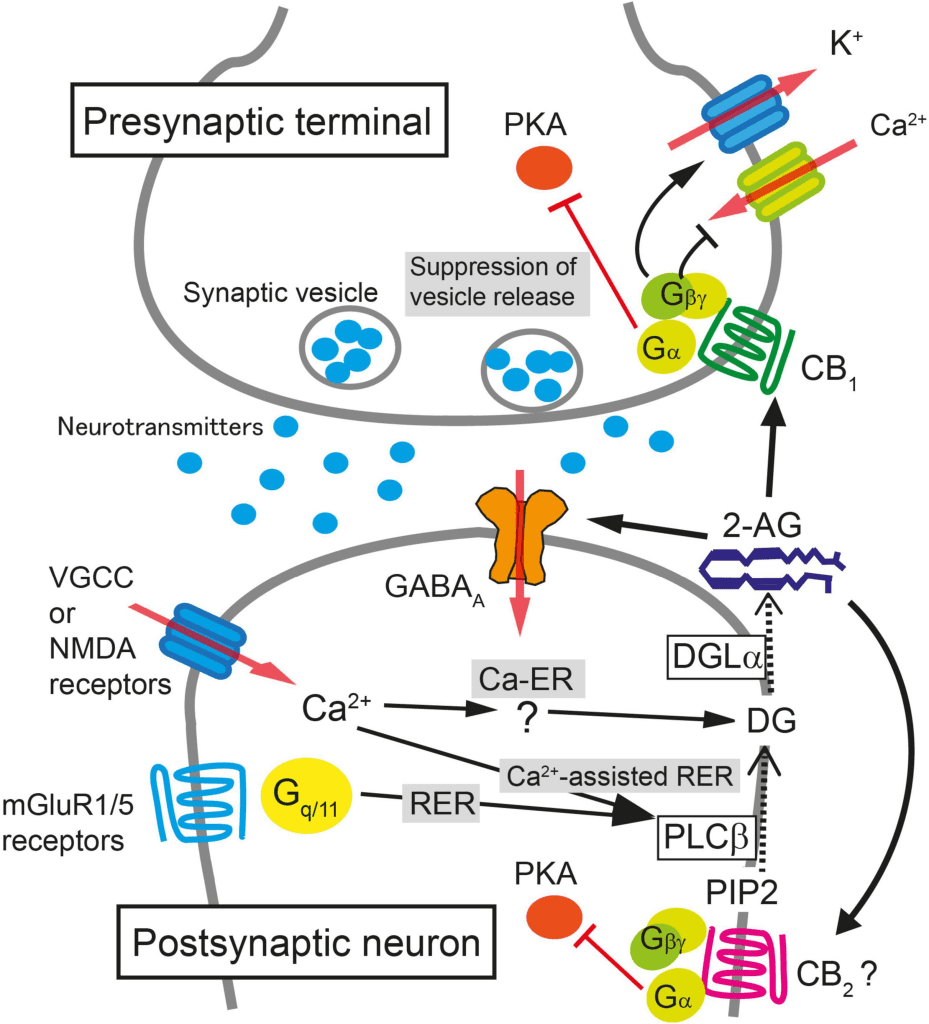
2.1 Biosynthesis & Retrograde Signalling
Endocannabinoids are synthesized postsynaptically from arachidonic-acid precursors, flow backwards across the synapse and dock on presynaptic CB1/CB2, damping further neurotransmitter release. This process is often optimized by the best weed selections.
3 What the ECS Actually Does
- Neurology & Memory: Governs long-term potentiation and extinction learning.
- Pain Gate: CB1 neurons in the dorsal horn throttle nociceptive traffic.
- Mood Balance: Low AEA correlates with clinical depression; THC micro-dosing shows fast-acting antidepressant-like effects and is part of the best weed combination.
- Sleep & Circadian Rhythm: AEA nudges REM/SWS balance, while CBD reduces sleep latency.
- Metabolism & Gut: CB1 signaling increases ghrelin (“munchies”) yet also curbs gut inflammation.
- Reproduction & Temperature: TRPV1 cross-talk controls implantation and body-heat handling.
4 Clinical Hotspots & Cannabinoid Therapy
| Syndrome | ECS Finding | Formula of the Best Weed |
|---|---|---|
| Migraine, fibromyalgia, IBS | Clinical endocannabinoid deficiency (low AEA/2-AG) | Balanced THC:CBD flower + myrcene for permeability |
| Osteoporosis | CB2 drives osteoblast activity | High-CBG cultivar with CB2-active terpenes |
| Auto-immune flares | CB2 agonism cools cytokine storms | THC-light, β-caryophyllene-rich strains |
5 The Animal ECS – Why Fido Needs a Different Blend
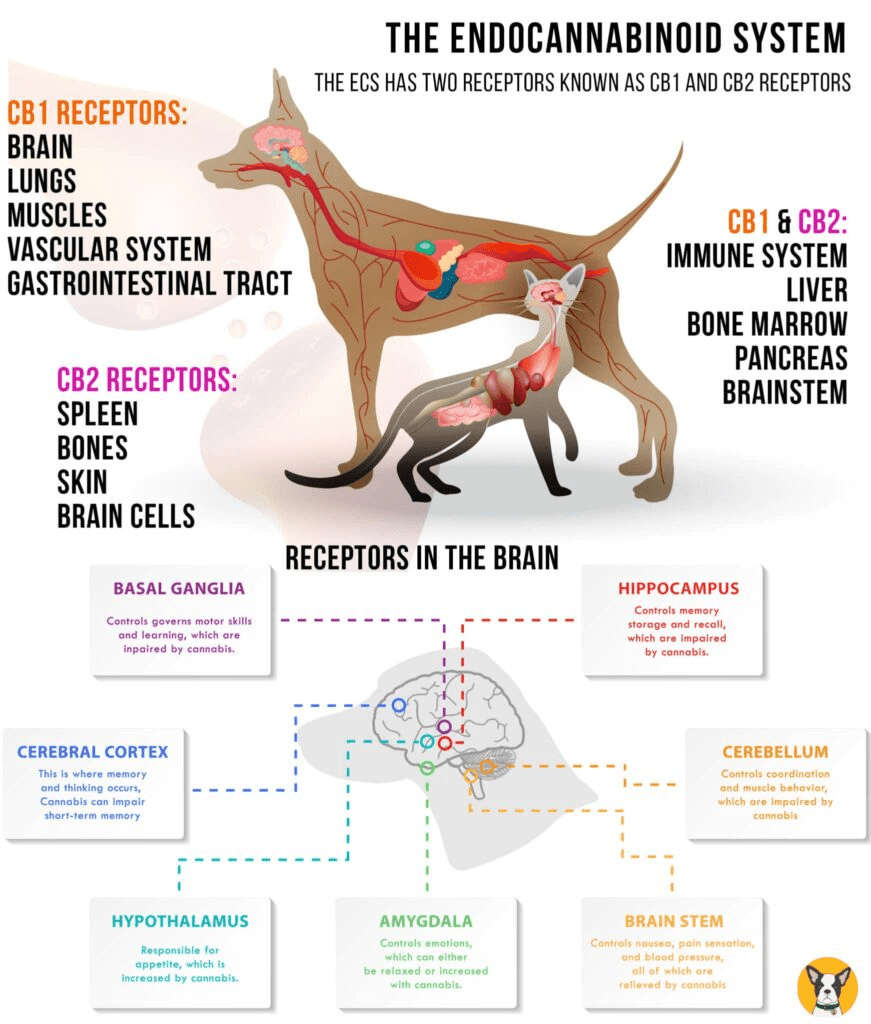
- Dogs, cats, horses, birds—even sea urchins—feature CB1/CB2, but binding profiles differ significantly, influencing the selection of the best weed for animal therapy.
- Canine CB2 shows ≈30 × lower affinity versus the human receptor Ndong et al. 2011 :contentReference.
- Practical upshot: THC that feels mellow to you can be neuro-toxic to a pup; pet products lean on CBD and minor cannabinoids instead.
6 Phytocannabinoids, Terpenes & the Quest for the Best Weed
6.1 Major Cannabinoids
- THC – potent CB1 agonist → euphoria, analgesia.
- CBD – negative allosteric CB1 modulator; smooths THC edges.
- CBG – partial CB1/CB2 agonist; neuro-protective.
6.2 Terpene Synergy
| Terpene | ECS Interaction | Strain style |
|---|---|---|
| β-Myrcene | Enhances cell-membrane permeability (“couch-lock”) | Indica, night-time |
| Limonene | May inhibit FAAH → higher AEA | Daytime sativa |
| β-Caryophyllene | Direct CB2 agonist | Anti-inflammatory |


