


Cannabis and Academic Performance: What Science Says
Introduction
The link between cannabis and academic performance is often painted as either harmless or disastrous. That kind of all-or-nothing story helps few adults who are revising for exams, retraining, or studying alongside work.
Confusing headlines, scare stories, and relaxed online chat pull in different directions, so many people are left guessing how their own grades, memory, or focus might respond.
Put simply, cannabis and academic performance covers how use relates to marks, learning, and long‑term study outcomes. Research suggests that heavy, early, or badly timed use can harm study, while moderate adult use away from work time looks different. This guide walks through what scientists have found, how cannabis acts on the brain, why timing matters, how CBD compares with THC, and where BudBuddies fits as a reference point for clear information and products.
How Cannabis Affects the Brain and Why Timing Matters
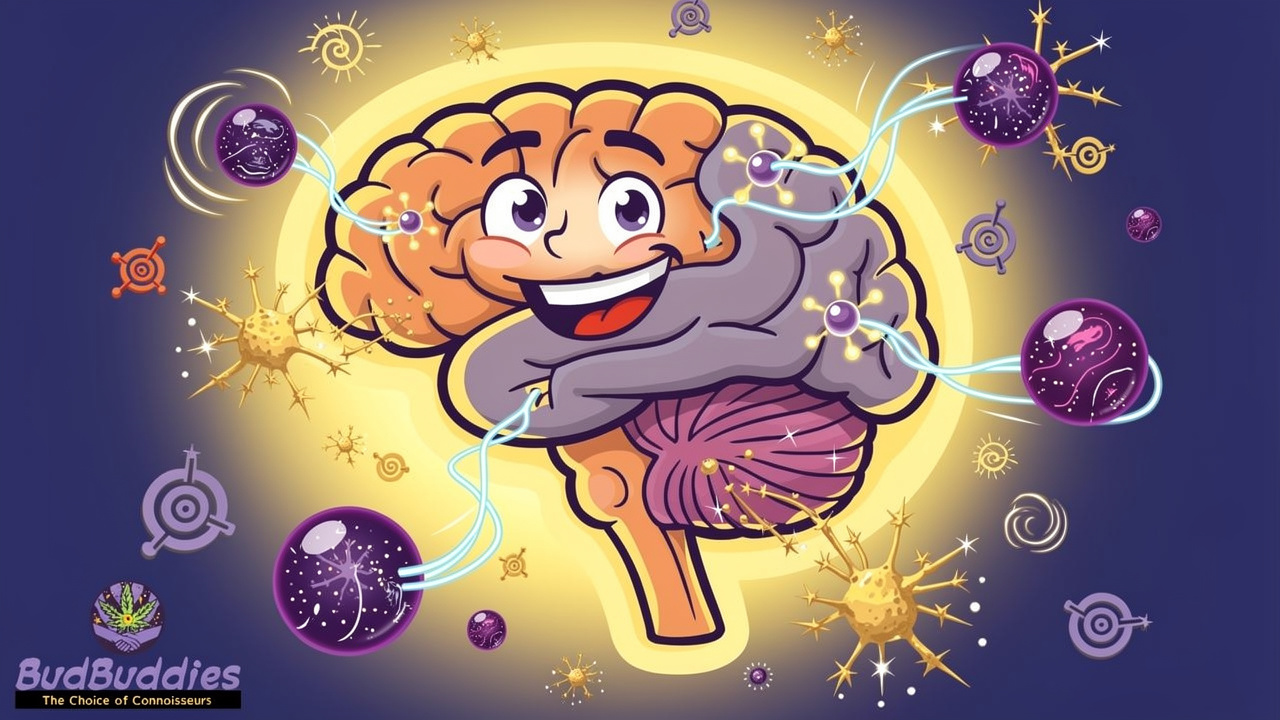
How cannabis affects the brain, and why timing matters, comes down to how THC interacts with areas involved in learning. When THC reaches CB1 receptors in the hippocampus and prefrontal cortex, it briefly changes signalling linked to memory, focus, and decision‑making.
For academic tasks, this short‑term shift is the most consistent finding in the research. Studying, revising, or writing coursework while high usually means weaker memory encoding and more errors, even if you feel relaxed at the time. A review in Neuroscience & Biobehavioral Reviews reports reliable drops in attention, working memory, and processing speed during acute THC effects, with performance returning closer to baseline once the drug has cleared.
Several mental functions matter most for study:
Working memory is the mental notepad that holds information while you use it. When THC weakens this system, it becomes harder to follow complex arguments or multi‑step instructions.
Attention and concentration keep you with a lecture or revision session. During intoxication, people are more distractible and long, demanding tasks feel tiring much sooner.
Processing speed is how fast the brain takes in and responds to information. THC can slow this down, so reading, writing, or problem‑solving may take longer than usual.
Encoding new memories means storing material for later recall. Experiments with verbal learning tasks show that people remember less of what they learn while high than during sober sessions.
For most adults, the sharpest impact sits in the hours during and just after use. Spacing sessions well away from study time is one of the clearest ways to protect performance.
The Developing Brain Vs the Adult Brain

The difference between a developing brain and an adult brain is central to research on cannabis and academic performance. Brain maturation, especially in the prefrontal cortex, continues into the mid‑twenties and supports planning, impulse control, and complex reasoning.
Studies reviewed in Lancet Psychiatry suggest that heavy, regular cannabis use starting in early adolescence is linked with changes in brain structure in regions tied to memory and attention, along with lower long‑term cognitive scores than in non‑using peers.
“Heavy, frequent cannabis use during adolescence is consistently linked with weaker educational and cognitive outcomes than non‑use.”
— Summary of findings reported in Lancet Psychiatry and Neuroscience & Biobehavioral Reviews
For adults with fully developed brains, moderate patterns look more reassuring. Reviews in Neuroscience & Biobehavioral Reviews indicate that many cognitive effects lessen or disappear after a few weeks of abstinence in typical adult users. In simple terms, for adults who use moderately, the main concern is how they perform while high, not permanent damage from every occasional session.
What the Research on Grades and Attainment Actually Shows
Research on grades, completion rates, and study effort gives the clearest real‑world link between cannabis and school or university results. A well‑known study in Lancet Psychiatry followed young people for several years and found that teenagers who used cannabis daily were about 60% less likely to finish school and far less likely to complete a degree than those who did not, even after several background factors were taken into account — a pattern consistent with High School Exiting Among autistic and broader student populations documented in national special education data.
Work from the University of Bristol using the ALSPAC cohort found that frequent cannabis use before age sixteen related to lower GCSE grades, even after allowing for family background, other substances, and earlier academic performance — findings that align with research Breaking down the gap between pupil characteristics and school absence outcomes. A meta‑analysis in Neuroscience & Biobehavioral Reviews likewise reported that young regular users performed worse on tests of memory, attention, and executive function.
Among university students, studies from several US campuses show that frequent cannabis users tend to report lower GPAs, attend fewer lectures, and face a higher risk of dropping out than occasional users or non‑users. This does not mean every user will see grades fall, but at a group level heavier use is linked with more academic difficulty.
Most of this research focuses on persistent, often daily use starting before adulthood. It does not say that an adult who uses a small amount at the weekend, well away from study, will see the same impact. That distinction matters for anyone weighing up their own habits.
Does Cannabis Cause Poor Grades or Just Correlate With Them?
Whether cannabis causes poor grades or simply correlates with them is one of the most common questions. In practice, both directions seem to play a role.
Some students who are already less motivated, more stressed, or living with mental‑health problems are more likely to use cannabis often. In those cases, existing challenges and environment can drive both lower grades and higher use.
At the same time, longitudinal studies that track pupils over years and adjust for earlier grades still find an independent effect of cannabis use, as demonstrated by A Fine-Grained Longitudinal Study of adolescent cannabis use and its relation to cognitive performance in young adulthood. Work in Drug and Alcohol Dependence reports that, even after accounting for baseline academic ability, higher cannabis use predicted weaker later performance. So the connection is best seen as a mix of pre‑existing risk factors and direct effects of the drug on motivation and cognition, a conclusion reinforced by research on Adolescent with cannabis use disorder and co-occurring mental health conditions that compound school impairment.
The Factors That Matter Most: Frequency, Potency, and Product Choice
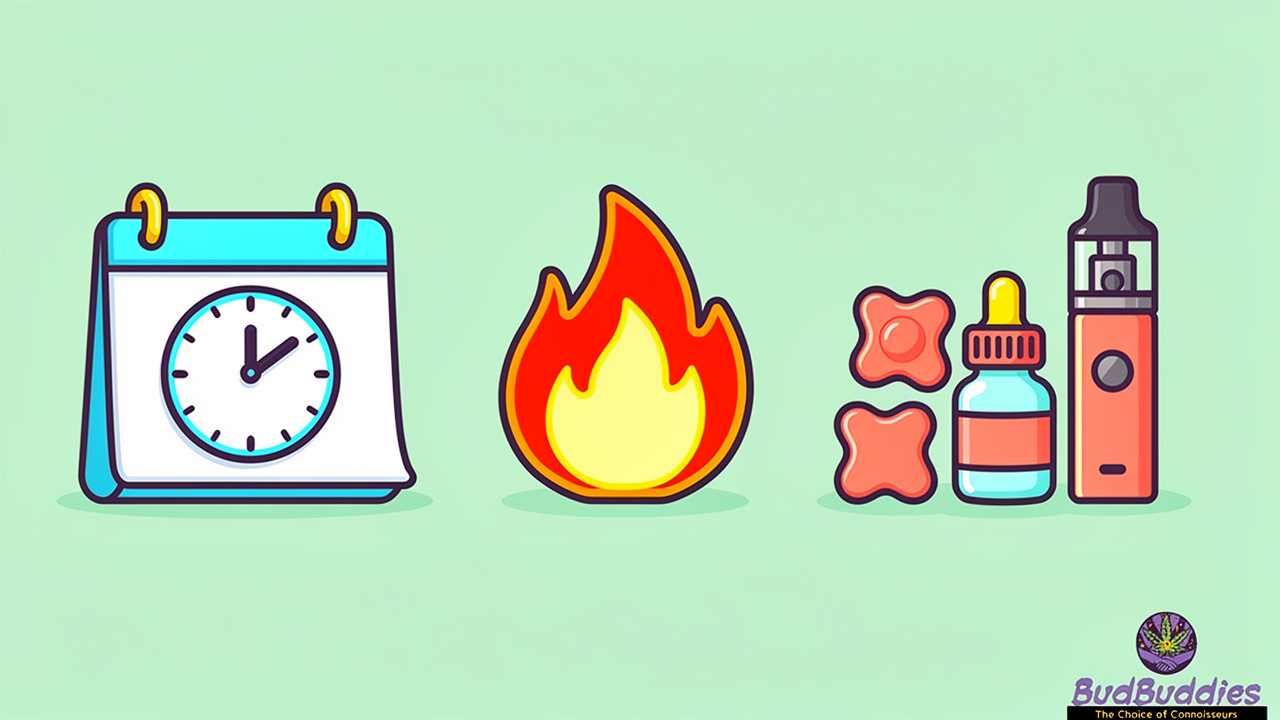
The factors that matter most for cannabis and academic performance are how often you use, how strong your products are, and when and how you consume them. These variables shape risk far more than a simple yes‑or‑no answer on use.
Frequency shows the clearest pattern. Across school and university studies, daily or near‑daily use relates to much poorer outcomes than monthly or occasional use, a finding echoed in a systematic review of Cannabis Use During Adolescence and its measured impact on academic achievement. Adults who keep cannabis for certain evenings and avoid study days sit in a very different group from heavy, regular users.
Potency has changed sharply across recent decades. Reviews in Drug and Alcohol Dependence describe average THC content in commonly used products more than doubling over about twenty years. Higher THC content generally means stronger intoxication, more noticeable short‑term memory problems, and longer‑lasting effects into the next day.
Product type also shapes the experience. Edibles come on slowly, peak later, and can last many hours, raising the chance that effects will overlap with the next morning. Vapes and flower come on faster and clear faster, but can still impair performance if used too close to study.
So in daily life, three practical levers stand out:
Frequency of use – keeping cannabis to defined times reduces overlap with work and revision.
Potency awareness – stronger THC products are more likely to leave thinking foggy into the next day.
Product format – edibles last longer; vapes and flower tend to be shorter‑acting.
CBD Vs THC: A Fundamentally Different Risk Profile

CBD and THC have very different profiles when you care about thinking clearly, and research into Frontiers | Young adult cannabis use and endocannabinoid concentrations helps explain how THC — not CBD — is the primary driver of cognitive disruption. CBD on its own does not produce a high and does not bind to CB1 receptors in the same way as THC, and current evidence suggests it is not linked with memory or attention problems. Some adults find that CBD helps them feel calmer, sleep better, or manage background anxiety, although clinical evidence reviewed by the NHS is still developing.
For adults who want to support wellbeing without the cognitive effects linked to THC, the CBD range at BudBuddies focuses on clarity. Oils, gummies, and capsules at budbuddies.cc come with clear cannabinoid percentages, detailed descriptions, and Certificates of Analysis for every batch, so you can see what is in each product before deciding how it fits around your study or work.
Making Informed Choices as an Adult Consumer
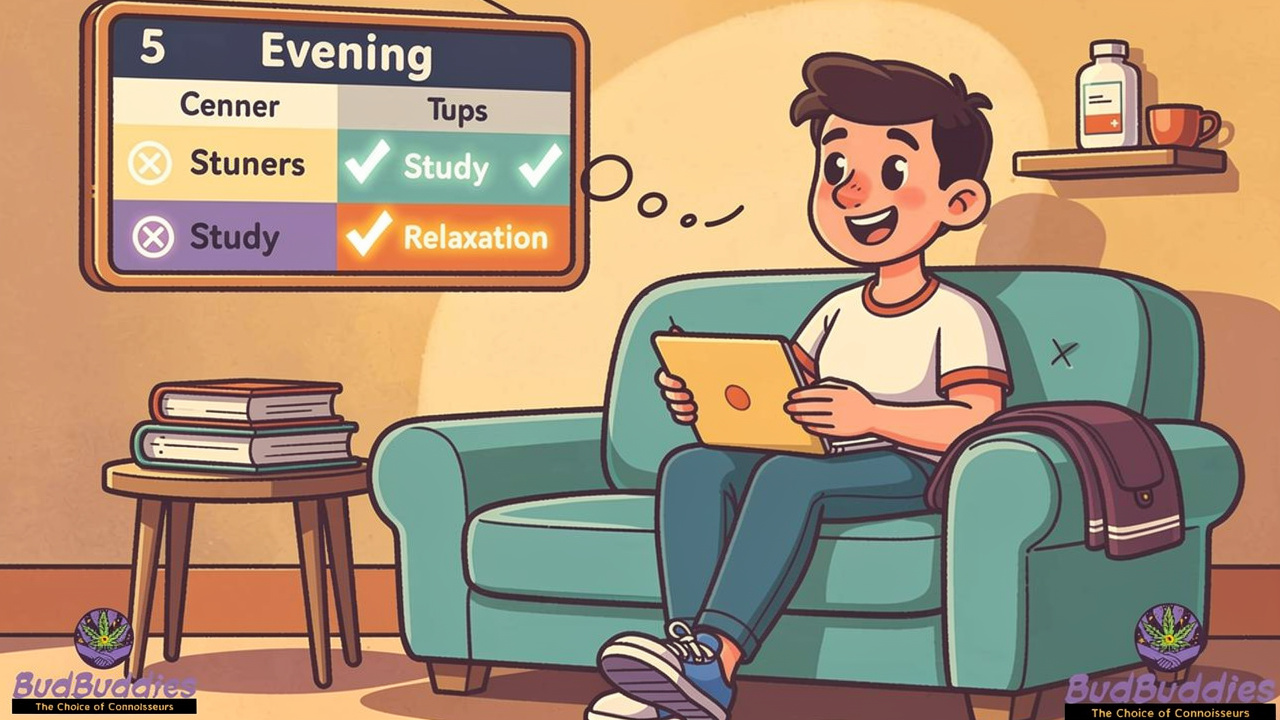
Making informed choices as an adult consumer means matching cannabis use to your real‑life responsibilities, including any study or professional learning. According to the Office for National Statistics, cannabis is the most commonly used drug among people aged sixteen to twenty‑four in Great Britain, so the question often shifts from “if” to “how” adults can use more responsibly.
“If you choose to use cannabis, keep it as far away from serious study and work as you reasonably can.”
— Practical guidance drawn from reviews in Drug and Alcohol Dependence
Some practical steps help many adults balance use with academic demands:
Plan your timing so cannabis sits after, not before, key study periods. Simple rules like “only after I finish my work for the day” help keep grades steadier.
Watch your own patterns around motivation and concentration. If lectures slip, deadlines drift, or goals feel flat as use rises, treat that as feedback and adjust.
Choose products with clear information so you know what you are taking. BudBuddies lists cannabinoid and terpene profiles, strength ranges, and COAs on each product page at budbuddies.cc, making it easier to pick lower‑THC options or focus on CBD.
Look after sleep and take breaks from THC when needed. Avoid very late or very heavy use if you wake groggy, and consider short breaks after higher‑use periods to restore focus and energy.
Privacy also matters to many adults who study or work in settings where they prefer to keep their choices quiet. BudBuddies sends orders in plain, discreet packaging with tracked delivery, which makes it easier to explore CBD products without unwanted attention.
Wrapping Up
Taken together, research on cannabis and academic performance paints a nuanced picture rather than a simple good‑or‑bad story. Heavy, frequent use starting young, or using right before study and exams, is the pattern most clearly linked with weaker grades and lower completion rates. For adults whose brains have finished developing, who use moderately, and who keep cannabis away from important academic or work periods, the risks look much lower.
Quality and transparency still matter. BudBuddies focuses on clear lab reports, strain‑specific guidance, and a calm, discreet experience at budbuddies.cc so that adult consumers can align product choices with real‑life responsibilities. Informed, honest decisions tend to support both enjoyment and achievement.
Frequently Asked Questions
Does Smoking Cannabis Affect Memory Long-Term?
Heavy, long‑term cannabis smoking that begins young can affect memory, as confirmed by a meta-analysis on Cannabis Use During Adolescence and young adulthood showing consistent negative associations with academic achievement and memory performance. Reviews such as Neuroscience & Biobehavioral Reviews suggest many effects improve after several weeks of abstinence.
Can CBD Help With Focus or Studying?
CBD does not seem to harm focus and may help by easing anxiety or improving sleep, but evidence is limited, so it is not a study aid.
How Long After Using Cannabis Should You Wait Before Studying?
Wait until you feel fully sober and mentally clear. For many, that means several hours after a modest dose and far longer after high‑potency products or strong edibles.
Is Cannabis Use Common Among UK University Students?
Yes. Surveys from the NHS and the Office for National Statistics list cannabis as the most used drug among people aged sixteen to twenty‑four in Great Britain.
What Is Amotivational Syndrome and Is It Real?
Amotivational syndrome describes regular cannabis users who seem less driven and show reduced effort. Some studies link it to heavy use, while others point to underlying traits or depression.

