


CBD After Too Much Weed: Calm Your High Fast
Introduction
Taking CBD after too much weed is a common hack, and for many people it really does help the experience settle. When a high tips from fun to uncomfortable, the mix of anxiety, racing heart, and looping thoughts can feel intense. That is where CBD steps in as a calming counterweight rather than more fuel for the fire.
The short answer is yes: CBD can help after too much weed by softening THC’s mental and physical effects. It works on the same body system but in a different way, so the overall high usually feels steadier and less panicky. In this guide, the focus is on what actually happens when you overdo THC, how CBD interacts with it, which CBD formats work fastest, other simple tricks that help in the moment, and how BudBuddies products fit in.
So if a session has gone a bit sideways before, or you simply like to be prepared, keep reading for clear, calm, step‑by‑step advice.
What Actually Happens When You’ve Had Too Much Weed?
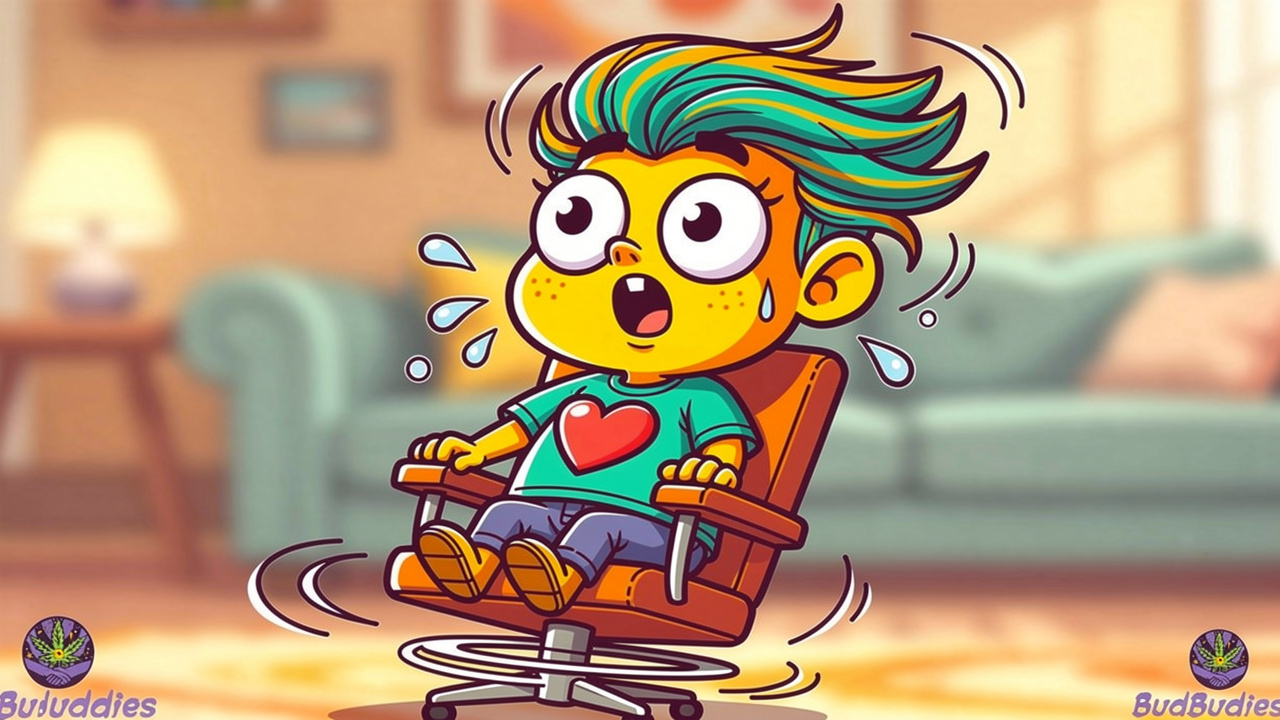
When someone has had too much weed, THC overstimulates receptors in the brain and body, and that overstimulation creates a rush of uncomfortable feelings. The experience can include physical symptoms, strong emotions, and a sense that everything is “too much” at once. Knowing what is happening takes some of the fear out of the moment.
Most people who overdo THC notice a mix of symptoms. Not everyone gets all of them, and intensity varies, but the pattern is surprisingly consistent:
Anxiety and paranoia are very common and often arrive first. Thoughts race, small worries feel huge, and the mind starts predicting worst case outcomes even when nothing dangerous is happening. That spiralling worry then feeds back into the body and makes the high feel even stronger.
A fast heartbeat is another classic sign of too much THC. The heart feels louder and quicker, which can frighten people who do not expect it. According to the National Academies of Sciences, Engineering, and Medicine, this kind of temporary increase in heart rate is a well documented cannabis effect rather than a sign of a heart problem in healthy users.
Dizziness, nausea, and “spins” often follow, especially after strong edibles. The room might feel like it tilts, or the body may feel unsteady and heavy at the same time. This can make simple tasks, like walking to another room, feel like a big effort even though nothing has changed physically.
Cognitive overwhelm is another piece of the puzzle. Simple sentences feel hard to track, the TV sounds too loud, and lights seem harsh. Some people describe this as “greening out”, where they just want everything to stop for a while so they can rest.
The key reassurance is that THC in weed does not trigger fatal overdose in the way some other substances can. A large evidence review from the National Academies of Sciences, Engineering, and Medicine looked at more than ten thousand cannabis related abstracts and found no confirmed deaths from THC toxicity. The experience feels dramatic, but the body is moving through a temporary state that will pass.
Common reassurance from harm reduction educators: “You are not dying, you are just high — and the feeling will pass.”
Keeping that sentence in mind can make a rough high feel less terrifying while you wait for it to ease.
Why CBD Can Actually Counter The Effects Of Too Much THC

CBD after too much weed helps because it interacts with the same internal system as THC but nudges it toward balance rather than extra intensity. THC binds strongly to CB1 receptors in the brain, which drives the classic high and, at higher amounts, the anxiety and confusion. CBD behaves differently and softens that signal instead of adding to it.
Researchers describe CBD as a negative allosteric modulator of the CB1 receptor, and a randomised, double-blind, cross-over trial on Does cannabidiol reduce the adverse effects of cannabis in schizophrenia supports this mechanism in a clinical setting. In simple terms, CBD changes the shape or behaviour of that receptor so THC does not activate it quite as strongly. That shift means the mental side of the high usually feels less sharp and less likely to tip into paranoia or full blown panic. For many people, CBD takes the edge off enough to ride things out in relative comfort, as explored in a phase 2a study on Cannabidiol for the treatment of cannabis use disorder, which found meaningful reductions in problematic use under controlled conditions.
As many CBD users put it, “CBD doesn’t erase the high; it just turns the volume down.”
CBD also acts on other targets linked with mood. Research summarised in the British Journal of Pharmacology by neurologist Ethan Russo points to CBD activity at serotonin receptors, which has clear relevance for anxiety. A clinical case series in The Permanente Journal followed seventy two adults given CBD for anxiety and sleep problems and reported lower anxiety scores in nearly eighty percent of participants after the first month. Those studies do not focus on cannabis panic alone, but they help explain why CBD feels so calming during a rough high.
Another useful idea from Russo’s work is the entourage effect. This describes how cannabinoids like CBD and THC, plus terpenes such as limonene and myrcene, work together rather than in isolation. Full spectrum CBD products, which keep that wider mix, may support smoother mood and body feel compared with CBD isolate alone. That is one reason many experienced consumers favour full spectrum oils or hemp flower when they want support during strong THC experiences.
For BudBuddies customers, this matters because the product pages clearly show whether a CBD oil, vape, or flower is full spectrum, broad spectrum, or isolate. That clarity makes it far easier to pick the style that suits personal sensitivity and preferred effect profile, especially if the goal is to soften THC rather than chase more intensity.
How Quickly Does CBD Work Choosing The Right Format
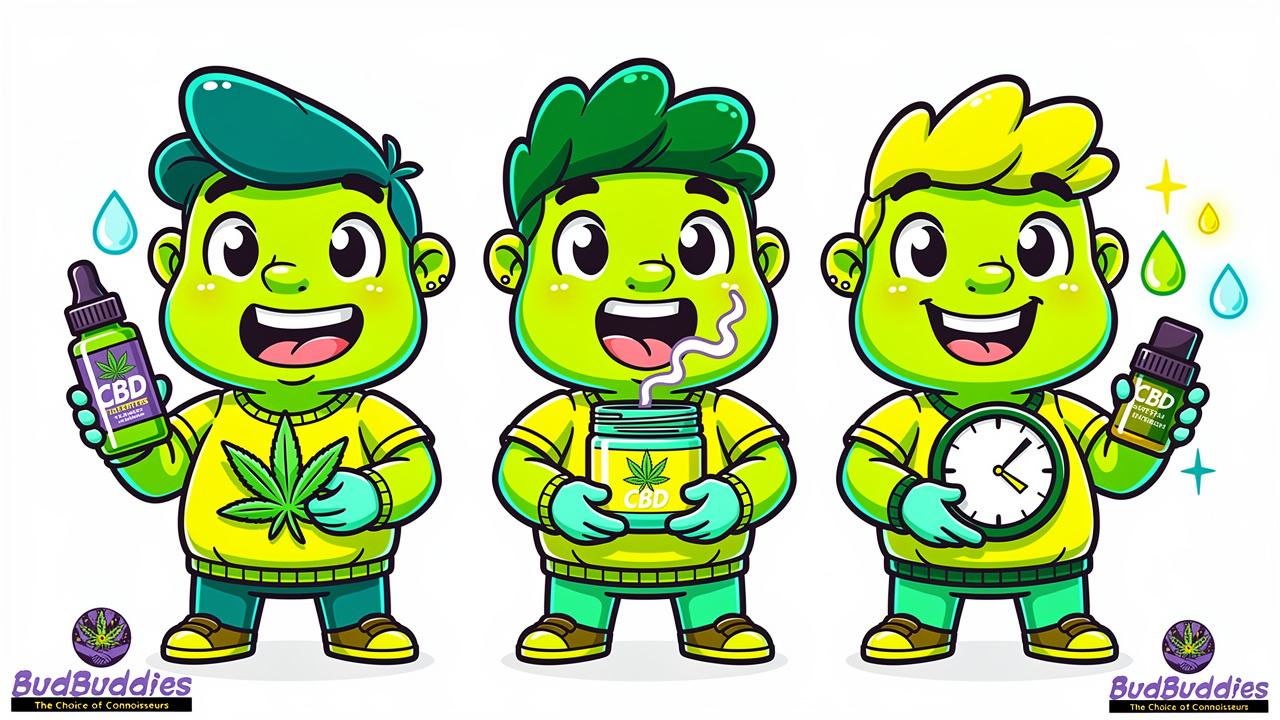
When taking CBD after too much weed, speed is everything, so format choice really matters. Products that reach the bloodstream quickly are far more helpful during a stressful peak than ones that take an hour or more.
CBD vapes and CBD hemp flower are the fastest options. Inhaled CBD reaches the bloodstream within minutes, as noted by Harvard Health Publishing, and most people feel a shift just as quickly. For someone who feels overwhelmed, that short delay can feel manageable, especially if they focus on slow breaths between puffs.
CBD oil under the tongue is the next best choice for timing. When drops sit under the tongue for around a minute, they absorb through the thin tissue there instead of waiting for full digestion. Both Harvard Health Publishing and Healthline describe this sublingual route as kicking in around fifteen to thirty minutes, which suits many people who prefer not to vape.
CBD edibles and capsules are helpful for general calm but less suited to emergencies. They must pass through the stomach and liver, so onset often falls between thirty minutes and two hours. Once they start working the effect can last longer, which is useful later in the evening, but they do very little for someone already panicking.
Tip from harm reduction educators: keep at least one fast‑acting CBD product for “just in case” moments, rather than relying only on slower edibles.
A simple plan is to keep a CBD vape or CBD oil from BudBuddies at home or in a regular kit, then rely on slower gummies or capsules for background support. BudBuddies lists clear milligram amounts and shares full Certificates of Analysis on budbuddies.cc, so there is no guesswork about what is in the bottle or cartridge when calm feels urgent.
Other Things That Can Help In The Moment

CBD after too much weed is a strong option, but it is not the only tool available. Simple kitchen items and a few grounding actions can make a surprising difference while THC levels slowly fall. These tricks work well on their own and pair nicely with CBD.
One group of helpers comes from terpenes, the aromatic compounds that give plants their scent and some of their effects. Limonene, caryophyllene, and pinene show particular promise for anxious states and all appear in common household ingredients.
Citrus fruits such as lemon and orange are rich in limonene. A small clinical study reported in BMC Complementary Medicine and Therapies followed twelve patients who inhaled citrus oil high in limonene and found reduced anxiety scores over time. At home, that might translate into sniffing fresh lemon peel, grating a little zest into water, or slowly chewing a small piece of rind. The bright scent and taste give the brain something simple and pleasant to focus on.
Whole black peppercorns offer another plant based helper. They contain beta caryophyllene, which interacts with CB2 receptors in the body, and alpha pinene, linked with alertness and memory. Research in Frontiers in Neuroscience highlights both terpenes for calming and cognitive support in animal models. Slowly chewing one or two peppercorns, or even just holding them near the nose and breathing in, can give a grounding sensory anchor and seems to take the edge off fuzzy, panicky thinking for many people.
Alongside terpenes, practical behaviour during a rough high matters just as much:
Controlled breathing sends a calming message to the nervous system. One simple pattern is to breathe in through the nose for four slow counts, hold for four, then breathe out through the mouth for four. Repeating this for a few minutes often lowers the sense of alarm, especially when paired with gentle reassurance that the feelings will pass.
Changing the environment can also help. Moving from a loud, bright room into a quieter space reduces the sensory flood that THC tends to amplify. Many people find that dim lights, a favourite blanket, or calm music at low volume make it easier to relax while they wait.
Hydration and a small snack support the body through the intense phase. Sipping water helps with dry mouth and gives a simple task to focus on. A light snack, such as fruit or toast, can steady blood sugar, which in turn can reduce shakiness and nausea. Resting in a comfortable position, ideally lying down, gives the body permission to settle.
If a trusted friend is present, asking them to sit nearby and offer calm reassurance often shortens the rough patch. Simply hearing “you are safe, this will ease soon” repeated steadily can feel like a lifeline.
How To Avoid It Happening Again Prevention And Better Choices
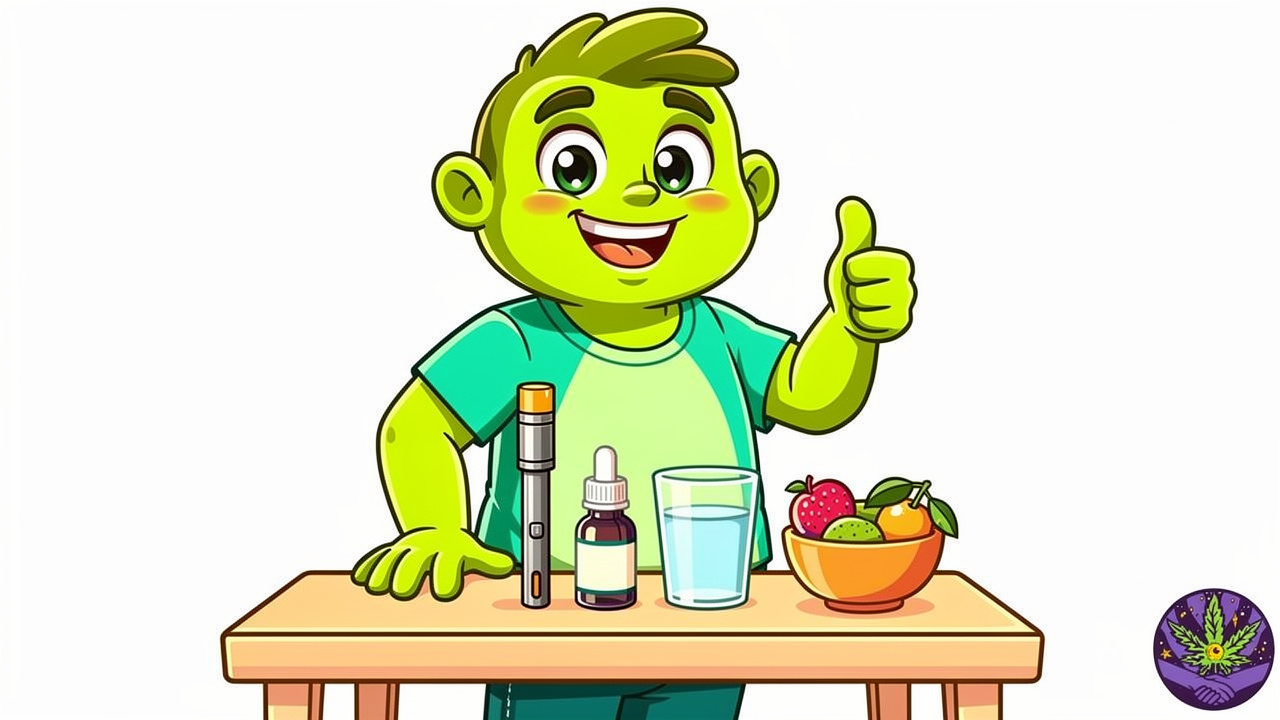
The most comfortable way to use CBD after too much weed is to avoid reaching that point in the first place. A few simple habits around dose, product choice, and preparation can dramatically reduce the chance of another overwhelming high.
A core idea many harm reduction educators repeat is start low and go slow. Edibles deserve special respect because they take longer to kick in and usually feel stronger once active. Guidance from the National Academies of Sciences, Engineering, and Medicine notes that edible cannabis effects can last four to eight hours, compared with one to three hours for inhaled forms. That long tail means redosing too soon is one of the easiest ways to overdo it.
Reminder: “Start low and go slow” applies even if you feel impatient; more THC is much easier to add than to wait out.
Balanced products also help. THC on its own can feel quite sharp, while a 1:1 CBD:THC mix usually feels smoother for most people. Medical reviews collected by the National Academies of Sciences, Engineering, and Medicine point out that preparations with meaningful CBD content tend to cause less anxiety and psychotic like symptoms in sensitive patients. So, choosing high CBD flower, balanced carts, or CBD rich gummies gives a very different mood compared with ultra strong THC only options.
Some practical habits that make a difference day to day:
Plan your dose. Before a session, decide on a maximum dose rather than guessing throughout the night. With clearly labelled BudBuddies edibles or vapes, that might mean setting a milligram limit and sticking to it, even if effects feel slow at first. Keeping a simple note on the phone with times and amounts can prevent accidental stacking.
Keep CBD close. Have a fast acting CBD product within easy reach, not buried in a drawer. A BudBuddies CBD vape or strong oil measured in clear milligram markings lets someone respond quickly if they feel the high creeping too far. Because every batch at budbuddies.cc carries a lab report, users can trust that a planned twenty or forty milligram dose really is what they are taking.
Think about setting and headspace. Tidy the room, line up water and snacks, choose calming music, and avoid sessions when already stressed or exhausted. Cannabis tends to amplify the mood someone brings into it, so planning sessions on steadier days lowers the chance of anxious spirals.
BudBuddies supports these habits with a curated range rather than an endless wall of products. High CBD strains, balanced carts, and CBD edibles sit alongside value bundles and BudPoints rewards, so regular customers can keep reliable support on hand without chasing random, unlabelled options.
Wrapping Up
CBD after too much weed is not a myth or a random trick from social media. It has a clear body mechanism, sensible science behind it, and many real world reports from people who feel calmer, clearer, and more in control after taking it. Fast formats such as CBD vapes and sublingual oils shine in those moments, while edibles help more with background steadying.
Combined with simple terpene helpers, breathing, and better planning, CBD can turn a once frightening experience into something manageable. If preparation sounds wiser than panic, explore the lab tested CBD oils, vapes, flowers, and edibles at budbuddies.cc and build a calm, reliable kit for future sessions.
Frequently Asked Questions
How Much CBD Should I Take If I’ve Had Too Much Weed?
Most people do well starting with 10–15 milligrams of CBD when they feel too high. More experienced users sometimes find 20–80 milligrams settles things during stronger episodes, taken in one or two steps. BudBuddies recommends starting at the lower end, waiting fifteen to thirty minutes, then topping up slowly if needed with clearly labelled products.
Can CBD Make A High Worse?
CBD does not make a THC high stronger and usually softens it instead, a finding supported by a randomised, double-blind, cross-over trial examining Does cannabidiol reduce the adverse effects of cannabis, which reported measurable reductions in cannabis-related symptoms. Research links CBD with reduced anxiety and a gentler mental state, not extra intoxication. People who worry about even tiny amounts of extra THC can pick BudBuddies broad spectrum or isolate CBD products, which focus on CBD and supportive compounds only.
Does CBD Work If I’ve Eaten An Edible?
Yes, CBD can still help after an edible, especially in fast formats like vapes or sublingual oil. Because edible THC lasts several hours, a quick onset CBD product gives the best chance of relief during the main peak. Many BudBuddies customers keep a vape or strong oil alongside edibles for exactly this reason.
Is CBD Legal To Use In The UK?
CBD products from reputable brands are widely available across the UK. BudBuddies focuses on clearly labelled CBD ranges and provides Certificates of Analysis on every product page, so customers can see cannabinoid content and purity in black and white. That transparency offers peace of mind when choosing items for a personal calm kit.
What’s The Fastest Acting CBD Product To Keep On Hand?
CBD vapes are generally the quickest option, with noticeable effects within a few minutes for most people. CBD oil drops held under the tongue come next, typically taking fifteen to thirty minutes. BudBuddies stocks both styles with clear strength labelling and discreet, tracked delivery, so customers can pick whichever format best fits their routine.

