


Do Smoke Alarms Detect Weed Smoke in the UK?
Introduction
The question do smoke alarms detect weed smoke creates real worry for anyone who values privacy and calm sessions. It feels even sharper in flats or shared houses where a loud smoke alarm turns one quiet evening into unwanted attention. That tension between relaxing and staying discreet is what brings many people to this topic.
The fuss comes from confusion about what alarms actually sense and whether they can tell weed smoke apart from anything else. Some people hear stories about vape detectors and assume every hallway device can spot THC. Others assume small clouds never matter, then get a screeching wake‑up call.
Here is the simple answer. Standard smoke alarms react to particles in the air, not to cannabis itself, so weed smoke can set them off when enough builds up. In this guide, you will see how different alarm types work, when weed smoke is likely to trigger them, how smoking compares with vaping, what specialist THC detectors do, and how BudBuddies products can help you stay as low‑key as you like while still respecting safety rules.
How Do Smoke Alarms Actually Work?
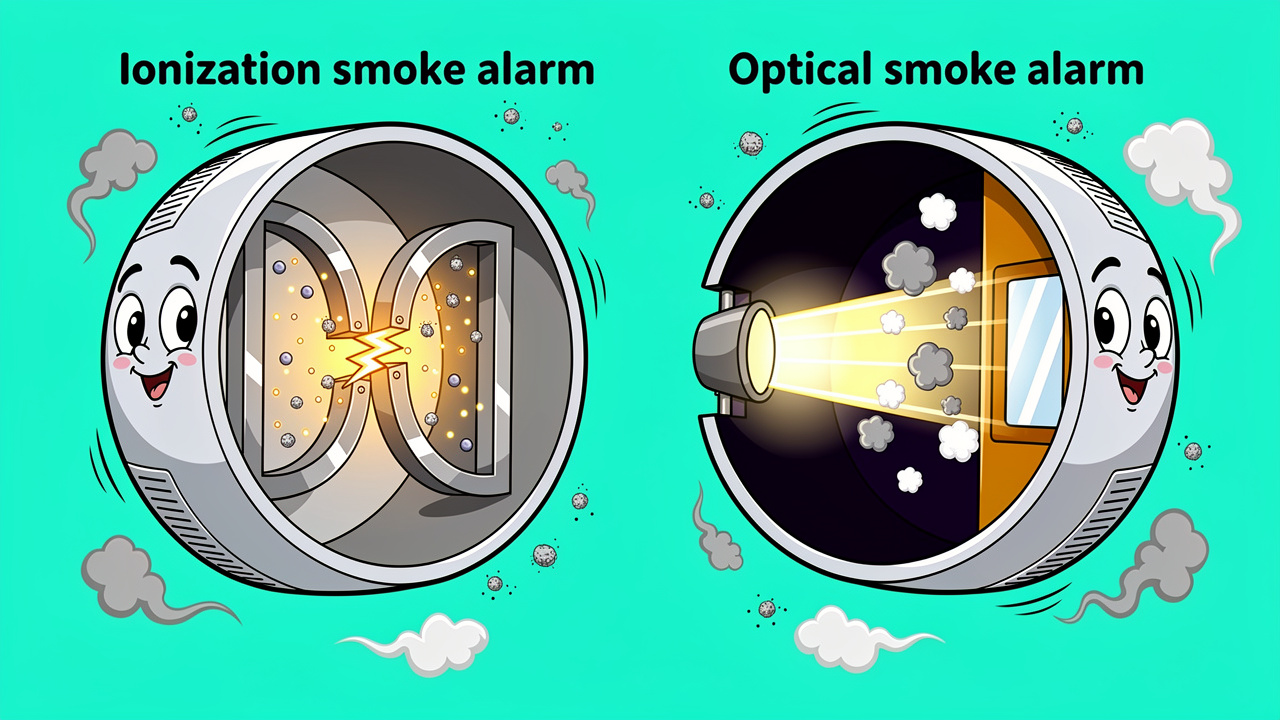
Smoke alarms work by sensing particles in the air rather than sniffing for a particular smell, and this is key for weed smoke. The devices in most UK homes react to tiny bits of matter floating past their sensors, not to THC or terpenes. Once you understand that, the rest of the picture becomes much clearer.
Most homes use either ionisation smoke alarms or optical (photoelectric) smoke alarms:
Ionisation alarms contain a small radioactive source that creates a steady electrical current between two plates. When fine particles pass through, they break that current, and the alarm sounds. These alarms respond very quickly to fast‑flaming fires that throw lots of tiny particles into the air.
Optical alarms use a small light beam and a sensor set at an angle. In clean air, the beam travels straight past the sensor without touching it. When thicker smoke enters the chamber, particles scatter the light onto the sensor and the alarm triggers. Fire services often prefer optical units for smouldering fires that create slower, denser smoke.
According to the UK Government, working smoke alarms at home greatly cut the risk of dying in a fire.
“The risk of dying in a home fire is significantly lower in properties with working smoke alarms.” — UK Government Fire Safety Guidance
Some properties also have heat detectors, usually in kitchens. These respond to a sharp rise in temperature, not to smoke at all. Weed smoke does not raise the room temperature anywhere near enough to set them off, so they play almost no part in this question.
So the bottom line on how alarms work is simple. Standard smoke alarms measure particle levels in the air and compare them with a trigger point. They never ask whether those particles come from toast, a candle, or cannabis.
Will Weed Smoke Actually Set Off a Smoke Alarm?
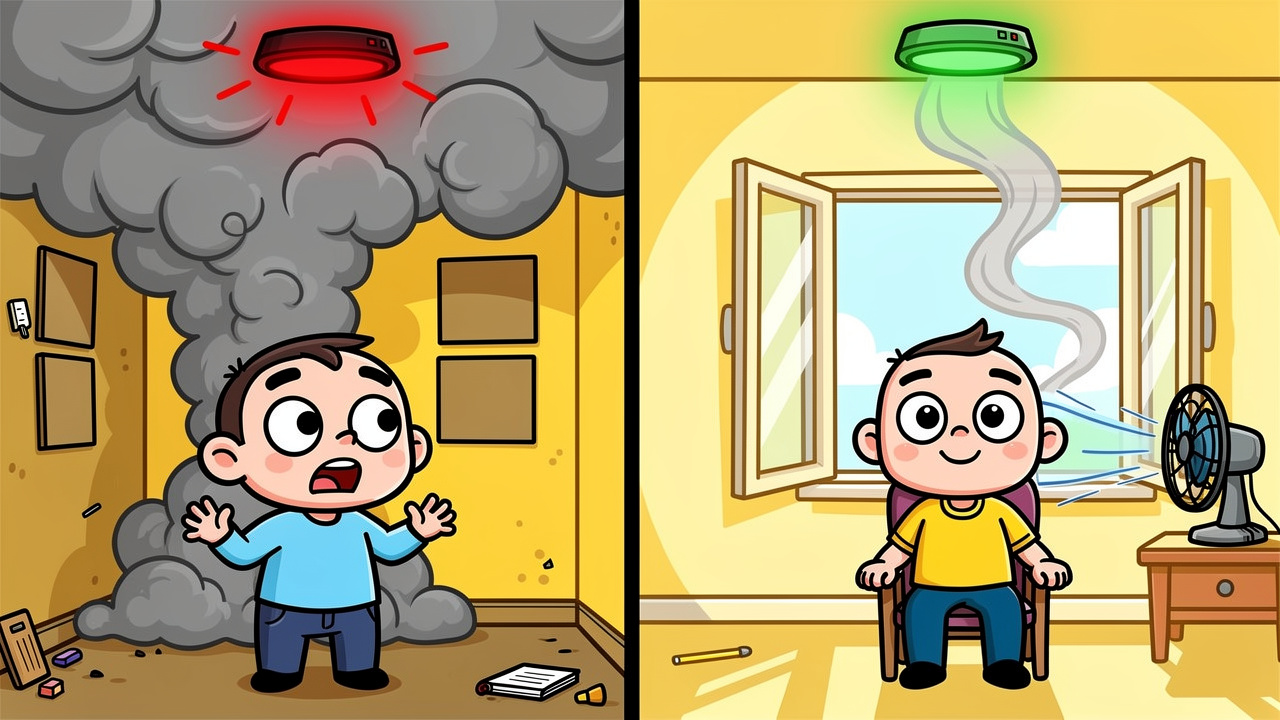
Weed smoke can set off a smoke alarm because, to the sensor, it behaves like any other smoke from burning plant matter. Combusting cannabis flower produces carbon particles, tar, and other byproducts that float through the air. The alarm does not recognise “weed”; it simply reacts when enough of those particles reach its chamber.
That means the real question is not whether the alarm cares about cannabis, but whether your smoking style fills the air with enough material. Light, occasional puffs near an open window in a big room create very different conditions from hotboxing a small bathroom. So context matters a lot.
Several main factors shape the chance of hearing that piercing beep:
Amount of smoke in the air matters more than almost anything else. One small joint smoked slowly with breaks gives particles more time to drift away. A series of big joints or blunts, especially with deep inhales and heavy exhales, builds a thicker cloud that can quickly reach an alarm’s trigger point.
Room size and ventilation change how quickly particles spread and thin out. A cramped box room with closed windows lets smoke collect around the ceiling where alarms often sit. In a larger lounge with an open window and a fan, particles disperse and leave the space faster, so they are less likely to reach the detector in high enough concentration.
Distance and airflow between you and the detector affect what the alarm “sees”. Smoking right under a hallway alarm sends fresh smoke almost straight into its chamber. Smoking in a bedroom with the door mostly shut, while air flows out through a window, gives smoke more paths to escape before it reaches the sensor.
Research from the National Fire Protection Association shows most fatal home fires happen where alarms are missing or not working, which is why alarms are set to be fairly sensitive. That sensitivity, plus the age and quality of the unit, completes the picture. Newer, high‑quality alarms may react quicker than older units that have gathered dust.
Put all of this together and you get a simple picture: weed smoke absolutely can set off a standard smoke alarm when the room fills up enough, especially with poor ventilation and heavier sessions.
Smoking Vs. Vaping: Which Is More Likely To Trigger an Alarm?

Smoking cannabis is far more likely than vaping to trigger a standard smoke alarm, because smoking creates thicker, dirtier clouds of particles. Vaporisers heat material without full combustion, so they produce lighter vapour rather than dense smoke. That difference has a big impact on what reaches the detector.
Joints and blunts sit at the top of the risk scale. They keep burning between puffs, constantly giving off sidestream smoke from the tip as well as the exhale from each draw. In a still room, that steady stream drifts upward and spreads along the ceiling. Two or three people passing joints around a small flat can easily create enough build‑up for an alarm to react.
Pipes and bongs usually sit a little lower on the risk line. When the bowl is not lit, they do not smoulder in quite the same way as a joint. Even so, each big exhale after a deep hit sends a dense cloud into the room. If you stand near a detector or sit in a poorly ventilated room, that cloud can still be more than enough to trip the sensor.
Dry herb vaporisers heat the flower to the point where cannabinoids and terpenes evaporate, but the plant material does not burn fully. The vapour they produce contains far fewer solid particles than smoke, so it tends to look thinner and fade faster. According to Public Health England, vaping nicotine is estimated to be far less harmful than smoking, mainly because it avoids combustion; the same principle applies to cannabis vapour and particle levels.
“Vaping is significantly less harmful than smoking because it doesn’t involve burning tobacco.” — Public Health England
THC vape pens that use oil cartridges usually sit at the lowest end of alarm risk. Many modern pens create a light, almost wispy aerosol that breaks apart quickly in the air. When you pair that with sensible habits, such as vaping near a slightly open window, it becomes much harder for a standard alarm to detect enough material to sound.
This is where BudBuddies comes in. BudBuddies stocks premium THC vapes that give smooth flavour and consistent strength without the heavy smoke of joints or bongs. For people who want to remove airborne particles altogether, BudBuddies edibles offer an even cleaner option with no vapour, no smoke, and no interaction with alarms.
What Are Specialist Cannabis Detectors — And Should You Be Aware Of Them?

Specialist cannabis detectors are very different from the basic smoke alarms found in most homes, and they change the picture for some buildings. Standard alarms only measure particle levels, but specialist units can look for chemical signs of THC and vaping — a capability explored in research on NIR and MIR Spectroscopy for the detection of smoking product adulteration, illustrating how sensor technology can identify specific chemical compounds in the air. Knowing that difference helps you judge when caution needs to step up.
Devices such as the HALO Smart Sensor are the classic example. These units do much more than beep when smoke appears. They contain multiple sensors that read air quality, humidity, sound levels, and specific compounds released by nicotine and cannabis vapes. According to the makers of HALO Smart Sensor, their devices now sit in thousands of schools, hotels, and other managed buildings across many countries.
These systems can also spot attempts to hide smells. If someone sprays heavy amounts of deodorant or fragrance after vaping, the sensor can notice the sudden spike in aerosols. Some models even flag tampering, such as someone covering or striking the unit. When something trips the thresholds, the sensor sends real‑time alerts to building staff instead of simply sounding in the room.
For most private UK homes, this technology is still rare. The typical flat or house will have simple ionisation or optical alarms rather than full smart sensors. Managed environments such as student halls, hotels, and some newer rented blocks are more likely to use advanced detection. That is one reason many privacy‑minded people in shared or managed spaces lean toward smokeless formats.
BudBuddies helps here by offering formats that keep alarm concerns to a minimum. THC vape pens from BudBuddies produce far less output than joints, and high‑quality edibles from budbuddies.cc sidestep air sensors completely. When you combine that with BudBuddies’ discreet, plain packaging and carefully sealed bags, both use and delivery stay quietly in the background.
How To Reduce the Risk Of Triggering a Smoke Alarm

To reduce the chance of a smoke alarm sounding while using cannabis, you need to control both what you put into the air and how the air moves. The aim is simple: keep particle levels around the detector low enough that it never reaches its trigger point. A few calm habits go a long way.
Good ventilation sits at the heart of this. Opening a window and creating a gentle cross‑breeze lets smoke or vapour leave the room faster. An extractor fan in a bathroom or kitchen helps pull particles away from living spaces and hallways where alarms often sit. According to the National Fire Chiefs Council, smoke spreads quickly through a property, which is why alarms detect it fast, so encouraging it out of the building really changes the game.
It also helps to pay attention to where the alarms actually are. Many homes place them on ceilings in hallways, near stairs, or in living rooms. Smoking in a different room with the door mostly shut reduces the direct line between your exhale and the sensor. Standing underneath the detector remains the quickest way to hear it.
For people who still prefer flower, some extra tools and tactics can calm things further:
Use a simple filter device for exhale, such as a sploof or a carbon filter tube. You exhale through the device, which traps a lot of the particles and odour inside. This does not remove everything, but it can thin the cloud dramatically, especially in smaller rooms.
Keep sessions shorter and lighter rather than marathon burns. A long evening of joint after joint builds a constant layer of smoke near the ceiling. Spacing things out, using smaller amounts, or switching between inhaled formats and edibles gives the room a chance to clear.
Choose lower‑output formats wherever possible for indoor use. Dry herb vapes and THC pens from BudBuddies release far fewer particles than bongs or blunts. Many people keep combustion for outdoor moments and use vapes indoors when they want quiet, low‑impact sessions.
Switch to smokeless formats when discretion really matters. Edibles from BudBuddies, whether gummies, baked treats, or capsules, add nothing to the air at all. They are also easy to store and dose quietly, which suits anyone sharing walls or corridors with others.
Tip: Fire services strongly advise never disabling or covering smoke alarms. If you choose to use cannabis, focus on ventilation and lower‑output methods rather than interfering with safety equipment.
For a lot of readers, the cleanest answer is to keep combustion outside and lean on vapes or edibles indoors. BudBuddies supports that approach with carefully chosen THC vapes, AAAA+ flower for when you do want to roll, and a growing edible range. Products are shipped in plain, smell‑resistant packaging from budbuddies.cc, so delivery stays low profile.
The Verdict: What UK Cannabis Consumers Actually Need To Know
For UK cannabis consumers, the key message is that standard smoke alarms detect particles, not cannabis itself. Weed smoke can trigger them when enough builds up, especially with joints or bongs in enclosed, poorly ventilated spaces. Vapes reduce that risk, and edibles remove it completely for alarms and for specialist sensors alike.
Specialist detectors used in some managed buildings take things a step further by spotting THC vapour and even masking sprays. That makes smokeless formats the easiest route for peace of mind where such systems may be present.
Always follow local laws and building rules around smoking or vaping. The aim is not only to avoid awkward alarms, but also to keep everyone in the property safe.
Conclusion
So if the thought do smoke alarms detect weed smoke keeps circling in your head, the answer is practical rather than mysterious. How you consume, how much you use, and how well the room breathes matter far more than any secret cannabis‑sniffing technology in a standard alarm. Combustion indoors carries the highest chance of trouble, vaping sits lower, and edibles sit outside the whole question.
BudBuddies exists to make those choices feel clearer. From refined THC vapes to precise edibles and premium AAAA+ flower, budbuddies.cc gives you detailed product information and discreet packaging. That way you can pick the format that fits your space, your comfort level, and the kind of session you want, without guessing in the dark.
Frequently Asked Questions
Many people share similar questions about weed smoke and alarms, especially when living with others. These quick answers round off the main points so you can check details at a glance.
Question 1: Can a smoke alarm tell the difference between weed smoke and cigarette smoke?
Answer: No, a standard smoke alarm cannot tell weed smoke from cigarette smoke or even burnt toast. It only measures how many particles are floating in the air near its sensor. If the cloud is dense enough, the alarm sounds, regardless of what is burning.
Question 2: Will vaping weed set off a smoke alarm?
Answer: Vaping weed is less likely than smoking to set off a standard alarm because it produces fewer solid particles. In most normal rooms with some ventilation, dry herb vapes and THC pens stay below the trigger point. Very dense vapour clouds in tiny, sealed spaces remain the main exception.
Question 3: Do edibles set off smoke alarms?
Answer: Edibles never set off smoke alarms, because eating cannabis creates no smoke, vapour, or airborne particles at all. Gummies, brownies, capsules, and other infused foods sit completely outside what alarms can sense, including advanced sensors that look for THC in the air.
Question 4: What type of smoke alarm is most sensitive to weed smoke?
Answer: Ionisation alarms are usually more sensitive to very small, fast‑moving particles, so they can react quickly to light, thin smoke. Optical alarms tend to respond better to thicker, smouldering smoke. Neither type knows whether the particles come from cannabis, tobacco, or something else.
Question 5: Can opening a window stop weed smoke from triggering an alarm?
Answer: Opening a window helps by letting smoke or vapour leave the room before it reaches the detector in high concentration. A fan that pushes air towards the window improves this further. It reduces, but does not completely remove, the risk if you smoke heavily or stand close to an alarm.


