


How to Make Cannabis Oil at Home Safely
Introduction
If you have been searching how to make cannabis oil at home, the amount of information can feel overwhelming fast. One guide says one thing, the next says the opposite, and plenty of recipes skip key details.
The real issue is that cannabis oil relies on the right mix of heat, timing, and ratios. Miss one part and you can end up with weak, burnt, or simply unpleasant oil that wastes good flower.
This guide walks through how to make cannabis oil safely and simply, using a gentle oil infusion method you can manage in a normal kitchen. You will see what you need, how the steps fit together, how to dose and store the finished oil, and where ready-made oils from BudBuddies can save time and guesswork. Check local laws before working with THC-rich material, then read on and the whole process should feel much clearer.
What You Need Before You Start Making Cannabis Oil
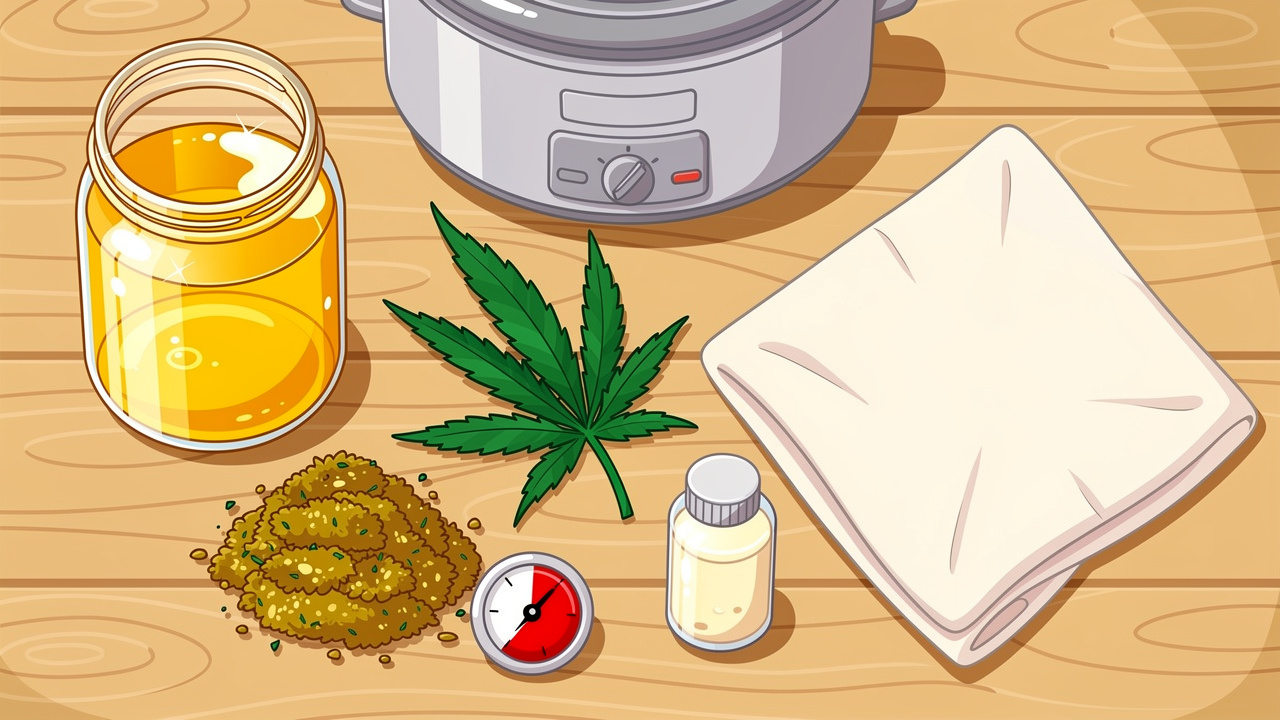
What you need before you start making cannabis oil is a short list of good ingredients, a few pieces of kitchen kit, and a basic idea of how to keep heat steady. Once those pieces are in place, the method becomes much easier to follow. The aim here is to set you up so your first batch already has a decent chance of turning out well.
The foundation is always your plant material. Most people use dried cannabis or CBD-rich hemp flower, because dense buds carry more cannabinoids and terpenes than loose leaf. Trim or shake can work, but you usually need more of it to reach the same strength.
You also need:
A carrier oil for the cannabinoids to bind to
Simple kitchen equipment to keep temperatures under control
A glass jar, a small saucepan or slow cooker, a thermometer, baking tray, baking paper, and some cheesecloth or a fine strainer are enough for the basic infusion method.
Quality cannabis or hemp flower gives you flavour, aroma, and strength. Buds grown and cured with care taste cleaner and feel smoother, which you notice once the oil is infused. Many readers pick AAAA+ grade flowers from BudBuddies for this reason, because they want a starting point they can trust.
A suitable carrier oil holds the cannabinoids and affects how the finished oil feels in the mouth. It also affects how fast the body absorbs each dose. MCT oil, coconut oil, olive oil, and hemp seed oil are all common choices, and you will see how to pick between them in a moment.
Basic kitchen equipment keeps temperatures steady instead of guessing. A simple oven, a low setting on a slow cooker, and a cheap probe thermometer all help you stay in the right heat range. That control is far more important than any fancy gadget.
Before any infusion, you need to decarboxylate the flower. Raw cannabis mostly holds THCA and CBDA, which do very little in the body. Decarbing means spreading ground flower on a baking tray and heating it at around 110–120°C for 30–45 minutes until it turns light golden and dry, a process supported by the Extraction Method and Analysis of cannabinoids in oil preparations. Research from Project CBD notes that this gentle heat range activates cannabinoids without destroying them.
“Start low and go slow” is a common rule of thumb shared by many cannabis clinicians and patient groups, and it applies to both making and using homemade oil.
Choosing Your Starting Material and Carrier Oil
Choosing your starting material and carrier oil sets the tone for how your cannabis oil smells, tastes, and feels. High quality whole flower tends to give stronger, smoother oil than trim or shake because the resin-rich heads are concentrated in the buds. If you are spending time learning how to make cannabis oil, it makes sense to give yourself decent material to work with.
For many people, the hardest part is knowing which flower to trust. Curated AAAA+ strains from BudBuddies remove a lot of that guesswork, because each batch is already checked for appearance, aroma, and strength. That way you are not gambling on something dry, old, or poorly cured that will never infuse well.
Different carrier oils each bring their own pros, and a peer-reviewed Formulation and Analytical Evaluation of liquid cannabidiol preparations confirms that the choice of oil base significantly influences absorption and stability:
MCT oil – Neutral flavour, stays liquid even in cooler rooms, and is absorbed quickly when taken under the tongue. A great all-round choice for sublingual cannabis oil.
Coconut oil – Feels richer and works nicely for edibles or topical balms, but it sets solid when cold. Ideal if you plan to cook or bake with your infusion.
Olive oil – Easy to find and ideal when you plan to drizzle the finished oil over food, although its stronger taste can mask more delicate terpenes.
Hemp seed oil – Pairs nicely from a plant point of view and adds nutty flavour, yet it tends to have a shorter shelf life, so you usually make smaller batches.
According to YouGov, around one in ten UK adults has tried CBD products, with oils and tinctures among the most common formats. That popularity comes mostly from the control you get over strength and carrier, whether you choose homemade infusions or ready-made bottles from a store such as BudBuddies.
How to Make Cannabis Oil Step by Step (Oil Infusion Method)
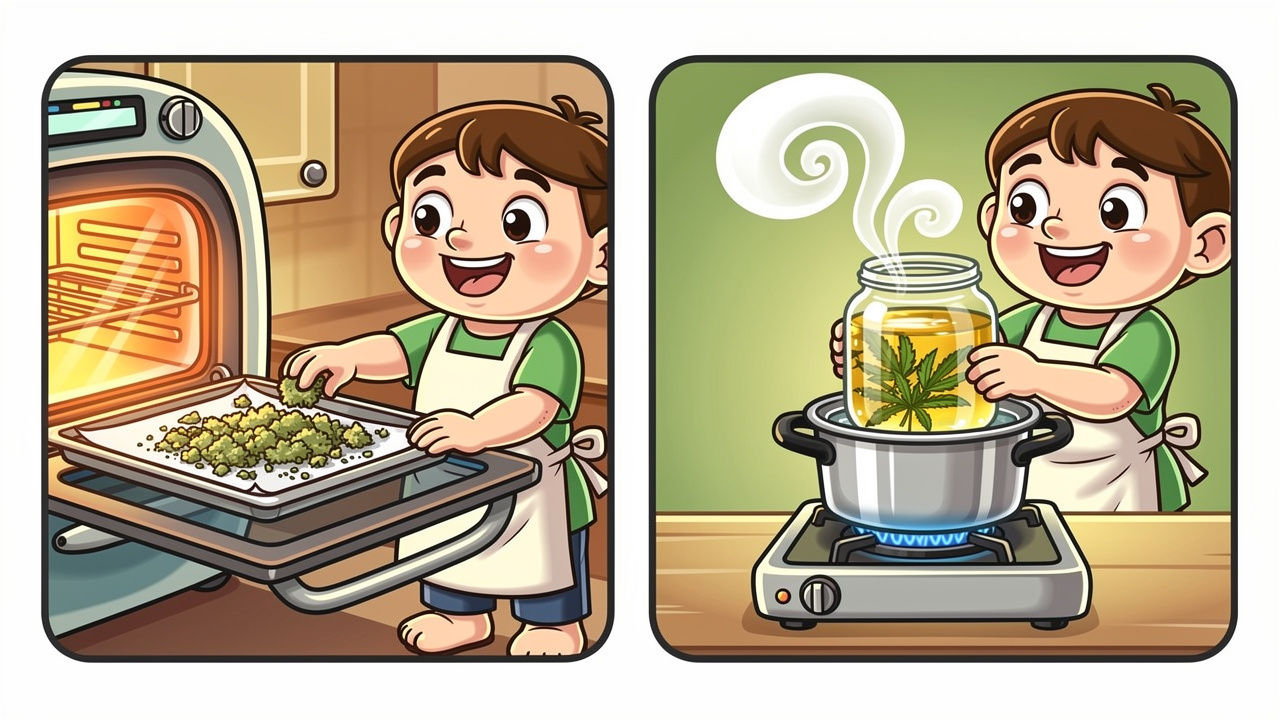
How to make cannabis oil with an oil infusion method comes down to a handful of clear stages. You activate the flower, mix it with oil, apply gentle heat, strain, then store the result. This is the simplest route for most home kitchens and stays closer to normal cooking than chemistry.
Start with decarboxylation. Preheat your oven to about 110–120°C and line a baking tray with parchment. Break your dried cannabis or hemp flower into small pieces and spread it in a thin, even layer. Bake for 30–45 minutes, stirring once or twice, until the material looks light golden and dry rather than green and moist.
Prepare your carrier oil. Measure your chosen oil into a clean glass jar or the inner pot of a double boiler. A common starting ratio is 1 gram of flower to 10–15 millilitres of oil, depending on how strong you want the batch — a guideline consistent with the How to Make Cannabis tinctures dosing framework used by professional producers. Stir the oil so it warms slightly and is ready to meet the decarbed plant material. Make a note of how much flower and oil you used for later potency estimates.
Combine the decarbed flower with the oil. Gently crumble the cooled cannabis into the warm oil, making sure all pieces sit below the surface. Stir slowly so every bit is coated and no dry clumps remain. This contact is important because cannabinoids are fat-loving, and the oil is where they will move during heating.
Apply low, steady heat. Place the jar in a water bath or set your slow cooker to its lowest setting, aiming for around 70–80°C. Use a thermometer to keep an eye on the temperature and adjust if it starts creeping above 90°C. Let the mixture infuse for 2–4 hours, stirring every half hour so the heat and cannabinoids spread evenly.
Strain and bottle the cannabis oil. Let the infusion cool until it is warm but safe to handle, then pour it through cheesecloth or a fine strainer into a clean jug. Squeeze the cloth gently to press out every drop you can without forcing plant bits through. Transfer the filtered oil into dark glass bottles, label them with the date and strain, and store them away from direct light.
According to Project CBD, cannabinoids begin to break down more quickly as temperatures climb much above 120°C, which is why slow, low heat works better than trying to rush the process. If you get this part right, you are most of the way to consistent homemade oil.
Common problems tend to repeat, so it helps to know them early — and a STEM-Based Methodology for designing cannabinoid extraction devices highlights how temperature control and drying kinetics are among the most critical variables in consistent extraction:
Overheating leads to harsh flavours and weaker effects because key compounds have broken down.
Cutting the infusion time short often leaves you with oil that smells nice but feels underwhelming, as many cannabinoids are still locked in the plant.
Poor straining, where lots of fine plant dust passes through, can make the texture gritty and shorten shelf life, so take your time with the filter stage.
Ethanol Extraction A More Advanced Option
Ethanol extraction offers a stronger, more concentrated cannabis oil but asks for more care and attention. It suits people who already feel confident in the kitchen and want to explore beyond the basic infusion method.
The core idea is simple. You decarb the flower in the same way as before, then soak it in very strong food grade ethanol that has been chilled — a method well documented in guides on How to Make Cannabis extracts and topicals at home. After a short wash, you strain out the plant material and gently evaporate the alcohol in a water bath until you are left with a thick, sticky extract. That extract can then be blended with a carrier oil for easier dosing and handling.
Because ethanol is highly flammable, you must work in a well-ventilated room, away from anything that sparks or produces a naked flame. Patience matters here, as you want the solvent to leave slowly without sudden boiling. On a commercial level, many producers, including premium suppliers such as BudBuddies, prefer CO₂ extraction instead, because it uses carbon dioxide under pressure and leaves no solvent behind. Market analysis from Grand View Research describes CO₂ systems as the dominant technology in the global cannabis extract sector.
How to Dose and Store Your Homemade Cannabis Oil
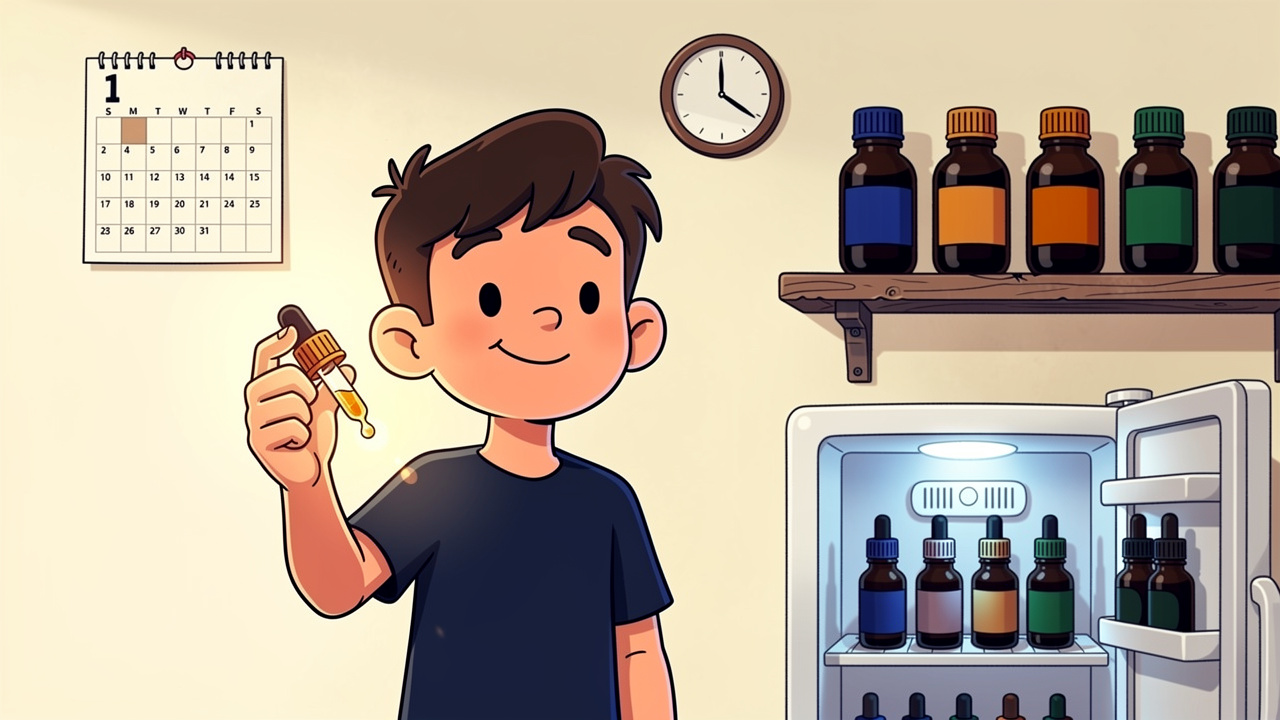
How to dose and store your homemade cannabis oil are the two big questions that usually come right after the cooking stage. Getting them right helps you feel more confident and stops good oil going to waste. Dosing is always an estimate with homemade batches, while storage is mostly about protecting the oil from light, heat, and air.
You can still reach a rough strength figure with a bit of simple maths, and a Comprehensive analysis of 19 cannabinoids in commercial CBD oils shows just how much concentrations can vary across products, underlining why careful calculation matters for homemade batches. That gram holds about 100 milligrams of CBD in theory. Home infusion often pulls out around 50–70 percent of that, so you might end up with roughly 50–70 milligrams of CBD spread through the 10 millilitres, or 5–7 milligrams per millilitre.
Because those numbers are only estimates, it makes sense to start low:
Begin with a small amount, perhaps a quarter or half millilitre.
Hold it under the tongue for 60–90 seconds, then swallow.
Wait at least an hour before deciding whether you feel anything and only then think about taking a little more.
A review in Frontiers in Pharmacology notes that oral cannabinoids have low and uneven absorption, which explains why onset can feel slow and unpredictable compared with inhaled formats.
Good storage habits keep that carefully made oil fresh for longer:
Use dark glass bottles so light cannot easily reach the oil. Light speeds up breakdown of cannabinoids and terpenes and slowly flattens both effect and flavour. Small amber or cobalt dropper bottles work well and make dosing simpler.
Keep bottles in a cool, steady place in the home. A cupboard away from the oven or radiator is enough for short-term use. Try to avoid places that swing between hot and cold, because constant change is hard on the oil.
For longer storage, place the oil in the fridge. Cooler temperatures slow down oxidation, which is the process that turns oils stale. Many people like to keep a main bottle cold and decant small amounts into a separate bottle for regular use.
Label every batch clearly with the date, strain, and your estimated strength. Future you will thank you for neat, honest labelling instead of guessing after a few weeks. If you often use BudBuddies flower for infusions, also note the exact product name so you can repeat successful combinations.
Coconut oil-based infusions usually set hard in the fridge, which can look odd the first time you see it. That change is normal, and the oil softens back up when it warms slightly at room temperature. Ready-made bottles from BudBuddies follow the same basic storage rules, but they arrive with exact cannabinoid numbers and lot codes already printed, which makes organising your shelf much easier.
Why Many UK Consumers Choose BudBuddies Instead
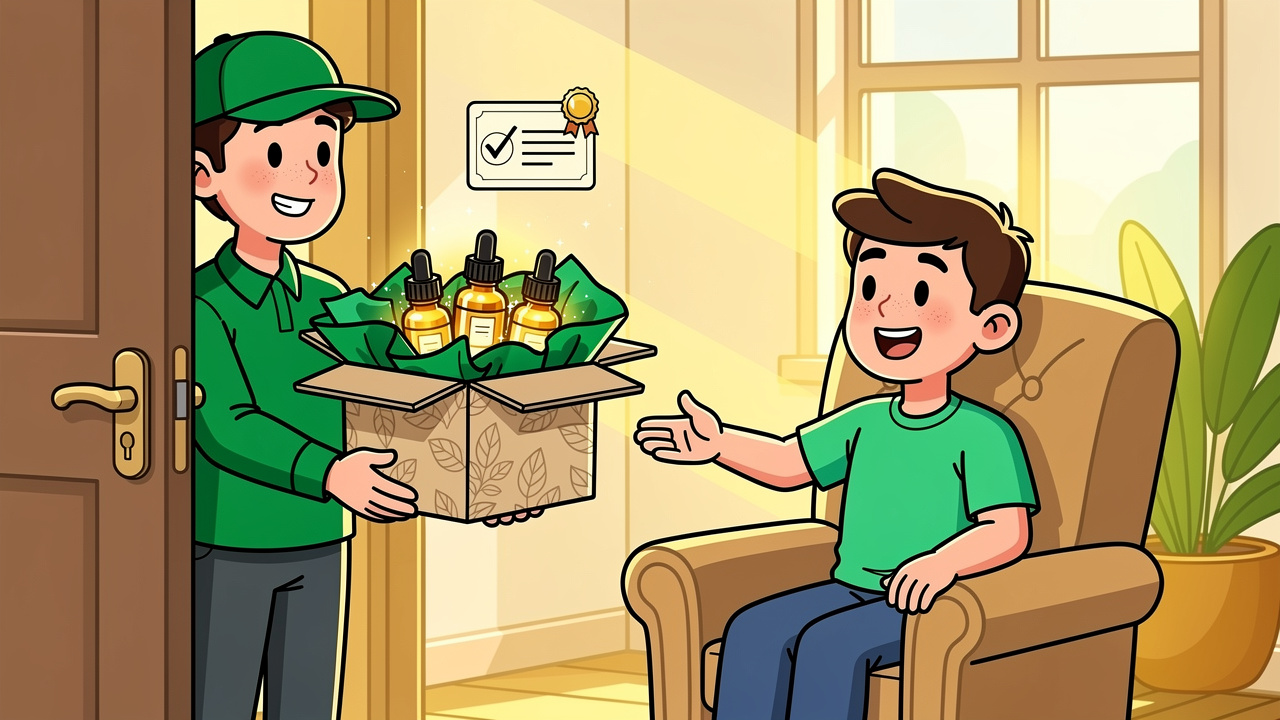
Why many UK consumers choose BudBuddies instead comes down to consistency, convenience, and confidence. Learning how to make cannabis oil is genuinely satisfying, but not everyone wants to repeat the whole process every time they run low. Some people simply want a bottle that works the same way each day.
Home batches always involve some guesswork around strength, even when you do the maths carefully. A study in JAMA found that almost 70 percent of online CBD products in the United States were mislabelled for their actual CBD content, and a Chemical Analysis and Alkaloid intake study from Johns Hopkins similarly highlights how commercially available botanical products frequently deviate from their stated composition — so you can imagine how variable kitchen infusions may be without any testing at all. BudBuddies works with professional extraction partners who use CO₂ systems and provide full laboratory reports, so each bottle of CBD oil, CBG oil, or THC concentrate lists clear, tested percentages.
There is also the simple question of time and mess. Ordering from BudBuddies means you skip the smell of decarbing flower, the long simmer, and the clean-up. Orders placed before mid-afternoon usually ship for next-day delivery across the UK, with free shipping once your basket passes £50. Everything arrives in plain, vacuum-sealed, smell-proof packaging, with tracking links so you can follow your parcel.
Value-minded readers tend to notice the payment options as well. BudBuddies accepts standard methods plus cryptocurrency such as Bitcoin, Litecoin, and Monero, and crypto payments come with an automatic 10 percent discount. Regular customers collect BudPoints cashback on every order too, which they can put towards future bottles, edibles, or AAAA+ flowers at budbuddies.cc/shop.
The Bottom Line on Making Cannabis Oil at Home
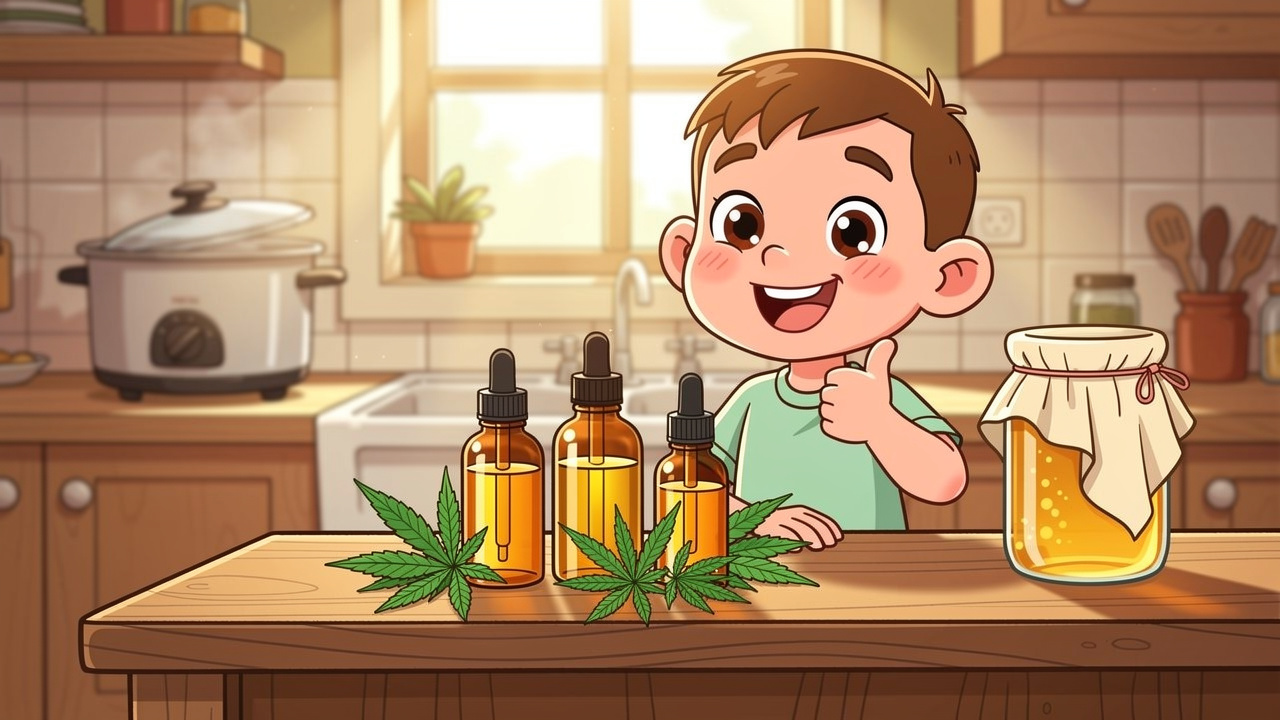
The bottom line on making cannabis oil at home is that the basic method is simpler than it first appears. You decarb good quality flower, gently infuse it into a suitable carrier oil, strain out the plant material, then store the finished oil in dark glass away from heat and light.
Once you understand those steps, you can decide when homemade batches make sense and when you would rather have a precisely tested oil ready to go. Many people enjoy learning the process, then keep a steady supply of lab-checked bottles from BudBuddies for everyday use. If you want to explore that side, the full range of oils, concentrates, flowers, and edibles sits neatly organised at budbuddies.cc/shop.
Frequently Asked Questions
Question: What is the best carrier oil for making cannabis oil at home?
Answer: MCT oil is usually the most practical carrier for home cannabis oil. It has a neutral taste, stays liquid in cooler rooms, and absorbs quickly under the tongue. Coconut oil works nicely for edibles or balms, while olive oil suits salad dressings and savoury dishes.
Question: How long does homemade cannabis oil last?
Answer: Homemade cannabis oil in a sealed dark glass bottle at room temperature typically stays fresh for around one to two months. Kept in the fridge, many batches remain stable for up to six months. If you used coconut oil, it will turn solid when cold, which is normal and reverses when warmed.
Question: Can you make cannabis oil without heating it?
Answer: You can soak raw cannabis in oil without heat, but the result is much weaker. That is because the cannabinoids mostly remain in their acid forms, such as THCA and CBDA, which are far less active. Gentle heating through decarboxylation is the key step that wakes the oil up.
Question: How is homemade cannabis oil different from the CBD oil you can buy?
Answer: Homemade cannabis oil is based on your own flower and best guess at strength, with no lab report. Bottled CBD oils from BudBuddies are extracted with CO₂, then tested by independent laboratories, so you get exact cannabinoid numbers, clean carrier oils, and batch codes on every label.
Question: How do I know what strength my homemade oil is?
Answer: You can estimate strength by starting from the stated cannabinoid percentage of your flower and applying a realistic extraction range, often around 50–70 percent. Divide the resulting milligrams by the total millilitres of oil. Because this is still an estimate, always begin with a small amount and increase slowly over time.


