


Weed and Asthma: What Every Smoker Should Know
Lighting up a joint when you live with asthma can feel like a gamble, and plenty of cannabis fans want a straight answer on weed and asthma before they inhale anything. The worry is fair, since asthma already narrows and inflames the airways, so adding smoke into the mix seems risky. Conflicting stories online do not help matters, and it is easy to end up more confused than reassured.
Here is the direct answer: it is largely how you consume cannabis, not cannabis itself, that decides whether your lungs cope well or badly with weed and asthma together. Smoking introduces hot, particle-laden smoke that can trigger coughing fits and tight chests, while smoke-free formats sidestep that problem completely. This guide walks through the mechanism behind airway irritation, ranks the main consumption formats by respiratory risk, and explains whether THC or CBD makes any practical difference. Along the way, we will point to BudBuddies‘ lab-tested, clearly dosed range as one practical route for anyone wanting to explore cannabis without lighting up. Read on to see exactly where the risk lies and how to work around it.
Key Takeaways
Smoking is the main respiratory risk connected to weed and asthma, not the cannabinoids in the plant itself.
Combustion by-products such as tar and carbon monoxide can trigger bronchospasm and worsen wheezing within minutes.
Smoke-free formats including edibles, capsules and CBD oils avoid inhalation risk entirely, bypassing the airways altogether.
Vaping cuts some harmful by-products compared with smoking flower, though it is not entirely risk-free for sensitive lungs.
Lab-tested, quality-checked products matter most for anyone with compromised airways, since contaminants like mould pose extra danger.
Does Weed Affect Asthma?
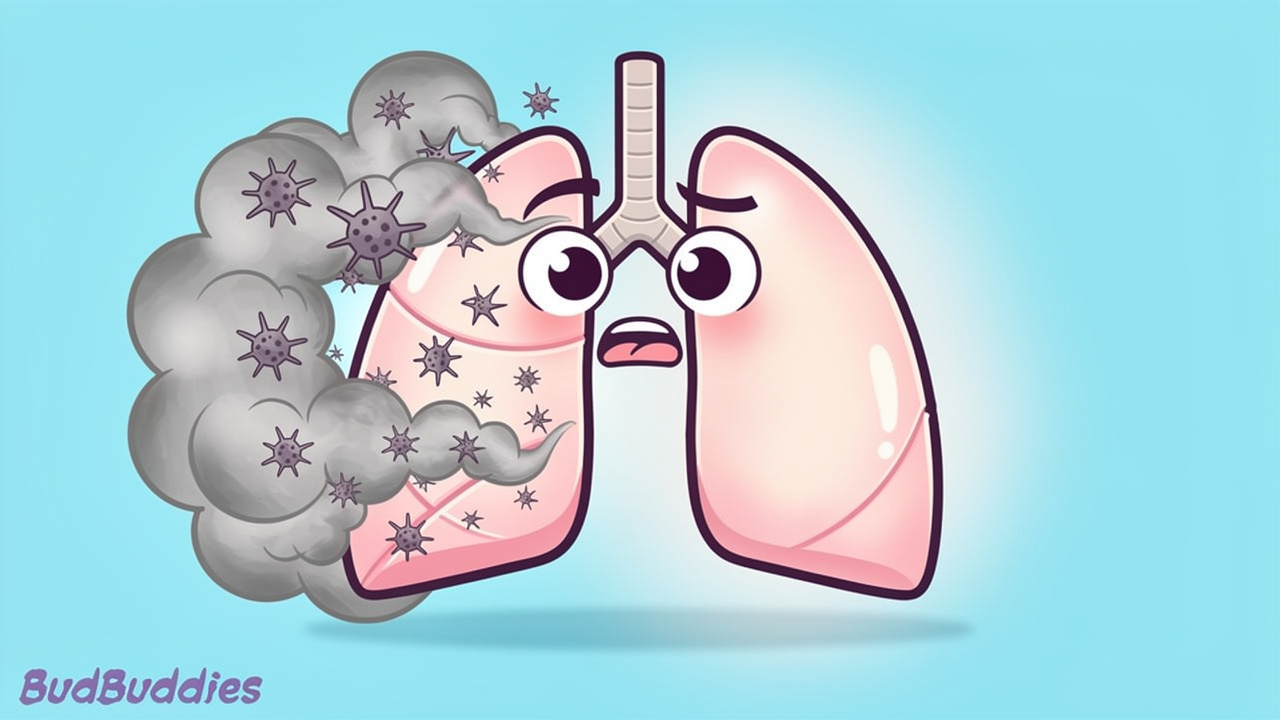
According to medical marijuana condition guides, weed affects asthma mainly through the method of use, not through cannabinoids like THC and CBD themselves, since cannabis and lung conditions remain a nuanced area of ongoing discussion. When cannabis is smoked, hot smoke and combustion by-products meet airways that are already inflamed in people with asthma. This contact can irritate the bronchial lining almost immediately, whatever strain is involved. Cannabinoids alone do not carry this irritant effect, which is why format matters more than the plant.
That irritation can trigger bronchospasm, a sudden tightening of the muscles around the airways. For someone with asthma, this can bring on coughing, wheezing and sudden breathlessness within minutes of inhaling smoke. Reactions vary from person to person, but anyone with sensitive airways should treat smoked cannabis with the same caution as any other smoke exposure.
Why Smoking Cannabis Is Riskiest for Asthma Sufferers
Smoking cannabis is the riskiest format for asthma sufferers because combustion releases tar, carbon monoxide and other irritant compounds alongside the cannabinoids. Burning plant material produces polycyclic aromatic hydrocarbons and ammonia, many of which inflame airway tissue. These compounds settle in narrowed passages, increase mucus production and can impair the cilia that normally clear debris from the lungs.
Regular smokers often report chronic cough, phlegm and wheezing, symptoms that closely mirror an asthma flare-up, a link explored in a systematic review and meta-analysis on cannabis consumption and asthma risk. Deep, breath-holding inhalation, common among cannabis smokers, can push irritants further into the lungs and prolong exposure. Mixing cannabis with tobacco, a common UK habit, compounds this risk and should be avoided by anyone managing weed and asthma alongside each other.
Which Cannabis Formats Are Safer for Your Lungs?

Choosing a safer format comes down to weighing respiratory risk against onset time and convenience. Formats that avoid inhalation altogether carry the lowest risk, while smoked flower sits at the opposite end of the scale. Vaping falls somewhere in the middle, since it heats material rather than burning it. The table below lines up the main options side by side, so you can see where each one fits before choosing what suits your lungs.
| Format | Respiratory Risk | Onset Time | Best For |
|---|---|---|---|
| Smoking (Joints, Pipes) | Highest | Almost instant | Not recommended for asthma |
| Vaping | Moderate | 1 to 5 minutes | Faster effects with less irritation than smoke |
| Edibles | Lowest | 30 to 120 minutes | Sustained, smoke-free relief |
| Tinctures and Oils | Lowest | 15 to 45 minutes | Quicker onset without any inhalation |
| Capsules | Lowest | 30 to 120 minutes | Precise, consistent dosing |
Edibles and Capsules, the Smoke-Free Option

Edibles and capsules bypass the lungs completely, since cannabinoids are absorbed through digestion rather than inhalation. Effects take between 30 and 120 minutes to appear, so patience matters and redosing too soon can lead to an uncomfortably strong experience. BudBuddies’ gummies, chocolates and capsules come in clearly printed doses from 2.5mg to 10mg THC, making it easier to start low and build up gradually.
Vaping, a Middle Ground Not a Risk-Free One

Vaping heats cannabis rather than burning it, cutting much of the tar and carbon monoxide a lit joint produces. Vapour can still irritate hyperreactive airways, and poorly made or unregulated cartridges have been linked to serious lung injury in some cases. Quality matters here, which is why the brand’s 510-thread cartridges are lab-tested rather than sourced from unverified suppliers. Watch closely for coughing or tightness the first time you try one.
CBD Oils and Low-THC Products
CBD is non-intoxicating and has been studied for possible anti-inflammatory properties, though it is not a proven treatment for asthma symptoms. Choosing an oil, capsule or CBD-dominant flower avoids inhalation risk while still allowing exploration of cannabinoids without a strong high. For anyone wary of THC or smoke altogether, these low-THC options offer a gentler starting point, particularly when doses are clearly labelled and lab verified.
Does Cannabinoid Type (THC vs CBD) Matter for Asthma?
THC and CBD affect the body differently, and some older research has explored THC as a possible short-term bronchodilator, meaning it might briefly open airways, a question re-examined in a recent review on cannabinoids in asthma treatment. However, this research is dated, involved small samples and has never been confirmed as a treatment for asthma. CBD, meanwhile, is non-psychoactive and has drawn interest for its anti-inflammatory potential, though clinical evidence specific to asthma remains limited.
In practice, cannabinoid type matters far less than how you consume it. Smoked THC flower still carries the same combustion risk as any other smoked product, regardless of any theoretical airway-opening effect. If you are curious about cannabinoids for their own sake, a smoke-free CBD or low-THC option will always be the lower-risk starting point for weed and asthma together.
How to Choose Cannabis Products Safely If You Have Asthma
Weed and asthma decisions get easier when you start low, whatever format you pick. Consider the following steps before trying anything new:
Begin with the smallest possible dose, especially with edibles, since their delayed onset can tempt you to take more before the first dose kicks in.
Keep your reliever inhaler within reach whenever you try a new product or method.
Stop immediately if you notice increased coughing, wheezing or chest tightness.
Check product quality, since mould, pesticides and other contaminants pose extra danger to sensitive lungs.
Talk to a GP or asthma nurse before trying cannabis, particularly if your asthma is poorly controlled.
Product quality matters just as much as format. BudBuddies publishes independent lab reports and Certificates of Analysis for every batch, so you can check cannabinoid content and confirm there is nothing harmful before you buy. Speaking with a healthcare professional first remains the sensible step, and as one general piece of harm-reduction guidance puts it:
Start low, go slow, and know exactly what you’re taking before you take it.
The Bottom Line
The bottom line on weed and asthma is straightforward. It is the method of consumption, not cannabis itself, that decides whether your lungs cope well. Smoking introduces hot, irritant-laden smoke directly into airways that are already sensitive, making it the format to avoid if you have asthma. Vaping reduces some of that harm but is not entirely risk-free, while edibles, capsules and CBD oils sidestep inhalation altogether.
If you want to explore cannabis without lighting up, BudBuddies’ smoke-free range of gummies, capsules and CBD oils gives you a lab-tested, clearly dosed place to start. Browse budbuddies.cc for dosage guidance and support from a team that takes quality and privacy seriously, and always keep your GP in the loop about anything new you try.
Frequently Asked Questions
Here are quick answers to the questions we hear most about weed and asthma.
Can Vaping Trigger An Asthma Attack Even Though It’s Not Smoke?
Yes, vapour can still irritate hyperreactive airways even without combustion. Some people notice coughing or tightness after vaping, especially with poor-quality cartridges. Choose tested, regulated products and watch closely for symptoms after your first try.
Is CBD Safe To Try If You Have Asthma?
CBD taken as an oil or capsule avoids inhalation risk, making it gentler than smoked cannabis. It should never replace prescribed asthma medication, and evidence for symptom control is still limited. Speak with your GP before adding it to your routine.
How Long Do Edibles Take To Work, And Why Does That Matter For Asthma Sufferers?
Edibles usually take 30 to 120 minutes to work, far slower than smoking or vaping. That delay can tempt people to redose too soon, leading to an uncomfortably strong experience. Clear, printed dosages on quality products help you wait it out rather than take more than intended.
Can Strong-Smelling Strains Or Terpenes Irritate Sensitive Airways?
Yes, some people find strongly aromatic strains irritating even when vaped rather than smoked, likely due to volatile terpenes rather than cannabinoids. If you notice this, milder-profile or CBD-dominant options may sit more comfortably with sensitive airways than punchy, high-terpene strains.
What Should You Do If You Notice Wheezing Or Tightness After Trying A New Cannabis Product?
Stop using the product straight away and use your reliever inhaler if symptoms continue. Note what you took and how it affected you, then speak with a GP or asthma nurse before trying cannabis again in any form.

