


Weed and Sleep Apnea: What the Research Actually Shows
If you’ve ever searched “weed and sleep apnea” at 2am wondering whether cannabis could ease your breathing pauses, you’re not alone. Sleep apnea disrupts breathing hundreds of times a night, and plenty of people find their CPAP mask uncomfortable, so they look for something gentler to help them rest. This curiosity around weed and sleep apnea has grown alongside cannabis’s reputation as a sleep aid, but the real clinical picture is more layered than social media threads tend to suggest.
This article looks at what real studies on weed and sleep apnea actually show, from the synthetic THC trials that first sparked scientific interest to the risks worth weighing before trying cannabis for this specific condition. We’ll cover how THC might affect breathing, where CBD fits into the picture, and which formats people commonly reach for at night. At BudBuddies, we think good decisions start with clear information, so let’s separate the evidence from the speculation.
Key Takeaways
Research on weed and sleep apnea has mostly used synthetic THC (dronabinol) in a lab setting, not herbal flower, vapes, or edibles bought from a shop.
Early trials show a drop in breathing pauses, measured by the Apnea-Hypopnea Index, but the studies are small and short-term.
Sleep medicine bodies, including the American Academy of Sleep Medicine, don’t currently recommend cannabis as a sleep apnea treatment.
THC may help some people relax before bed, but grogginess, appetite changes, and weight gain are genuine risks worth weighing.
Product format, whether flower, vape, edible, or oil, changes how fast effects arrive and how you feel the next morning.
What Is Sleep Apnea and Why Are People Turning to Cannabis?
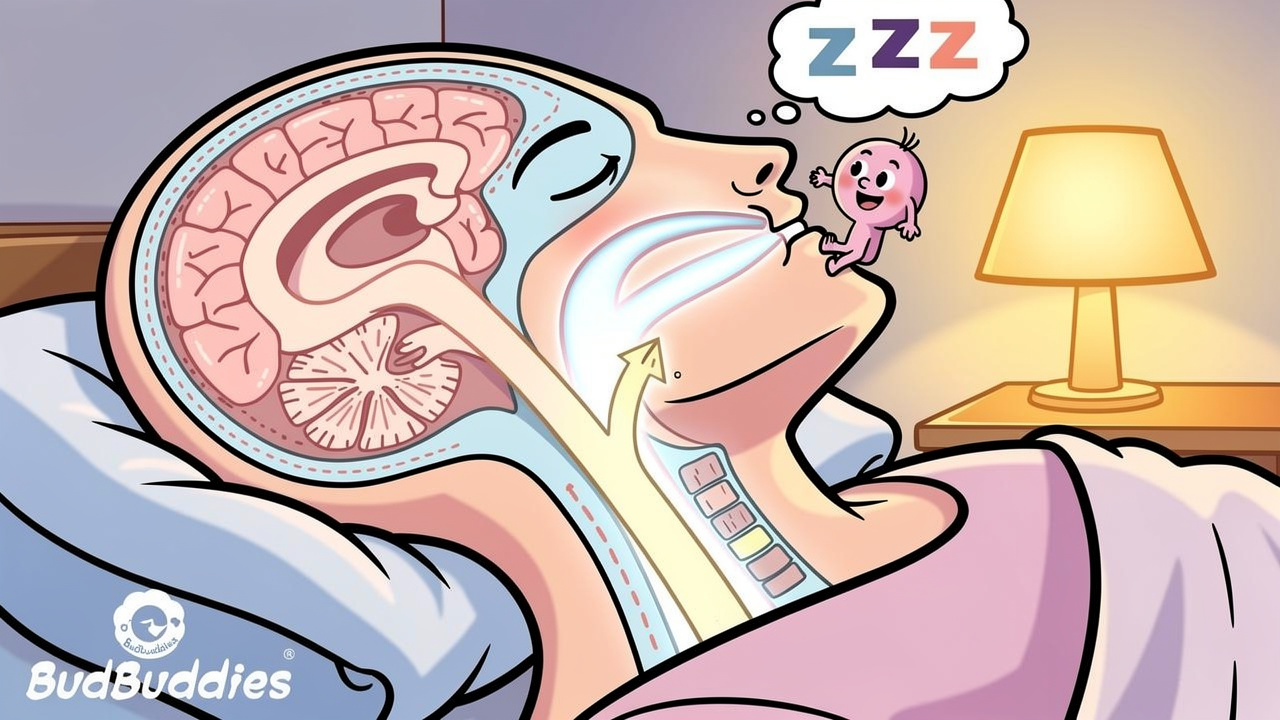
Sleep apnea is a breathing disorder where airflow repeatedly stops or shrinks during sleep, sometimes hundreds of times a night. The most common type, obstructive sleep apnea, happens when throat muscles relax too much and the airway narrows or closes, while central sleep apnea involves the brain failing to signal the breathing muscles correctly. Both types can bring loud snoring, gasping, morning headaches, and daytime tiredness that makes ordinary tasks feel much harder than they should.
Standard treatment usually means a CPAP machine, which many people find uncomfortable or awkward to keep wearing every night. That discomfort has pushed some people towards cannabis as a possible companion approach, partly because of its long-standing use for sleep and relaxation, and partly because a small pool of clinical research has started asking whether cannabinoids affect breathing patterns directly.
What Does the Research Actually Say About Weed and Sleep Apnea?
The clearest answer science can currently offer is that weed and sleep apnea have been studied together through only a handful of small clinical trials, and these used dronabinol, a synthetic form of THC, rather than herbal cannabis, vapes, or edibles you’d find on a menu. Two studies stand out here:
An earlier trial published in the journal Sleep
A later, more rigorous randomised study known as the PACE trial
Both measured the Apnea-Hypopnea Index, or AHI, which simply counts how many times breathing pauses or shallows out per hour of sleep, the standard yardstick doctors use to judge how severe someone’s obstructive sleep apnea is. In the earlier trial, participants given higher doses of dronabinol showed a meaningful drop in their AHI compared with those given a placebo, alongside self-reported improvements in daytime sleepiness. The follow-up PACE trial ran over six weeks with a properly blinded design, and it again found dronabinol was generally well tolerated, producing measurable reductions in AHI, though the effect varied by dose.
Researchers behind these trials were careful not to oversell the findings, stressing that dronabinol isn’t a recommended treatment and that far larger, longer studies would be needed before any clinical guidance could shift. This caution matters because the American Academy of Sleep Medicine has issued a position statement on medical cannabis stating plainly that it does not recommend medical cannabis or synthetic extracts for treating obstructive sleep apnea, citing a lack of long-term safety and effectiveness data. It’s also worth being clear these results apply to a standardised pharmaceutical compound taken under medical supervision, not to smoking a joint or a few puffs from a vape pen, since herbal cannabis contains hundreds of variable compounds that behave quite differently from one isolated molecule. So while the early data on weed and sleep apnea is genuinely interesting, it doesn’t yet give a green light for treating the condition with everyday cannabis products.
How Might THC Affect Breathing During Sleep?
Researchers have proposed a few ways THC could influence breathing during sleep, though none of these ideas are proven fact yet. One theory involves serotonin, a brain chemical that helps control the muscles keeping your upper airway open, and THC may change how that signalling works, which could either steady breathing or, in some people, do the opposite.
Muscle relaxation is another double-edged idea. THC is well known for relaxing muscles throughout the body, which sounds helpful for falling asleep but could also let airway tissue collapse more easily in obstructive sleep apnea. Some researchers also point to cannabis’s anti-inflammatory properties, suggesting reduced swelling in the airway might ease breathing, though this link remains largely theoretical for now.
Does CBD Work Differently Than THC for Sleep Apnea?

CBD hasn’t been through the same dronabinol-style clinical trials as THC, so any claims about CBD helping sleep apnea specifically remain anecdotal rather than clinically proven. Most of what people report about CBD and sleep apnea comes from personal experience shared online, not controlled studies measuring breathing pauses.
That said, CBD’s profile is quite different from THC’s. It’s non-intoxicating, so there’s no “high,” and it’s more commonly associated with easing anxiety and gentle relaxation rather than the stronger sedative pull people often feel from THC. For anyone sensitive to THC’s psychoactive effects, or wary of next-day grogginess, CBD-led products can feel like a calmer starting point, though they don’t address the physical airway blockage that defines obstructive sleep apnea.
What Are the Risks of Using Weed if You Have Sleep Apnea?
The biggest risks around cannabis and sleep apnea sit outside the airway itself:
Appetite and weight gain: THC is well known for stimulating appetite, and since excess weight is one of the strongest drivers of obstructive sleep apnea, regular use that leads to weight gain could work against you over time.
Lung and throat irritation: Smoking cannabis exposes the lungs and throat to combustion by-products, which may irritate airways already under strain.
Next-day grogginess: Many users report morning fatigue that compounds the tiredness sleep apnea already causes.
Combined sedation: Mixing cannabis with alcohol or sleeping tablets isn’t advisable, since combined sedation can relax throat muscles further and affect how alert you feel through the night.
Anyone managing sleep apnea, particularly if using CPAP or another prescribed treatment, should have an open conversation with their GP or sleep specialist before making changes to their routine.
Which Cannabis Formats and Strains Are Best Suited for Night-Time Use?
Format changes how quickly you feel an effect and how long it lasts, which matters when weighing sleep-onset needs against staying asleep through the night.
Vapes tend to act within minutes, useful for winding down quickly.
Edibles take anywhere from 30 minutes to two hours but last far longer, which suits people who wake partway through the night.
Oils sit somewhere in between, offering fairly quick onset with easier dose control than edibles.
Indica-dominant strains and terpenes like myrcene and linalool are commonly chosen for evening relaxation, thanks to their calming reputation among cannabis users. BudBuddies’ range covers flower, vapes, edibles, and oils across these profiles, with lab testing and a Certificate of Analysis available for every batch, so you know exactly what’s in the product before it reaches your door.
The Takeaway
The honest summary is that early research on weed and sleep apnea is promising but far from conclusive, built on a small number of trials using a synthetic pharmaceutical rather than everyday cannabis products. Sleep medicine authorities aren’t recommending cannabis as a sleep apnea treatment yet, and anyone diagnosed with the condition should keep working with their GP or sleep specialist on evidence-backed care.
Start low, go slow — a simple rule worth following for anyone new to cannabis products, especially where sleep and breathing are concerned.
If you’re exploring cannabis for general relaxation and better sleep rather than treating sleep apnea itself, choosing lab-tested, clearly labelled products makes a real difference to consistency and peace of mind. The platform backs every product with clear dosing guidance, a “start low, go slow” approach for newcomers, and discreet, tracked delivery so you can explore what works for you with confidence.
Conclusion
Weed and sleep apnea remain connected mostly through a small stack of early studies, interesting findings, and a fair number of open questions rather than a settled answer. The safest path is treating cannabis as a topic worth watching, not a substitute for CPAP therapy or professional diagnosis, while any general interest in sleep support is approached with realistic expectations.
For readers who want quality-checked products and clear guidance while they figure out what suits their own sleep routine, BudBuddies offers a curated range built on lab testing, transparency, and a smooth, private ordering experience from start to finish.
Frequently Asked Questions
Can Vaping Cannabis Help With Snoring Caused By Sleep Apnea?
There’s no direct clinical evidence that vaping reduces snoring or breathing pauses linked to sleep apnea specifically. Vaping does avoid the combustion by-products that come with smoking, which some people find gentler on their throat and airway, but that’s a comfort difference rather than proof of any effect on apnea events themselves.
Is It Safe To Use Cannabis Alongside A CPAP Machine?
There’s currently no strong evidence that cannabis dangerously interacts with CPAP machines. The main concern is sedation affecting how consistently someone wears their mask through the night, so it’s worth discussing combined use openly with a GP or sleep specialist before relying on both together.
Can Cannabis Make Sleep Apnea Worse Instead Of Better?
Yes, it’s possible in some cases. THC’s muscle-relaxing effect could theoretically let airway tissue collapse more easily, and regular use that increases appetite and weight could add to the underlying risk factors behind obstructive sleep apnea over time.
How Long Does It Take To Feel The Effects Of Edibles Versus Vapes For Sleep?
Vapes typically act within 2 to 5 minutes, useful for quick relaxation before bed or during a wake-up. Edibles take longer, often 30 minutes to 2 hours, but last considerably longer through the night. The platform stocks both formats, so you can match timing to your own sleep pattern.
Does CBN Help With Sleep Apnea Symptoms?
CBN, or cannabinol, is gaining attention for its potential sedative properties and is increasingly featured in sleep-focused cannabis products. However, it hasn’t been studied specifically for sleep apnea, so any benefit for breathing pauses remains anecdotal rather than clinically confirmed at this stage.

