


Why Does Weed Make Your Eyes Red? A Simple Explanation
Spotting bloodshot eyes in the mirror after using cannabis is one of the more familiar, and occasionally awkward, parts of the experience. It’s a fair thing to wonder about, and if you’ve ever asked yourself why does weed make your eyes red, the answer isn’t complicated or worrying. In short, tetrahydrocannabinol (THC) temporarily widens the tiny blood vessels in your eyes, and that extra blood flow is what gives eyes their reddened, glassy look. This isn’t a sign of damage or an allergic reaction, and it settles on its own within a few hours.
This guide walks through the full science behind why weed makes your eyes red, how long the effect typically lasts, and whether it’s a reliable sign that someone is impaired. We’ll also cover practical ways to manage or reduce redness and how BudBuddies’ lab-tested range on budbuddies.cc helps you pick a format and strength suited to your comfort level. By the end, you’ll understand exactly what’s happening in your body and know what to expect next time.
Key Takeaways
Red eyes happen because THC widens blood vessels in the eyes, a process called vasodilation, not because of smoke or any damage.
The effect appears with any method that puts THC into your bloodstream, including edibles and tinctures, not just smoking or vaping.
Redness is temporary and usually clears within a few hours as your body processes the THC.
Bloodshot eyes aren’t a reliable way to prove someone has recently used cannabis or is currently impaired.
Picking lower-THC or CBD-led products from the BudBuddies range can reduce how noticeable the effect is.
Why Does Weed Make Your Eyes Red?
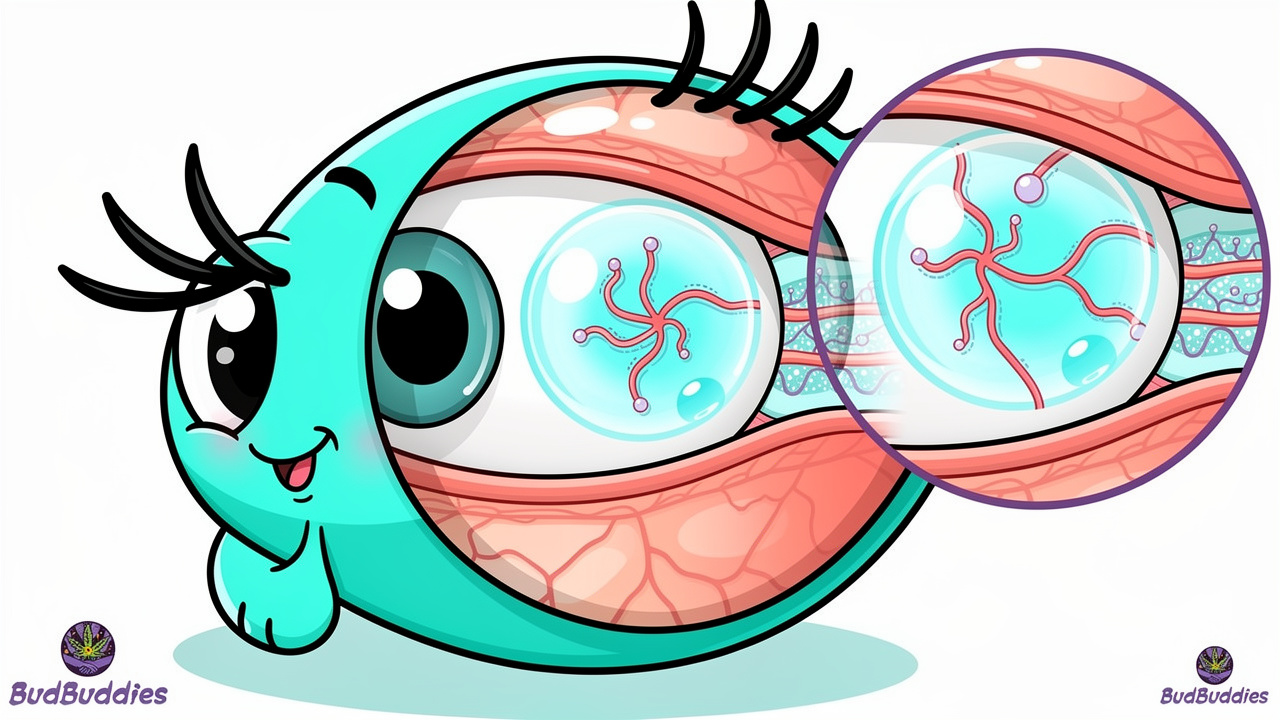
Weed makes your eyes red because of a straightforward chain reaction inside your blood vessels, and it starts the moment THC enters your bloodstream. Whether you smoke, vape, or eat cannabis, THC causes a temporary drop in blood pressure throughout the body, and your circulation responds by widening blood vessels so blood keeps flowing properly, a process doctors call vasodilation. The eyes carry an unusually dense network of tiny blood vessels sitting close to the surface, right under the thin, clear tissue called the sclera (the white part of your eye). When those vessels widen, more blood passes through them, and that extra blood becomes visible through the sclera, giving eyes their familiar red, glassy look. This is exactly why weed makes your eyes red rather than, say, your hands or your face, since the eyes’ surface vessels are simply easier to see. Nothing about this process damages the eye itself, and it isn’t an allergic reaction or a sign that something has gone wrong; it’s blood flow increasing in a very visible place. Cannabinoid receptors, part of what’s known as the endocannabinoid system, sit throughout the walls of blood vessels across the body, which is why THC has such a noticeable effect on circulation. Once THC levels in the blood start to fall, vessels narrow back down and the redness fades without any lasting trace, no matter how it appeared in the first place.
The Role of Intraocular Pressure
Alongside vasodilation, THC also lowers intraocular pressure, the fluid pressure inside the eye itself, an effect documented in research on the adverse ocular impact and therapeutic potential of cannabis on eye health. This effect is well known enough that cannabis was studied for years as a possible glaucoma treatment, a condition where high eye pressure damages the optic nerve over time. Lower eye pressure isn’t the direct cause of redness, but it happens alongside vasodilation, adding to the reddened look people notice.
Does Every Way Of Using Weed Cause Red Eyes?
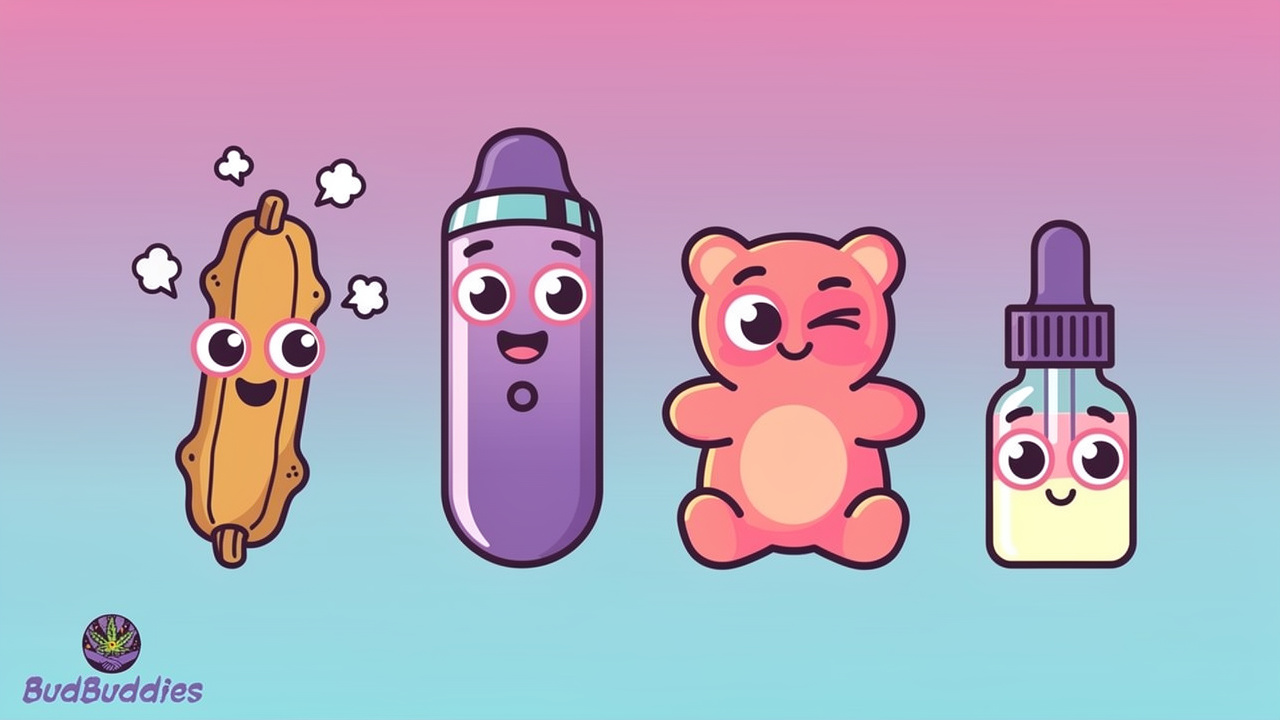
Yes, virtually any method of using cannabis that puts THC into your bloodstream can cause red eyes, a finding backed by a cross-sectional study on visual parameters in cannabis users, because it’s the THC circulating in your blood that triggers vasodilation, not smoke or vapour touching your eyes directly. Smoking flower, vaping, dabbing concentrates, taking tinctures sublingually, and eating edibles can all lead to noticeably bloodshot eyes, even though onset and intensity differ between them.
Smoking and vaping bring on redness within minutes since THC reaches the bloodstream almost immediately through the lungs.
Edibles work more slowly, often taking 30 minutes to two hours, because THC has to pass through digestion and the liver first.
Concentrates and dabbing typically involve much higher THC concentrations, so the vasodilation effect, and the resulting redness, can feel more pronounced.
Smoking or vaping might add a small amount of extra irritation from smoke or vapour reaching the eyes, but this is a secondary factor rather than the main cause.
CBD-dominant oils or flower, with little to no THC, rarely cause noticeable redness at all, simply because there isn’t enough THC present to trigger meaningful vasodilation.
This distinction matters if you’re comparing formats and want to understand why some barely affect your eyes while others clearly do.
How BudBuddies Helps You Choose With Confidence
BudBuddies stocks a curated range spanning flowers, edibles, THC vapes, concentrates, and CBD products, each lab-tested with clear THC, CBD, and terpene data on every product page. If reducing side effects like red eyes matters to you, browsing budbuddies.cc lets you compare potency at a glance and choose milder CBD options or lower-THC strains suited to your tolerance and how intense you want the experience to feel.
How Long Do Red Eyes Last After Using Weed?
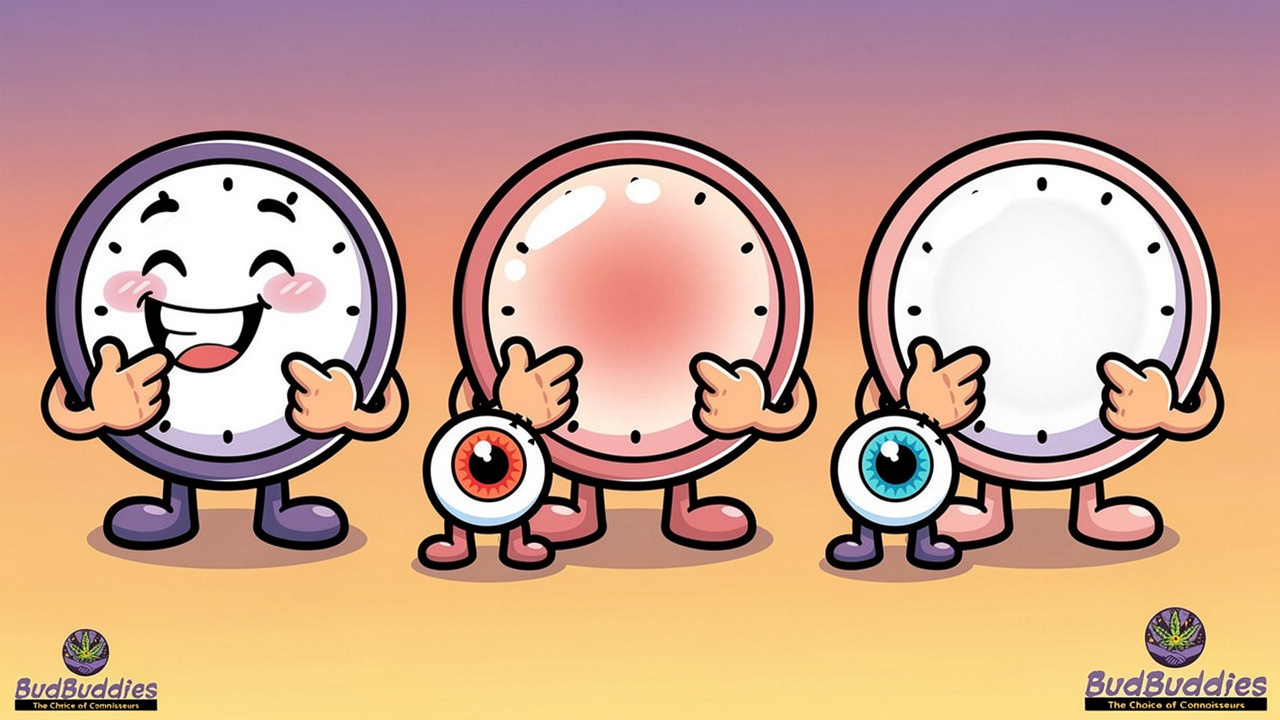
Smoked or vaped cannabis usually brings on red eyes within minutes, a timeline explained in detail in this breakdown of why eyes turn red after smoking weed, and the effect typically lasts somewhere between one and three hours before fading as THC’s initial peak wears off. Edibles work differently, since they take longer to digest, so redness may not appear for 30 minutes to two hours, but once it does, it can last considerably longer, sometimes four to six hours, because THC releases into the bloodstream more gradually.
Several factors affect exactly how long redness sticks around. Higher-potency products and larger doses tend to produce stronger vasodilation and longer-lasting redness, while lower-THC options usually fade faster. Hydration levels, individual tolerance built up from regular use, and general body chemistry all play a part too, which is why two people using the same product can notice quite different results.
Is Red Eye A Reliable Sign Of Being Impaired?
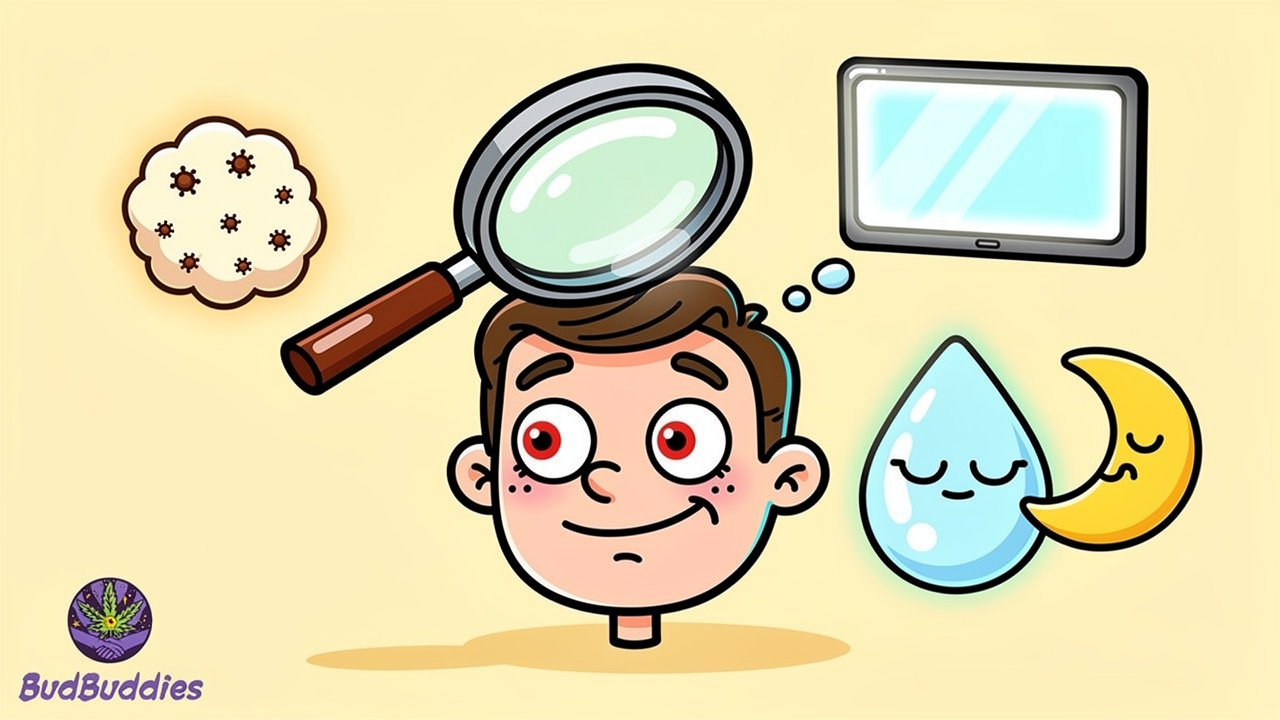
Red eyes get treated as an obvious giveaway that someone has used cannabis, but that assumption doesn’t hold up well under scrutiny. Redness has plenty of other common causes that have nothing to do with weed, including tiredness, allergies, long stretches of screen time, chlorine from swimming, dry air, and general eye strain. Alcohol also causes similar vasodilation, so a red-eyed look after a night out proves very little on its own.
Because so many everyday things cause the exact same appearance, red eyes alone aren’t a dependable way to judge whether someone is currently impaired or how recently they used cannabis. Genuine impairment shows up far more clearly through behaviour, coordination, and reaction time than through eye colour, so treating bloodshot eyes as proof of anything specific tends to lead to the wrong conclusion more often than not.
How Can You Reduce Or Manage Red Eyes?
If bloodshot eyes bother you, whether for comfort or discretion, there are several practical ways to take the edge off, and none of them need to be complicated. Redness-relief eye drops are the fastest fix, since they contain ingredients that narrow the blood vessels in your eyes and counter the vasodilation THC causes, often working within minutes, a remedy detailed in this guide on how to fix red eyes from smoking weed. Staying hydrated helps too, since dehydration can make both dryness and redness worse, so drinking water before and during a session makes a noticeable difference.
Moderate your dosage. Smaller amounts of THC produce a milder vasodilation response, so redness tends to be less noticeable and clears faster, which is especially useful while you’re still working out your tolerance.
Give it time. Redness is temporary by nature and generally fades on its own within a few hours as THC’s peak effects pass, so patience alone often does the job.
Choose lower-THC or CBD-balanced products. Formats with less THC produce less vasodilation from the outset, so any redness is milder or barely noticeable at all.
Keep sunglasses handy. They won’t treat the cause, but they’re a simple, practical way to stay comfortable in social settings while redness settles down naturally.
Quick tip: If redness is a recurring concern, check the THC percentage on the label before you buy — lower numbers generally mean a milder response.
Why Product Transparency Matters For Managing Side Effects
Knowing exactly how much THC you’re consuming makes managing side effects far easier, which is where BudBuddies’ approach to lab testing comes in. Every product listed on budbuddies.cc carries clear cannabinoid data, so you can see THC and CBD percentages before you buy rather than guessing based on appearance or reputation. That transparency helps you dose carefully and avoid the stronger, more noticeable reactions, including more intense redness, that come from underestimating a product’s strength.
For anyone newer to cannabis, the platform’s customer support can also point you toward gentler formats, whether that’s a lower-THC flower or a CBD-led alternative, so you’re choosing with a clearer picture of what to expect rather than trial and error.
The Takeaway
Red eyes are a normal, temporary, and entirely harmless response to THC widening blood vessels in your eyes, not a sign of damage, allergy, or anything to worry about. How long it lasts and how noticeable it gets depends mostly on your consumption method, the potency of the product, your dose, and your own tolerance, with smoking and vaping bringing on quicker but shorter redness and edibles taking longer to appear but lasting further into the evening.
If you’d rather keep redness to a minimum, exploring BudBuddies’ lab-tested range on budbuddies.cc is a straightforward way to find a strain, edible, or CBD option that matches your tolerance and the kind of experience you’re after.
Frequently Asked Questions
Can Red Eyes From Weed Damage Your Eyesight Long Term?
No. Red eyes from cannabis are a temporary, cosmetic effect caused by blood vessels widening, not damage to the eye itself. Once THC’s effects wear off, blood pressure returns to normal, vessels narrow back down, and the redness disappears completely, with no evidence of any lasting harm to your eyesight.
Why Do Some People Get Redder Eyes Than Others From The Same Amount Of Weed?
Individual differences explain most of this. Genetics, general cardiovascular health, hydration levels, and tolerance built up from regular cannabis use all influence how strongly someone’s blood vessels respond to THC, which is why two people using an identical product can end up looking noticeably different.
Does Tolerance Reduce Red Eyes Over Time?
Some frequent cannabis users report milder redness with regular use, possibly because the body adapts somewhat to repeated vasodilation. That said, this isn’t universal, and responses vary a lot depending on genetics, overall health, and how often and how much someone consumes.
Can Eye Drops Make Red Eyes Worse If Used Too Often?
Yes, overusing certain redness-relief drops can sometimes trigger rebound redness, where eyes look worse once the drops wear off. Sticking to the directions on the packaging and avoiding constant, repeated use throughout the day helps you avoid this effect.
Do CBD Products Cause Red Eyes At All?
CBD-dominant products rarely cause noticeable redness, since THC, not CBD, is what drives the vasodilation behind bloodshot eyes. If you want to avoid this effect altogether, choosing a CBD-led option from the BudBuddies range on budbuddies.cc is a sensible, comfortable alternative.

