


Does Weed Cause Constipation? What the Evidence Really Shows
Does weed cause constipation? It’s one of the most common questions cannabis users ask once they notice their bathroom habits have shifted. Cannabis has a reputation for boosting appetite and easing nausea, so it feels confusing when the same plant seems to slow things down at the other end. The truth sits somewhere between yes and no, and it depends on dose, product type, and how your own body handles cannabinoids.
This guide breaks down how cannabis interacts with your digestive system, why some people never notice a change while others do, and what actually helps. We’ll also look at when cannabis might ease constipation rather than cause it, and when it’s worth speaking to a GP. BudBuddies exists to make sense of cannabis without the confusion, and this article follows that same plain-English approach, grounded in what’s currently understood about the endocannabinoid system and gut function.
Key Takeaways
THC can slow gut motility by binding to CB1 receptors in the digestive tract, which is the main reason cannabis-related constipation happens in the first place.
Dehydration, low-fibre snacking, and reduced activity often make the effect worse, especially with heavy or frequent use.
CBD interacts with the body differently and tends to have a more neutral, sometimes even helpful, effect on digestion.
Cannabinoid Hyperemesis Syndrome (CHS) is rare but serious, and it’s worth knowing the warning signs.
Staying hydrated, eating more fibre, and choosing the right product can prevent most cases of weed-related constipation.
Does Weed Cause Constipation?
Yes, cannabis can cause constipation in some people, though the effect is far from universal and depends on how much you use, what you use, and your own body chemistry. Many regular smokers and vapers never notice any change in their bowel habits, while others find that heavier or more frequent use leaves them feeling backed up and uncomfortable. The main reason lies in THC’s interaction with CB1 receptors, which sit throughout the gut and help control the wave-like muscle contractions that move waste through the intestines. When THC binds to these receptors, it can slow that process down, meaning stool spends longer in the colon while more water gets reabsorbed along the way, leaving it harder and slower to pass.
This isn’t the whole story, because dehydration from dry mouth, a shift towards processed snack foods, and simply moving around less can all add to the problem separately from cannabis’s direct effect on the gut. Dosage matters too, since higher amounts of THC and more frequent sessions raise the odds of constipation, whereas occasional, lighter use rarely causes any noticeable change. The rest of this guide unpacks each of these factors, starting with the biology behind why THC behaves this way in the gut.
Why THC and CBD Affect Digestion Differently

THC binds strongly to CB1 receptors throughout the gut, which is why products high in THC are more often linked to slower digestion and firmer stools. CBD interacts with the endocannabinoid system in a different way and doesn’t bind to CB1 receptors with the same strength, so it rarely produces the same slowing effect on gut motility, though a holistic review of cannabis research notes this specific area is still fairly limited.
This is why some people find that switching to a more balanced or CBD-dominant product eases digestive discomfort without giving up the benefits they’re after. Checking the THC-to-CBD ratio before buying makes a real difference, which is exactly why every BudBuddies product page includes a full lab-tested cannabinoid breakdown, so you can see what you’re choosing before it arrives.
How Cannabis Affects Your Gut
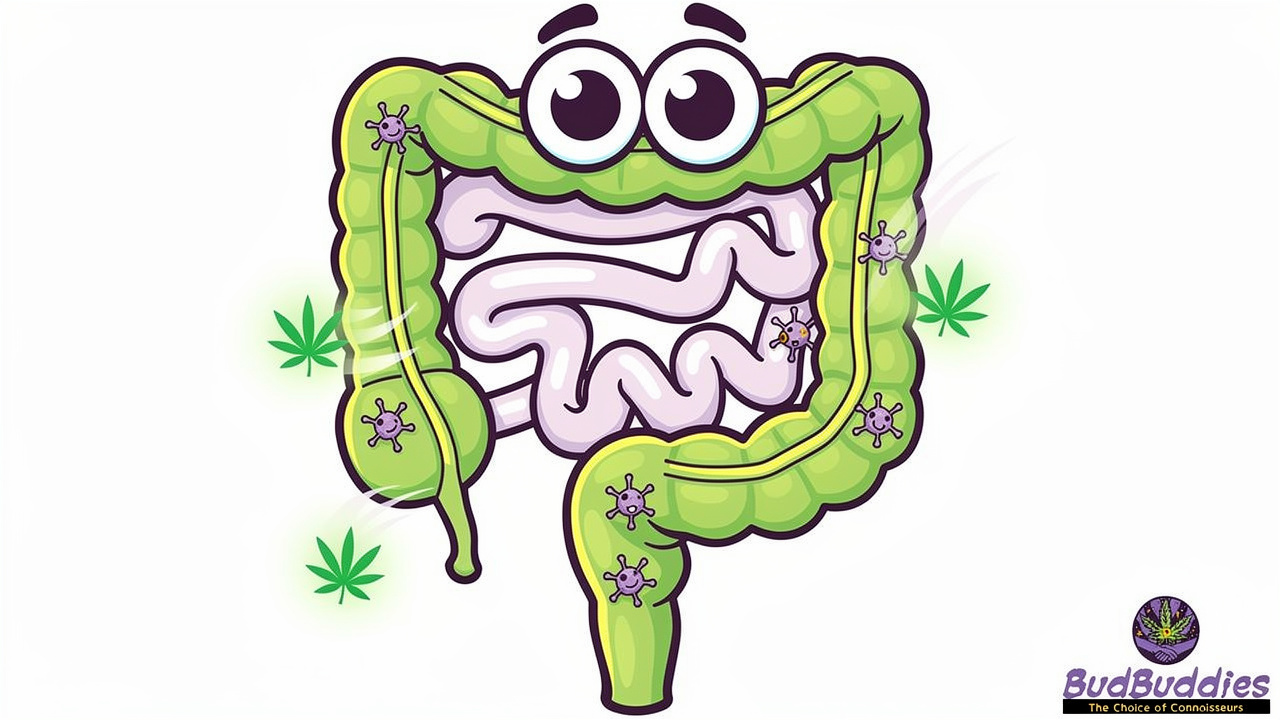
Cannabis affects your gut through the endocannabinoid system, a network of receptors called CB1 and CB2 that sit throughout the body, including deep within the gastrointestinal tract. This system normally helps regulate digestion, appetite, and gut motility, the process by which muscles in your intestines contract in waves to push food and waste along.
When THC latches onto CB1 receptors in the gut, it can dampen down these contractions, known as peristalsis, slowing the whole process. With less movement pushing things along, waste sits in the colon for longer, and the colon keeps drawing water out of it the whole time it’s there. The result is stool that’s drier, harder, and genuinely more difficult to pass.
Why Does Weed Affect Some People’s Bowels More Than Others?
Not everyone who uses cannabis experiences constipation, and that’s largely down to a handful of overlapping factors that stack differently for each person:
Dosage and frequency heavier or daily use means more THC consistently acting on CB1 receptors in the gut, while occasional use tends to leave digestion mostly unaffected.
Method of consumption edibles are processed through the liver and digestive system in a way that inhaled products aren’t, often producing a longer and more noticeable effect.
Dehydration cannabis is well known for causing dry mouth, and that same drying effect can extend through the body if fluid intake isn’t topped up to match.
Appetite changes, commonly called the munchies, often steer people towards processed, low-fibre snacks rather than the fibre-rich foods that support regular bowel movements, which compounds the issue independently of cannabis itself.
Reduced physical activity, particularly with more sedating strains, can also play a part, since movement helps stimulate healthy digestion generally.
Existing digestive conditions, such as irritable bowel syndrome, may mean your gut is simply more reactive to these changes than someone without that history.
Does Consumption Method Matter?

Edibles are metabolised through the liver and digestive system before reaching the bloodstream, a process examined in research on cannabis and bowel motility that shows it can produce longer-lasting and, for some people, more pronounced effects on the gut than smoking or vaping. This happens partly because the liver converts THC into a different compound during digestion, one that stays active in the body for longer than THC absorbed through the lungs.
Inhaled formats such as flower and vapes skip this digestive step almost entirely, which is why some people who struggle with edibles find they have no issues at all when they switch. BudBuddies stocks flower, vapes, edibles, and THC drinks side by side, so if one format seems to disagree with your gut, a straightforward alternative sits on the same site.
Can Weed Help With Constipation Instead?
Cannabis doesn’t only slow digestion down. Some users, and early research, point to a biphasic response, where small doses can support gut motility while larger doses have the opposite, slowing effect. This dose-dependent pattern is well documented with several other cannabis effects, so it isn’t a huge surprise that digestion might follow a similar curve.
Cannabis is also widely used to take the edge off stress, and stress itself is a well-known trigger for digestive issues, including constipation, in plenty of people. By easing tension and relaxing muscles throughout the body, some users find their bowel movements become more regular rather than less, though this depends heavily on the person, the product, and the dose involved.
How to Prevent and Manage Cannabis-Related Constipation

If cannabis leaves you feeling backed up, several practical adjustments can help ease things along without giving up your usual routine entirely. Most of these focus on undoing the compounding factors mentioned earlier, particularly dehydration and low-fibre snacking, rather than fighting cannabis’s direct effect on the gut.
Drink more water throughout the day, not just when you notice dry mouth. Consistent hydration keeps stool softer and genuinely easier to pass, countering the drying effect cannabis has on the whole body.
Add more fibre to your plate, including fruit, vegetables, wholegrains, and pulses. This supports regular bowel movements even during heavier sessions and is easier to build into a routine than most people expect.
Stay physically active, since even a short daily walk helps stimulate the gut. This counteracts the sluggishness that can come with a sedating strain or a lazy evening on the sofa.
Choose fibre-rich snacks over processed ones when the munchies hit. Planning ahead with healthier options nearby makes this far easier than resisting cravings in the moment.
Consider adjusting your dose, frequency, or product choice if constipation keeps recurring. Moving towards a lower-THC or CBD-dominant option is often enough to settle things down.
When Should You See a Doctor?

Occasional, mild constipation after using cannabis usually isn’t cause for concern and tends to settle once THC clears your system. It’s worth paying closer attention if constipation is severe or doesn’t improve, if it comes with significant abdominal pain or bloating, or if you notice symptoms resembling Cannabinoid Hyperemesis Syndrome, a rarer condition linked to heavy, long-term use involving cycles of severe nausea and vomiting.
If constipation persists even after cutting back on cannabis, or an existing digestive condition seems to be flaring up, it’s sensible to speak with a GP rather than waiting it out, since these symptoms can sometimes point to something unrelated entirely.
The Takeaway
So, does weed cause constipation? For some people, yes, largely down to THC’s effect on CB1 receptors in the gut, compounded by dehydration, snacking habits, and how little you move during a session. For others, it barely registers, or even seems to help, which shows how personal this relationship really is.
If you’re trying to work out what suits your body, exploring BudBuddies’ lab-tested range of flower, vapes, edibles, and drinks gives you a clear view of what’s actually in each product before you commit to it. Pay attention to how your own gut responds, adjust your habits where needed, and treat this as one more piece of getting to know your body a little better.
Frequently Asked Questions
Does CBD Cause Constipation The Same Way THC Does?
No, not usually. CBD doesn’t bind strongly to CB1 receptors in the gut, so it tends to have a more neutral effect on digestion than THC. Many people find CBD-dominant products sit more comfortably with their gut, though research in this area is still developing.
How Long Does Weed-Related Constipation Usually Last?
It typically clears up within a day or two once THC works its way out of your system. With heavy, regular use, the effect can persist longer, since THC keeps building up in the body and continuing to act on gut receptors.
Can Switching Strains Help With Digestive Issues?
Yes, different strains carry different cannabinoid and terpene profiles, which can affect digestion in different ways. If one strain upsets your gut, trying another with a different THC-to-CBD balance, using the platform’s strain breakdowns as a guide, is a sensible next step.
Is It Normal To Get Constipated Only With Edibles But Not Flower?
Yes, that’s a common pattern. Edibles pass through the liver, which converts THC into a compound that stays active longer and can affect the gut more noticeably. Flower and vapes skip this step, which is why some people tolerate them better.
Does Drinking Water Really Help With Cannabis-Related Constipation?
Yes, hydration makes a genuine difference. Cannabis often causes dry mouth and mild dehydration, both of which lead to harder, slower-moving stools. Drinking water consistently throughout the day helps counter this and keeps digestion moving more comfortably.

