


Does Weed Cause Diarrhoea? What Every Smoker Should Know
Loose stools after a smoking session can feel confusing, especially since weed has a reputation for settling the stomach rather than upsetting it. Many people reach for cannabis to ease nausea or spark an appetite, so digestive trouble seems like the last thing on the list of expected effects. This confusion is exactly why so many people search for a straight answer to does weed cause diarrhoea.
The truth sits somewhere in the middle. Cannabis rarely causes diarrhoea on its own, but certain factors, including dosing, edibles, product quality, and individual body chemistry, can tip things the other way for some people. This article walks through the science behind the gut-cannabis link, the specific triggers worth knowing about, and practical steps to keep your digestion on side. BudBuddies has put this guide together to help UK cannabis consumers make sense of a topic that gets far less straightforward advice than it should. Read on for the full picture, starting with the honest answer to the core question.
Key Takeaways
Cannabis is linked far more often to easing digestive upset than causing it, with diarrhoea remaining the exception rather than the rule.
A small number of triggers, including edibles, overconsumption, poor-quality product, and withdrawal, explain most reported cases.
The endocannabinoid system, with receptors spread through the gut, explains why cannabis affects digestion at all.
Quality, dosing, and consumption method are the biggest factors you can actually control.
Lab-tested, clearly dosed products from BudBuddies help reduce several of these risk factors from the start.
Does Weed Actually Cause Diarrhoea?
For most people, cannabis is more likely to calm an unsettled stomach than trigger a rush to the bathroom, though a minority of users do report loose stools after use. The digestive system reacts to cannabinoids through a network of receptors that behave slightly differently in every person, which is why one smoker’s experience can look completely different from another’s.
This variation comes down to a mix of biology and circumstance rather than any single cause. Body chemistry, the amount consumed, the method used, and even the quality of the product itself all play a part in whether cannabis settles or unsettles the gut. The sections ahead break down exactly why this happens and what tends to sit behind the cases where diarrhoea does show up.
How Does Cannabis Interact With Your Gut?
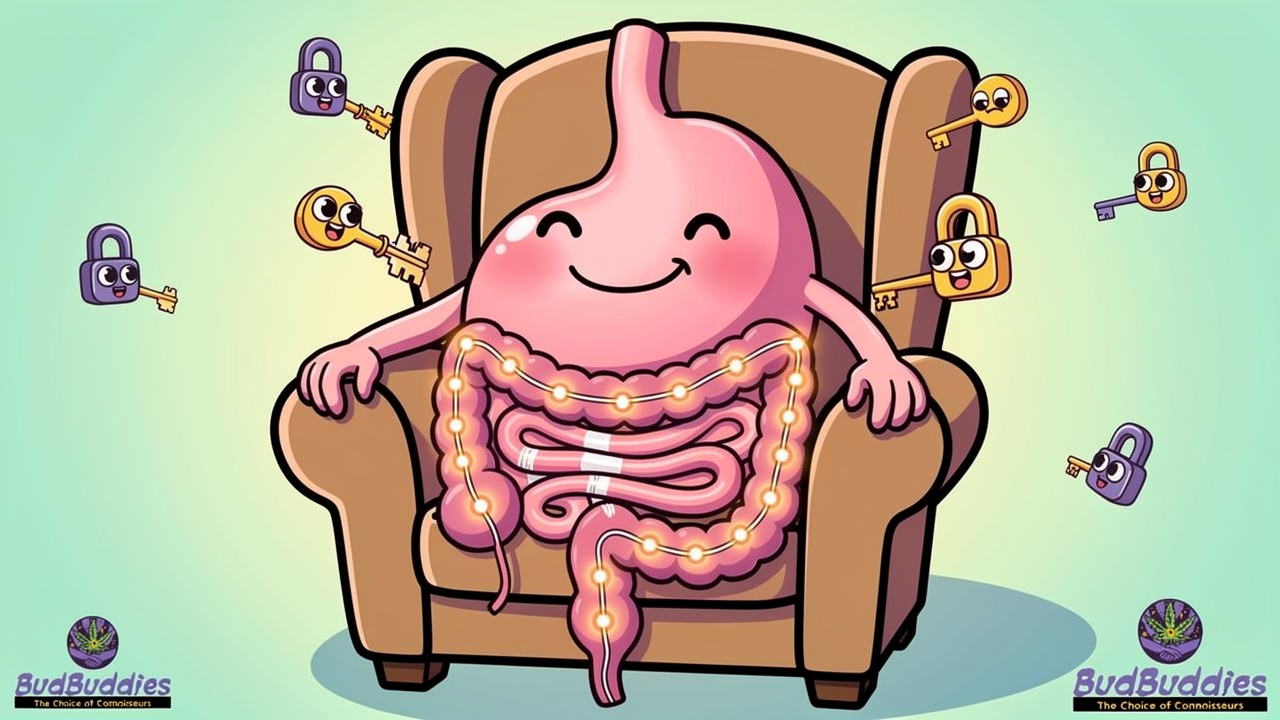
Cannabis affects digestion through the endocannabinoid system, a network of receptors and signals that helps keep the body in balance. This system, often shortened to ECS, regulates far more than mood and appetite. It plays a direct role in digestion, pain signals, and immune activity, with two receptor types, known as CB1 and CB2, sitting throughout the gastrointestinal tract rather than only in the brain.
This spread of receptors through the gut, documented in a cannabinoid-microbiome systematic review, explains why cannabis can have such a noticeable effect on digestion in either direction. THC binds directly to CB1 receptors, which can influence gut motility (how quickly food moves through the digestive tract) alongside its more familiar effects. CBD works more indirectly through CB2 receptors, without producing any intoxicating effects. Because these two compounds interact with the gut differently, cannabis can calm digestion for one person while disrupting it for another, depending on their own ECS response.
What Actually Triggers Diarrhoea After Using Weed?

A handful of specific triggers sit behind almost every case of cannabis-related diarrhoea, and recognising them makes the problem far easier to manage. Edibles, overconsumption, poor product quality, withdrawal, rare conditions like Cannabinoid Hyperemesis Syndrome, and anxiety each play a distinct role, and most people who experience digestive upset can trace it back to one of these causes rather than cannabis itself being the problem. Quality and dosing tend to be the two biggest levers within your control, a point echoed in clinical guidance on medical cannabis and gastrointestinal disorders, which is why choosing carefully tested, clearly labelled products matters as much as how much you actually consume.
Edibles, Sugar, and Carrier Oils
Edibles are the most commonly reported culprit behind cannabis-linked digestive upset. Sugar, fat, and carrier oils such as MCT oil, all common in gummies and baked goods, can cause loose stools on their own regardless of THC content. Slow onset, often taking 45 minutes to 2 hours, can also lead people to take a second dose too soon, assuming the first one hasn’t worked.
Overconsumption and “Greening Out”
Taking too much THC can overwhelm the body and trigger nausea alongside other symptoms sometimes described as greening out. Cannabis has what’s known as a biphasic effect, a dose-dependent response detailed in the Merck Manual’s clinical overview of marijuana, meaning low doses can settle the stomach while high doses push it the other way. This is one reason gradual, careful dosing matters so much for digestive comfort.
Poor-Quality or Contaminated Product
Mould, pesticides, or poorly cured flower can irritate the gut on their own, entirely separate from any cannabinoid effect. This makes product quality a hidden but genuine cause of digestive upset that has nothing to do with THC or CBD content. Independent lab testing and certificates of analysis (COAs) remain the clearest safeguard against this risk.
Cannabis Withdrawal and Cannabinoid Hyperemesis Syndrome (CHS)
Heavy, regular users who stop suddenly can experience withdrawal symptoms that occasionally include stomach cramps and loose stools alongside irritability and disrupted sleep. Separately, Cannabinoid Hyperemesis Syndrome is a rare condition tied to long-term heavy use, marked by cycles of nausea and vomiting, a pattern also noted in research on THC-containing cannabis for inflammatory bowel disease. Symptoms from both usually settle once cannabis use stops or is reduced.
Anxiety and the Gut-Brain Link
High-THC strains can trigger anxiety in some users, and anxiety itself is a well-established trigger for diarrhoea through the gut-brain axis. In these cases, cannabis isn’t directly upsetting the gut through a chemical reaction, but rather setting off a stress response that the digestive system reacts to.
How to Reduce Your Risk of Digestive Upset

Reducing the odds of digestive upset comes down to controlling the few variables that actually matter:
Product quality choosing lab-tested products removes the risk of contaminants causing gut irritation
Dose size starting low and increasing gradually helps you find the point where cannabis settles rather than disrupts your stomach
Consumption method matching your intake style to your own sensitivity makes a real difference
Matching your consumption method to your own sensitivity helps considerably. BudBuddies’ AAAA+ flower line offers predictable potency for careful dosing, while its edibles carry clear dosage labelling so you always know exactly what you’re taking. For those prone to digestive sensitivity, fast-acting vapes or THC drinks bypass some of the unpredictability edibles can bring, and the brand’s CBD-dominant and low-THC options give a gentler route for anyone wanting the benefits without the higher risk. Every batch across the range comes with a full COA, so quality assurance is never left to guesswork.
When Should You See a Doctor?

Most cases of cannabis-linked digestive upset settle on their own within a day or two, but certain signs are worth taking seriously:
Diarrhoea lasting more than a week
Severe abdominal pain
Signs of dehydration such as dizziness or dark urine
Blood in the stool
Any of these warrant a conversation with a GP rather than waiting it out.
Persistent digestive symptoms alongside cannabis use are also worth raising with a doctor, particularly if you already live with a condition like IBS or IBD, and official guidance on the use of cannabis for medical purposes recommends discussing any pre-existing conditions before use. A GP can help work out whether cannabis is genuinely the cause or whether something else is happening alongside it, and can advise on next steps if symptoms don’t clear up on their own.
A useful rule of thumb: if digestive symptoms outlast the cannabis itself by more than a few days, it’s time to stop guessing and get it checked.
Wrapping Up
Cannabis is far more often linked to settling the stomach than upsetting it, and for most people, diarrhoea remains the exception rather than something to expect. Where digestive upset does happen, it almost always traces back to a specific, identifiable cause rather than cannabis itself being inherently harsh on the gut.
Quality, dosing, and consumption method are the three factors that matter most, and they’re also the easiest to control once you know what to look for. BudBuddies’ lab-tested, clearly dosed range across flower, edibles, vapes, and CBD-led products gives you the information and consistency needed to shop with confidence and keep your digestion firmly on your side.
Frequently Asked Questions
Can CBD Alone Cause Diarrhoea?
CBD is generally well tolerated, but high doses can occasionally cause loose stools in sensitive people. This is more often linked to the carrier oil used in the product than to CBD itself, so checking the full ingredient list can help identify the actual cause.
Does Smoking Weed Cause Diarrhoea More Than Eating Edibles?
Smoking and vaping bypass the digestive system almost entirely, which generally makes them less likely to trigger digestive upset than edibles. Edibles pass through the gut and liver, where slower processing and added ingredients like sugar or oils raise the chances of an upset stomach.
How Long Does Weed-Related Diarrhoea Usually Last?
It typically clears up within a few hours to a day or two, once the cannabinoids have been fully processed by the body. Longer-lasting symptoms are more likely tied to withdrawal or, in rare cases, Cannabinoid Hyperemesis Syndrome rather than a single session.
Can You Build A Tolerance That Stops Digestive Upset From Weed?
Regular, moderate use often reduces sensitivity over time as the body adjusts to cannabinoids. However, heavy, long-term use raises the risk of Cannabinoid Hyperemesis Syndrome instead, so tolerance isn’t a reason to increase intake without limits.
Is It Safe To Use Cannabis If You Already Have IBS?
Some people with IBS report symptom relief from cannabis, while others notice flare-ups, so responses vary considerably. Starting with a low dose and monitoring how your body reacts is the safest way to find out where you sit.
Does BudBuddies Offer Low-THC Options For Sensitive Stomachs?
Yes, the brand stocks high-CBD, low-THC strains alongside CBD-only products for anyone wanting therapeutic effects with a gentler digestive profile. These options suit consumers who want the benefits of cannabis without the higher risk that comes with stronger THC doses.

