


Does Weed Make Studying Harder? A Clear Guide
Introduction
The short answer to does weed make studying harder is yes for many people, but not for everyone. Some find that a joint turns revision into a fog. Others feel a tiny amount of cannabis helps them relax and stay with the work.
The real issue is how dose, strain, product type, and timing change what weed does to your brain. Use a strong THC product right before dense reading and your memory and focus often suffer. Use a light, calmer product well before you start and you may feel less tense and more open to ideas.
This guide explains what actually happens in your brain, when cannabis can help, when it almost always gets in the way, and how to use it carefully if you choose to. You will also see how BudBuddies and budbuddies.cc use clear dosing, lab results, and strain guides so you can make confident choices. Keep reading to turn a fuzzy question into a clear, practical plan.
How Cannabis Actually Affects Your Brain When You Study
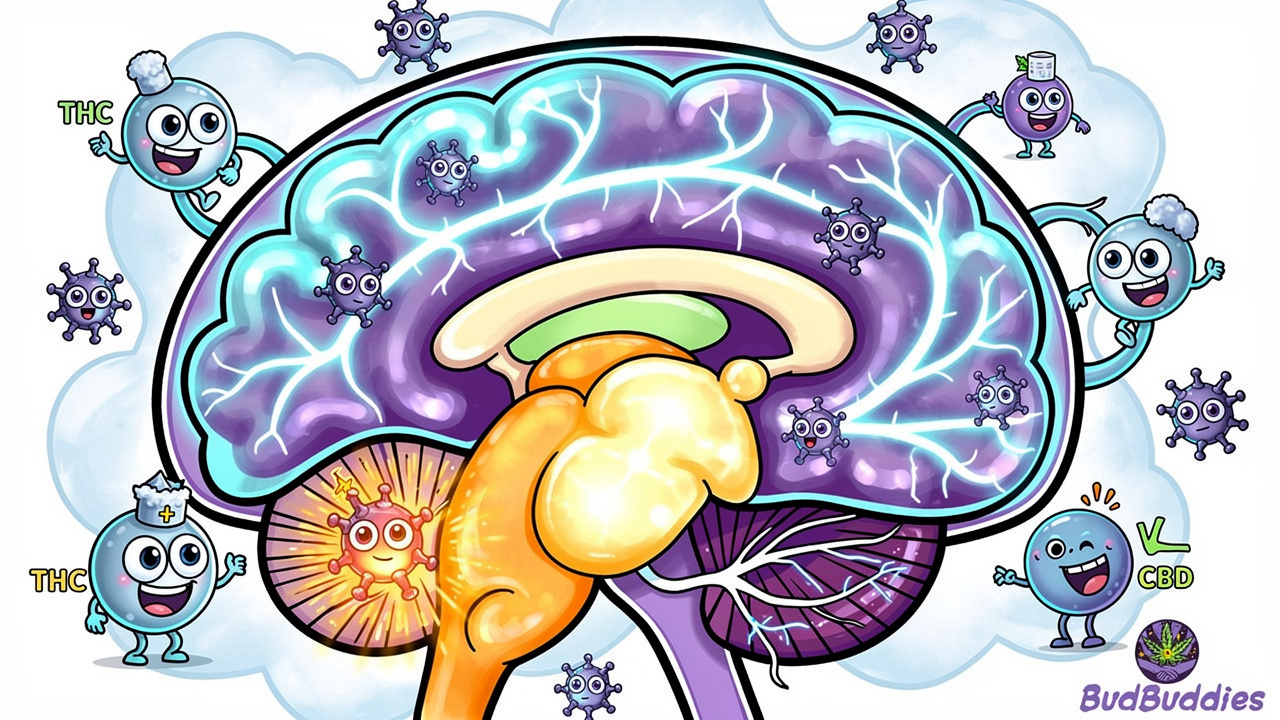
Cannabis affects your brain during study by changing how THC and CBD interact with the systems that manage focus and memory. When you consume weed before revision, THC binds to cannabinoid receptors in regions that control attention, learning, and motivation. Research from the National Institute on Drug Abuse explains that this binding alters how brain cells pass signals for several hours at a time.
That system is called the endocannabinoid system, and it normally helps fine‑tune mood, appetite, and learning. At low doses, THC causes a gentle rise in dopamine, the chemical linked with reward and interest. That can take the edge off nerves and make a dry chapter feel slightly more inviting. CBD in the mix may calm racing thoughts without adding much obvious high.
Once the dose climbs, the picture changes. does THC get you high the hippocampus, the brain area that turns short bursts of information into lasting memories. Research published in young adult cannabis use studies links THC exposure with weaker scores on short‑term memory and attention tests, including measurable differences in circulating endocannabinoid concentrations. You might read ten pages and find the next day that almost nothing has settled.
THC also narrows attention span and slows reaction time. A naturalistic examination of chronic and acute cannabis use on cognition confirms slower processing on complex tasks after smoking or vaping, with particular relevance for attention-related difficulties. That slowdown matters for maths problems, detailed reading, and any subject where you must hold several ideas in your head at once. It can feel like thinking through treacle.
With regular heavy use, the effect goes beyond one evening. Work from teams at University College London suggests that frequent high‑THC use can alter brain connectivity linked with learning and planning. People often notice a general fogginess and lower drive, even on days without weed. That is why honest reflection about your patterns matters as much as what happens in a single session.
“If you notice that weed makes you reread the same page again and again, that is your brain giving you feedback.” — Study skills tutor
When Weed Helps and When It Hurts The Honest Answer

Whether weed helps or makes studying harder depends mainly on dose, product choice, and the kind of work you need to do. For a lot of people, moderate or high THC before revision means weaker memory and focus. For some, a very small, carefully chosen amount can ease anxiety and help them start.
On the positive side, low‑dose THC can support creativity and cannabis for anxiety. A small trial reported by Springer Nature found that a light THC dose improved best terpenes for creativity scores in some adults doing creative tasks. CBD has its own benefits, with reviews in Harvard Health Publishing noting its calming effect for many users. For essay plans, brainstorming, or open‑ended projects, that calmer, freer headspace can feel helpful.
The negative side is better documented. A large review from the National Academies of Sciences, Engineering, and Medicine concluded that acute cannabis use reliably impairs learning, memory, and attention for several hours. That is the last thing you want when you need to memorise dates, formulae, or case studies. High‑THC edibles, strong indica flowers, or repeated vaping in one evening all raise that risk sharply.
So where does that leave you?
When Low‑Dose Cannabis May Help Certain Study Tasks
A tiny amount of a sativa‑leaning or CBD‑rich product can sometimes make repetitive reading, mind‑maps, or creative planning feel less heavy. The key is staying far below your usual recreational amount and keeping THC on the mild side. BudBuddies supports this with clear strength bands and lab data on every product page. That way you can pick lighter options for study nights instead of guessing.When Cannabis Is Likely To Make Studying Harder
Strong joints, potent concentrates, or high‑dose edibles before revision often end in poor recall and lost time. Indica‑heavy products can leave you sleepy, snack‑focused, and nowhere near your notes. Research collected by the National Institute on Drug Abuse also links frequent heavy use with poorer educational outcomes over time, a finding reinforced by factors associated with possible cannabis use disorder among medical cannabis users. BudBuddies’ detailed potency labels help you spot when a product sits in that “too much for study” zone before you use it.
Strain And Format Matter More Than You Think

Not all weed hits your brain in the same way, so strain and format matter a lot for study. Sativa‑dominant flowers flowers tend to feel brighter and more head‑focused, while indica‑dominant strains feel heavier and more body‑led. Balanced hybrids sit somewhere between, which can be handy for light, relaxed reading.
If you want to stay alert, classic sativa‑leaning names like Blue Dream, Sour Diesel, Durban Poison, or Jack Herer are popular daytime choices among many consumers. These often carry terpenes such as limonene and pinene, linked in early research to lifted mood and clearer focus. CBD‑only oils, edibles, or vapes add another option, bringing calm without noticeable high or memory fog.
Format changes the experience as well:
Smoking or vaping from BudBuddies flowers or cartridges hits quickly and fades within a few hours, so you can plan study blocks around the peak.
Edibles from budbuddies.cc take longer to kick in but last longer, which suits some people for an evening of lighter tasks.
Across all types, BudBuddies publishes terpene profiles and Certificates of Analysis so you can match strain and format to what your study session actually needs.
Practical Tips For Studying If You Choose To Use Cannabis

Practical study choices make a big difference if you decide to mix cannabis with coursework. The goal is to keep any benefits, such as lower anxiety, while cutting the risk of fog, distraction, or wasted hours. Thoughtful dosing and planning matter more than chasing a strong high.
Guides from sources like Harvard Health Publishing and the National Institute on Drug Abuse consistently repeat one message: start low and go slow. That lines up with how BudBuddies designs its range for clear, measured use. Here are grounded ways to put that into practice.
Microdose And Know Your Tolerance
For study‑adjacent use, think in micro amounts rather than full sessions. That might mean one or two small pulls on a vape, or a BudBuddies edible in the 2.5–5 mg THC range instead of several pieces. Give yourself at least an hour to judge the effect before adding more. If you feel floaty, distracted, or sleepy, that is already too much for useful study.Pick The Right Timing And Tasks
Save heavy, indica‑leaning products for after you close the books, when you want to unwind or sleep. If a tiny dose genuinely helps you settle, use it before low‑pressure reading or brainstorming rather than right before a timed mock paper. Many people find the best rhythm is sober, focused revision first, cannabis as a reward afterwards. BudBuddies’ product filters make it simple to separate daytime from evening options.Shape Your Study Space Carefully
Cannabis can make existing distractions more tempting, not less. Before you consume anything, tidy your desk, silence extra notifications, and queue up what you will work on first. Keep water and a light snack nearby to avoid trips to the kitchen turning into long breaks. A clean, simple space makes it easier for your slightly altered brain to stay on track.Track What Actually Works For You
Everyone’s response to weed is different, so treat the first few sessions like an experiment. Note what you took, how much, what you studied, and how well you remembered it the next day. If you spot a pattern where certain products always leave you foggy, keep those for weekends, not exam prep. BudBuddies’ consistent lab‑tested batches help you repeat the combinations that genuinely support you.
“If you’re going to mix cannabis and study, know your dose as well as you know your syllabus.” — BudBuddies team
What Regular Use Does Over Time And How To Stay Sharp
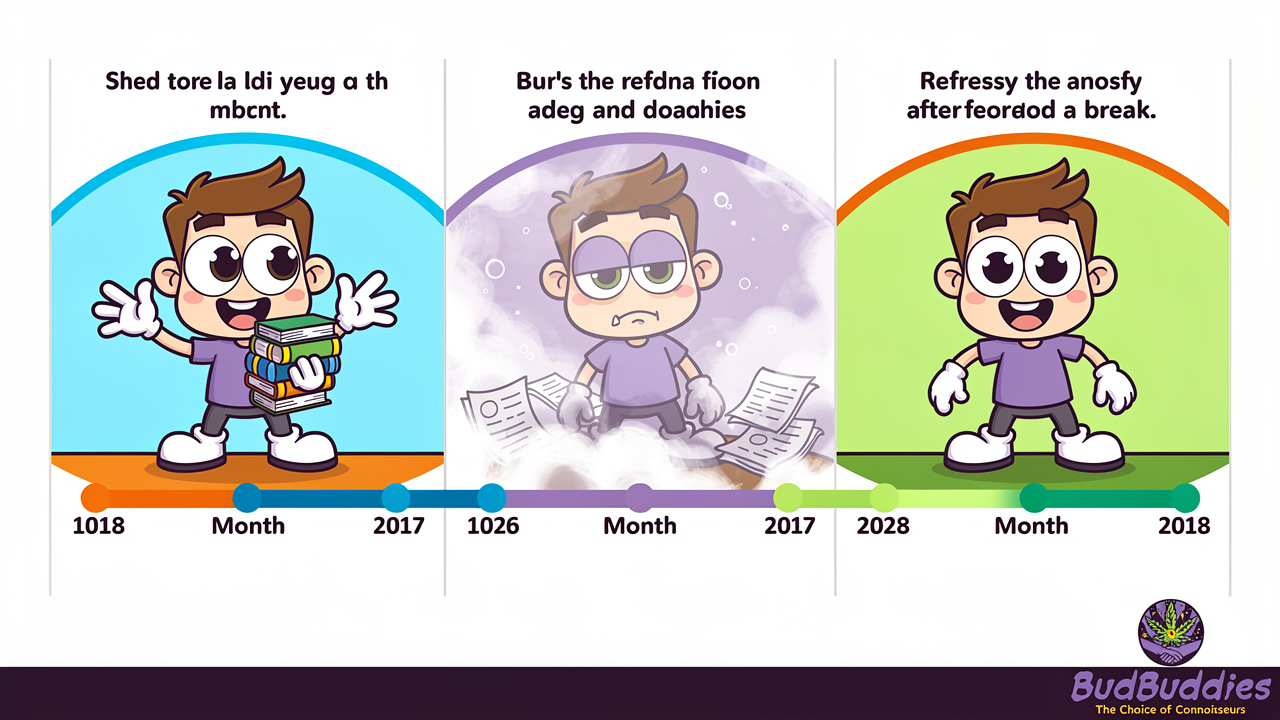
Regular, heavy THC use affects studying very differently from the odd light session. Over months, high‑dose patterns can blunt memory, motivation, and general mental sharpness. A large review for the National Academies of Sciences, Engineering, and Medicine linked long‑term frequent use with lower educational achievement and lower reported life satisfaction — a finding echoed by research on cannabis use during adolescence and its measurable impact on academic achievement.
Tolerance also builds with regular use. The brain adjusts to constant THC, so you need more to feel the same effect, which then adds more strain to memory and attention. Data from the National Institute on Drug Abuse estimate that around 9 percent of adult cannabis users develop some level of use disorder, rising to about 17 percent for those who start young — a pattern well documented in the Cannabis Use Disorder literature on StatPearls. That shows how easily a casual habit can become hard to dial back.
Staying sharp means putting some guard rails around your consumption, such as:
Keeping THC for evenings and days off.
Rotating in CBD‑only products.
Taking regular “tolerance breaks” of a week or two.
Many people notice that sleep, focus, and motivation improve within days of easing off. BudBuddies supports this kind of control with double‑verified potency labels and clear cannabinoid breakdowns, so you always know how strong a product really is.
Think of your brain as something you want working well for years, not just for this term. If weed starts to creep into every study session, or you feel foggy even when sober, that is a sign to cut back. A few honest adjustments now can protect both your grades and your long‑term relationship with cannabis.
The Bottom Line
So, does weed make studying harder or can it help? For most people, moderate or high THC before serious revision makes it harder to learn, remember, and stay focused. In lighter doses, with the right strain and task, cannabis or CBD can sometimes lower anxiety and support creative or low‑stakes work.
The key is knowing what you are taking, why you are taking it, and how it affects you the next day. BudBuddies makes that easier with a curated range of sativa flowers, CBD oils, balanced vapes, and low‑dose edibles, all backed by Certificates of Analysis. If you choose to mix cannabis and study, budbuddies.cc gives you the clear product information needed to do it thoughtfully rather than by guesswork.
Frequently Asked Questions
Does Weed Affect Memory While Studying?
Yes, weed can affect memory while you study, especially at moderate or high THC doses. THC acts on the hippocampus, which helps turn short‑term information into long‑term memory, and Cannabis Use Disorder research from NCBI highlights how repeated high-dose exposure can further entrench these memory disruptions over time. According to the National Institute on Drug Abuse, this can weaken learning and recall for several hours. CBD on its own does not show this effect.
Is CBD Better Than THC For Studying?
For most people, CBD is a safer bet for studying than THC. CBD can CBD for anxiety UK and promote a calm, steady mood without the high that interferes with memory and attention. Many readers start with BudBuddies CBD oils, edibles, or vapes from budbuddies.cc when they want gentle support without feeling intoxicated.
Does Smoking Weed Every Day Affect Your Grades?
Daily weed use can affect grades, especially when products are high in THC. Heavy, frequent use links with poorer memory, lower motivation, and more missed study time, according to reviews from the National Academies of Sciences, Engineering, and Medicine, with cannabis use during adolescence research confirming significant academic achievement gaps in systematic meta-analyses. Occasional low‑dose use carries far less risk, and regular tolerance breaks help your thinking stay sharp.
What Strains Are Best For Focus And Studying?
Sativa‑dominant and CBD‑rich strains usually suit study better than heavy indicas. Brighter options similar to Durban Poison, Jack Herer, or Blue Dream are often chosen for daytime focus, while CBD products support calm without a high. BudBuddies offers strain‑specific guidance and terpene data at budbuddies.cc so you can pick products that match your study goals.

