


Caught With Weed in a Student Flat? What Happens Next
Introduction
Being caught with weed in a student flat can flip an ordinary night into a flood of panic. Suddenly there are knocks on the door, strange faces in the hallway, and a head full of worst case scenarios. It feels like everything you have planned for uni is at risk.
This guide explains what usually happens next, how staff, flatmates and police tend to respond, and how to steady the situation. You will see the steps that follow, the consequences students often forget about, and what choices you still control. We will also look at practical ways to lower the risk next time, including more discreet options from BudBuddies.
Take a breath, read this through from start to finish, and you will feel more prepared for whatever comes next.
What Actually Happens When You’re Caught With Weed in a Student Flat
Being caught with weed in a student flat usually follows a pattern, even if it feels chaotic in the moment. Someone notices something, tells someone else, and before long you are facing questions at your own front door. Understanding that pattern helps you keep calm and make choices that work for you.
Tip: Pause before you react. Take a few slow breaths, speak clearly, and avoid rushing into explanations you might regret later.
Most situations start with smell drifting into shared corridors or neighbouring rooms. According to the Office for National Statistics ONS, cannabis is the most used drug among young adults in England and Wales, so staff are very familiar with how it smells. Resident assistants, security staff or neighbours pick up on it and make a report, sometimes after more than one incident.
From there, discovery usually comes from one of a few familiar routes:
Routine flat inspections where staff check alarms, windows and general condition often end up revealing grinders, baggies or trays left on desks. Once something is spotted, staff may take photos, ask questions, and pass the details to accommodation managers. Even if they seem friendly, they are usually expected to log what they see.
Noise complaints about parties or late night visitors can bring security to your door. If the room smells strongly of weed when they step in, the focus can switch very quickly from noise to drugs. That single visit can then trigger follow up meetings, emails and possible calls to the police.
Maintenance visits to fix heating, showers or electrics sometimes lead to awkward finds. If weed or paraphernalia is lying out in a kitchen or bedroom, workers may tell their manager, who then alerts housing staff. It can feel unlucky, yet it is extremely common for students to forget an item on the side.
Loose talk and social posts can also start the process. Flatmates, guests or even people you barely know can mention what they have seen to staff or online. Chat about dealing, large amounts or grows in the flat tends to travel fast. One careless social post or joke in the wrong ear is often all it takes.
Once someone in authority is involved, two paths can start at the same time:
Accommodation or university staff may arrange a meeting, send a warning, or even ask you to move out, based on their own rules for residents.
Police involvement may follow if staff feel they have to report what they have seen.
You can end up dealing with both processes at once: staff meetings about your housing and a separate visit or interview with officers — a dynamic explored in detail in research on Detection and documentation of crimes in the student environment relating to illicit drug trafficking.
When Flatmates Are Involved – Shared Risk in Shared Spaces

When weed sits in a shared student flat, everyone in that space feels some level of exposure. If cannabis is found in a kitchen, lounge or shared bathroom, staff usually cannot tell who brought it in. That often means every name on the tenancy or housing contract gets called in for a chat.
You are not required to take the blame for someone else’s stash. If you genuinely do not know whose it is, saying so clearly is usually better than guessing or covering. The sooner you state that you do not want weed kept in communal areas, the easier it is to separate yourself from someone else’s choices.
The best time to talk about this is before anything happens. Early in the year, sit down with flatmates and agree simple ground rules about smoking, vaping and storage:
No weed or paraphernalia left in shared cupboards or on kitchen counters.
No smoking in doorways or corridors where smell drifts into other flats.
Clear agreement on what happens if staff find something in a shared area.
You can say you are not comfortable with weed in shared spaces, or with strong smells drifting into the hallway. That kind of clear, calm chat can prevent very awkward conversations later.
The Consequences That Catch Students Off Guard
Consequences from being caught with weed in a student flat often run wider than a quick telling off. Short meetings and warning letters can stack up into housing problems, academic stress and awkward questions later in life. Many students only see the full picture once things have already escalated.
Universities usually push any report of drug use in halls into a formal conduct route. That might mean:
a meeting with a residence or conduct manager
a written warning on your file
being asked to move out of halls
Guidance shared by Universities UK highlights that behaviour in accommodation is a frequent trigger for these processes, so staff follow clear internal steps rather than dealing with cases informally.
Living arrangements can change very fast once an incident is logged. Some students find themselves removed from halls with only a few days to find a room elsewhere, even if they stay on their course. With more than two and a half million people studying at UK universities, according to the Higher Education Statistics Agency HESA, private rentals near campus can be scarce and expensive, especially part way through the year.
Tip: If you get a warning or letter, contact your students’ union or advice centre straight away. The earlier you ask for help, the more realistic options you usually have.
Longer term, any formal action from staff or police can leave a paper trail. Employers in teaching, healthcare, finance and similar fields often use enhanced background checks that pull information from several systems, not just your CV. Government guidance on safeguarding roles from the Disclosure and Barring Service DBS explains that such checks can include past warnings as well as more serious outcomes.
Housing and travel can also be affected:
Letting agents may ask previous landlords whether there have been behaviour issues.
Some overseas visa forms include questions about past contact with police or disciplinary action.
Professional registration bodies in fields like nursing or law often expect you to declare previous sanctions.
None of this means life is over, yet it shows why treating the situation carefully from day one really matters, even if it feels minor at first.
Your Rights If Police Attend Your Flat

Your rights when police arrive at a student flat shape how the whole situation feels. Knowing what you can calmly say and do often makes the difference between panic and a more controlled conversation. Many students meet officers at their door for the first time in this setting.
Police usually need either:
your clear agreement for them to come in, or
a specific written authority (such as a warrant or particular legal power) that lets them enter without it.
In shared blocks, staff may let them into the building itself, but your flat or room is still treated as private space. Understanding that difference helps you set calm boundaries at the door.
Once officers are inside, the way you behave matters as much as what they find. You do not have to answer every question in detail on the spot, beyond basic information like your name and address. Research discussed by the National Union of Students NUS suggests many students feel unsure what to say in these moments, which is why thinking it through in advance helps — a concern also raised in work on Building consensus for harm reduction approaches in UK universities, where students reported feeling underprepared when facing institutional or police contact over drug use.
In general, you can:
give basic details (name, address, date of birth) without getting into long explanations
say you would like to speak to a legal adviser before answering detailed questions
ask for a copy of any notes, forms or reference numbers linked to the visit
If things go further, you can ask to speak to a legal adviser or a trusted representative before giving a full account. Many students also contact their students’ union advice centre as soon as they can, so they have someone to help them understand any papers or next steps. You are allowed to take time before signing anything or agreeing to a version of events.
Tip: As soon as you can, write down what happened — times, names and what was said. Your own notes can be very helpful later.
Practical habits make these encounters less stressful:
Stay polite and steady, even if you are scared. Sudden movements, raised voices or arguments only increase tension for everyone in the room. Officers are used to nervous students, and calm behaviour usually keeps the tone more relaxed.
Answer simple identification questions but avoid chatting freely about who owns what or how often people smoke. You can say you would rather speak to an adviser before going into detail. Short, neutral answers often serve you better than long stories.
Do not try to hide, flush or throw anything once police are at the door. That kind of action attracts far more attention than the original issue and can be treated as its own problem. Keeping your hands visible and movements slow reduces suspicion.
Read any documents properly and ask questions if you are unsure. You can request copies for your records and show them to a representative later. Writing down times, names and what was said, as soon as you can, helps you remember events clearly.
Remember that this guide is general information, not legal advice. If police are involved, speaking to a qualified solicitor is always wise.
Smarter Choices – How to Reduce Your Risk as a Cannabis Consumer
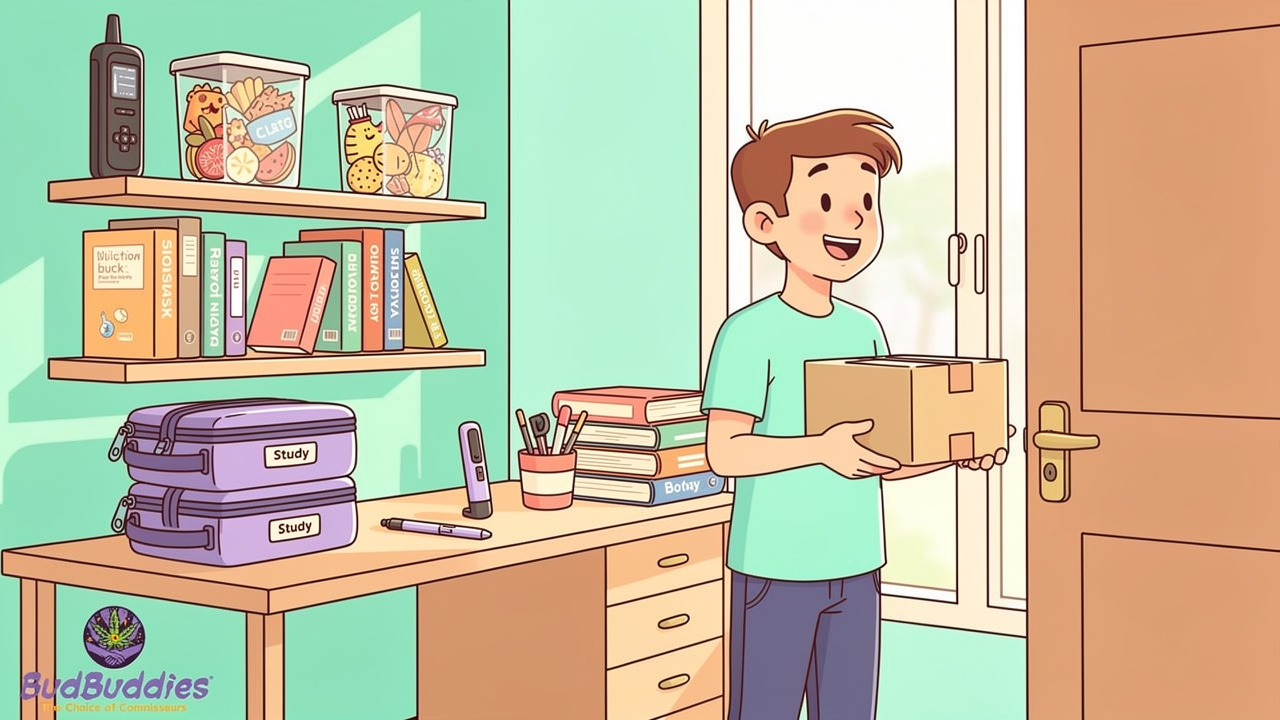
Smarter choices about how you use cannabis in a student flat can sharply cut your chances of awkward knocks on the door. Being thoughtful about smell, storage, quantities and delivery already puts you ahead of many others. This section stays practical and focused on what you can change.
The first big factor is smell. ONS figures show that about one in six young adults used cannabis in the last year in England and Wales ONS, so staff and neighbours recognise the scent very quickly. The more that smell drifts into corridors, the higher the chance someone says something.
Consider the following:
Think carefully about how you consume. Smoking joints or bongs indoors produces lingering odour that spreads through vents and under doors. Vapes and edibles from BudBuddies produce far less smell, which makes them better suited to shared spaces. With clear strength info on budbuddies.cc, you are also less likely to overdo it and draw attention.
Keep weed and gear out of communal areas. Leaving trays, grinders or bags in the kitchen is asking for trouble during inspections or surprise visits. Store everything in your own room, in airtight or smell proof containers, and away from windowsills. BudBuddies packaging is vacuum sealed and discreet, which makes private storage much easier.
Rethink how you source cannabis. Meeting random contacts outside halls or in cars increases the chances of being seen or talked about. Ordering through budbuddies.cc gives you tracked delivery, plain outer packaging and smell proof inner bags that look like any other online order. You can time deliveries so parcels go straight from courier to your hands, not via a communal post room.
Pay attention to quality and dose. Unreliable street products can be far stronger than you expect, which can lead to loud, messy nights that attract complaints. BudBuddies publishes lab results, cannabinoid profiles and clear dosing guides, so you can choose calmer strains or lower strengths when you need to stay low key. Knowing what you are taking helps you stay in control.
Do not supply others. Giving or selling weed to friends, even casually, can move you from personal use into dealing in the eyes of the law, which carries far heavier consequences.
Small habits add up. Keeping gatherings modest, airing rooms, cleaning surfaces and binning roaches promptly all help your flat feel normal to visitors. Combine that with the privacy focused setup that BudBuddies offers and you significantly lower the chances of being caught with weed in a student flat again.
Tip: Treat your flat like somewhere staff might walk into at any time. If you would panic about them seeing or smelling something, change how and where you use it.
Kokkuvõte
Everything in this guide comes back to one main point. Being caught with weed in a student flat feels huge in the moment, yet there are clear patterns you can learn from. Once you see how discovery happens, how people tend to respond and what you can still control, the situation feels far less overwhelming. With calm reactions, sensible choices and better habits, most students are able to move past a scare and keep their plans on track.
The Bottom Line
Being caught with weed in your student flat is never pleasant, but it does not have to define your whole time at university. When you know how discovery usually happens, what staff and police might do next, and how to respond calmly, you can reduce the damage and move forward.
For anyone who chooses to keep using cannabis, the low drama route is to stay discreet, stay informed and avoid risky sourcing. BudBuddies exists to support exactly that, with quiet delivery, smell proof packaging and clear product information that makes private use much simpler. Combine that with tidy habits at home and you greatly lower the chances of facing the same situation again.
Frequently Asked Questions
These answers give general guidance for students in the UK. They are not a replacement for professional legal advice.
Question: Can my university expel me for having weed in my flat?
Yes, a university can expel a student if it decides cannabis use breaks its code of conduct. Many cases stop at a warning, fine or being moved out of halls, yet the rules allow stronger action in serious or repeated cases. Eviction from accommodation often happens faster than any academic decision about your course, so housing is usually affected first.
Question: What should I do if my flatmate has weed and I don’t?
The best step is to protect yourself and set clear boundaries. You are not required to cover for a flatmate, and you can say you do not want their stash in shared areas. Speaking to welfare or housing staff for anonymous advice helps you understand options without immediately naming anyone. If things escalate, having already said you were not comfortable with weed in communal spaces can make a real difference.
Question: Does a cannabis warning show up on a DBS check?
A simple warning from police usually stays off a standard DBS check but can appear on an enhanced one. Roles in teaching, healthcare, law and social care often use enhanced checks. If you are heading for those paths, treat any contact with police around drugs as a serious matter and ask a legal adviser how it might appear on future checks.
Question: Are edibles or vapes safer to use in a student flat than smoking?
Edibles and vapes are usually lower risk in shared housing because they produce far less smell than joints or bowls. Odour is what alerts neighbours and staff most often. BudBuddies stocks a full range of precisely dosed edibles and THC vapes, sent in plain, smell proof packaging that keeps attention low. Always start with a low dose and wait, especially with edibles that take longer to kick in.
Question: How does BudBuddies make delivery discreet for students?
BudBuddies builds privacy into every stage of delivery. Orders arrive in plain, unbranded packaging, with products sealed in vacuum packed, smell proof bags inside. Tracked services show where your parcel is, so you can meet it at the door and avoid it sitting in communal mail areas or with reception.
This article is for information only and does not give legal or medical advice. If you are facing disciplinary action or criminal charges, speak to a qualified adviser as soon as you can.

