


Smoking Weed Before Studying: Does It Really Help?
Does Smoking Weed Before Studying Actually Help?
Smoking weed before studying can sometimes feel helpful, but for most people it quietly gets in the way of learning. It may soften stress or make dull reading feel less painful, yet it often harms memory and focus when THC levels are high.
The phrase smoking weed before studying comes up in group chats, lecture halls, and late‑night revision crams. Some friends say it makes reading less boring; others say they forget everything the next day. No wonder it feels confusing.
Here is the key point. THC can disrupt short‑term memory, while CBD can calm nerves without the same mental fog. So whether a pre‑study joint helps or hurts depends on:
dose
strain
timing
your tolerance
and what kind of work you are doing
This guide walks through how cannabis affects your brain, where it may help, where it gets in the way, and how BudBuddies products fit in. If you would rather have clear, no‑nonsense guidance than rumours and guesswork, you are in the right place.
How THC And CBD Affect Your Brain When You Study
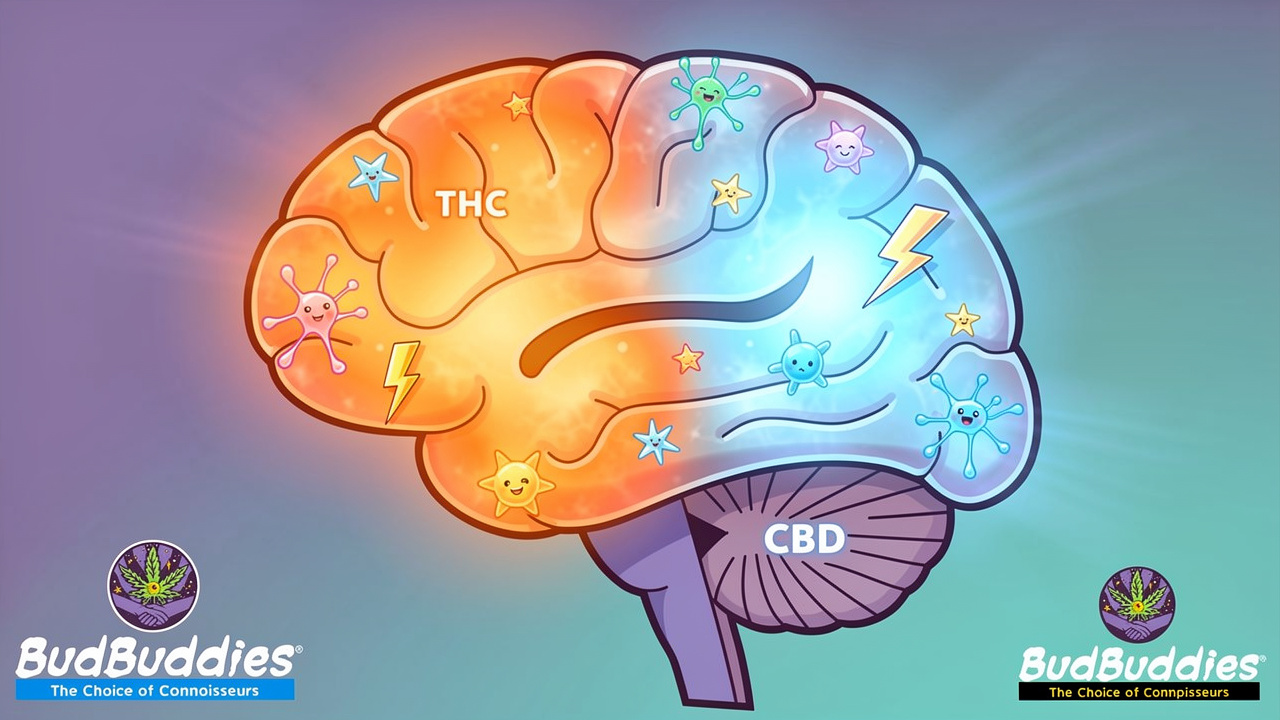
How THC and CBD affect your brain when you study explains why some people swear by cannabis and others regret using it. Once you see what they do to memory, attention, and mood, the mixed stories start to make sense.
THC interacts with the endocannabinoid system and binds to CB1 receptors in the hippocampus. That part of the brain handles learning and forming new memories. When THC is present, the brain struggles to move information from short‑term storage into long‑term storage, so new material does not stick as well.
Research from NIDA reports that cannabis use can impair attention, memory, and learning for several hours after use. That effect is strongest at higher doses and in people who do not use often. So a strong high right before revision is rarely a smart move.
THC also nudges dopamine in reward pathways, which can make a dull textbook feel more interesting. The catch is simple. Feeling interested and actually remembering the content are two different things, and THC helps one more than the other.
CBD behaves very differently. It does not create a high and does not bind to CB1 receptors in the same way. Studies reviewed by Harvard Medical School link CBD with reduced anxiety and a calmer mood. That calmer state can help you sit with your work, especially if stress usually sends you into avoidance or scrolling.
So, THC tilts you toward impairment as the dose climbs, while CBD leans toward calm without the same memory cost. Most real study experiences sit somewhere between those two poles, depending on the product and how much you use.
“The palest ink is better than the best memory.” — Chinese proverb
When you are high, rely on written notes and summaries rather than trying to hold everything in your head.
The Case For And Against: Honest Perspectives On Studying And Cannabis
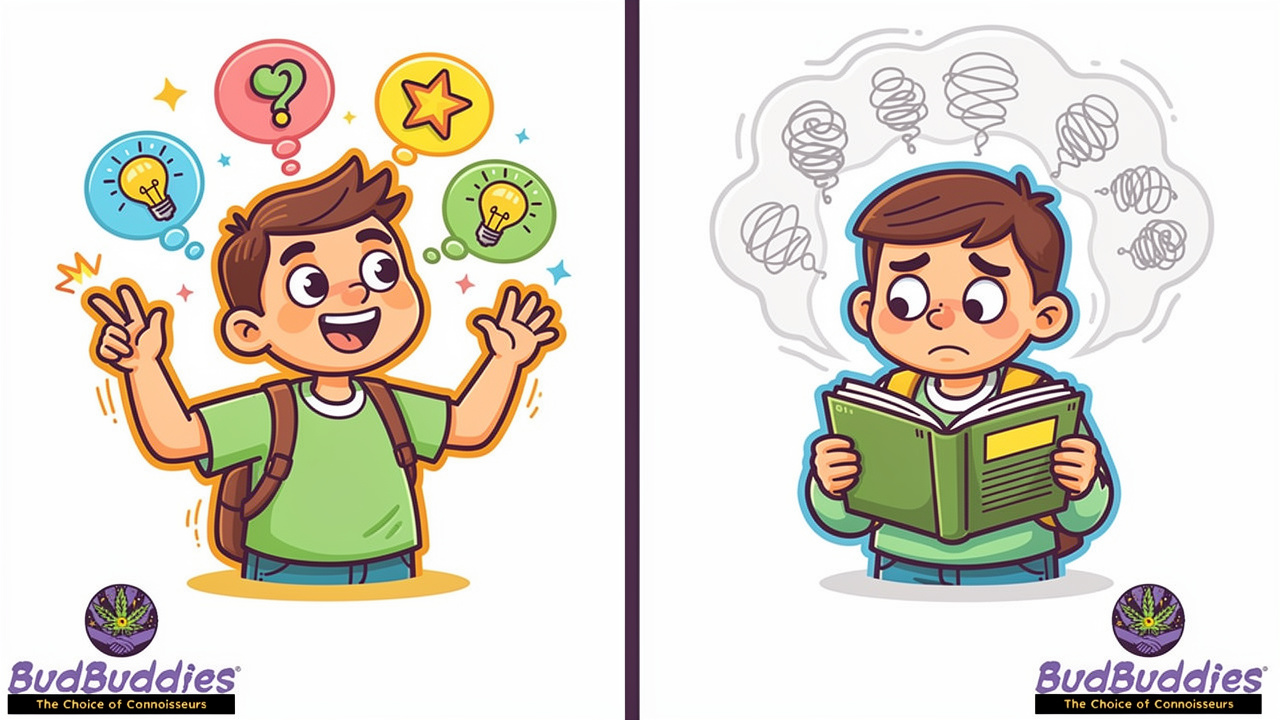
The case for and against mixing study sessions with cannabis reflects what many BudBuddies customers describe. There are real upsides for some people, but they sit next to very real downsides shown in research.
On the positive side, some learners find that certain strains help soften boredom and perfectionism. Others feel less tense about deadlines and can finally sit at the desk without spiralling worry. A few say brainstorming feels more fluid and playful after a small amount of THC.
On the negative side, people often report reading the same page again and again and not taking anything in. Others feel more self‑conscious, overthinking every sentence they write. Long revision sessions can turn into playlists, snacks, and very little actual work.
According to a review in Frontiers in Psychology, frequent cannabis users tend to score lower on verbal learning and memory tests than non‑users. That fits with what many students notice when they revise high all week, then sit an exam sober.
Here is a clearer look at what people describe:
Some people notice that low‑THC or balanced products make creative work feel easier. They might outline essays, sketch designs, or map ideas without the usual tension. The work can feel less rigid and more playful, which suits open‑ended subjects. This effect tends to fade or flip into confusion when the dose creeps up.
Others find that a very small amount helps quiet racing thoughts before a study block. They use it like a mental warm‑up, then work largely on autopilot once they get going. If they overshoot the dose though, the same product can slow reading and make concentration feel fragile. The line between helpful and unhelpful sits close.
On the downside, many people find heavy use damages their sense of drive, and a naturalistic examination of cannabis use found that both chronic and acute consumption negatively affected cognition and attention in everyday settings. Long periods of daily high‑THC use can leave them flat and unbothered about grades. Research quoted by NIDA links heavy long‑term use with problems in attention and motivation, which is not what anyone wants from a study habit.
“The secret of getting ahead is getting started.” — Mark Twain
If weed keeps you from ever starting the work, it is not helping your studies, no matter how relaxed it makes you feel.
When Cannabis Might Actually Support Your Studies
When cannabis might actually support your studies is a narrower question than whether it helps studying in general. There are a few clear situations where it can fit fairly well if you already use it.
Creative or conceptual work can sometimes work with a gentle cannabis haze. Tasks like idea mapping, free writing, or exploring themes respond well to looser thinking. A light sativa or hybrid effect can help you see links you might skip when too tense. The key is that you are not trying to memorise strict facts at the same time.
CBD‑heavy products can help if study nerves keep you stuck before you even start. A CBD oil or CBD flower session from BudBuddies can relax your body without pushing you out of your depth mentally. Many people find that once their chest feels less tight, starting the first page feels less dramatic. Over time, that simple shift can raise grades.
Revising material you already know fairly well sits in a middle zone. Some learners go over flashcards or mind maps with a light THC effect and do fine. Because the base knowledge is already there, they are reinforcing rather than building from scratch. Even here though, a high dose brings more risk than reward.
Post‑study relaxation and sleep support may be the most study‑friendly use of cannabis. Research gathered by Sleep Foundation shows that solid sleep helps the brain lock in new memories. If an indica or CBD product helps you switch off and get those hours, your daytime revision can benefit indirectly.
Strain, Dose, And Consumption Method: What To Choose If You Do Use Cannabis Around Study Time

Strain, dose, and method shape how smoking weed before studying affects your mind much more than many people realise. Choosing well will not turn cannabis into a magic study aid, yet it can reduce avoidable problems.
Sativa‑leaning and balanced hybrid strains tend to suit daytime use more than heavy indicas. People often describe a clearer, more head‑based effect, which pairs better with thinking work. Indica‑heavy strains such as Blue Cheese from BudBuddies are usually better saved for the end of the night when sleep and body relaxation matter more than revision.
Terpenes also matter. Limonene, found in many citrus‑scented strains, often links with lifted mood and a sense of lightness. Pinene has been studied for possible support of alertness and may help counter the classic THC fog. While these links are not simple guarantees, checking terpene profiles on budbuddies.cc gives you more control than guessing.
Format makes a big difference as well. Research from NIDA notes that smoked or vaped cannabis peaks in the blood within minutes, while orally consumed products can take between 30 minutes and 2 hours to reach full effect and then last far longer. That timing matters if you care about clear thinking during a specific study slot.
A few simple rules help here:
Lower doses cause much less trouble around study time than big hits. A couple of small puffs from a BudBuddies vape, then a pause to see how you feel, usually beats a strong joint in one go. Once you overshoot, you cannot pull the THC back out. Treat each increase as a small step, not a leap.
Inhaled formats like vapes give better real‑time control than edibles. If you feel too floaty while vaping, you can stop and watch the effect fade within an hour or so. With edibles, once the dose is swallowed, you wait for several hours and ride the wave. That slow arc rarely fits focused revision.
CBD products work best for people who mainly want calm rather than a high. CBD flower, CBD vapes, and oils from BudBuddies are labelled with clear percentages and lab reports. That clarity helps you match your choice to your goal, whether that is taking the edge off anxiety or winding down after work.
BudBuddies tip: Start lower than you think you need, especially on nights before exams or important deadlines. You can always add a little more next time if the effect feels too mild.
BudBuddies Products Worth Considering For This Use Case
BudBuddies products worth considering for study‑linked use cover several categories, each with a clear role. The idea is not to push you toward one format, but to help you spot what might fit your own pattern.
For creative or idea‑heavy tasks, many customers lean toward sativa strains such as Green Crack or Amnesia Haze from budbuddies.cc. These flowers tend to give an uplifted, citrus‑tinged experience that suits mind mapping and brainstorming. Balanced hybrids like Blue Dream or Strawberry Cough often sit in the middle, giving a bright head feel without pulling you into the sofa.
If you prefer quick, measured doses, THC vapes are a natural fit. BudBuddies cartridges and disposables list THC strength clearly on the box, so you can match a lower‑strength option to lighter study days. CBD oils and CBD flower offer a gentler route for anxiety relief, especially before big projects. Across all of these, BudBuddies recommends a start‑low, go‑slow approach and often suggests microdosing around 2.5 to 5 mg THC around 2.5 to 5 mg THC, used 4 or 5 days a week with 2 or 3 day breaks to keep tolerance steady. Always follow local laws and, if you are unsure, talk with a healthcare professional first.
Timing Your Use: Before, During, Or After A Study Session

Timing your cannabis use around study sessions has more influence on your results than many other variables. The same product can feel friendly or unhelpful depending on when you use it.
Using cannabis just before sitting down to work places peak THC right inside your learning window. That is the moment when your brain most needs sharp short‑term memory. For fact‑heavy subjects, smoking weed before studying in that way usually makes the next day’s recall weaker, not stronger.
Here is a simple way to think about timing:
Before study, keep things very light if you use anything at all. Waiting 60 to 90 minutes after a small vape or joint before you start helps you avoid the peak. If you choose a low‑THC, higher‑CBD product and focus on planning, outlines, or easy reading, you reduce the risk of wasted hours. Heavy maths or case law are better tackled sober.
During breaks, many people find a quick puff tempting as a mini reward. The problem is that breaks then grow longer, snacks appear, and the next block of work feels slow. If you want a treat, consider a CBD option from BudBuddies during a longer break and keep THC for after your work is actually done. That way, the study block stays the main event.
After study is usually the safest window for most adults. You get the full benefit of sober learning, then use cannabis to relax, stretch, or chat once your notes are closed. This pattern keeps the association between focus and clear thinking, while still letting cannabis hold a place in your evening routine.
Before bed, some learners use indica or CBD products to support sleep. As mentioned by Sleep Foundation, consistent, good‑quality sleep helps the brain store the day’s learning. If cannabis helps you fall asleep at a sensible hour without heavy after‑effects, your study efforts can pay off the next morning.
“Sleep is the single most effective thing you can do to reset your brain and body each day.” — Matthew Walker, Why We Sleep
If cannabis helps you sleep better without hurting your days, that may be a smarter use than getting high during revision.
The Bottom Line

The bottom line on smoking weed before studying is that it rarely acts as a simple study booster. For most people, THC makes new facts harder to keep and detailed reading harder to follow, especially at higher doses.
That does not mean cannabis and study can never sit in the same life. Light, well‑judged use around creative work, anxiety relief, or post‑study rest can fit into a balanced routine. CBD products from BudBuddies often suit those roles best, with far fewer memory concerns.
If cannabis is already part of your lifestyle, the smartest move is to take strain, dose, method, and timing seriously. BudBuddies exists to make those choices clear, with lab‑checked products, plain‑English guidance, and a calm, discreet experience on budbuddies.cc.
Frequently Asked Questions
This section answers common follow‑up questions about studying and cannabis in simple, direct language. Each answer stands on its own, so you can skim to the parts that fit your situation.
Question: Can smoking weed before studying help with ADHD‑related focus issues?
Some adults with ADHD‑like traits report that low‑THC, sativa‑leaning strains help them sit still and start tasks. The effect is highly personal and large doses usually backfire. Microdosing and keeping a simple log of what you use and how you feel can help you notice patterns. CBD products from BudBuddies are a calmer starting point for focus support.
Question: Is vaping better than smoking for studying?
Vaping is often better than smoking when study focus matters, because you can control dose more precisely. Effects arrive within minutes, so you can pause as soon as you feel a light lift. BudBuddies vape products show THC strength clearly, which helps you pick gentler options. Many people also find vapour less harsh on the throat.
Question: What is microdosing and does it work for focus?
Microdosing means taking a very small amount of THC, well below the level that gives a strong high. The aim is a subtle shift in mood or concentration, rather than obvious intoxication. Many BudBuddies customers start around 2.5 to 5 mg THC per session and track how it feels. Cycling days on and off helps stop tolerance dulling the effect.
Question: Are edibles a good choice to use around study sessions?
Edibles are rarely a good match for planned study blocks. They take 60 to 90 minutes to kick in and can last several hours. That slow rise and long plateau make timing tricky. Many people find themselves most intoxicated right when they meant to be sharp.
Question: What is the best type of cannabis strain for studying?
For daytime and focus‑related use, people most often choose sativa‑dominant or balanced hybrid strains. These usually feel brighter and more head‑centred than heavy indicas, which suit evening rest or sleep after revision. Looking at terpene profiles helps too, with limonene linked to mood lift and pinene linked to alertness. BudBuddies product pages highlight these details so you can pick with confidence.

