


cannabis product safety standards
Picking a cannabis product online often means trusting a label you cannot check and a supplier you have never met in person. Quality swings wildly between sellers, and without a way to see what is actually inside a jar, cartridge, or bottle, buyers are left guessing whether something is genuinely safe or just well packaged.
Cannabis product safety standards are the checks, tests, and labelling rules that confirm a product contains exactly what it claims and nothing harmful on top. This covers lab testing for potency and contamination, clear labelling, and honest sourcing right through the supply chain. This guide walks through how testing works, which contamination risks matter most, how to read a label properly, and what separates a trustworthy supplier from the rest. Along the way, we will show how BudBuddies builds these checks into every product it lists.
Read on to see exactly what to check before you spend a penny.
Key Takeaways
Cannabis product safety standards cover potency accuracy, contamination limits, and consistent quality checks from growing through to the finished product.
A certificate of analysis is the clearest proof that a product has actually been tested, not just described.
Mould, pesticides, heavy metals, and residual solvents are the main contamination risks, and they vary by product format.
A trustworthy label lists cannabinoid percentages, full ingredients, and batch details, not vague marketing terms.
The most reliable suppliers make testing documentation easy to find rather than something you have to ask for.
What Are Cannabis Product Safety Standards?
Cannabis product safety standards are the combined rules and checks that confirm a product is accurately labelled, free from harmful contaminants, and consistent from batch to batch. In practice, this means potency claims match lab results, growing and processing avoid unnecessary chemical residues, and every stage of production gets documented rather than left to guesswork.
These standards matter differently depending on who is reading a label. Newcomers want reassurance that a product will not cause unpleasant surprises, whilst experienced consumers care more about consistency between batches and accurate strength information. Either way, the same underlying checks apply, which is why understanding them makes every future purchase easier to judge.
How Cannabis Lab Testing Actually Works
Cannabis lab testing is the process of analysing a sample from every batch to confirm its cannabinoid content and screen it for contaminants before it reaches a customer. A proper lab-tested cannabis products looks at several things at once rather than just one number on a bag, and understanding these categories helps you judge whether a supplier is being thorough or just ticking a box.
Potency and Purity Testing
Potency testing measures the actual THC and CBD levels in a product and compares them against what the label claims, a concern that mirrors ongoing debate over alcohol label accuracy on wine bottles found to misstate strength. This matters because dosing confidence depends entirely on accuracy, particularly for anyone using cannabis for a therapeutic reason rather than casual enjoyment. This kind of gap is not rare: one investigation found that products often can’t get past 34% actual potency even though labels claim up to 42%, showing how labelled cannabis vs actual potency figures can diverge sharply.
Contamination Screening
Contamination screening checks for pesticides, heavy metals, mould, and microbial pathogens that can build up during growing, drying, or storage. These substances are not visible or detectable by smell, so lab analysis is the only reliable way to rule them out. Concentrates and vapes need an extra layer of scrutiny here, since any residual solvents from extraction can carry through into the final product, which is why researchers have developed methods for enhanced quantification of 64 pesticides in cannabis oil down to regulatory decision thresholds.
Certificates of Analysis (COAs)
A certificate of analysis is the document that proves testing actually happened, showing the batch number, test date, the laboratory’s name, and the results themselves. Checking a COA before buying lets you compare products directly rather than relying on marketing claims alone. If a verified THC products for a specific batch, that is a clear signal to look elsewhere.
Why BudBuddies Prioritises Authenticity Testing
Authenticity testing confirms that a product is genuinely cannabis-derived rather than synthetic or diluted with something cheaper. BudBuddies builds this into its process specifically because customers who rely on consistent effects, particularly those with a therapeutic focus, need certainty that what they are buying matches what they bought last time. That consistency becomes the real value once potency and purity checks are already in place.
Which Contamination Risks Should You Watch For?
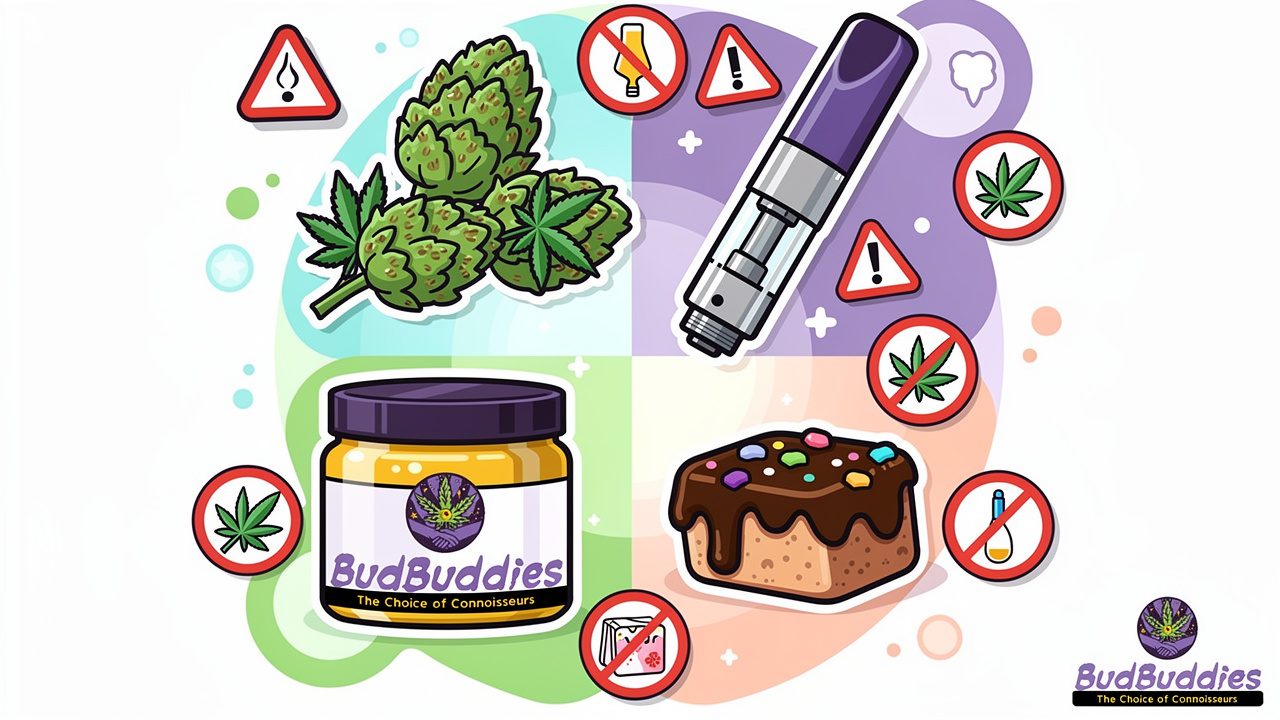
Contamination risk varies by product type, so knowing what to look for depends on whether you are buying flower, an edible, a vape, or a cannabis concentrates guide. The main culprits repeat across categories, but the way they show up, and how much damage they can do, changes with the format.
Mould, Pesticides, and Heavy Metals
Mould tends to appear in flower that was dried or stored badly, thriving in humid conditions and often invisible until it has already spread through a bud, a pattern reflected in recent mycotoxin trends in cannabis compliance testing across US flower and concentrates. Pesticides and heavy metals build up during cultivation instead, absorbed from soil, water, or spray treatments, and neither breaks down through normal handling. Both risks are reasons to favour suppliers who can show clean test results rather than simply promising quality on the packaging.
Format-Specific Risks
Vapes and concentrates carry their own risk profile because the extraction process can leave solvent residue or introduce how to spot fake vapes the oil. Edibles present a different challenge entirely, since edible dosage calculator across pieces and clear allergen labelling both need checking before you eat anything. Recognising which risk applies to which format helps you ask the right question at the right moment.
How Labelling Reveals Product Quality
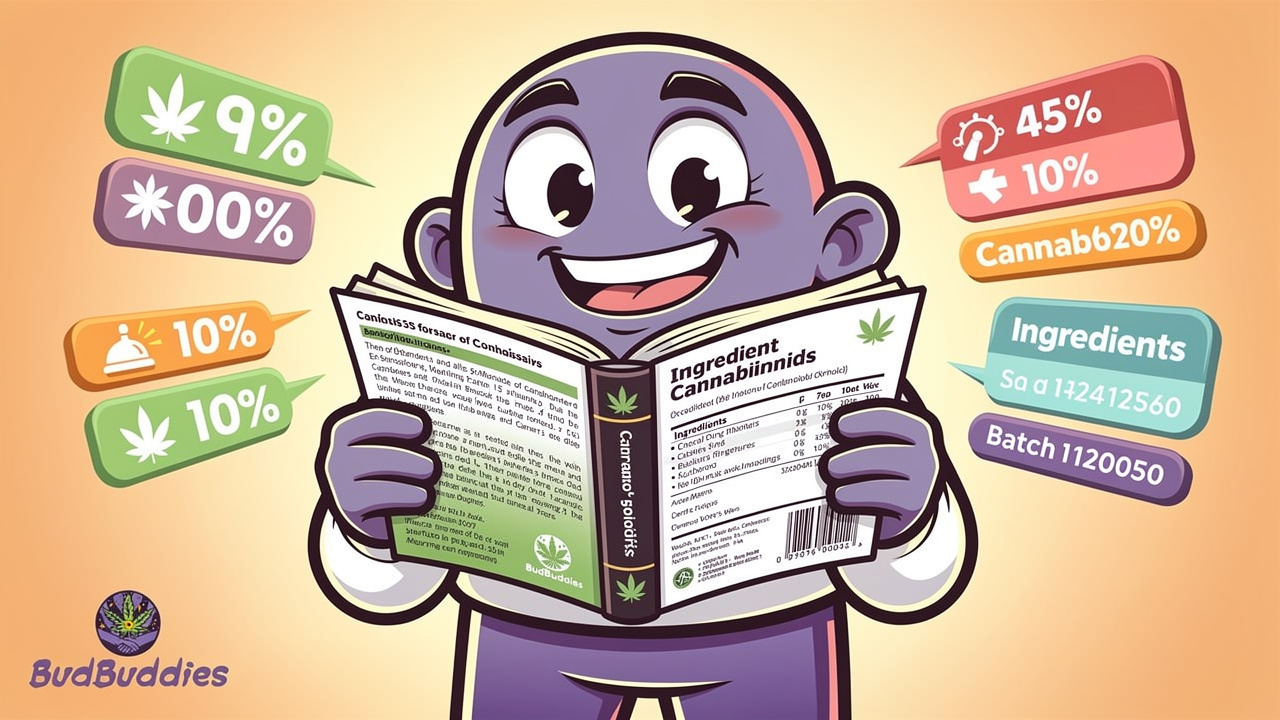
A trustworthy cannabis label tells you almost everything you need to know before you open the packaging, not just a strain name and a strength percentage. Complete labelling includes cannabinoid percentages, a full ingredients list, carrier oils, flavourings, and terpene content, giving you a genuine picture of what you are consuming rather than a rough guess, in line with the detailed packaging and labelling guide for cannabis products used by Canadian regulators.
Vague descriptions are one of the clearest warning signs in this market, since a supplier with nothing to hide usually has nothing to gloss over either. Full ingredient transparency, listing exact carrier oils and additives rather than generic terms, lets you compare formulations properly before you buy. This is one of the areas where the brand has built its product pages, so cannabinoid and terpene details sit alongside every listing rather than being hidden in a separate document.
What Makes a Cannabis Supplier Trustworthy?
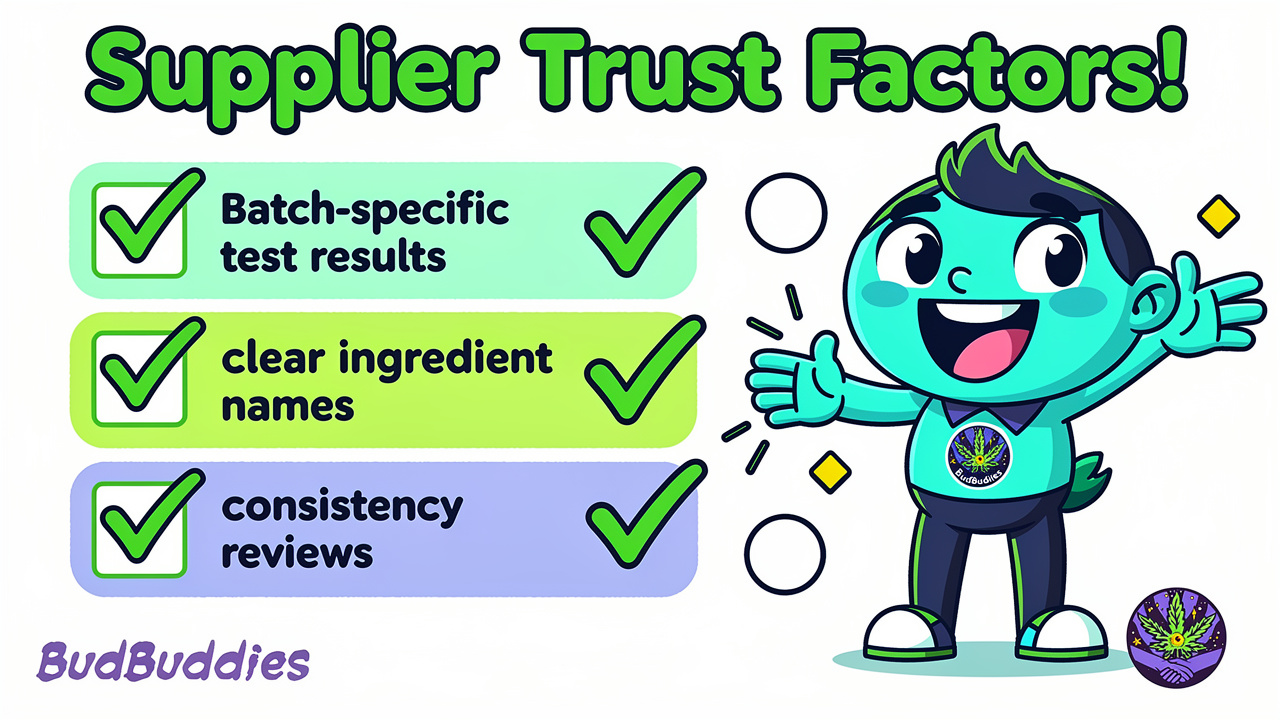
A trustworthy cannabis supplier is one whose sourcing, testing, and communication can all be checked rather than simply taken on trust. Practical signals include how openly a supplier shares its sourcing information, whether testing documentation is easy to find, how clearly staff answer safety questions, and whether reviews describe consistent quality over time rather than one good batch followed by disappointment.
BudBuddies aims to meet each of these signals directly, pairing authenticity testing and full ingredient transparency with 48-hour UK delivery in discreet weed delivery. A few practical checks worth running on any supplier before you buy include the following points.
Look for batch-specific test results rather than a single generic certificate applied across an entire range, since potency and purity can shift between harvests, a requirement spelled out in New Jersey’s official cannabis testing guidance for licensed businesses.
Check whether ingredient lists name specific carrier oils and flavourings instead of vague catch-all terms that tell you almost nothing.
Read recent reviews for comments about consistency between orders, not just praise for a single standout purchase.
Notice how delivery is handled, since discreet and secure packaging says a lot about how seriously a supplier treats customer privacy.
The Bottom Line
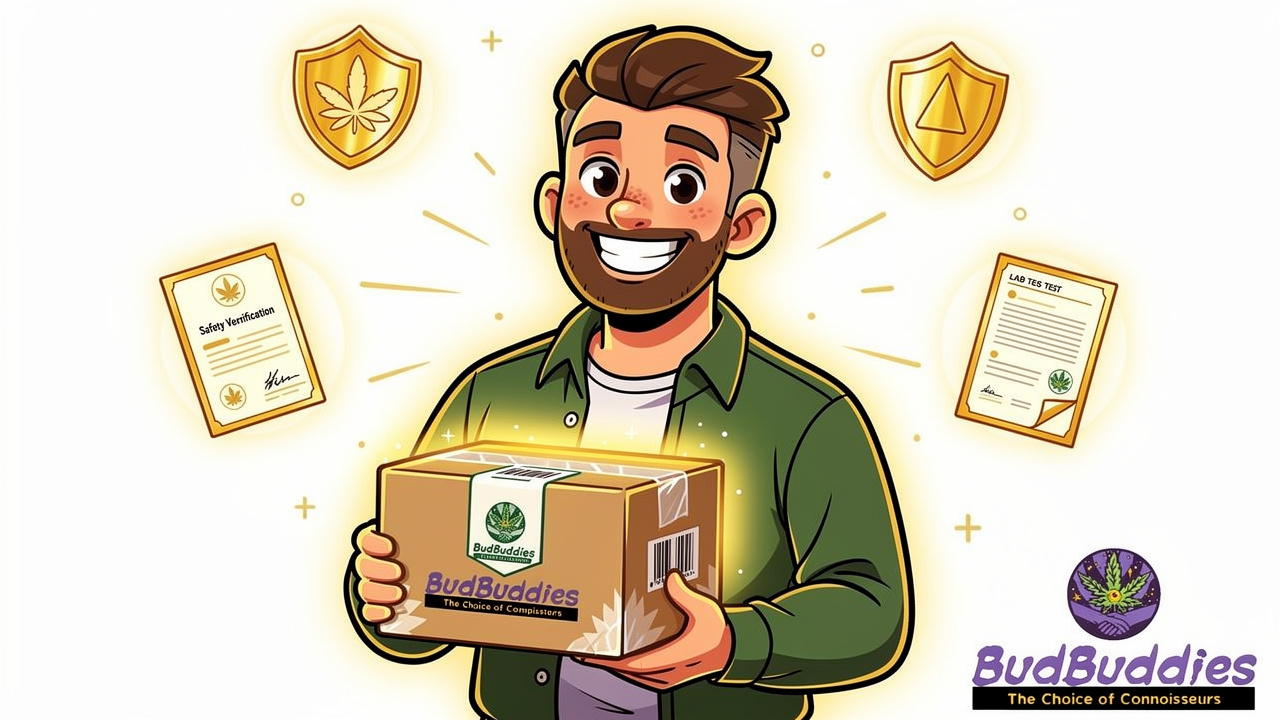
Real cannabis product safety comes from testing, transparent labelling, and consistent quality control, not from confident marketing copy on a product page. A supplier that shows its working, batch numbers, lab results, and full ingredients, gives you something to check rather than something to simply believe.
how to choose a dispensary becomes far easier once you know what to look for, and BudBuddies has built its range around exactly these standards, from authenticity testing through to discreet delivery. Start with a supplier that makes this information easy to find, and the rest of the decision tends to follow naturally.
Frequently Asked Questions
How Can You Tell If a Cannabis Product Has Been Properly Tested?
Look for a certificate of analysis tied to the specific batch you are buying, not a generic document covering an entire product line. Reputable suppliers display this openly on the product page, showing test dates, a laboratory name, and detailed results rather than making you request it separately.
What’s the Difference Between Third-Party Testing and In-House Testing?
Third-party testing means an independent laboratory with no financial stake checks the product, giving unbiased results you can trust. In-house testing alone lacks that independence, since the same company producing the product is also grading its own work, which weakens the accountability behind the results.
Do Vegan-Friendly Cannabis Products Have Different Safety Considerations?
Vegan formulations simply avoid animal-derived ingredients such as certain gelatines or dyes, but they still need the same potency and contamination checks as any other product. A vegan-friendly range should carry identical testing standards alongside its ingredient adjustments, which is exactly how the brand approaches its vegan options.
How Long Does It Take For Contaminated Cannabis To Cause Noticeable Effects?
This depends entirely on the contaminant involved. Mould can cause respiratory irritation fairly quickly if inhaled, whilst heavy metals and pesticide residues build up gradually through repeated exposure rather than causing an immediate reaction. That slow, cumulative risk is exactly why testing before use matters more than waiting for symptoms.
Are Concentrates Riskier Than Flower In Terms of Safety?
Concentrates carry a higher stake because the extraction process magnifies whatever contaminants were already present in the source material. A small pesticide trace in best cannabis flower UK once it is processed into oil or wax, which is why solvent and purity testing matter even more for these products.
How Does BudBuddies Ensure Delivery Doesn’t Compromise Product Safety?
Every order ships within 48 hours across the UK using secure, unmarked packaging designed to protect both product integrity and customer privacy. This keeps items away from heat, light, and rough handling during transit, so what arrives matches what left the warehouse.


