cannabis and sleep improvement
Lying awake wondering if there’s a better way to switch off is exhausting, and searching for answers on cannabis and sleep improvement can feel like wading through conflicting claims. Yes, cannabis can help improve sleep quality for many people, though how well it works depends on the compound, the dose, and the timing you choose. THC tends to calm the body and shorten the time it takes to drop off, while CBD works more gently on the anxiety and tension that often keep people awake. Used thoughtfully, cannabis and sleep improvement can become a steady part of your evening routine rather than a guessing game.
This guide walks through the science in plain terms, then covers how to pick the right strain, product, and dose for your specific sleep goal. We’ll look at indica genetics and terpenes like myrcene, product formats from flower to edibles, dosing and timing strategies, and the pitfalls worth avoiding, including tolerance and next-day grogginess. BudBuddies stocks a curated range of sleep focused THC and CBD products, each lab tested, so quality never gets in the way of a decent night’s rest.
Read on to see exactly how cannabis affects your sleep cycle, and how to use it well.
Key Takeaways
THC and CBD affect cannabis and sleep improvement differently, so knowing which one suits your situation matters more than picking randomly.
Indica-dominant strains and terpenes like myrcene and linalool tend to support deeper, calmer rest during evening use.
Product format changes both how quickly effects arrive and how long they last through the night.
Starting low and staying consistent helps avoid grogginess and stops tolerance building too fast.
Lab testing and quality control decide whether your results are actually repeatable.
How Does Cannabis Actually Affect Your Sleep?
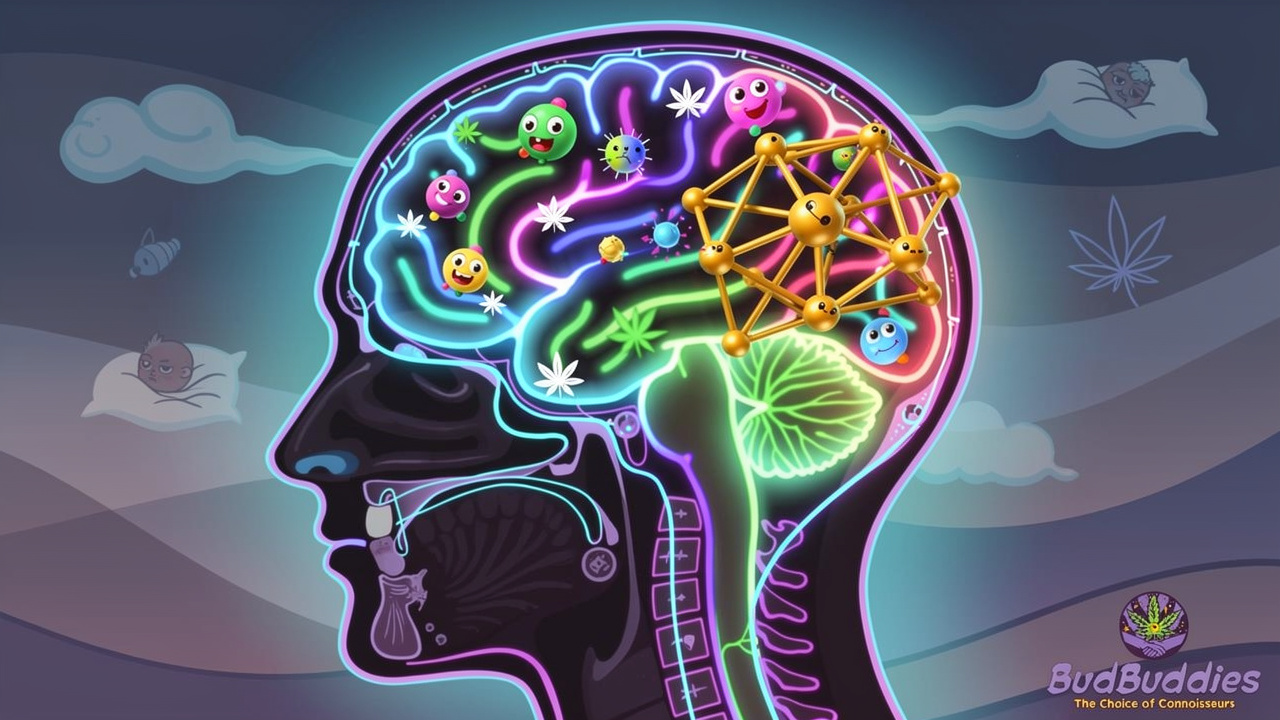
Cannabis and sleep improvement both trace back to the endocannabinoid system, a network of receptors that helps regulate the sleep-wake cycle alongside pain, mood, and appetite. THC, the compound behind cannabis’s psychoactive effects, binds to CB1 receptors in the brain and tends to shorten sleep latency, an effect confirmed in a randomised placebo-controlled crossover study on medicinal cannabis improves sleep outcomes for adults with insomnia. Many people feel a wave of drowsiness within minutes of using a THC product, which makes the transition into sleep feel far more natural than lying there fighting racing thoughts. CBD works through a different route, engaging serotonin pathways rather than causing sedation directly, and its main strength is easing the anxiety that often keeps people staring at the ceiling. Because CBD isn’t intoxicating, it suits anyone who wants calm without the high. Terpenes, the aromatic oils that give cannabis its scent, play a genuine supporting role too. myrcene sleep effects, with its earthy, musky note, is closely linked to sedative effects, while linalool (also found in lavender) adds a floral, calming quality. Together, these compounds shape how quickly you drift off, how deep your sleep gets, and how you feel the next morning.
What Happens to REM Sleep With Cannabis Use?
THC can shorten the time it takes to nod off, but a pilot randomised controlled trial on acute effects of oral cannabinoids on sleep architecture found higher doses may reduce REM sleep, the stage linked to dreaming, memory, and emotional processing. This is exactly why moderate dosing matters so much for lasting cannabis and sleep improvement. A dose that relaxes the body without heavy sedation tends to preserve more natural sleep architecture, giving you faster onset without trading away the restorative stages of rest that keep your mind sharp the next day.
Which Cannabis Products Work Best for Better Rest?
The best product for cannabis and sleep improvement depends on whether you struggle to fall asleep, stay asleep, or both, since each format delivers cannabinoids at a different speed.
Flower and vapes reach the bloodstream through the lungs within minutes, useful for anyone who needs to wind down quickly before bed.
edibles and oils pass through the digestive system first, so effects build slowly but last considerably longer, often carrying someone through the entire night.
CBD-led products work gradually and without intoxication, appealing to readers who want calm evenings without feeling high.
Deciding between these routes usually comes down to your specific sleep complaint. If falling asleep is the main battle, a quick-acting vape or a few puffs of indica flower before bed may be enough on its own. If waking at 3am is the recurring problem, a longer-acting edible or oil is generally the smarter pick, since its effects are still present when those early-hours awakenings tend to strike. Cost, discretion, and your own comfort with smoking versus not smoking all factor into the decision, and it’s worth trying more than one format before settling into a nightly habit.
Flower, Vapes, and Edibles: What’s the Difference for Sleep?
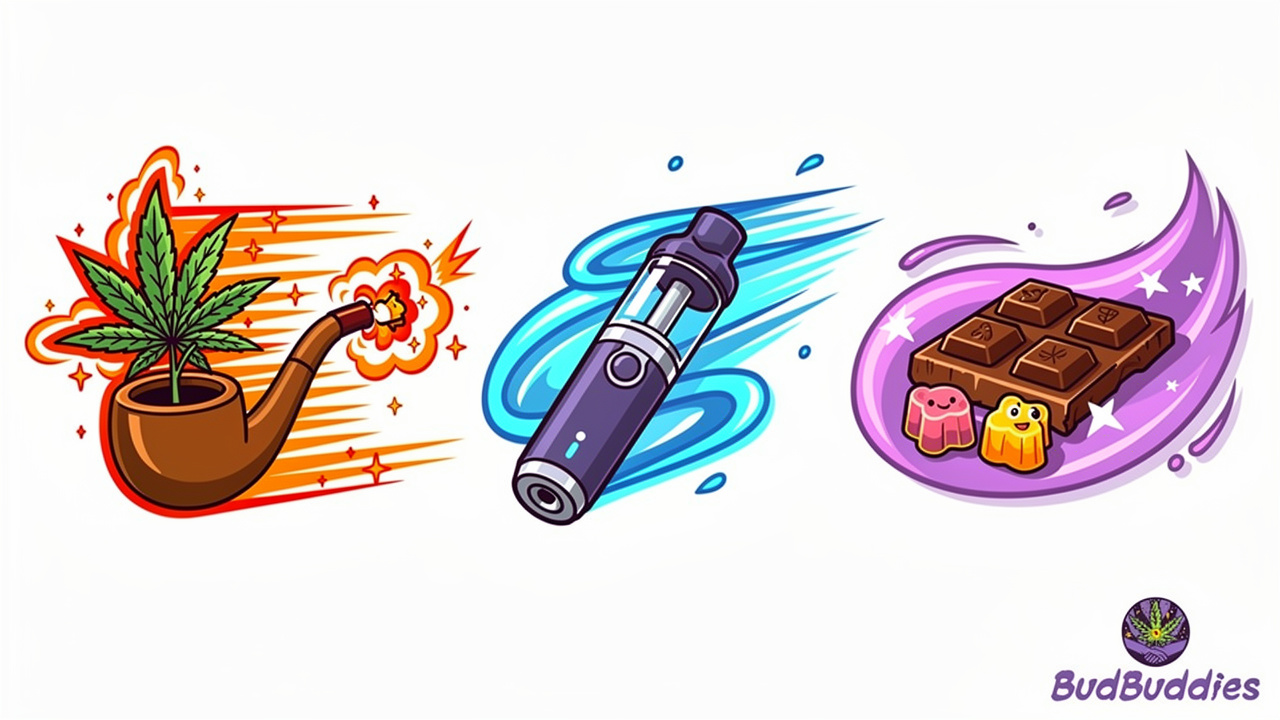
flower and vapes both act fast, typically within 5 to 15 minutes, which suits anyone who wants to feel relaxed shortly after their evening routine winds down. The effects peak quickly and fade within a few hours, so they’re better suited to helping you drop off rather than keeping you asleep until morning. Edibles work on a slower timeline, usually taking 90 minutes to 2 hours to kick in as they pass through digestion, but once active they can last 4 to 8 hours.
That extended window makes edibles a strong choice a strong choice for staying asleep right through the night. BudBuddies’ gummies and chocolates are dosed precisely in milligrams, so you always know exactly what you’re taking, night after night, without any guesswork getting in the way.
CBD, CBN, and Supportive Ingredients for Evening Routines
CBD rarely knocks you out the way THC can, and research tracking changes in sleep quality over the months following medical cannabis initiation found its benefits often build gradually over two to three weeks of consistent use rather than delivering instant sedation. For anyone chasing CBD for sleep improvement without intoxication, the brand offers CBN gummies and CBD products blended with chamomile or a touch of melatonin, alongside full-spectrum, broad-spectrum, and isolate formats to suit different sensitivities and preferences.
Which Cannabis Strains Are Best for Sleep?
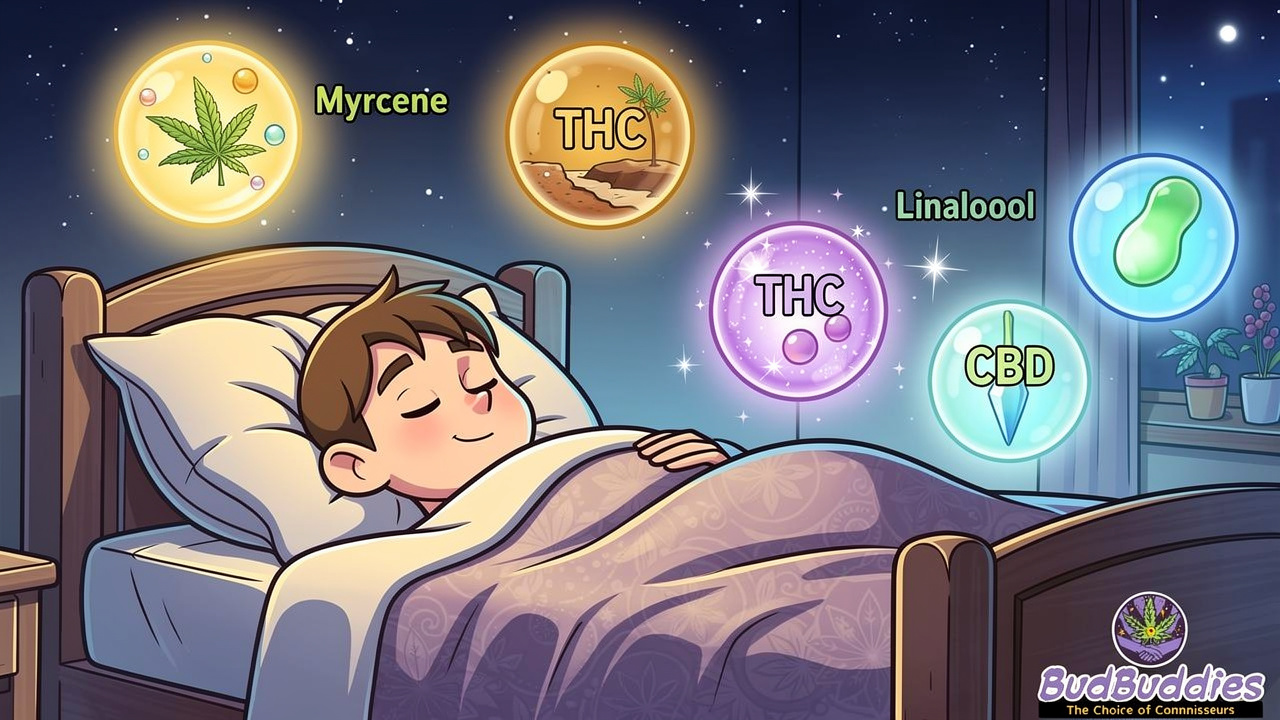
Cannabis and sleep improvement often hinges on strain choice, since indica-dominant genetics carry different terpenes than sativas do. These strains tend to carry higher levels of myrcene, the earthy terpene linked to heavy-limbed relaxation, and linalool often shows up alongside it, adding a calming quality that many people find eases them into sleep rather than switching their mind off abruptly. Strains bred for rest typically favour these terpene profiles over the sharper, citrus-forward ones found in more energising varieties.
Sativa-dominant strains generally lean towards alertness and are rarely the right pick before bed, though a handful of high-CBD sativas can offer calm without drowsiness. Hybrids sit somewhere between the two, and the right choice depends entirely on the parent genetics and cannabinoid balance. When browsing flower, filtering by effect (sleep, relax, or unwind) rather than just strain name makes it far easier to find something that actually suits your evening instead of leaving you wired.
How Much Cannabis Should You Take, and When?
Getting the dose right for cannabis and sleep improvement starts with going in low and adjusting slowly, since responses vary enormously from one person to the next.
Tip: Start with around 2.5 to 5mg of THC, or a comparable amount of CBD, and hold that dose steady for several nights before deciding whether to nudge it up.
Jumping straight to a strong dose rarely speeds things up and often just leaves you groggy the next day, which defeats the purpose entirely. Timing matters just as much as the amount you take:
Vapes and flower act quickly, so using them 15 to 30 minutes before you intend to sleep usually lines up well with when the effects peak.
Edibles need far more lead time, generally 90 minutes to 2 hours, since they have to pass through digestion before cannabinoids reach the bloodstream.
Planning your evening around this window, rather than eating a gummy the moment you climb into bed, makes a genuine difference to how well the timing actually works.
Building a Consistent Evening Routine
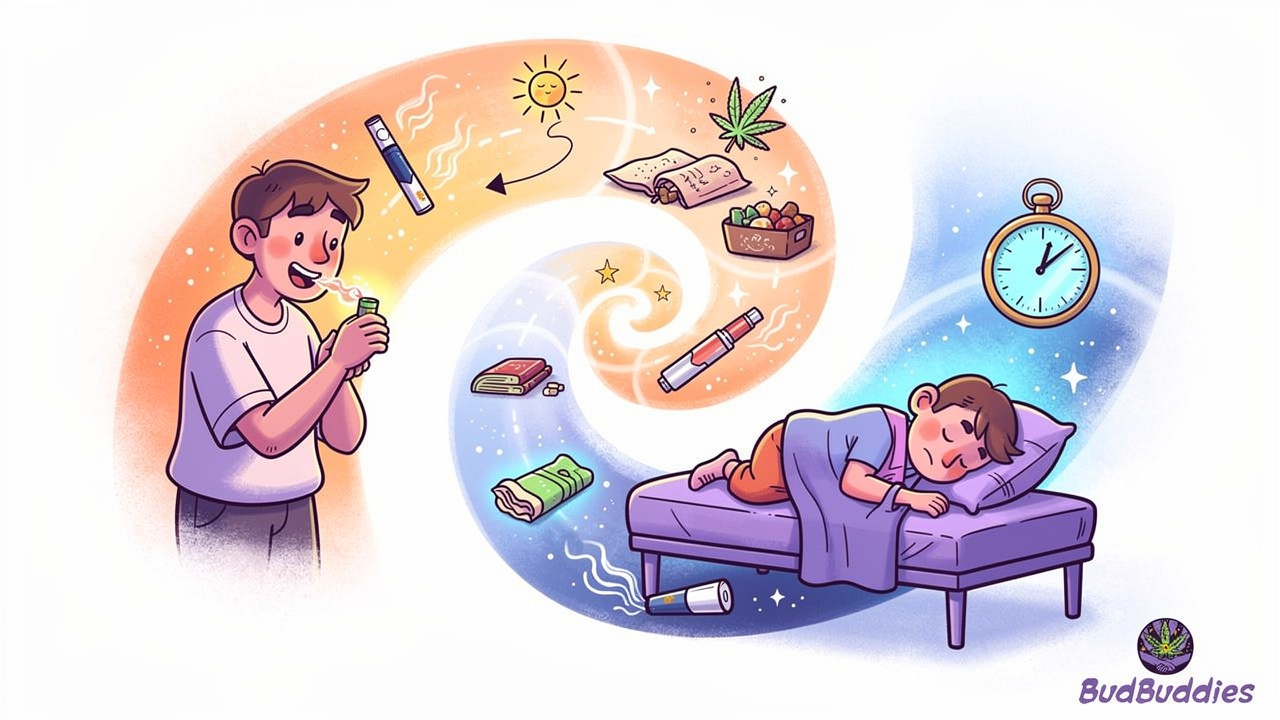
Using the same product at the same dose and the same time each evening helps your body settle into a predictable rhythm, rather than guessing fresh each night. This consistency is only possible when potency doesn’t drift from batch to batch, which is why every product is tested and comes with published Certificates of Analysis, so the gummy or oil you buy this month behaves the same as the one you bought last month.
What Should You Watch Out For?
Regular nightly use can lead to tolerance, where the same dose gradually does less than it used to, and this is common with THC in particular. When this happens, many people find that short break for several nights, or rotating between different products, restores the original effect without needing to keep raising the dose.
Quality is the other major risk, since inconsistent or contaminated products make it far harder to judge what’s actually working. Look for lab-tested products with a Certificate of Analysis confirming both potency and the absence of pesticides, heavy metals, or solvents, since untested cannabis makes reliable insomnia relief close to impossible to achieve.
Frequently Asked Questions
Cannabis and sleep improvement raises plenty of practical questions once you’re ready to try it yourself. Here are clear answers to the queries we hear most often, covering everything from insomnia relief to next-day grogginess.
Can Cannabis Help With Insomnia Specifically, or Just General Poor Sleep?
Yes. THC in particular can reduce sleep onset time and increase deep sleep phases, which directly addresses insomnia symptoms rather than just general restlessness, though individual results still vary depending on dose and strain.
Does CBD Alone Help You Sleep, or Do You Need THC Too?
CBD alone can help, but its effect is more gradual and less predictable than THC’s direct sedative action. If you need reliable sedation rather than gentle calm, a balanced or THC-inclusive product tends to work better.
How Long Does It Take for Cannabis to Improve Sleep Quality?
Inhaled products like flower and vapes can work within minutes on the very first night. CBD, however, often needs two to three weeks of consistent use before its calming benefits on sleep become noticeable.
Can You Build a Tolerance to Cannabis for Sleep, and How Do You Avoid It?
Yes, nightly use can lead to tolerance, especially with THC. Rotating between products, adjusting doses only when necessary, and taking occasional breaks all help preserve cannabis’s sleep-promoting effects over the longer term.
What’s the Difference Between Using Cannabis for Sleep Onset Versus Staying Asleep All Night?
Fast-acting formats like vapes and flower suit falling asleep quickly, since effects peak within minutes. Edibles take longer to kick in but last several hours, making them better suited to staying asleep through the night.
Will Cannabis Make You Feel Groggy the Next Morning?
It can, particularly with higher doses or THC-heavy products taken too close to bedtime. Starting low, choosing lab-tested products with consistent potency, and timing your dose correctly all reduce the chance of next-day grogginess.
Is It Better to Smoke, Vape, or Eat Cannabis for Sleep?
There’s no single right answer, since it depends on whether you need fast onset or lasting effects. Vapes and flower work quickly, while edibles last longer, so choosing between them comes down to your specific sleep priority.
The Takeaway
Getting real results from cannabis and sleep improvement comes down to matching the right format, strain, and dose to your specific sleep problem, then sticking with it long enough to judge the outcome fairly. Fast-acting options help you drop off quickly, longer-acting edibles keep you asleep, and consistent, lab-tested potency is what makes any of it repeatable night after night.
If you’re ready to build your own routine, BudBuddies’ curated range of indica flower, edibles, vapes, and CBD products comes with clear dosing information, verified lab testing, and discreet delivery, so finding what genuinely works for you feels straightforward rather than overwhelming.