Live Resin vs Distillate Cart: Which Vape Suits You?
Introduction
Standing in front of a vape menu or scrolling budbuddies.cc, it is easy to freeze on one decision. Two neat cartridges sit side by side; both look the same, yet one says live resin and the other distillate. The whole live resin vs distillate cart choice can feel bigger than it needs to be.
Both options can be excellent. You are not choosing between “good” and “bad”; you are choosing between flavour, feel, strength, and price. A live resin vs distillate cart comparison is really a question of what you want from each puff rather than which format wins on paper.
This guide walks you through what each cart actually is, how they are made, how they taste, how they feel, and how much they tend to cost. By the end, you can look at any live resin vs distillate cart listing on BudBuddies and know which one fits you, without jargon or guesswork.
What Are Live Resin And Distillate Carts?
Before you can decide where you land on the live resin vs distillate cart debate, it helps to get the basics straight. Both sit in similar looking vape hardware, often in 510-thread cartridges or sleek disposables. The difference is in the oil inside, not the device itself.
Live resin comes from cannabis that is harvested and frozen straight away while it is still fresh. That frozen flower then goes through extraction at low temperatures, which keeps the full mix of cannabinoids and fragile terpenes. Terpenes are the scented parts of the plant that give strains their citrus, pine, fuel, or floral notes, and they also help shape the feel of the high. Live resin carts usually sit around 70–85% THC, but bring a wide mix of other compounds with them.
Distillate is almost the opposite style. The producer starts with dried cannabis or trim, turns it into crude oil, then runs that oil through distillation until it is mostly just THC. Terpenes, flavonoids, and minor cannabinoids are stripped away, leaving a clear, thick, nearly flavourless liquid that often tests between 85–95% THC. Because it has no taste on its own, flavour is added back afterwards using botanical terpenes or sweet style flavourings.
So the live resin vs distillate cart choice is not about the battery or shape of the pen. It is about whether you want a full, strain-like extract or a refined, high-THC oil with added taste. At BudBuddies you see clear breakdowns on every product page, with terpene profiles, effect notes, and THC or CBD percentages ready to read. A simple way to remember it is this – if live resin is a full meal, distillate is a quick espresso shot.
How They Are Made And Why It Matters
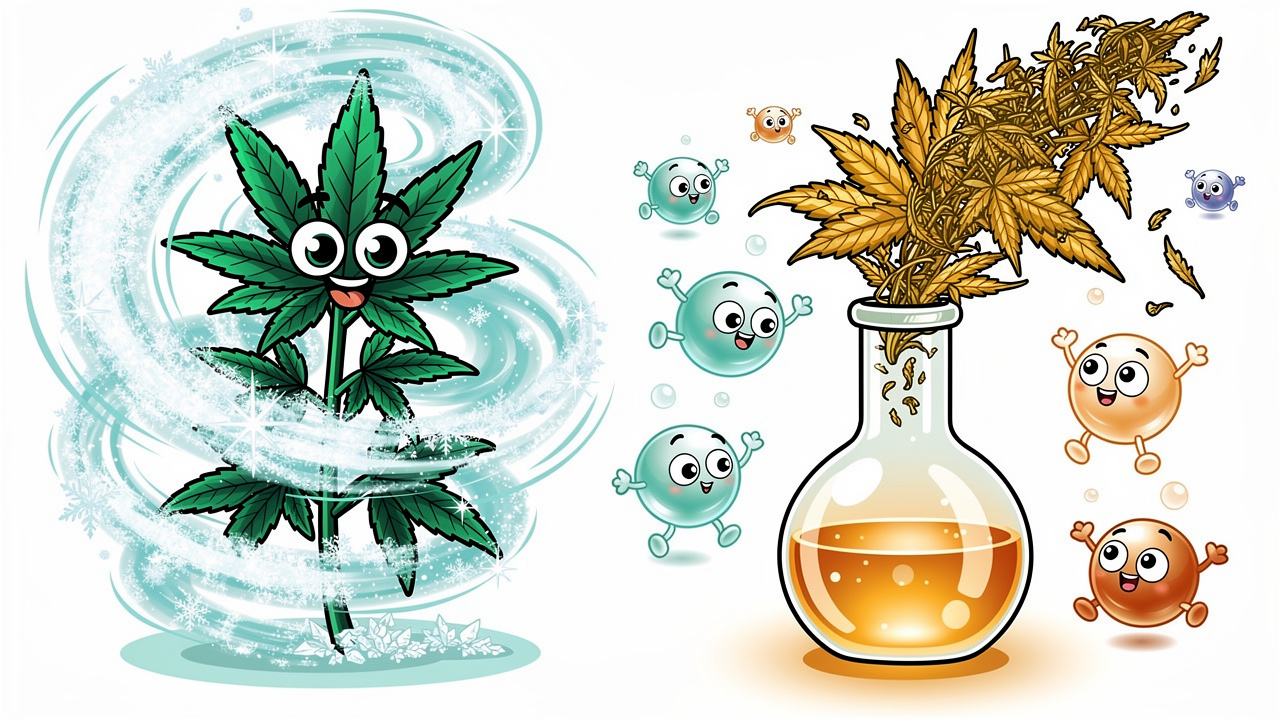
Once you know how each oil is produced, the price and effect differences in any live resin vs distillate cart comparison start to make sense. The two styles do not just taste different; they come from very different production choices, with different costs and strengths.
Live Resin Preserving The Plant
For live resin, growers cut the plants and freeze them straight away, rather than drying and curing them. This locks in the original mix of terpenes and cannabinoids that would otherwise fade during drying. That frozen flower then goes into a cold solvent extractor, often using butane or propane, and the temperature stays low from start to finish.
In simple terms, the process looks like this:
Harvest cannabis at peak freshness.
Freeze whole plants or buds immediately.
Run a cold solvent extraction on the frozen material.
Purge the solvent at low temperature to protect terpenes.
Refine the extract into vape-ready live resin oil.
Working at low temperature protects those fragile aroma compounds, so the finished oil still smells and tastes like the living plant. The trade off is that this process needs specialist equipment, careful handling, and more time, and the batches are often smaller. That is a big part of why a live resin vs distillate cart line-up tends to show live resin at a higher price. The goal here is to keep the plant’s character, not strip it down.
Distillate Refining For Potency
Distillate starts with dried, cured cannabis flower or trim, which is easier and cheaper to store and move. Producers first create a crude extract, then run that extract through fractional distillation. Different compounds boil at different temperatures, so by heating and cooling in stages, they separate out and focus on THC.
A typical distillate run goes through:
Extracting crude oil from dried flower or trim.
Winterising and filtering to remove fats and waxes.
Passing the oil through a distillation unit in several passes.
Collecting high-purity THC distillate.
Adding flavouring terpenes and filling vape carts.
By the end of this process, most terpenes and minor cannabinoids are gone, leaving a thick, almost pure THC oil. On its own, that oil has very little flavour, so producers add botanical terpenes from fruits or herbs, or sweet e-liquid style flavourings. Because the process is efficient and scales well, distillate keeps costs lower and batches more consistent. When you pick a distillate in the live resin vs distillate cart choice, you are choosing a refined, potency-first oil.
Flavour, Effect, And The Entourage Effect Explained


Flavour and feel are where the live resin vs distillate cart decision becomes personal. Two carts can have similar THC numbers on the label but taste and hit very differently once you actually take a draw.
Live resin keeps the plant’s own terpene profile, so each strain has its own clear character. One cart might bring a bright citrus zest, another a deep earthy note, another sharp pine or floral spice. Because those terpenes are cannabis derived and still in their natural ratios, the taste is usually smooth and rounded. Many people describe live resin as tasting like a strong version of the flower it came from.
Distillate is a blank starting point, so its taste depends on what is added afterwards. Some carts use blends of plant terpenes that aim to feel “strain-like”, while others lean into big fruit, dessert, or sweet shop flavours. If you prefer mango, grape, or ice style profiles over the smell of the plant itself, distillate often fits well. It can also be more subtle in smell, which helps if you want your live resin vs distillate cart choice to lean towards discretion.
To sum up flavour preferences, many regular vapers find:
Live resin carts feel closer to smoking the actual strain.
Distillate carts feel more like flavoured vapes with a strong THC hit.
Effects can split in similar ways. Distillate, with its very high THC, tends to hit fast and hard. The high may feel clear and direct, but sometimes a little flat or sharp. Many regular users like this for quick, predictable sessions, especially when price matters and they want the strongest option per puff.
Live resin works differently. THC is still there in solid amounts, yet it sits alongside other cannabinoids such as CBG and CBC, plus that rich terpene mix. This combination is often called the entourage effect, meaning the compounds work together and change how the high feels. Strains high in myrcene may lean cosy and sleepy, while limonene heavy options can feel bright and upbeat. This can give a live resin vs distillate cart session a more rounded, longer lasting feel, closer to how flower tends to act.
Many cannabis educators say that THC is the engine, but terpenes are the steering and suspension. That is the entourage effect in plain language.
It is worth saying plainly that a higher THC percentage does not always mean a “better” experience. A 95% distillate cart might look stronger on paper than a 78% live resin cart, yet you may prefer the live resin once you try both. BudBuddies helps you compare by listing terpene profiles and simple effect pointers on every cart page, so you can match what you buy to your mood instead of guessing.
Price, Value, And Which One Is Right For You
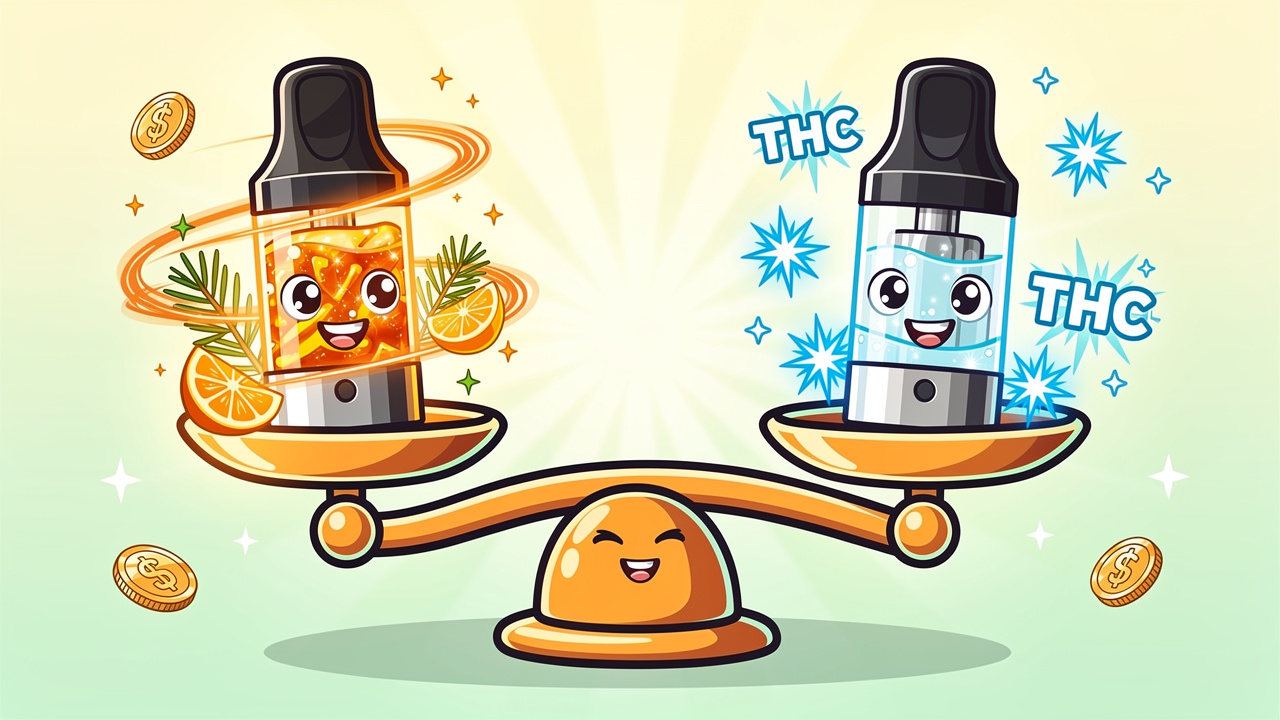
Once flavour and feel make sense, the next part of the live resin vs distillate cart decision is cost. You want to know not just what each cart does, but which one offers the best value for the way you use it.
Why Distillate Costs Less
Distillate makes smart use of widely available starting material such as dried flower and trim, rather than only top grade fresh buds. The production method is efficient and built for larger runs, so producers can create a lot of consistent oil from each batch of input. Distillate is also very stable on the shelf because many of the more fragile compounds are removed, so there is less risk of ageing or flavour drift in storage. Put together, these factors let distillate carts hit a lower price point while still offering strong THC numbers. If you vape often, care about keeping spend steady, or want your first live resin vs distillate cart to be simple and strong, distillate can make very good financial sense.
Why Live Resin Costs More
Live resin starts from a more demanding place. Growers freeze whole plants at peak freshness, which asks for careful timing and more costly storage. Extraction stays cold and slow, with a focus on keeping terpenes and minor cannabinoids where they belong. Batches are often smaller, and each step needs attention so the finished oil still feels like the original strain. All of this adds cost and helps explain why a live resin vs distillate cart line-up usually shows live resin at a higher price. That higher spend goes into richer flavour, a more layered high, and the pleasure of tasting a strain in concentrated form. If you are a flavour fan, care how different cultivars feel, and want a cart that feels special when you reach for it, live resin often earns its place.
For a quick way to think about it, you might say this:
When price per milligram and strong THC are your top priorities, distillate tends to be the better fit.
When taste, aroma, and a more detailed effect matter more than the last few points of THC, live resin tends to be the better fit.
BudBuddies stocks both in 0.5 ml and 1.0 ml sizes, with clear prices, so you can match your live resin vs distillate cart choice to your budget without losing clarity.
How BudBuddies Makes The Choice Easier

Knowing the theory behind live resin vs distillate cart options is one thing. Having a place that presents both clearly, with good hardware and solid support, is what turns that knowledge into a smooth experience.
On budbuddies.cc you find a focused range of premium live resin, live rosin, and high potency distillate carts. They come in both 0.5 ml and 1.0 ml sizes, and you can pick between pre-filled 510-thread cartridges or tidy disposables. This keeps the menu sharp rather than crowded, so you spend more time comparing oils and less time picking through clutter.
Every cart page gives plain English details that match what you actually feel and taste. You see:
Flavour notes and aroma descriptions.
Strain-style effect pointers (for example, calm, creative, or sleepy).
THC and CBD percentages.
Terpene profiles and customer reviews.
Each batch is third-party lab tested for potency and purity, checking for things like pesticides, heavy metals, solvents, and microbes, and those results are shared so you can read them for yourself.
The BudBuddies team works on a simple rule: if we would not be happy vaping it ourselves, it does not go on the site.
BudBuddies also looks after the practical side once your live resin vs distillate cart arrives. Each order includes simple voltage advice, with a recommended range of about 2.4 to 2.8 volts to keep vapour smooth and terpenes happy. Orders are sent next day across the UK in plain, vacuum-sealed, smell proof packaging with tracking, which keeps your vaping life quiet and tidy at home.
If you still are not sure which cart to pick, seven day customer support can talk you through strain choices, battery questions, or small issues like clogging or burnt taste. On top of that, BudCash loyalty points and referral credits mean that as you try different live resin vs distillate cart options over time, the value you get keeps growing.
Conclusion
When you look at live resin vs distillate cart choices through a clear lens, the picture is simple. Live resin gives you authentic strain flavour, a full mix of cannabinoids and terpenes, and a high that often feels layered and close to flower. Distillate focuses on very high THC, clean hardware performance, and bright added flavours that suit many taste buds.
Neither format is “better” for everyone. The right pick depends on whether you care more about strength per pound, big fruit or sweet flavours, or rich plant character and the entourage effect. The nice part is that once you understand how live resin vs distillate cart options differ, you can mix and match to suit different moods.
Whenever you are ready to choose, BudBuddies keeps everything in one calm place, with tidy menus, clear lab results, and honest product descriptions. Browse the carts, read the notes, and if you need a nudge, the support team is there to help you land on the cart that feels right for you.
FAQs
Is Live Resin Stronger Than Distillate?
Distillate usually has a higher THC percentage, often well above 85%, so on paper it looks stronger. Live resin tends to sit a little lower in THC, yet it carries a full mix of terpenes and minor cannabinoids. Many people find this gives a more rounded and steady high. So in a live resin vs distillate cart comparison, “stronger” depends on whether you mean raw numbers or overall feel.
Are Live Resin Carts Worth The Extra Cost?
If you love rich flavour, care about strain character, and enjoy a high that feels layered rather than sharp, live resin often earns its higher price. The fresh frozen input and terpene rich extract give something you simply do not get from standard distillate. If your main aim is strong THC at a fair price, distillate may suit you better. Reading reviews and effect notes on budbuddies.cc can help you decide where you sit on the live resin vs distillate cart choice.
What Voltage Should You Use For A Live Resin Cart?
Live resin likes gentler heat, so a voltage in the region of 2.4 to 2.8 volts is usually ideal. This keeps the vapour smooth and lets the terpene profile shine without burning the oil. Turning the power too high can dull flavour and make hits harsh. BudBuddies includes simple voltage guidance with every order, so you can dial in your live resin vs distillate cart easily.
Can Beginners Use Live Resin Carts?

Beginners can enjoy live resin, as long as they start slow and keep hits short while they learn how it feels. The effects can be more detailed than straight distillate, so it helps to pay attention and give each puff time to settle. Starting at a lower voltage and taking small draws is a good approach. BudBuddies backs this up with clear product pages and seven day support, so your first live resin vs distillate cart experience can feel calm and confident.