is vaping cannabis safer than smoking
Vaping cannabis is generally considered safer than smoking, mainly because it skips the burning process that creates most of smoke’s harmful byproducts. That’s the short answer to a question a lot of cannabis consumers ask before switching methods. Smoking burns plant material at very high heat, producing tar, carbon monoxide and other compounds your lungs really don’t need. Vaping heats cannabis at a much lower temperature, turning cannabinoids and terpenes into vapour without ever setting anything alight.
This piece walks through what the evidence actually says, not just the headline claim. We’ll look at what happens at a chemical level when you vape versus smoke, what that means for your lungs, and how much of a difference toxin exposure really makes. We’ll also cover why product quality matters just as much as the method itself, and how BudBuddies approaches safety through lab testing and considered device design. By the end, you’ll have a clearer picture of where the real benefits lie and how to vape more responsibly.
Key Takeaways
Vaping skips combustion entirely, so it avoids tar, carbon monoxide and many of the carcinogens produced when cannabis burns.
Most vapers report less coughing and throat irritation than smokers, since there’s no hot smoke to inflame the airways.
Vaping is more efficient, meaning you typically need less cannabis to reach the same effect.
No consumption method is completely risk-free, and long-term vaping research is still developing.
Lab-tested products and well-maintained devices help you avoid the avoidable risks, such as contaminants or overheating.
What Actually Happens When You Vape Versus Smoke Cannabis?
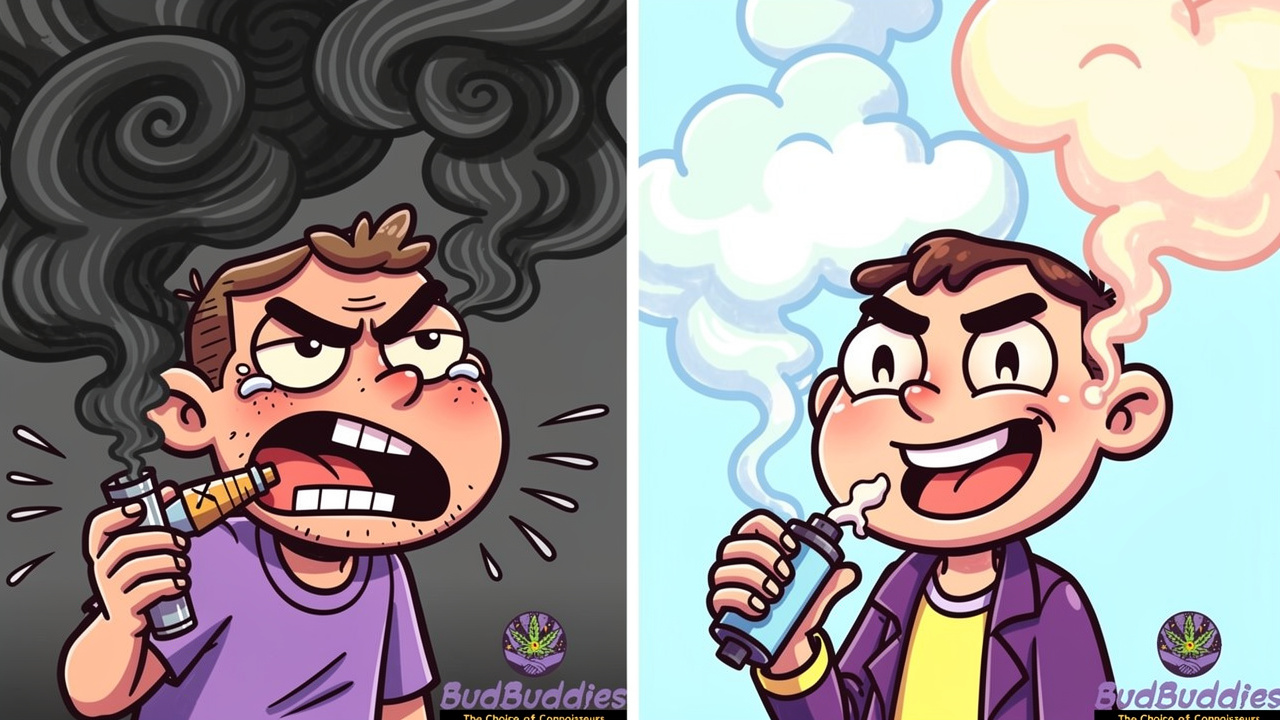
Vaping cannabis avoids the intense heat that smoking relies on, which is the core reason it’s seen as safer for your health. Smoking burns cannabis flower at temperatures of roughly 300°C to 900°C, a process called combustion. This creates smoke loaded with tar, carbon monoxide and other by-products that don’t come from the plant itself, but from the burning process.
Vaping works differently, cannabis vaporiser temperature guide and 220°C, hot enough to release cannabinoids and terpenes as vapour but too low to cause combustion. Because nothing burns, the resulting vapour is chemically far simpler than smoke. This lower-heat approach explains why vaping tends to come out ahead in comparisons of lung health, toxin exposure and flavour, as the next sections show.
Is Vaping Cannabis Better For Your Lungs?
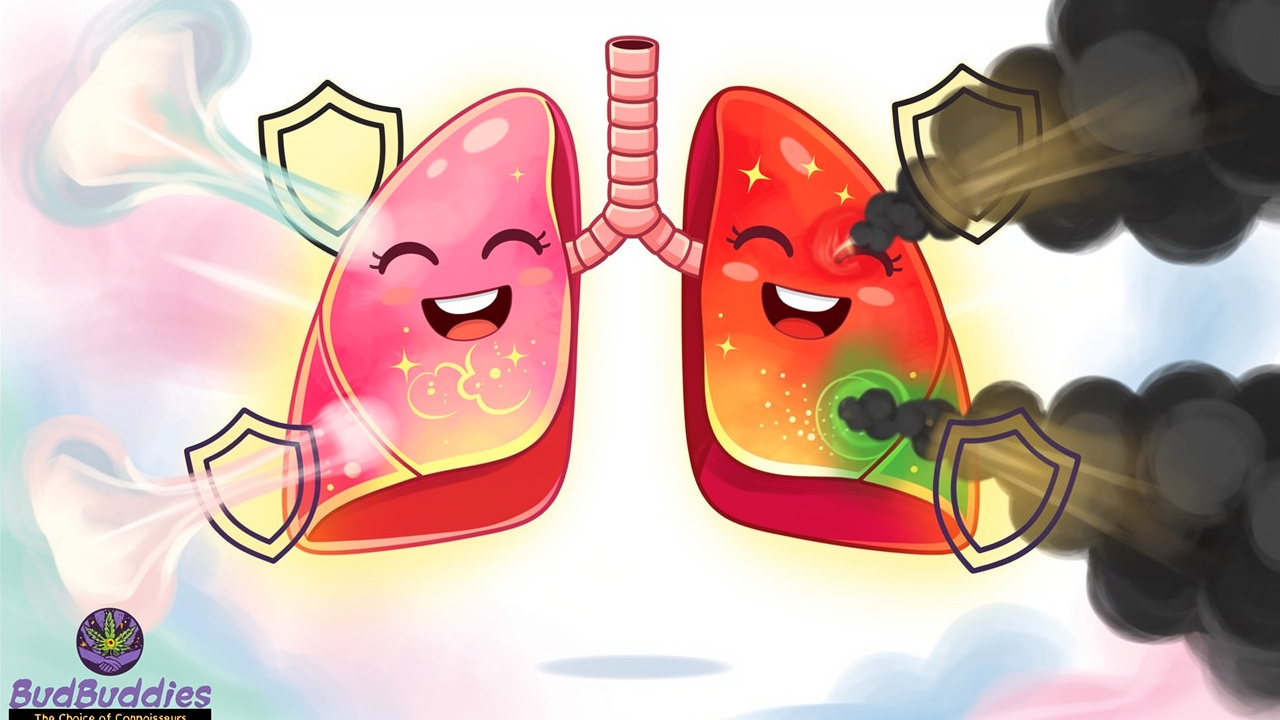
Vaping cannabis is generally kinder to your lungs than smoking it, largely because it removes the tar and carbon monoxide that combustion creates. Smoking exposes your airways to hot smoke and irritant chemicals with every inhale, which is why regular smokers often develop a persistent cough. Over time, this irritation has been linked to chronic bronchitis and other respiratory complaints. Tar coats the airways, whilst carbon monoxide can reduce how efficiently blood carries oxygen.
Vaping sidesteps most of this because nothing is burning, so users typically report far less coughing and throat irritation than smoking the same amount of cannabis. Without hot smoke hitting the airways, there’s simply less for them to react to. Many people switching from smoking to vaping notice smoother, gentler inhales within their first few sessions.
That said, inhaling anything into your lungs carries some degree of risk, and long-term effects of cannabis hasn’t caught up with decades of smoking studies yet. Anyone with an existing respiratory condition should be cautious and seek medical advice before choosing either method. Even so, current evidence points clearly towards vaping being gentler on your respiratory system than smoking.
Does Vaping Reduce Toxin And Carcinogen Exposure?

Vaping cannabis cuts down toxin and carcinogen exposure significantly compared with smoking, because it skips the chemical reactions that burning triggers. Combustion doesn’t just release cannabinoids, it also creates a long list of compounds that only exist because the plant material is on fire. Vapour, by contrast, contains mainly the cannabinoids and terpenes you’re actually after, provided the device and product are lab tested cannabis products. This is one of the clearest, most consistently supported differences between the two methods, and it’s worth knowing exactly what’s involved.
Tar, a sticky residue that builds up in the airways over time. It’s chemically similar to the tar found in tobacco smoke, and it doesn’t form when cannabis is simply heated rather than burned.
Carbon monoxide, an odourless gas produced by combustion. It binds to red blood cells more readily than oxygen, which can reduce how well your blood carries oxygen around the body.
Polycyclic aromatic hydrocarbons (PAHs), a group of carcinogens created whenever organic material burns. They’re found in both cannabis and tobacco smoke, though concentrations vary.
Benzene and other volatile organic compounds, additional combustion by-products with no useful place in cannabis vapour or your lungs.
None of these unwanted extras form when cannabis is heated below combustion point, a finding consistent with toxicant exposure comparisons of vaping and smoking aerosols, which is why vaping is often described as the cleaner way to consume cannabis, particularly when the product itself is well made and properly tested.
Why Product Quality Changes The Safety Equation
The safety benefits of vaping only hold up if the product and device are actually well made, a distinction often missed in the vaping versus smoking debate. Cheap or unregulated weed cartridge buying guide can contain cutting agents, thinning agents or other additives that carry their own risks once heated and inhaled. A poor-quality heating element can also scorch material rather than vaporise it, undoing much of vaping’s advantage.
This is why BudBuddies puts every batch of flower, vape cartridge and e-liquid through quality assurance at BudBuddies. Each result checks for potency, mould, pesticides, heavy metals and residual solvents, so you know exactly what you’re inhaling before you buy. That level of quality control removes much of the guesswork that comes with unregulated products.
Does Vaping Preserve More Cannabinoids And Flavour Than Smoking?

Vaping preserves considerably more of cannabis’s natural cannabinoids and terpenes than smoking does, because lower heat doesn’t destroy them the way combustion does. When flower burns, a good portion of its THC, CBD and aromatic terpenes are lost to the flame rather than inhaled. Vaping keeps these compounds largely intact, which is why vapour often tastes more distinct and flavourful than smoke.
This also makes vaping more efficient, since a smaller amount delivers a fuller dose of active compounds. Whether you prefer best cannabis flower UK or cannabis oil, understanding this difference helps you pick the format suited to your taste, from earthy full-spectrum flavour to cartridge consistency and convenience.
How Can You Vape Cannabis More Safely?
Getting the most out of vaping’s safety advantage comes down to a few practical choices:
Always choose verified THC products UK from a reputable seller, since verified lab results confirm what’s actually in your cartridge or flower.
Stick to devices with proper temperature control, ideally staying within the 160°C to 220°C vaporisation range, since research on vaporized cannabis extract pharmacokinetics shows that factors like solvent, sex and age can influence acute behavioural effects, and overheating can accidentally trigger combustion and undo the whole point of vaping.
Clean your device regularly and store it correctly, since residue build-up can create hot spots and affect vapour quality.
Start low and go slow, especially with concentrates or cartridges, since vaping tends to deliver cannabinoids more efficiently than smoking.
Our range covers this from every angle, including THC vape UK guide, the Elite Pro dry herb vaporiser with precise digital temperature control, and starter kits for anyone switching from smoking. Our vape pen cleaning guide walks you through the details of cleaning and storage.
A good rule of thumb: if your vapour ever starts to look or smell like smoke, your device is running too hot.
To Sum Up
Vaping cannabis is generally the safer route compared with smoking, a conclusion echoed in harm-reduction comparisons of vaping, smoking and edibles, mainly because it removes combustion and the tar, carbon monoxide and carcinogens that come with it. It’s also more efficient, delivers cannabinoids and terpenes more intact, and tends to be gentler on your throat and lungs. That said, no consumption method is completely without risk, and the long-term picture for vaping is still being studied. Product quality and device choice make a real difference to how safe your experience actually turns out.
If you’re thinking about making the switch, BudBuddies’ lab-tested vape cartridges, dry herb vaporisers and starter kits give you a considered, well-tested way to do it, with clear guidance every step of the way.
Frequently Asked Questions
Switching from smoking to vaping raises plenty of practical questions, from safety to strength to which format suits you best. Here are clear answers to the queries we hear most often from newcomers and experienced cannabis consumers alike.
Is Vaping Weed Completely Safe?
No, vaping isn’t entirely risk-free, but it does reduce exposure to tar, carbon monoxide and many carcinogens compared with smoking. Inhaling anything carries some risk. Choosing quality products and moderate use keeps that risk as low as reasonably possible.
Can Vaping Cannabis Harm Your Lungs Over Time?
Long-term studies on cannabis vaping remain limited, unlike decades of smoking research. Current evidence suggests vaping is gentler on the lungs than smoking. Quality devices, moderate use and proper maintenance all help lower avoidable respiratory risk further.
Does Vaping Cannabis Get You Higher Than Smoking?
Vaping can feel stronger, since it delivers cannabinoids more efficiently, so less material produces a similar or bigger effect. This matters most for newcomers. Start low, wait between doses, and judge your tolerance before increasing how much you use.
What’s The Difference Between Vaping Flower And Vaping Oil Cartridges?
Vaping dried flower preserves the whole natural compound profile, including subtle terpene flavours, through a best cannabis vaporizers. Oil cartridges offer convenience and consistent potency in a simpler, portable device. We stock both, so you can choose whichever suits your routine.
How Do I Know If A Vape Product Is Safe To Use?
Check for lab tested THC products and a Certificate of Analysis covering potency, pesticides, heavy metals and solvents. BudBuddies tests every batch of flower, cartridges and e-liquid this way, so you always know what you’re inhaling.
Are Edibles A Safer Alternative To Vaping And Smoking?
Edibles skip inhalation entirely, so there’s no smoke or vapour reaching your lungs at all. For anyone wanting to avoid inhalation methods altogether, that’s a genuine advantage. We offer cannabis gummies UK guide, chocolates and drinks with clear, consistent strengths for exactly this reason.