THC Edible Metabolism Explained: From Gummy to Brain
Introduction
Eat a cannabis gummy, feel nothing for ages, then suddenly feel far higher than planned. That experience sits at the heart of THC edible metabolism explained. The way an edible moves through the body is very different from a puff on a vape or joint.
Instead of going straight from lungs to blood, THC from an edible travels through the stomach, intestines, and liver. That extra path changes when effects start, how strong they feel, and how long they last. This guide sets out THC edible metabolism in plain English, covering the digestive path, the liver’s role, individual biology, and smart dosing.
By the end, the science behind that “delayed then intense” feeling should feel straightforward. You will also see how BudBuddies edibles fit into this picture, so you can pick products and doses with far more confidence.
Why Edibles Work Differently To Inhaled Cannabis
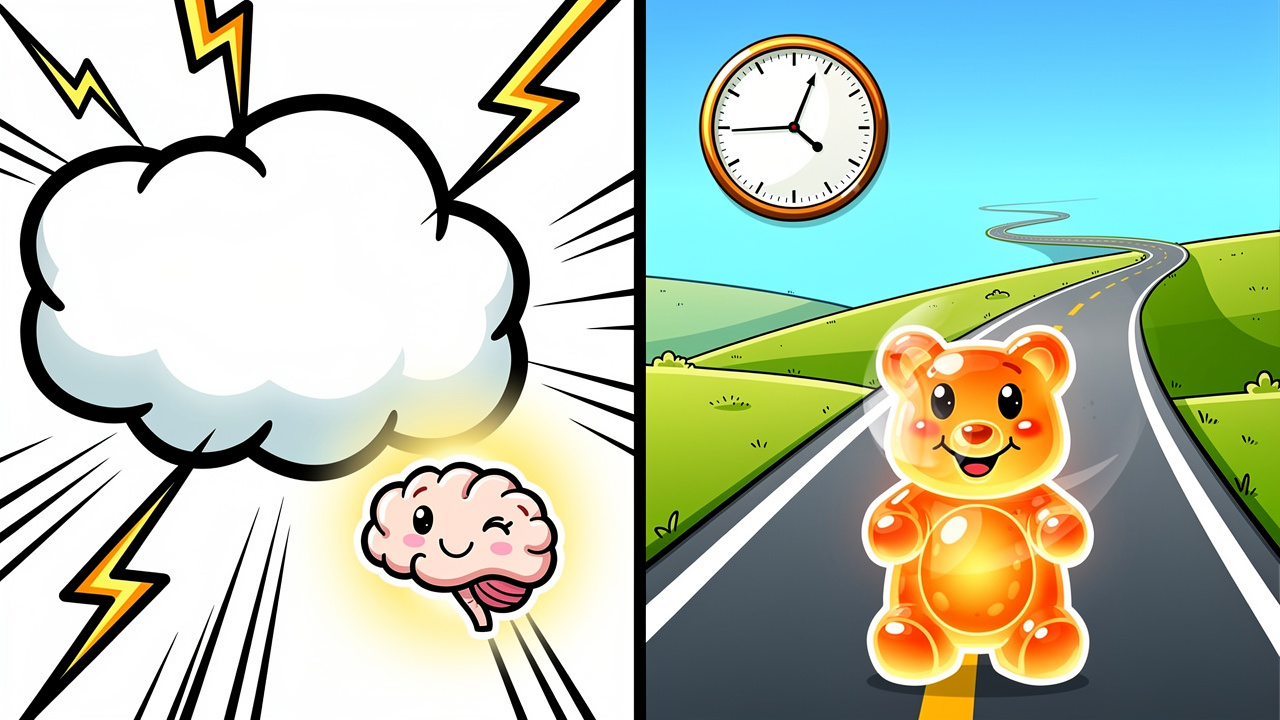
Edibles work differently to inhaled cannabis because they use the digestive system instead of the lungs. With smoking or vaping, THC passes through lung tissue into the bloodstream within minutes, so effects arrive fast and fade relatively quickly. With edibles, THC must pass through the gut and liver first, which completely changes the timeline.
When you inhale, THC in vapour or smoke reaches your blood in seconds. According to guidance summarised by Leafly, most people feel inhaled cannabis within a few minutes, often sooner. The same amount of THC eaten in a brownie might take well over half an hour to do anything noticeable.
After you swallow an edible, the base (chocolate, gummy mix, biscuit dough, or drink) breaks down in the stomach — a process shaped by well-established principles of Drug Metabolism – Clinical pharmacology. The THC, which prefers to sit in fats, moves with the digested contents into the small intestine. From there, it is absorbed into a special blood vessel that sends everything straight to the liver before it joins the main bloodstream.
The main differences between inhaled cannabis and edibles can be summed up simply:
Route: lungs → blood → brain (inhaled) vs. mouth → stomach → intestines → liver → blood → brain (edibles)
Onset: minutes for smoking or vaping vs. 30–180 minutes for many edibles
Peak: quick rise and fall for inhaled vs. slower rise and longer plateau for edibles
Duration: roughly 1–3 hours when inhaled vs. 4–8 hours or more with edibles
This extra stop in the liver is the real reason THC edible metabolism feels different. By the time THC reaches your brain, part of it has changed into another compound, 11‑hydroxy‑THC, which can feel stronger and more dreamlike. Instead of a sharp lift and a quick fade, the experience often builds slowly, peaks later, and hangs around for several hours.
As many clinicians like to say, “What you eat goes through your liver first, and cannabis is no exception.” That single step is why edibles can feel deeper and longer-lasting than a few puffs on a vape.
What First-Pass Liver Metabolism Actually Does
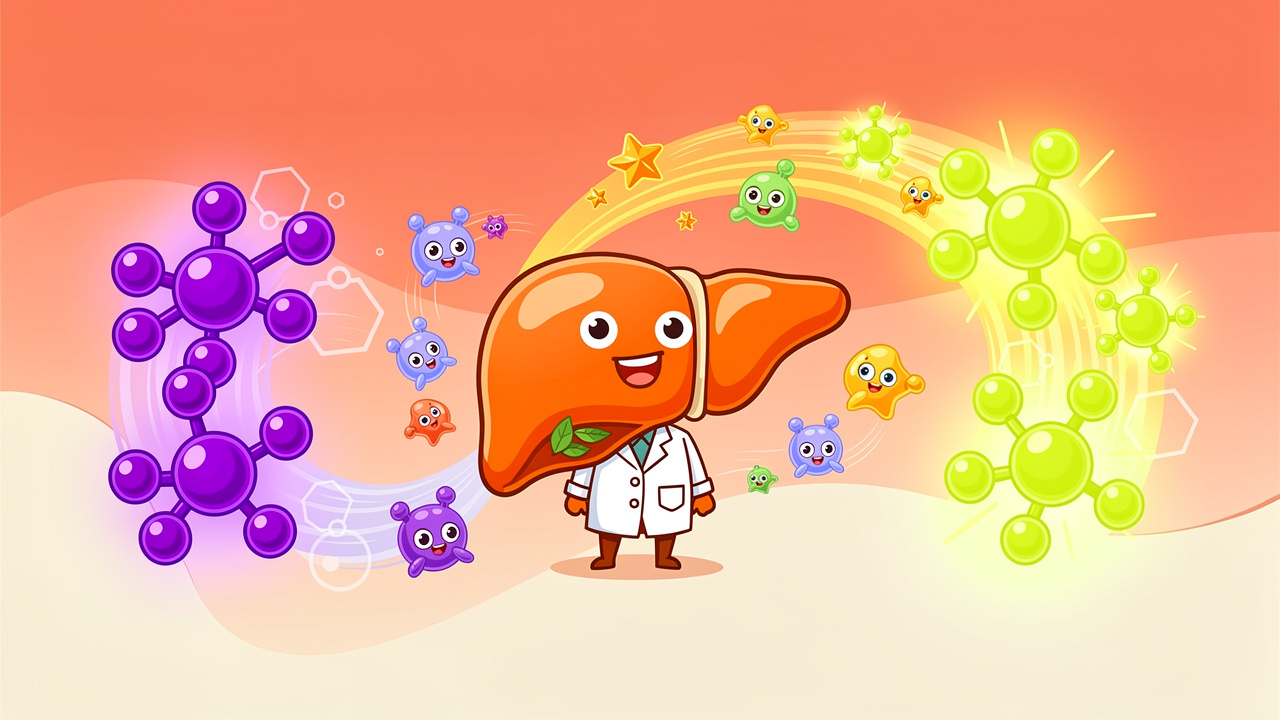
First‑pass liver metabolism describes what happens when THC passes through the liver before reaching the rest of the body. With edibles, almost all of the absorbed THC goes through this liver checkpoint, so the process has a big effect on how the edible feels.
Once THC has crossed the gut wall, it enters the portal vein, a blood vessel that feeds straight into the liver. Enzymes there, mainly CYP2C9 and CYP3A4, start turning delta‑9‑THC into a related compound called 11‑hydroxy‑THC. A review in Frontiers in Pharmacology notes that oral THC produces higher levels of 11‑hydroxy‑THC than inhaled THC, which helps explain the heavier body feel many people notice with edibles.
In simple terms, first‑pass metabolism:
Receives THC from the intestines
Converts a portion into 11‑hydroxy‑THC
Sends a mix of delta‑9‑THC and 11‑hydroxy‑THC into the wider bloodstream
The important part for everyday use is that this conversion changes how a given milligram dose feels. Ten milligrams of THC on a packet might sound the same everywhere, but 10mg inhaled is mostly delta‑9‑THC, while 10mg eaten becomes a mix of delta‑9‑THC and 11‑hydroxy‑THC — and as studies on Pharmacokinetics of oral Δ9-tetrahydrocannabinol confirm, oral administration produces a distinctly different metabolic profile. That mix often feels more intense, even though the number on the label has not changed.
Because of this, BudBuddies puts a lot of focus on clear milligram labelling and repeated potency checks — particularly important given that research on the Accuracy of labeled THC potency across cannabis products shows significant variation in the wider market. When you know the true amount of THC per gummy or square of chocolate, you can match that information to your own response to first‑pass metabolism, instead of guessing from one unmarked sweet to another.
11-Hydroxy-THC The Compound Behind The Intensity
11‑hydroxy‑THC is not a weak leftover from THC; it is an active compound in its own right, and research into Comparative Pharmacokinetics and Safety of cannabinoid formulations highlights how delivery method fundamentally alters the compounds that ultimately reach the bloodstream. Research referenced by Healthline indicates that 11‑hydroxy‑THC crosses into the brain more easily than delta‑9‑THC, which helps explain the stronger, sometimes more immersive mental effects many people report from edibles.
This metabolite also sticks around for longer. That longer presence lines up with the typical 4 to 8 hour window many people feel from a THC edible, compared with roughly 1 to 3 hours from smoking or vaping. After that, the liver breaks 11‑hydroxy‑THC down into THC‑COOH, an inactive metabolite that gathers in fat tissue and appears on many lab tests for cannabinoid exposure.
For practical use, that means:
A modest edible can feel “deeper” than a similar inhaled dose
Redosing too soon can stack both THC and 11‑hydroxy‑THC in your system
Planning your day or evening around this longer arc is wise, especially if you are new to THC edibles
Why Onset Takes So Long And Why That Catches People Out
Onset for edibles takes longer because digestion and liver processing are not instant. Most people feel a THC edible between 30 minutes and 2 hours after eating, which is a wide range — a variability reflected in findings on Commercial cannabis product testing: fidelity to labels and regulations, which underscores how product consistency and potency directly influence user experience. According to Healthline, some people even need closer to 3 hours before the main effects arrive.
Several steps slow things down:
The stomach needs time to break the edible base apart
The small intestine needs time to absorb THC along with the rest of the meal
The liver then needs time to convert part of that THC to 11‑hydroxy‑THC
Only then does the combined mix reach your brain
Food makes a big difference to THC edible metabolism. A large, heavy meal tends to slow stomach emptying, so the edible sits in place for longer before absorption even starts. A snack with some fat can help THC dissolve and move into the bloodstream more smoothly, a principle supported by studies on Enhancing cannabinoid bioavailability: a crossover comparison of formulations, which found that fat-based delivery significantly affects absorption rates. Alcohol can speed absorption and intensify effects, so mixing the two often feels rougher than planned.
This slow, uneven timing is why so many people get caught out. Someone takes a gummy, feels nothing after forty minutes, eats another, and then both doses arrive together an hour later. The calmer choice is to wait a full two hours before judging an edible, then adjust the dose another day. That gap matches the actual biology and keeps you away from the “why did I do that” spiral.
A useful rule of thumb many health writers repeat is: “Treat edibles more like a slow-release capsule than a quick snack.” You cannot talk your stomach or liver into working faster, so patience is your best safety tool.
How Your Biology Shapes The Edible Experience

Personal biology shapes THC edible metabolism just as much as dose size. Two people can share the same BudBuddies brownie and one might feel gently relaxed while the other feels deeply stoned — a reality explored in depth in The Scientific research Behind delta-9 gummies and how they interact with individual body chemistry. That difference is not just “tolerance” but a mix of several body factors.
Your endocannabinoid system, the network of CB1 and CB2 receptors that THC interacts with, is slightly different from anyone else’s. Receptor numbers and sensitivity vary, so the same blood level of THC and 11‑hydroxy‑THC can feel calmer in one person and much stronger in another. Research summarised by NIDA also shows that THC and its metabolites store in body fat and release over time, which adds another layer to how long effects linger.
Liver enzyme genetics matter as well. Variants in CYP2C9 and CYP3A4 genes can make someone a fast or slow processor of THC. A slow processor may experience higher peaks and longer duration from the same BudBuddies edible compared with a faster processor. Age and general health play a part too, as digestion and liver activity change across adult life.
Hormones and medications also influence the ride. Some research discussed by Harvard Medical School suggests hormonal cycles may change THC sensitivity, while medicines that share the same liver enzymes can either speed up or slow down THC breakdown. All of this is why personal note‑taking, rather than copying a friend’s dose, is such a helpful habit.
If you want to fine‑tune your edible experience, it can help to jot down:
What you ate and drank, and when
The THC amount and product type (for example, 5mg BudBuddies gummy)
Onset time, peak time, and when you felt back to normal
Any side effects like dry mouth, racing thoughts, or drowsiness
Over a few sessions, patterns start to show, and you can adjust more calmly.
Dosing Edibles Safely The Start Low Go Slow Principle
Safe edible dosing rests on the start low, go slow idea because of everything described in THC edible metabolism. For most adults new to edibles, 2.5 to 5mg of THC is a sensible first step. Guidance from Harvard Health Publishing points to this range for beginners, with careful waits between servings.
The main rule is simple:
Take a small measured dose
Wait at least two full hours
Decide whether that amount is right for you
Only change the dose on another day, not the same evening
Raising the dose on another day is far kinder to your body and mind than stacking extra gummies during the same night.
This table gives a rough starting point. It is not a hard rule, but it shows how many people line up experience with a first test dose.
| Experience Level | Suggested Starting THC Amount | Short Notes |
|---|---|---|
| New to THC | 2.5–5mg | Gentle first step, focus on how you feel |
| Occasional Consumer | 5–7.5mg | Noticeable but manageable for most people |
| Regular Consumer | 7.5–10mg | For those already used to THC |
| Very Experienced | 10–20mg | Only if you know your limits well |
BudBuddies makes this easier by giving clear per‑piece THC amounts on every edible — a standard that matters greatly given that research summarised in Can weed labels be trusted shows label accuracy varies considerably depending on the type of cannabis product purchased. Gummies, chocolates, baked treats, and drinks on budbuddies.cc use double‑checked lab results and 100% cannabis‑derived THC, so the number on the label matches what reaches your liver. That accuracy turns start low, go slow from a slogan into something you can follow in real life.
Tip from many seasoned users: “Your perfect dose is the smallest amount that gives the effect you want, without side effects you dislike.” Work up to that, rather than trying to hit it on night one.
The Bottom Line On Edible Metabolism

The key chain in THC edible metabolism runs like this: you eat the product, your gut absorbs THC, your liver converts a chunk of it into 11‑hydroxy‑THC, and the combined mix reaches your brain slowly but strongly. The result is a delayed onset, deeper peak, and a longer glide back to baseline.
BudBuddies builds its edibles around this science, not in spite of it. Clear labelling, thoughtful strength ranges, and discreet, tracked delivery across the UK mean you can explore this longer‑lasting format with more calm and less guesswork.
Conclusion
Edibles only feel mysterious until you can see the simple steps behind them. Once you understand how your stomach, liver, enzymes, and receptors work together, THC edible metabolism stops being a puzzle and starts to feel predictable.
From there, the real task is matching that knowledge to well‑described products and patient dosing. That is where the BudBuddies range comes in, from low‑dose gummies for quiet evenings to stronger options for experienced fans who already know their sweet spot. Take your time, note your own reactions, and let the science guide your next choice on budbuddies.cc.
Frequently Asked Questions
Question: How long does it take for a THC edible to kick in?
The effects of a THC edible usually start between 30 minutes and 2 hours after eating. Food in your stomach, the fat content of the edible, and your personal liver speed all play a part. Because of this range, waiting at least two full hours before adding more is the safest plan.
Question: Why do edibles feel stronger than smoking the same amount of THC?
Edibles often feel stronger because the liver turns part of the THC into 11‑hydroxy‑THC, which reaches the brain efficiently. With smoking or vaping, much less of this metabolite is formed. So even if the milligram number matches, the mix of active compounds in the blood is different, and usually feels heavier.
Question: How long do the effects of a THC edible last?
Most people feel the main effects of a THC edible for 4 to 8 hours, with a gentle tail that can reach 10 to 12 hours. Duration depends on dose, metabolism speed, body fat, and how often you use THC. This longer window suits evenings, lazy weekends, and extended relaxation.
Question: Does eating before taking an edible make a difference?
Yes, eating before an edible can change both timing and intensity. A full stomach slows the path into the intestines, so effects arrive later but may feel steadier. A snack with some fat can help THC absorption. Neither empty nor full is “best”; noticing what suits your own body is more useful.
Question: Can you build a tolerance to THC edibles?
You can build tolerance to THC edibles over time as CB1 receptors in the brain become less responsive. Someone who uses THC often may need more milligrams than a newcomer for the same effect. Because edibles use a different metabolic path than smoke, tolerance from inhaling does not always match edible strength perfectly.