


Blue Zushi Strain Guide: Everything You Need to Know
Wondering what all the fuss is about with Blue Zushi strain? This vividly coloured hybrid has become one of the most talked-about names in the wider “Zushi” family, and plenty of UK cannabis fans are curious whether it lives up to the hype. Between its deep blue and purple hues, its layered fruity flavour, and a THC range that sits firmly on the stronger side, there’s a fair bit to unpack before deciding if it’s the right pick for you.
This guide breaks it all down in plain English. We’ll look at where Blue Zushi comes from genetically, what it actually looks, smells and tastes like, and the kind of effects most people report after trying it. We’ll also cover how to spot genuinely good flower and how the strain compares across different product formats, so you finish this page knowing exactly what to look for. BudBuddies puts this guide together as part of its broader approach to clear, honest strain education for UK shoppers.
Read on for a full walk-through, starting with what Blue Zushi actually is.
Key Takeaways
Blue Zushi is a balanced hybrid, generally traced back to Zkittlez and Kush Mints genetics, sitting within the wider Zushi strain family.
Its signature look comes from deep blue and purple pigments called anthocyanins, paired with a sweet, fruity, minty flavour profile.
Effects tend to open with gentle euphoria before easing into calm body relaxation, with THC typically reported between 20% and 26%.
Good quality bud shows bold colour, heavy trichome frost, and a strong aroma, plus lab-verified potency rather than THC numbers alone.
What Is Blue Zushi?
Blue Zushi is a balanced hybrid cannabis strain built from Zkittlez and Kush Mints genetics, placing it firmly within the popular Zushi lineage that has built a loyal following over recent years. It typically presents as a near 50/50 hybrid, which means it doesn’t lean hard into pure sedation or pure head-high territory the way some older strains do. Instead, it aims for a rounded, well-balanced experience that appeals to a wide range of tastes, whether you’re after quiet relaxation or something a little more social.
Because Blue Zushi is part of a wider breeding family rather than a single fixed cultivar, phenotype variation is common from one grower to the next. Some batches lean slightly indica-dominant with heavier body effects, while others sit closer to the sativa side with a lighter, more cerebral lift, so it’s worth treating “Blue Zushi” as a family trait rather than one fixed formula.
What Are Blue Zushi’s Genetics and Lineage?

Blue Zushi’s genetic backbone comes from two well-regarded parent strains, Zkittlez and Kush Mints, each bringing distinct qualities to the final result. Zkittlez contributes the sweet, candy-like fruitiness and much of the strain’s colour variation, while Kush Mints adds an earthy, minty depth along with a stronger, longer-lasting body effect that many experienced consumers specifically look for.
Because Blue Zushi sits within a broader breeding family rather than a single standardised line, phenotype variation between growers is genuinely common, and no two harvests are guaranteed to look or taste identical. This isn’t a flaw so much as part of the appeal, since it gives each batch a slightly individual character while keeping the core traits that define the strain intact. It’s one reason lab testing and grower reputation matter more than a strain name alone.
What Does Blue Zushi Look, Smell and Taste Like?
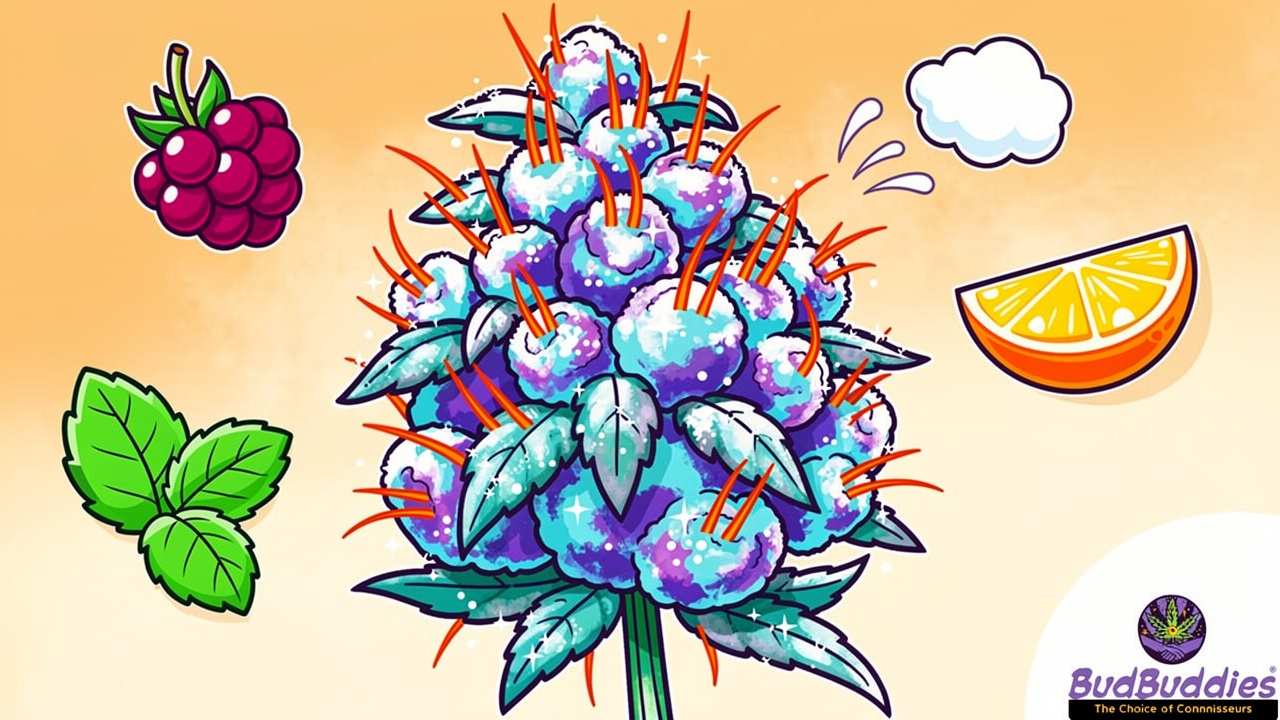
Blue Zushi is best known for its striking bag appeal, showing off deep blue and purple hues that develop against forest green foliage and orange pistils, all wrapped in a thick, frosty coat of trichomes that signals strong resin production. This colouration comes from anthocyanins, natural pigments that become more pronounced when the plant experiences cooler night-time temperatures during flowering, which is why well-grown cuts often look noticeably bolder than average batches.
On the nose, expect a sweet, pungent aroma built from berry and grape notes layered over an earthy, gassy kush backbone, with a minty freshness cutting through that sweetness on the exhale. The flavour follows a similar pattern, delivering candy-like fruit up front before settling into an earthy, hash-like finish with a cooling, minty aftertaste that tends to linger pleasantly on the palate.
Key Terpenes Behind the Flavour
The taste and feel of Blue Zushi come largely down to its terpene content, which are the aromatic compounds responsible for scent and flavour in cannabis and countless other plants.
Caryophyllene adds a peppery, spicy edge
Limonene brings citrus brightness often linked to mood lift
Linalool offers floral, almost lavender-like notes tied to relaxation
Myrcene contributes earthy undertones thought to deepen the calming side of the high
Understanding these terpenes matters because they shape the actual experience just as much as THC percentage does, which is why serious strain fans increasingly look past raw potency numbers alone.
What Effects Can You Expect From Blue Zushi?

Most people report a gentle cerebral lift as the first sign Blue Zushi is working, bringing feelings of euphoria, mental clarity and a noticeable boost in sociability that makes it a popular pick for gatherings or creative tasks. As the high develops, a soothing body relaxation tends to follow, easing physical tension gradually rather than delivering the heavy couch-lock associated with pure indica strains, though larger doses can tip things toward drowsiness later on.
With THC typically reported between 20% and 26%, Blue Zushi sits on the stronger end of what’s widely available, so it’s worth respecting that potency rather than treating it like a milder hybrid. Newer consumers, or anyone trying a new batch, should start with a small amount and wait to see how it lands before having more, since individual tolerance and body chemistry both play a real part in how strong the effects actually feel.
How Do You Choose Quality Blue Zushi?
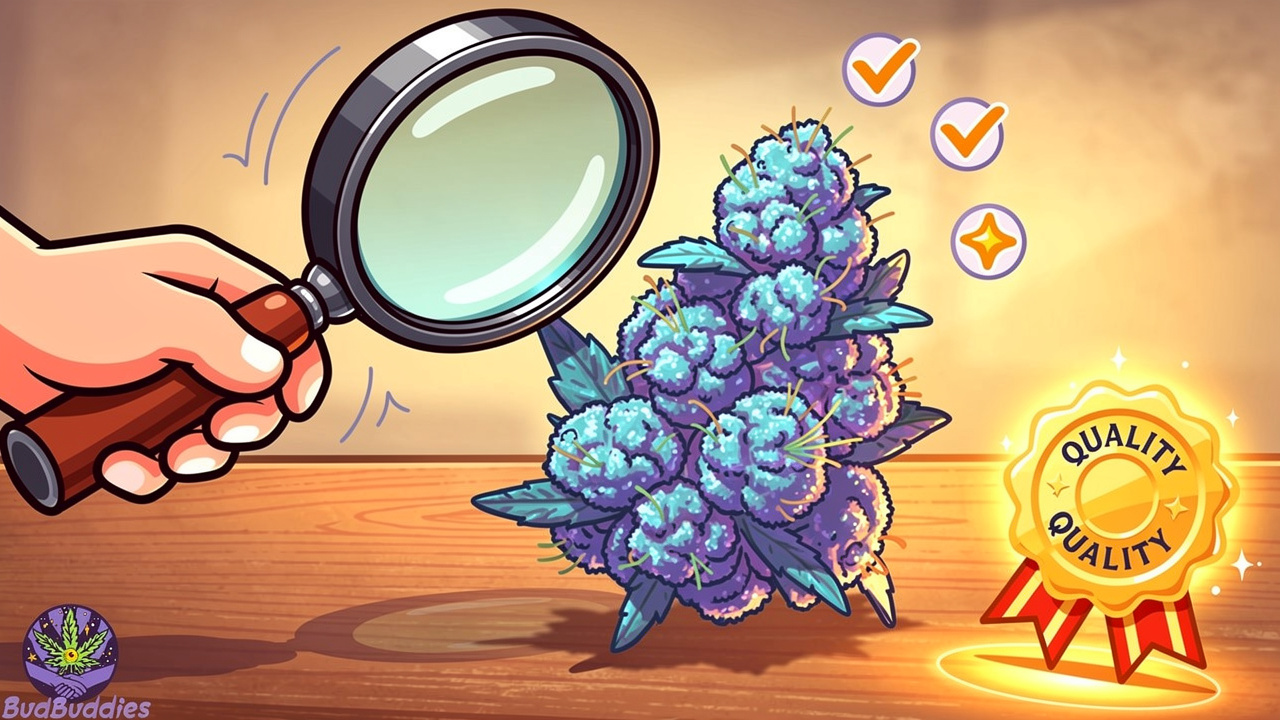
Spotting genuinely good Blue Zushi comes down to a handful of visual and aromatic clues that experienced buyers rely on every time:
Bold colour: Blue or purple tones rather than a dull, flat green usually signal proper growing and curing.
Trichome coating: A generous, frosty layer points to strong resin and cannabinoid content.
Aroma depth: A loud, layered scent combining sweetness with earthy depth suggests the terpenes have been preserved well.
Cure quality: A faint or hay-like smell often means the cure was rushed.
That said, appearance and smell only tell part of the story, which is why BudBuddies leans on independent lab testing and full terpene transparency rather than relying on THC percentage as the only measure of quality.
A well-cured, terpene-rich batch in the low-to-mid twenties can genuinely feel stronger and more enjoyable than a stale, higher-THC alternative, so freshness and proper curing deserve just as much attention as the number on the label.
How Does Blue Zushi Compare to Other Formats?
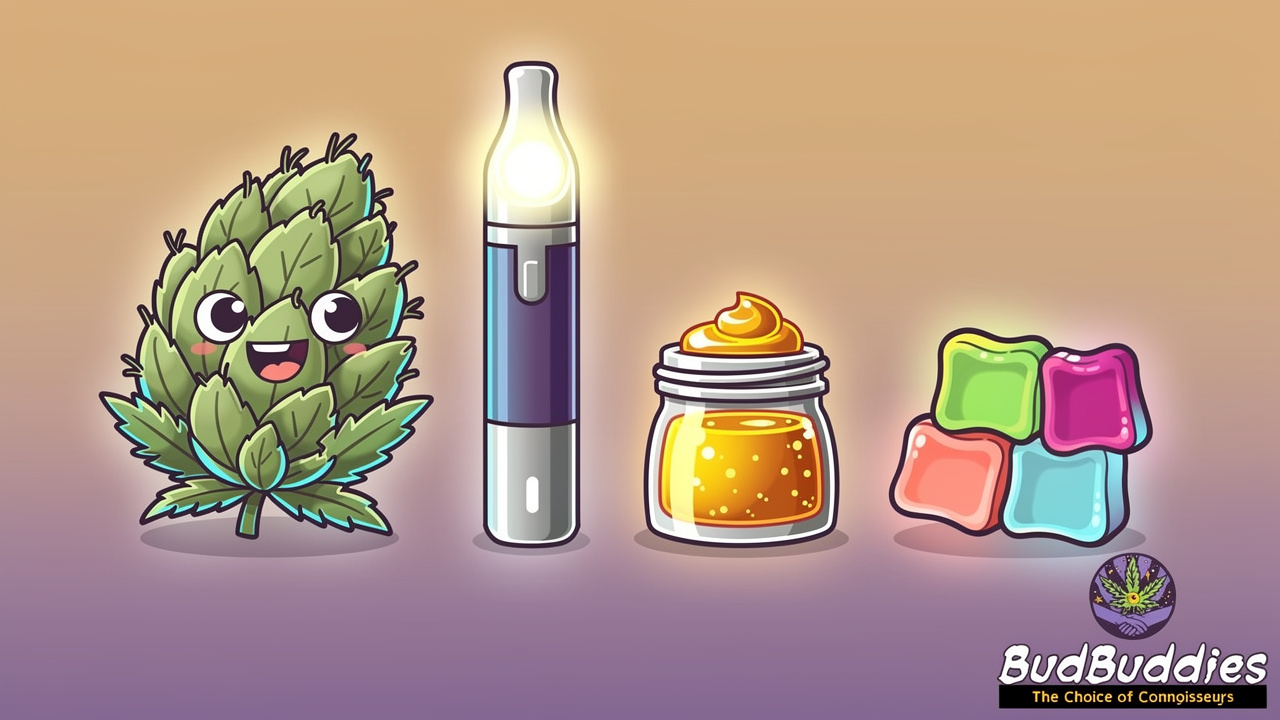
Blue Zushi’s character shows up differently depending on how you consume it, and knowing these differences helps you pick the format that actually suits your routine.
Flower (smoked or vaped): Fastest onset, usually within minutes, along with the fullest expression of the strain’s aroma and flavour, though effects typically fade within one to three hours.
Vapes: A similarly quick onset in a more discreet, low-odour format.
Concentrates: A much stronger, more compact dose for those with existing tolerance.
Edibles: Take anywhere from 30 minutes to two hours to kick in but last considerably longer once they do.
Since the platform stocks flower, edibles, vapes and concentrates across its curated range, you can experience Blue Zushi’s genetic family in whichever format fits your lifestyle, whether that’s a fast-acting smoke session or a slower, longer-lasting edible for later in the evening. Trying more than one format is a genuinely useful way to understand how the same terpene and cannabinoid profile can feel quite different depending on how it reaches your system.
The Takeaway
Blue Zushi earns its reputation through a rare combination of bold colour, layered fruity-minty flavour, and effects that manage to feel balanced rather than one-note. Its Zkittlez and Kush Mints heritage gives it real depth, and the 20-26% THC range makes it a strain best appreciated once you’ve built up some tolerance or are prepared to start slow.
If this guide has you curious, take a look at BudBuddies’ curated flower range and check the live catalogue for current strain availability, since selections do change as fresh batches come in. Every order ships with discreet packaging and tracked delivery, and lab-tested quality runs across the whole range, so you can explore strains like Blue Zushi with a clear picture of what you’re actually getting.
Frequently Asked Questions
Is Blue Zushi Indica or Sativa?
Blue Zushi is a balanced hybrid, generally sitting close to a 50/50 split between indica and sativa traits rather than leaning heavily either way. That said, phenotype variation means some specific cuts lean slightly indica-dominant, producing a touch more body relaxation, while others feel a bit lighter and more cerebral.
How Strong Is Blue Zushi Compared to Other Hybrid Strains?
Blue Zushi typically tests between 20% and 26% THC, which puts it above the average for many common hybrid strains on the market. That extra strength means it suits consumers with some existing tolerance better than complete newcomers, who should start with a smaller amount.
What Makes Blue Zushi’s Colour So Blue and Purple?
The blue and purple tones come from anthocyanins, natural pigments that intensify when the plant experiences cooler night-time temperatures during the final weeks of flowering. Growers often manage temperature carefully at this stage specifically to bring out these deeper colours.
Can Blue Zushi Help With Sleep or Relaxation?
Some users report that Blue Zushi’s calming, body-focused effects feel helpful for winding down, particularly at higher doses. This is anecdotal rather than a medical claim though, and anyone with genuine sleep or health concerns should speak to a qualified professional instead.
What’s the Difference Between Blue Zushi and Other Zushi Family Strains?
Compared to original Zushi or Kush Mints, Blue Zushi stands out mainly through its deeper blue-purple colouration and slightly fruitier, berry-forward flavour balance. The underlying earthy, minty backbone still connects it clearly to the rest of the family.
How Should Beginners Approach Trying Blue Zushi for the First Time?
Beginners should start with a small amount, wait to feel the full effect before having more, and pick a comfortable, familiar setting. If you’re unsure which format or strength suits you best, BudBuddies’ product pages and support team can help point you toward a sensible starting choice.

