


Forbidden Fruit Strain: Everything You Need to Know | BudBuddies
Searching for the Forbidden Fruit strain and getting a clear answer isn’t always easy. Many pages repeat the same few facts about flavour and potency without explaining what actually shapes the experience, leaving newcomers guessing and experienced consumers short on the detail they want.
Forbidden Fruit is an indica-dominant hybrid, bred from Cherry Pie and Tangie. It’s known for its tropical fruit aroma, layered citrus and berry flavour, and a relaxing body high that deepens over time. This guide walks through its genetics, its taste and smell, how its effects typically unfold, and how strong it tends to be. We’ll also cover what separates a genuinely well-cured batch from a disappointing one, and how BudBuddies handles lab testing, curing, and discreet delivery for strains like this across the range.
Read on for the full picture, starting with where the Forbidden Fruit strain actually comes from.
Key Takeaways
The Forbidden Fruit strain is an indica-dominant hybrid (roughly 80:20) crossing Cherry Pie and Tangie, giving it a fruity, evening-friendly character.
Its aroma combines tropical fruit, citrus zest, and dark berry notes over an earthy base, driven by terpenes like myrcene and limonene.
Effects typically start with a mild cerebral lift before settling into deep, sometimes heavy, body relaxation.
THC commonly runs from moderate to high, often cited between 19% and 27%, so curing and terpene quality matter as much as the number on the label.
Checking lab reports, terpene data, and packaging discretion helps you spot a genuinely good batch before you buy.
What Is the Forbidden Fruit Strain?
The Forbidden Fruit strain is an indica-dominant hybrid cannabis strain, typically running around an 80:20 indica-to-sativa ratio, created by crossing Cherry Pie and Tangie. That heritage gives it a fruity, tropical character alongside effects that lean firmly towards relaxation rather than energy. The strain has built a strong following among UK cannabis enthusiasts. It manages to combine a genuinely layered flavour profile with a body-focused high that many describe as comforting rather than overwhelming.
Newcomers often find it a manageable way into indica-leaning strains, since the Tangie parentage keeps the early effects bright and sociable before the deeper relaxation sets in. Experienced consumers, meanwhile, tend to return to Forbidden Fruit as a dependable evening strain with real depth, rather than a one-note fruity hybrid. Its reputation rests on this balance between enough sedation to genuinely unwind the body and enough cerebral lift to avoid feeling flat. On top of that, its flavour stands out even among the crowded field of modern dessert and fruit strains. Whether this is your first indica-dominant strain or one you already know well, understanding its genetic background helps explain why it behaves the way it does.
Genetics: Cherry Pie and Tangie Explained
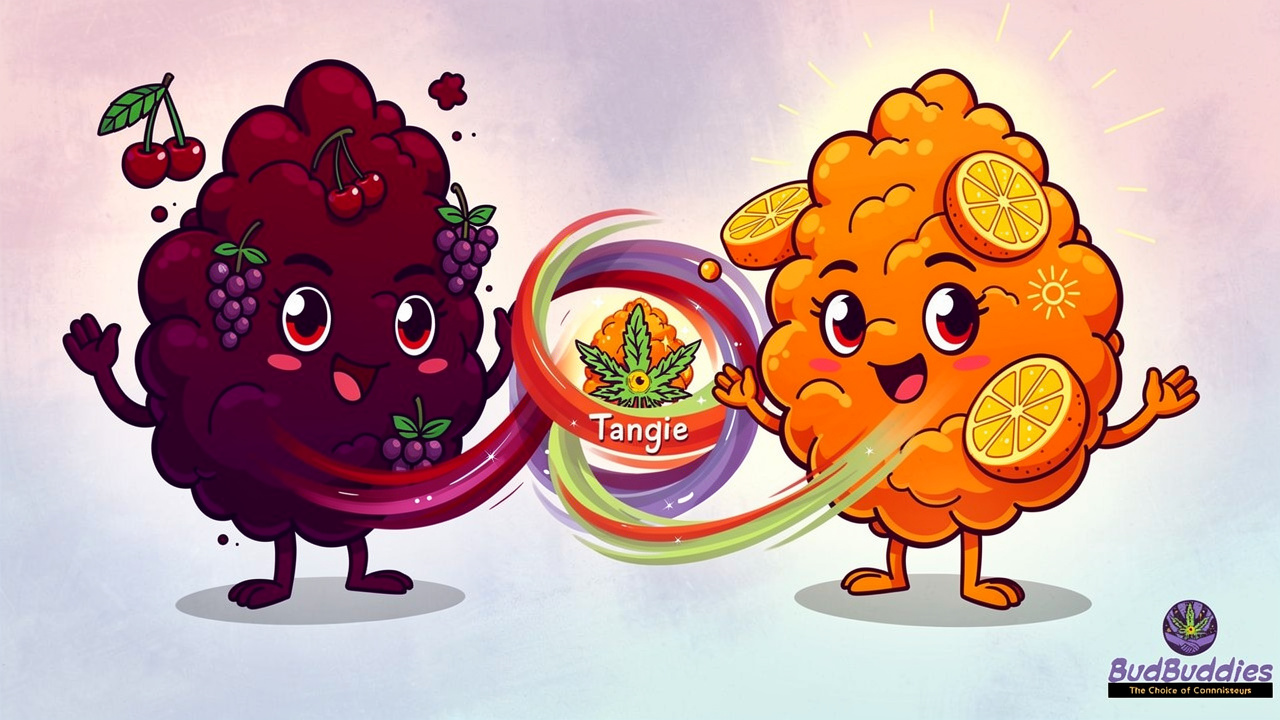
Cherry Pie is itself a hybrid, descended from Granddaddy Purple and Durban Poison. It hands Forbidden Fruit its dark cherry and berry sweetness, along with a mellow, relaxing indica base. This parent strain is largely responsible for the deep, comforting body effects that show up later in the high.
Tangie, a sativa-dominant strain with California Orange and Skunk genetics, brings the bright citrus punch and a lighter, more cerebral lift. Combined, these two parents give Forbidden Fruit its layered fruit-forward character, balancing dark, sweet depth against sharp, zesty top notes that few other strains manage together.
What Does Forbidden Fruit Taste and Smell Like?

Forbidden Fruit smells like its name suggests: a genuinely tropical, almost decadent mix of mango, passionfruit, and citrus zest layered over darker cherry and grape sweetness. Break a bud apart and the earthy, slightly skunky base note comes through underneath, grounding what would otherwise be an overwhelmingly sweet profile. On the exhale, the flavour tends to soften, with citrus and berry lingering longer than the initial sharp aroma suggests.
That complexity comes down to terpenes, the aromatic compounds that give every strain its individual scent and flavour:
Myrcene adds earthy depth and supports the relaxing effects
Limonene delivers the citrus brightness
Caryophyllene brings a peppery edge
BudBuddies lists terpene data alongside THC content on its product pages and prioritises careful curing, since a rushed dry can strip away the volatile monoterpenes responsible for that fruity character, a distinction well documented in guides comparing live vs cured terpenes before it ever reaches you.
What Effects Does Forbidden Fruit Produce?

Forbidden Fruit produces effects that are predominantly physical, with a gradual pull towards deep relaxation that many consumers find genuinely comforting rather than heavy-handed. The high tends to begin with a lift in mood, a touch of mild euphoria, and a reduction in racing thoughts. This owes largely to the Tangie genetics working alongside the calmer Cherry Pie base.
As the experience develops, that cerebral brightness fades into a warm, spreading physical relaxation that starts in the head and moves down through the body. At lower doses, many people report feeling sociable, at ease, and pleasantly loosened up without losing focus entirely. Push the dose higher, though, and the sedative side takes over more firmly. Muscle tension eases, mobility drops, and there’s a strong pull towards the sofa that many describe as genuine couch-lock.
This physical heaviness is where Forbidden Fruit earns its reputation as an evening strain, since the relaxation can be difficult to shake off if you need to stay alert. The mental side never fully disappears, though. That’s part of what separates this strain from purely sedative indicas, since there’s usually a thread of contentment or mild giggliness running underneath the physical calm. How intensely each stage hits depends heavily on dose, tolerance, and the specific batch. That’s why starting cautiously with any new supply makes sense, particularly for those without much prior experience of indica-dominant hybrids.
How the High Typically Progresses
Most people notice a bright, happy cerebral lift within the first few minutes, often accompanied by a sense of sociability and mild euphoria. That initial phase gradually gives way to deeper physical relaxation, usually within twenty to thirty minutes, as the body-focused effects of the Cherry Pie genetics take hold. By the later stages, especially at higher doses, the experience settles into calm, heavy relaxation best suited to a quiet evening rather than an afternoon out.
How Strong Is Forbidden Fruit?
THC levels in the Forbidden Fruit strain commonly sit between moderate and high. Many tested batches fall somewhere in the 19% to 27% range, depending on the phenotype and how it’s been grown. CBD content is typically low, usually under 1%, which is standard for most popular THC-dominant hybrids. Given this potency, the strain suits consumers with at least some existing tolerance, particularly once the physical relaxation deepens at higher doses.
Raw THC percentage only tells part of the story, though, a point explored in depth in analysis challenging the industry’s fixation on high THC numbers in favour of terpene quality. BudBuddies works on the principle that a well-cured, terpene-rich 22% can hit harder than stale 28% flower, since freshness and terpene content shape how the effects actually feel.
A well-cured, terpene-rich batch at 22% THC can hit harder than a stale batch at 28%, because freshness and terpene content shape how the effects actually feel.
Every batch is independently lab-tested for cannabinoids and screened for contaminants, so the number on the label reflects what’s genuinely in the jar.
How to Choose a Quality Forbidden Fruit Product

Before buying any Forbidden Fruit strain product, check for:
A genuine Certificate of Analysis confirming cannabinoid content, terpene data, and screening for pesticides or heavy metals
Clear THC and CBD labelling, since vague percentages usually signal a supplier cutting corners on testing
Discreet packaging and tracked delivery, particularly if privacy matters to you, given how pungent this strain is
The platform provides lab reports on every listing and packs flower in vacuum-sealed, smell-proof bags inside plain outer packaging. It also offers tracked delivery across the UK and Ireland, with next-day options for orders placed before 3pm. Once it arrives, store your Forbidden Fruit in an airtight, opaque glass jar at 15 to 20°C and around 58 to 62% humidity to keep that fruity terpene profile intact. If you’re newer to potent indica-dominant strains, effect-based filtering and responsive support can help you choose confidently rather than guessing.
The Takeaway
Forbidden Fruit earns its reputation through a genuinely layered flavour, tropical, citrus, and berry all at once, paired with effects that move from a light cerebral lift into deep, evening-friendly relaxation. It suits consumers who already have some tolerance and want a dependable way to unwind, rather than those chasing an energising daytime smoke. The strain’s appeal lies as much in how it tastes as in how strong it is. That’s why curing and terpene quality deserve just as much attention as the THC figure on the label.
If that combination sounds like your kind of evening strain, BudBuddies’ lab-tested, fruit-forward flower selection is worth a browse. Every listing includes full terpene and cannabinoid data, so you can see exactly what you’re choosing before it arrives, discreetly and well cured, at your door.
Frequently Asked Questions
A few quick answers to the questions we hear most often about the Forbidden Fruit strain, covering its classification, aroma, suitability for beginners, and how it compares with its own parent genetics. These short answers are designed to stand alone, so you can find what you need without reading back through the full guide.
Is Forbidden Fruit a Sativa or an Indica?
The Forbidden Fruit strain is an indica-dominant hybrid, typically running around an 80:20 indica-to-sativa ratio. It isn’t a pure indica or sativa; the Tangie parentage keeps a light cerebral lift present even though the physical, relaxing effects clearly dominate the overall experience.
What Does Forbidden Fruit Smell Like Compared to Other Fruity Strains?
Forbidden Fruit layers tropical fruit, citrus zest, and dark berry notes together rather than leaning on one dominant flavour. Many fruity strains offer a single-note sweetness, whereas Forbidden Fruit’s combined Cherry Pie and Tangie genetics create a noticeably more complex, multi-layered aroma.
Is Forbidden Fruit Good for Beginners?
Forbidden Fruit suits consumers with at least some existing tolerance, given its moderate to high THC levels and strong sedative potential at higher doses. Newcomers can still try it, but starting with a small amount and waiting to gauge the effects is sensible.
How Is Forbidden Fruit Different From Its Parent Strains, Cherry Pie and Tangie?
Forbidden Fruit is brighter and more citrus-forward than Cherry Pie, thanks to its Tangie genetics, yet considerably more sedating and body-focused than the energetic, cerebral-dominant Tangie. It sits between the two, combining dark fruit depth with zesty top notes.
What Time of Day Is Best for Using Forbidden Fruit?
Evening or night-time suits Forbidden Fruit best, since its relaxing, sometimes sedating effects can make daytime tasks harder to manage. A smaller dose earlier in the day may feel manageable, but larger amounts tend to bring on noticeable drowsiness.
How Should I Store Forbidden Fruit to Keep It Fresh?
Keep Forbidden Fruit in an airtight, opaque glass jar, ideally between 15 and 20°C with humidity around 58 to 62%. Store it away from direct light and heat, which both degrade the terpenes responsible for its distinctive fruity aroma over time.

