


Can You Freeze Weed Safely? Storage Tips from Bud Buddies
Can you freeze weed without wrecking the flavour, the potency, or the buds themselves? It’s one of the most common storage questions UK cannabis fans ask, and the honest answer is more nuanced than a simple yes or no. Cold storage sounds like a clever shortcut for keeping cannabis fresh for longer, but flower reacts very differently to freezing than most people expect.
Freezing cannabis flower carries real risks, from brittle trichomes snapping off during handling to trapped moisture that invites mould once thawed. Cannabis edibles, by contrast, freeze rather well when wrapped and sealed properly, making them the safer candidate for the freezer. This guide walks through exactly what happens when you freeze weed, why edibles behave so differently, and which storage methods actually keep flower fresh without the added risk. We’ll also cover how to spot cannabis that’s gone off, whatever the cause. BudBuddies, a curated UK cannabis destination, built its storage guidance around getting these details right, so your stash stays in the condition it arrived in.
Key Takeaways
Freezing cannabis flower isn’t recommended. Moisture condensation and brittle trichomes put both mould risk and potency at stake.
Cannabis edibles are the exception. Wrapped and sealed properly, they freeze well for months with potency staying stable.
Cool, dark, airtight storage beats the freezer for flower. Aim for 15–20°C and 58–62% relative humidity to keep buds fresh for 6–12 months.
BudBuddies supplies pre-cured flower alongside storage accessories, so getting this right doesn’t take extra guesswork.
Can You Freeze Weed Safely?
Yes, you can freeze weed, but whether you should depends entirely on what you’re freezing. Cannabis flower generally shouldn’t go in the freezer, because the same cold that slows down degradation also creates the conditions for condensation and trichome damage once the buds thaw out. Low temperatures make the tiny, crystal-like trichomes covering each bud brittle and prone to snapping off during handling, which strips away potency and flavour before you’ve even opened the jar. Worse, any residual moisture inside the bud can form ice crystals that damage plant cells, and when the cannabis warms back up, that damage combined with trapped moisture creates an ideal environment for mould.
Cannabis edibles are a different story entirely. Baked goods, gummies, and chocolates freeze in much the same way as any other food product, and their potency stays largely stable for months provided they’re wrapped tightly enough to prevent freezer burn. The main downside with edibles is textural rather than chemical, since gummies can turn slightly chewier or firmer after thawing, though this rarely affects how well they work.
So the honest, direct answer to “can you freeze weed” splits down the middle: treat your flower with caution and reach for proper cool, dark storage instead, but feel free to freeze your edibles if you’ve bought or made more than you’ll get through soon. Understanding this distinction from the outset saves you from turning a good batch of flower into a mouldy disappointment, while still giving you a genuinely useful freezing option for the products that can actually handle it.
Why Freezing Damages Cannabis Flower
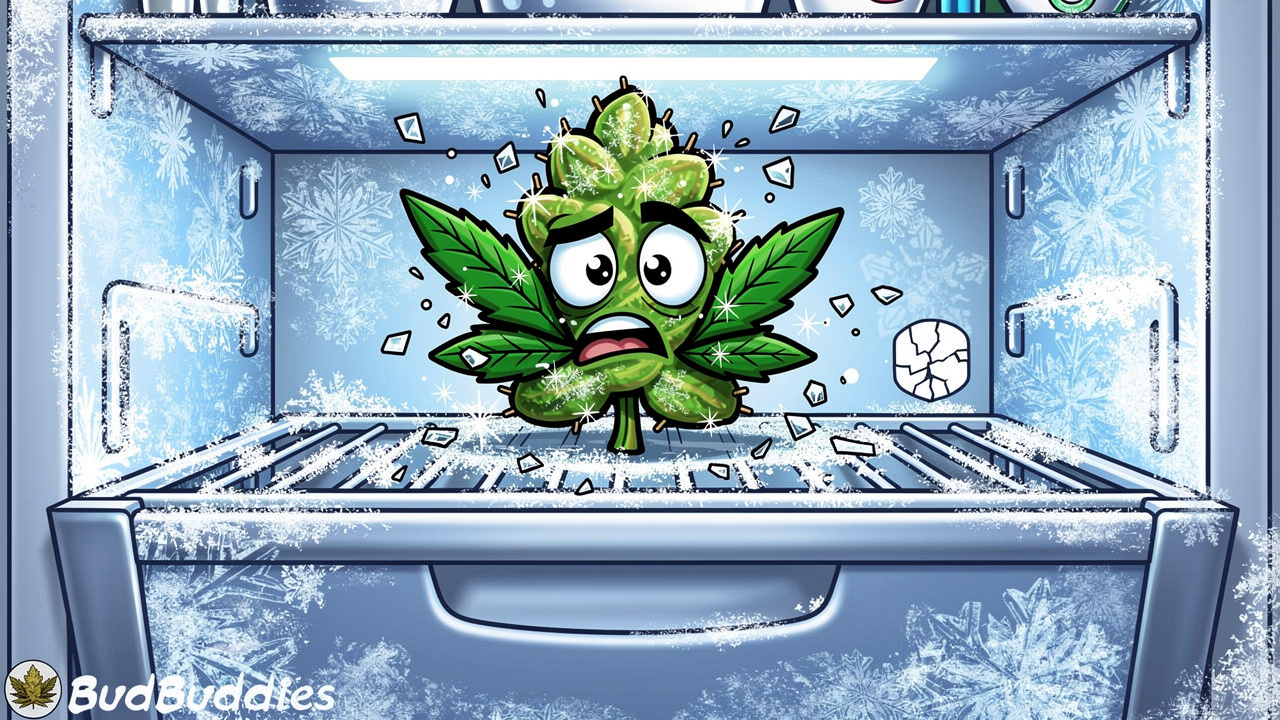
Freezing makes the trichomes on cannabis flower stiff and fragile, since these tiny structures hold most of the plant’s cannabinoids and terpenes. Any handling, like moving buds between containers or breaking them apart, causes brittle trichomes to snap off and fall away. That’s a direct loss of potency and flavour, and it happens more easily than most people realise, even with careful hands.
The bigger issue is moisture trapped inside the bud itself. When buds freeze, any residual water forms ice crystals that expand and damage the plant’s cell walls. Once thawed, that cellular damage combines with leftover moisture to create a perfect breeding ground for mould, which is why properly cured buds matter so much before freezing is even considered.
What Happens If You Freeze Weed Anyway?
If you freeze cannabis flower despite the risks, three problems tend to show up fairly quickly:
Brittle trichomes become fragile and break off during handling, stripping away potency before you even notice.
Poor sealing lets air reach the buds, degrading terpenes and sometimes letting freezer odours seep into the flavour.
Trapped moisture forms ice crystals that damage plant cells, setting the stage for mould once the buds warm back up.
Opening and closing a frozen container repeatedly makes all of this worse. Each time warm air meets frozen buds, condensation forms on the surface, and that repeated cycle accelerates degradation with every opening. Portioning flower into smaller containers before freezing, rather than reopening one large batch, reduces this problem considerably.
Can You Freeze Cannabis Edibles?

Cannabis edibles freeze noticeably better than flower, and for many people they’re the more practical option for long-term storage. Gummies, chocolates, and baked goods can sit in the freezer for several months without losing meaningful potency, since there’s no delicate trichome layer at risk. The main change worth expecting is texture: gummies sometimes firm up or turn slightly chewier once thawed, though this rarely changes how well they work.
Getting this right comes down to sealing properly, a principle covered in broader cannabis storage and humidity guidance, so wrap edibles tightly in cling film or an airtight bag before placing them in a freezer-safe container to prevent freezer burn. BudBuddies’ range includes edibles alongside storage accessories, so anyone stocking up can pick up sealed products and the containers to protect them from a single order.
How Should You Store Weed Instead of Freezing It?
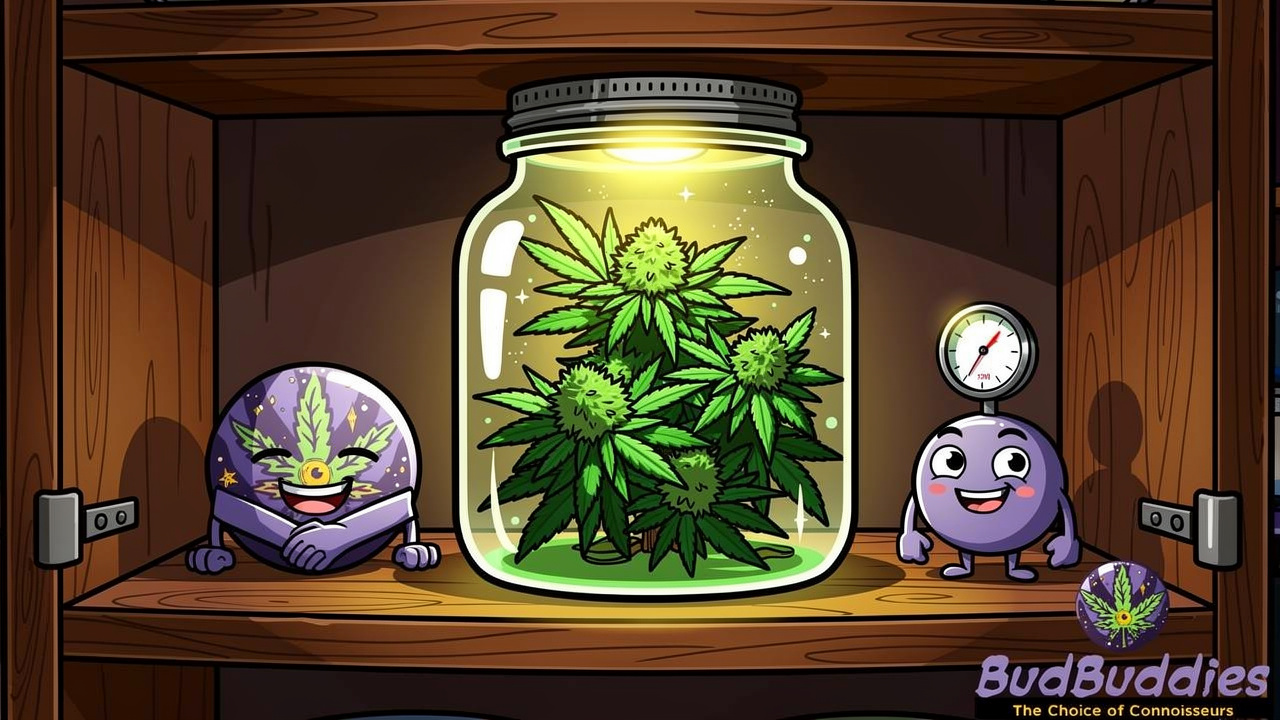
Cannabis flower stays freshest when it’s protected from what storage specialists call the four enemies of degradation: temperature, humidity, light, and air. Keeping buds between 15–20°C and 58–62% relative humidity, a range detailed in guidance on the best RH for cured cannabis, away from direct light and sealed from air exposure, slows the breakdown of THC, CBD, and terpenes considerably. Get any one of these four wrong and quality starts slipping fast, regardless of how careful you are with the others.
Airtight glass jars are the simplest way to manage all four factors at once, especially when paired with a humidity control pack that holds moisture at a steady level.
The platform stocks UV-blocking glass jars and Boveda humidity packs designed for exactly this purpose, taking the guesswork out of finding the right conditions for your buds.
Because the flower already arrives properly cured, there’s no extra drying or curing step needed before it goes into storage. You can transfer it straight from its sealed delivery packaging into a proper jar and expect it to stay fresh for 6–12 months without ever touching a freezer.
How Can You Tell If Your Weed Has Gone Off?
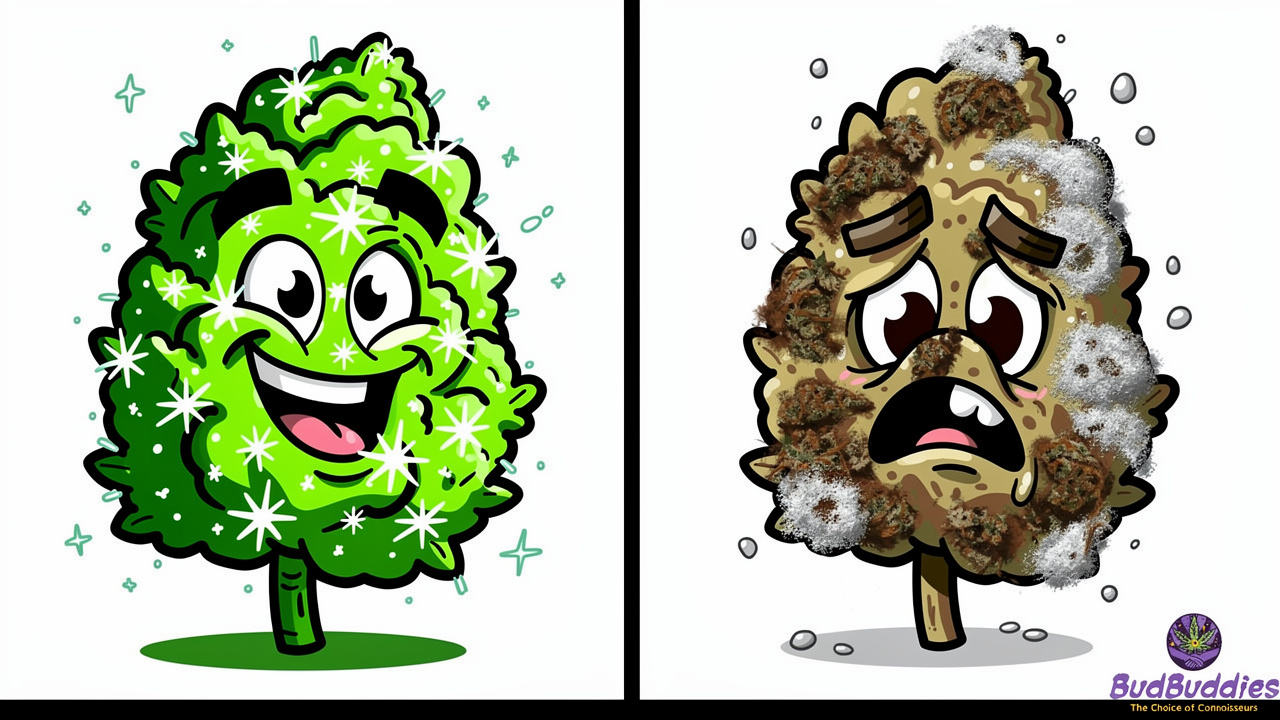
Spotting spoiled cannabis comes down to a few clear warning signs, whether the cause was a freezer mishap or simply poor storage over time:
Discolouration, such as buds turning brown, black, or an unnatural grey, is one of the first things to look for.
Fuzzy white, grey, or green spots are mould, not to be confused with the frosty white trichomes that naturally coat healthy buds.
An off smell, musty, hay-like, or ammonia-like, instead of the strain’s usual aroma, is another reliable red flag.
Unusual texture, such as buds that feel damp, slimy, or oddly brittle, suggests moisture or freezer damage.
If you spot any of these signs, the safest move is to discard the affected buds entirely rather than trying to salvage part of the batch. Mould spores can spread through material that looks fine on the surface.
The Bottom Line
So, can you freeze weed? Flower is best left out of the freezer altogether, since brittle trichomes and trapped moisture turn a preservation attempt into a mould risk. Cannabis edibles are the safer exception, freezing well for months with potency staying stable and only minor texture shifts to expect.
For flower, proper cool, dark, airtight storage does the job better than any freezer could, keeping buds fresh for 6–12 months without the added risk. BudBuddies’ pre-cured flower, storage jars, humidity packs, and guides make it straightforward to get this right from the moment your order arrives, so freshness isn’t left to chance.
Frequently Asked Questions
Here are quick answers to a few common questions about freezing and storing cannabis properly.
Does Freezing Weed Reduce Its Potency?
Properly sealed freezing barely touches potency, since cold temperatures actually slow cannabinoid breakdown. The real risk comes from poor sealing or repeated temperature swings, which let oxygen reach the buds and speed up THC degradation over time. This is why freezing works far better for edibles than for flower.
Can You Refrigerate Weed Instead Of Freezing It?
Refrigeration carries many of the same risks as freezing, mainly condensation forming inside the container as temperatures shift. Without strict humidity control, a fridge can encourage mould just as easily as a freezer can. Cool, dark cupboard storage is generally the safer, simpler choice for flower.
How Long Does Properly Stored Weed Stay Fresh Without Freezing?
With the right conditions, cool and dark surroundings, airtight glass, and humidity held around 58–62%, as outlined in a jar curing guide for cannabis, flower typically stays fresh for 6 to 12 months. This storage guidance is built around these exact ranges, helping buds hold onto potency and flavour for as long as possible.
What’s The Best Container For Storing Weed At Home?
Airtight glass jars are the gold standard, since glass doesn’t react with cannabis or hold static that strips trichomes the way plastic can. Mylar bags work well for bulk storage, while small metal tins suit travel or short trips out of the house.

