


cannaray thc
Cannaray THC products cover flower, oils, edibles and vapes, and whether the brand suits you comes down to matching format and strength to your own experience level. If you’re new to cannabis, or simply comparing what’s on offer before you spend money, that answer only really means something once you understand how Cannaray’s strength labelling works and how each format actually feels in practice.
This guide walks through what Cannaray offers, how strong its THC products actually are, whether the cannabinoids are hemp-derived, and how to work out a sensible dosage for flower, oils, edibles and vapes. We’ll also look at where UK shoppers can find a similarly transparent, lab-tested range, including BudBuddies, if clear cannabinoid labelling and discreet delivery matter to you as much as strength and flavour do.
By the end, you’ll know exactly what to check on a product page before buying anything, whether you’re brand new to cannabis or already have a favourite strain. Let’s start with what Cannaray actually is.
Key Takeaways
Cannaray’s range spans several formats, and each one behaves differently once it’s in your system, which is worth knowing before you buy anything based on strength alone.
Strength labelling varies by format. Flower shows a THC percentage, while oils and edibles show milligrams per serving, so the two figures aren’t directly comparable.
Onset and duration differ hugely. Vapes and flower act within minutes, while edibles can take two hours to kick in but last far longer once they do.
Dosage should start low. Newcomers benefit from smaller amounts and patience, particularly with edibles and oils, where effects build slowly.
BudBuddies offers a comparable range with lab-verified THC labelling, terpene data and discreet UK delivery, giving you a transparent alternative to compare against.
What Is Cannaray and What Does It Offer?
Cannaray is a UK-facing cannabis brand that sells THC and CBD products across several formats, including flower, oils, edibles and vapes. It positions itself around quality control, clear labelling and options for both cannabis newcomers and long-term users, which is exactly why so many people search for it before deciding whether to buy.
The brand’s catalogue covers dried flower strains for smoking or vaping, sublingual oils for steady daily use, discreet edibles with fixed dosing, and vape cartridges or disposable pens for anyone who wants fast effects with minimal fuss. Cannaray also markets itself on batch consistency, so the THC percentage on the label should reflect what’s actually inside, giving buyers a reasonable degree of confidence before they commit to a purchase.
How Strong Is Cannaray THC?
Cannaray THC strength depends entirely on the product format, so there’s no single figure that describes “how strong” the brand is overall. Flower strains are typically labelled with a THC percentage, often somewhere between 15% and 25%, while concentrates can push into the 60% to 90% range for experienced users chasing a stronger hit, a gap explored in detail in this concentrates vs flower potency comparison. Oils and edibles work differently, showing milligrams of THC per drop or per serving rather than a percentage, because the dose you actually consume matters more than the concentration of the liquid itself.
A vape cartridge might list both a percentage figure and an approximate number of puffs, giving you a rough sense of how far a single device will last. Reading these labels correctly matters, because a 20% THC flower and a 20mg edible gummy will affect you very differently once you account for how each is absorbed. Newcomers often assume higher percentages always mean better quality, but strength alone doesn’t determine flavour, terpene balance or how smooth the experience feels.
Matching the potency figure to your own tolerance, rather than buying the highest number on the shelf, tends to produce a far more enjoyable result. This is one reason experienced buyers cross-reference lab reports, known as Certificates of Analysis, alongside the label, since these documents confirm the percentage is accurate rather than inflated for marketing purposes.
Cannaray Product Range: Flower, Oils, Edibles and Vapes
Cannaray’s flower range covers strains sorted into energising, balanced or relaxing categories, with potency varying strain by strain rather than following one fixed number. Oils sit in the middle ground, taken sublingually with a dropper for steady, repeatable dosing that suits people who want a consistent effect most days. Edibles carry a clear THC-per-serving figure and edibles kick in, typically 30 minutes to two hours, but the effects last considerably longer once they arrive.
built for speed and discretion, producing effects within minutes and leaving barely any smell behind, which makes them popular with anyone consuming cannabis away from home. BudBuddies stocks a comparable spread across these same four categories, with THC percentage and terpene data listed on every product page so you’re never guessing at strength before you buy.
Is Cannaray THC Hemp-Derived?

Cannaray’s cannabinoids, like most THC products sold across the UK market, are typically extracted from cannabis plants bred and processed specifically for their cannabinoid content rather than fibre or seed. “Hemp-derived” simply means the THC and other cannabinoids come from the plant itself through extraction, rather than being created synthetically in a lab.
Sourcing and extraction method affect the final product noticeably. Full-spectrum extraction preserves a wider range of cannabinoids and terpenes alongside the THC, which many buyers feel produces a rounder, more natural effect than an isolated extract stripped down to a single compound.
How Do You Work Out the Right Cannaray Dosage?

Working out the right Cannaray dosage starts with the “start low, go slow” principle, which simply means beginning with a small amount and waiting to see how it affects you before taking more. For newcomers, this often means starting around 2.5mg to 5mg of THC with an edible dosage calculator, since these formats take longer to show their full effect. Experienced consumers with an established tolerance may need considerably more to notice anything, but even seasoned users benefit from checking a new batch’s strength before assuming it matches what they’re used to.
Dosing isn’t only about the milligram or percentage figure either, because bioavailability meaning how much of the THC you consume actually reaches your bloodstream, varies hugely by format:
Inhaled THC from flower or vapes tends to have relatively high bioavailability, often somewhere between 10% and 35%, meaning effects arrive quickly and can be adjusted puff by puff.
Edibles have much lower bioavailability, often just 4% to 20%, partly because the liver converts THC into a different compound, 11-hydroxy-THC, that research on therapeutically motivated cannabis use shows can produce distinctly different, longitudinally variable effects compared with flower.
This is exactly why so many people overconsume edibles, mistaking a slow onset for no effect and taking more before the first dose has even landed. Waiting a full two hours before considering a second dose of any edible or oil is a sensible habit worth building early, whatever your experience level.
Dosage by Format: Flower, Vapes, Oils and Edibles
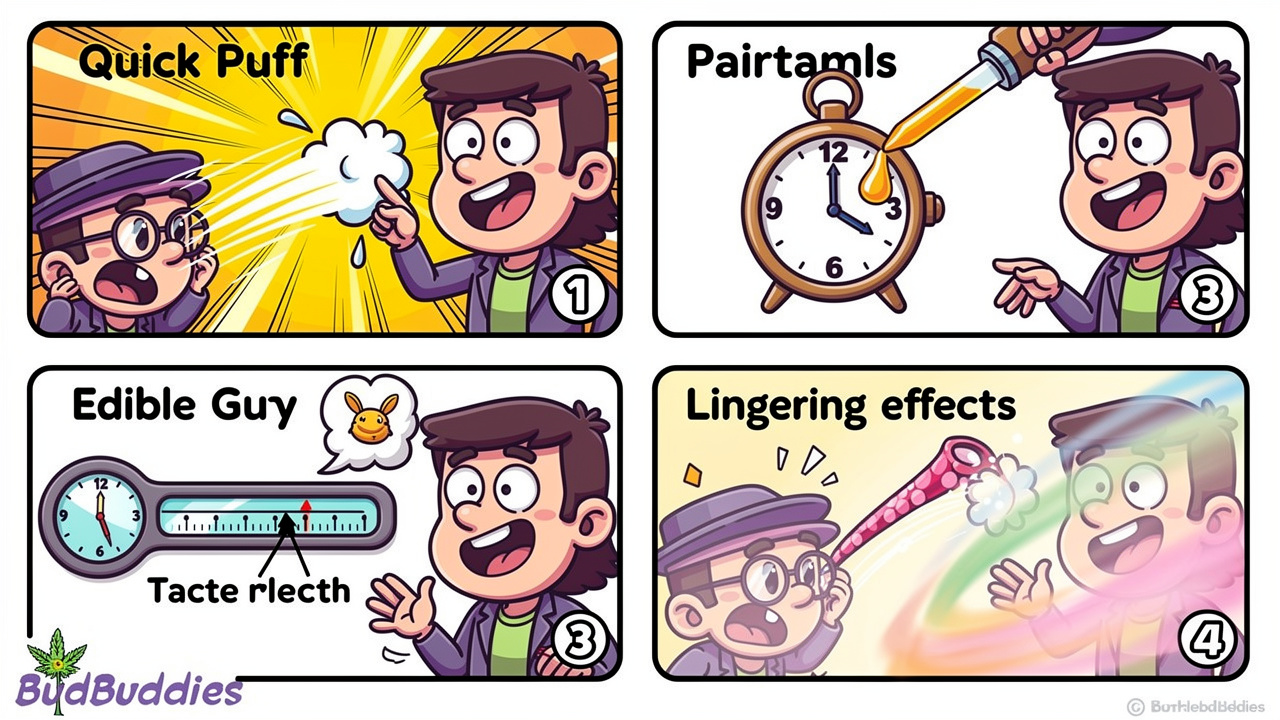
Timing differs sharply across formats, and knowing what to expect helps you avoid needless redosing mistakes or long waits for effects that never really intensify.
Flower and vapes kick in within minutes of inhaling, typically peak around 30 minutes, and fade within one to three hours, making it easy to judge your dose puff by puff and stop once you feel enough.
Edibles take 30 minutes to two hours to show anything, because the product must pass through digestion first, but once active, effects commonly last six to eight hours, a timeline echoed in this 100mg THC gummies joints comparison, so patience before redosing really matters here.
Oils taken sublingually tend to land within 15 to 45 minutes and last around four to six hours, offering a practical middle ground for people who want consistent daily dosing without the long wait of a full edible.
Where Can You Buy Quality THC Products Like Cannaray in the UK?
BudBuddies is a straightforward option if you want THC products with the same transparency and format variety that Cannaray buyers expect, without needing to compare specifications across several different sites. The catalogue includes AAAA+ flower strains such as Gelato and Blueberry Haze, precisely dosed edibles, sublingual oils, and vape cartridges, each listed with its THC percentage and terpene profile, similar to the format and potency breakdown found in this cannabis concentrates chart, plus a lab-verified Certificate of Analysis confirming it’s free from pesticides, heavy metals and mould.
Every order ships in plain, vacuum-sealed, odour-proof packaging with tracked next-day delivery for orders placed before the 3pm cut-off, which matters if privacy and reliability are as important to you as strength and flavour. The BudCash loyalty programme also rewards repeat customers with credit toward future orders, a genuine advantage for value-conscious shoppers deciding where to spend their budget long-term.
The Takeaway
Cannaray represents just one option within a UK cannabis market that now spans dozens of formats, strengths and price points, so there’s no universal answer to whether it’s the right choice for everyone. What actually matters is matching product format to your lifestyle, matching THC strength to your tolerance, and taking dosage seriously enough to start low and build up gradually rather than guessing.
If you’d like the same format variety and strength transparency without shopping around multiple sites, the platform’s lab-tested range at budbuddies.cc covers flower, oils, edibles, concentrates and vapes with clear cannabinoid labelling on every product page. Combined with discreet packaging and tracked delivery, it’s a dependable place to start comparing your options properly.
Frequently Asked Questions
Here are quick, straightforward answers to the questions people ask most often about Cannaray THC and how it compares to other options.
What Does Cannaray Cannabinoid Strength Mean on a Product Label?
Cannaray labels flower as a THC percentage, showing how concentrated the plant material is, while edibles and oils list milligrams of THC per serving instead. This distinction matters because a strong percentage on flower doesn’t translate directly to a strong dose in an edible, so checking the correct unit prevents confusion and overconsumption.
How Does Cannaray THC Oil Compare to Vapes or Edibles?
Oils sit between the two extremes, offering sublingual dosing that kicks in within 15 to 45 minutes and lasts four to six hours. Vapes act faster, within minutes, but fade sooner, while edible high vs vape high, around 30 minutes to two hours, yet last the longest overall, often six to eight hours.
What Should First-Time Buyers Look for in Cannaray CBD Products?
First-time buyers should look for lower or zero-THC options if they want milder, more manageable effects, alongside a clearly stated cannabinoid ratio on the label. Checking for lab documentation confirming that ratio gives extra confidence that what’s advertised matches what’s actually inside the bottle.
How Reliable Are Cannaray Customer Reviews?
Customer reviews offer a useful real-world gauge of consistency, flavour and effects across different batches, which lab reports alone can’t fully capture.
It’s worth reading reviews alongside the Certificate of Analysis rather than instead of it, since together they give a much fuller picture of quality.
Can You Find Similar THC Products With Clearer Lab Testing?
Yes, the brand publishes Certificates of Analysis and terpene profiles for its flower, oils, edibles and vapes directly on each product page. Checking that documentation before you buy gives you the same reassurance experienced Cannaray shoppers already look for, without any extra guesswork.


