


Edible High vs Vape High: Effects, Timing & Safety
Introduction
Comparing an edible high vs vape high can feel confusing, and guessing wrong can spoil the whole session.
Different onset times, changing intensity, and uncertain dosing all add to the pressure.
An edible high comes from THC passing through the gut and liver before it reaches the brain, while a vape high comes from THC absorbed through the lungs within minutes. That one difference changes how fast things start, how long they last, and how the high feels. This guide explains those contrasts in clear terms, shows realistic timelines, covers safe dosing, and links each format to everyday situations, using BudBuddies products as concrete examples.
By the end, you will know:
How your body handles edibles vs vapes
What onset, peak, and duration to expect from each
How to dose safely with both methods
When an edible or vape better fits your plans
Keep reading to see which experience matches your tolerance, routine, and style of cannabis use.
How Your Body Processes Edibles And Vapes Differently
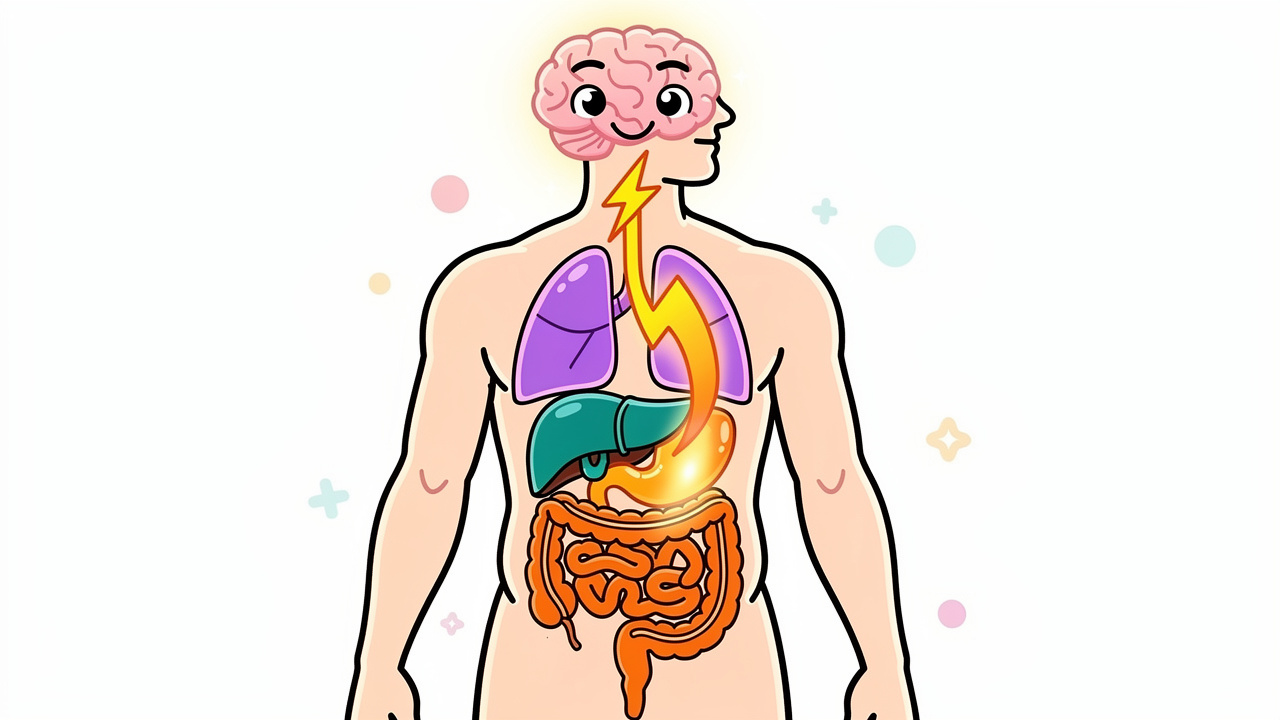
How your body processes edibles and vapes explains why an edible high vs vape high can feel almost like two different substances. Vaping sends THC straight from your lungs into your bloodstream, while edibles send THC through digestion and the liver, where it changes into a stronger form. That change shapes both the timing and the feel of the high.
When you inhale from a vape, vapour travels into tiny air sacs in the lungs called alveoli, which sit right next to blood vessels. THC crosses into the blood within minutes and moves to the brain, where it binds to CB1 receptors. According to the National Institute on Drug Abuse, inhaled THC usually reaches peak levels in the blood within a few minutes. This quick route explains why vape effects arrive fast and are easier to judge.
With an edible, THC first passes through the stomach and small intestine before it enters the portal vein and reaches the liver. The liver converts much of that THC into 11-hydroxy-THC, a related compound that crosses the blood–brain barrier more easily. Research summarised by the National Academies of Sciences, Engineering, and Medicine notes that orally taken THC has lower direct bioavailability but produces stronger subjective effects because of this metabolite. That is why a modest edible can feel surprisingly deep.
You can think of the two routes like this:
Vapes:
Lungs → bloodstream → brain
Mostly delta-9-THC
Fast to start, faster to fade
Edibles:
Stomach → intestines → liver → bloodstream → brain
Mix of delta-9-THC and 11-hydroxy-THC
Slow to start, slow to fade
Here is the key: vapes give you mainly delta-9-THC, which feels clear and quick. Edibles end up giving you a mix that includes 11-hydroxy-THC, which often feels heavier, more physical, and longer lasting. Individual factors such as body weight, liver enzymes, and whether you ate recently influence the exact effect, but the two basic routes stay the same.
For BudBuddies, these differences sit at the heart of how the edibles and vapes range is organised. THC edibles UK guide, cartridges, and disposable pens are all labelled so you can see which path you are choosing and how strong each option is before you start.
Onset, Duration, And Intensity – What To Realistically Expect
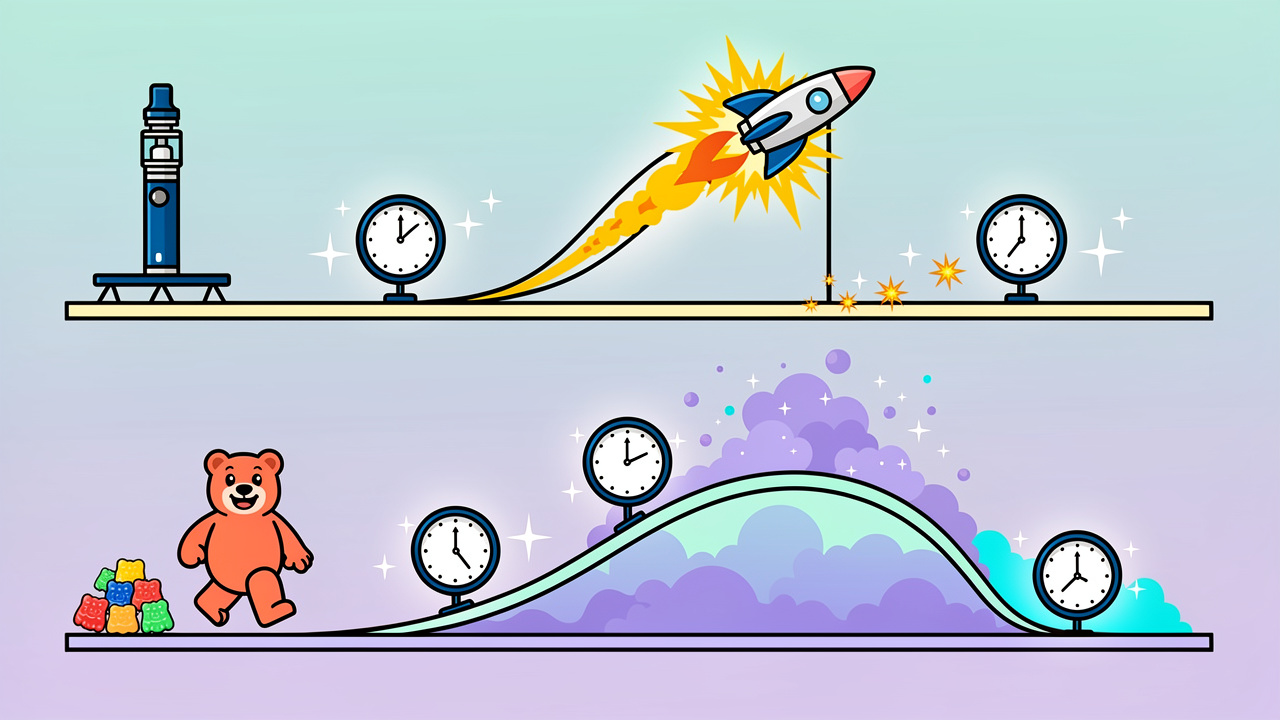
Onset, duration, and intensity look very different when you compare an edible high vs vape high. Vape highs start within minutes and usually fade within a few hours, while edible highs can take a long time to appear yet keep going well into the evening. Knowing those patterns makes planning far easier.
For most people, vape effects start within two to ten minutes of the first draw. According to Healthline, inhaled cannabis usually reaches peak effect within about half an hour, with the main high lasting one to three hours. That makes vapes well suited to:
Short, controlled sessions
Quick mood shifts after work
Social use where you want a clear start and finish
Edibles move on a slower clock. Commonly, you feel little for the first thirty to sixty minutes. Peak effects often land around two to four hours after eating, and the main body of the high can last four to eight hours or more — a pattern well illustrated by the How a Cape Town field trial comparing gummy and smoking onset times in real-world conditions. Harvard Health Publishing notes that oral cannabis can last significantly longer than inhaled forms because of the way the liver processes THC. This is lovely if you want steady help with sleep or long film nights, but not so helpful if you have an early start the next day.
Intensity also shifts. A moderate amount of vaped THC often feels crisp, social, and relatively easy to steer. The same notional milligrams in an edible can feel much fuller and more immersive, because of that 11-hydroxy-THC created in the liver. Add in variables like metabolism and recent meals, and you start to see why edibles deserve extra respect.
If you are unsure which way to go, a useful rule of thumb is:
“If you are new or anxious, choose the format that gives you the most control.”
For many people that means a low-dose vape first, then edibles once they better understand how THC feels in their body.
The Vape High Vs The Edible High – A Direct Comparison
The quickest way to understand an edible high vs vape high is to place them side by side. Vapes win on speed and control, while edibles win on depth and duration. Both have a place, as long as you match them to the moment.
Here is a simple comparison table you can refer back to.
| Factor | Vape High | Edible High |
|---|---|---|
| Onset | Around 2 to 10 minutes | Around 30 to 120 minutes |
| Peak | Around 15 to 30 minutes | Around 2 to 4 hours |
| Duration | Around 1 to 3 hours | Around 4 to 8 hours, sometimes longer |
| Intensity | Crisp, more cerebral, easier to steer | Fuller, body centred, can feel stronger at similar doses |
| Best For | Daytime use, social time, quick adjustment | Evenings, sleep support, steady relief for several hours |
The table hides one important detail. Edibles feel stronger at matching doses because THC turns into 11-hydroxy-THC, which passes into the brain more readily. Vaping does not trigger that same conversion to the same extent.
Finally, remember that food intake, body fat, and general health shape edible timing far more than they shape vaped timing, which is why two people can share the same brownie and tell very different stories afterwards. Keeping a simple personal log of dose, time, and effect for a few sessions can help you notice your own pattern.
Dosing Safely – Getting It Right With Both Formats
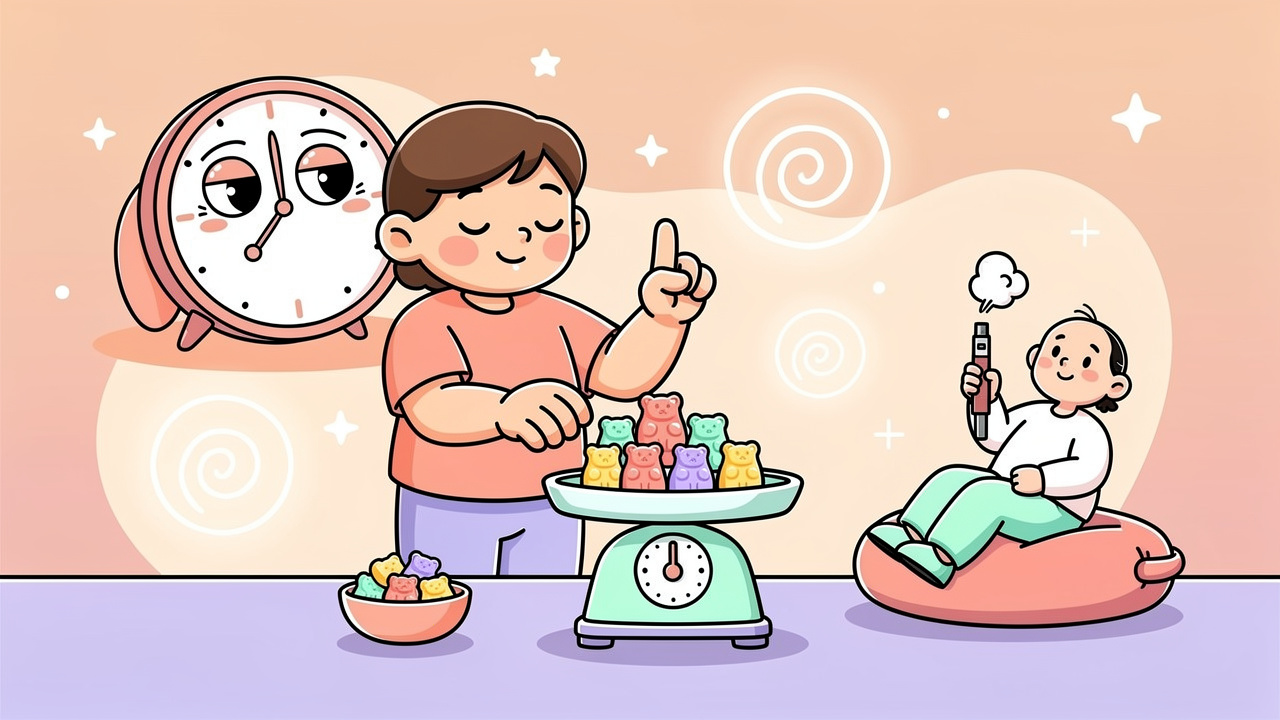
Safe dosing sits at the centre of any sensible comparison of an edible high vs vape high. Vapes give you near instant feedback, while edibles ask you to wait patiently before you decide whether you need more. The method is different, but the aim is the same: a calm, predictable experience.
With vaping, a stepwise approach works well, and understanding how inhalation affects the body is essential — the NCBI’s overview of Electronic Vaping Delivery of cannabis explains the physiological mechanics that make incremental dosing so important. Take one or two gentle draws, set the device down, and wait at least ten minutes before you decide whether you need more. Because the onset is so quick, you can usually feel the direction of travel within a few minutes. According to the NHS, inhaled cannabis tends to produce peak effects within a short window, which makes it easier to judge your own limit.
BudBuddies BudBuddies vape cartridges show THC strength clearly, so you can match a lower strength option to a lighter session or a higher strength option to evenings when your tolerance is higher. The live resin cartridges keep the full terpene profile of the flower, which many experienced users feel gives a rounded, predictable effect at a smaller number of puffs.
Edible dosing needs more structure and more patience. The effect builds slowly, so the classic mistake is topping up too early because “nothing is happening yet”. Standard advice often starts with very small amounts. Healthline notes that five milligrams of THC is a common beginner serving in regulated markets, with many people doing well with even less. BudBuddies labels every gummy, baked item with THC per piece, so you can follow that kind of measured approach.
As Health Canada and many clinicians say, “start low and go slow” with cannabis, especially with edibles.
Here is a simple dosing ladder many people find helpful.
2.5 mg THC – This is a gentle micro dose that suits beginners, THC-sensitive people, or anyone who wants a light shift without feeling obviously high. Many people use a dose at this level to test how their body responds over several hours before they move up. It is a calm way to build confidence and avoid surprises.
5 to 10 mg THC – This range is a common starting point for new but confident users and a regular choice for many occasional consumers. The high is usually noticeable but still manageable, especially in a relaxed setting at home. If you start here, give yourself a full ninety to one hundred and twenty minutes before changing the plan.
10 to 20 mg THC – At this level, the effects are clear and can feel quite strong, particularly for people without a long history of use. Many regular consumers settle here for heavier evenings or tougher days. Anyone moving into this range should have some experience with lower doses and a good sense of their own limits.
20 mg THC and above – These doses are best left to people with high tolerance or specific needs, such as severe ongoing pain or sleep issues that have not responded to gentler levels. The high can be intense and long lasting. Even experienced users often split amounts like this over time rather than taking them in one go.
Whichever rung you choose, the golden rule with BudBuddies edibles is simple: start low, wait at least ninety to one hundred and twenty minutes, and only then think about another piece. That rhythm keeps the chance of an uncomfortable evening much lower.
A few extra harm-reduction tips many people follow:
Use cannabis in a safe, familiar place the first few times
Keep water or a soft drink nearby to stay hydrated
Avoid mixing with large amounts of alcohol
If you have medical conditions or take regular medication, talk with a health professional before heavy use
Which Format Is Right For You And Can You Use Both?
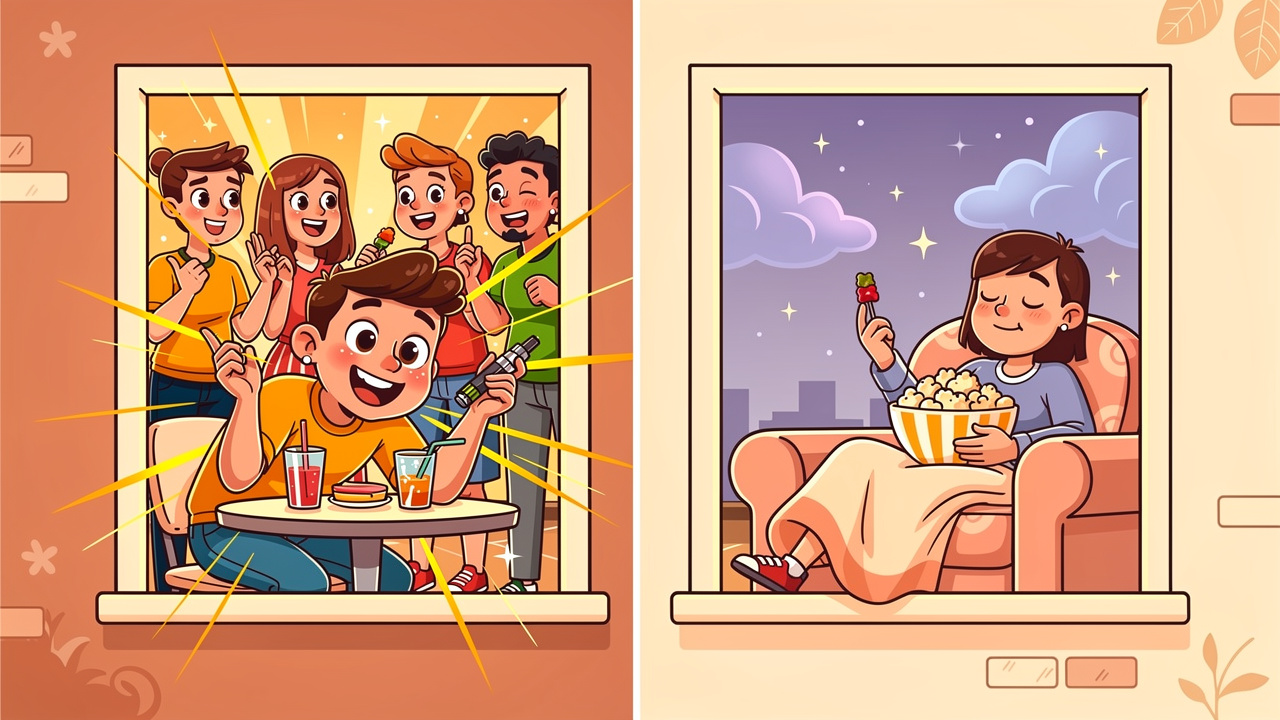
Choosing between an edible high vs vape high means looking at your goals, your tolerance, and how you like to spend your time. Vapes tend to favour fast, flexible sessions, while edibles suit longer, steadier experiences. Many BudBuddies customers eventually find room for both.
For newer consumers, vapes often feel less intimidating. You can take a single puff, wait, and notice very quickly whether that is enough. If you have plans later, the shorter one to three hour window is easier to fit around your day. Privacy-minded readers often like that BudBuddies disposable pens are slim, neat, and create a scent that fades quickly after use.
Edibles shine when you want to settle in for the evening or when you prefer not to inhale anything at all. A measured gummy or capsule can provide four to eight hours of steady support, which suits people dealing with long film nights, extended gaming sessions, or nagging discomfort. The lack of vapour, devices, or smell also suits anyone who wants full discretion at home or while travelling.
To simplify the choice:
Choose vapes if you want speed, control, and a shorter effect window
Choose edibles if you want long-lasting, low-effort support with no inhalation
Here is where things get more interesting. Many experienced BudBuddies customers use a dual method approach. They take a modest edible as a base, then keep a vape pen nearby for small top ups if they want a slight lift later in the night. The full catalogue at BudBuddies supports this neatly, with gummies, baked goods, and capsules on one side and pre-filled cartridges, disposable pens, and live resin options on the other. That mix lets you design an experience rather than just picking a product.
Value-conscious readers also care about how far their money goes. Because edibles last so long, one pack of well dosed gummies or biscuits can cover many separate evenings, especially at lower milligram levels. Combine that with BudBuddies double potency verification, BudCash rewards, and free shipping above the minimum spend, and you start to see how a planned mix of formats can feel both premium and sensible over time.
The short version is simple. Reach for a vape when you want speed, control, and a clear end point. Reach for an edible when you want depth, discretion, and a long gentle curve. If you keep both around, you can match the method to the moment instead of forcing one format into every situation.
The Right Choice Starts With The Right Product
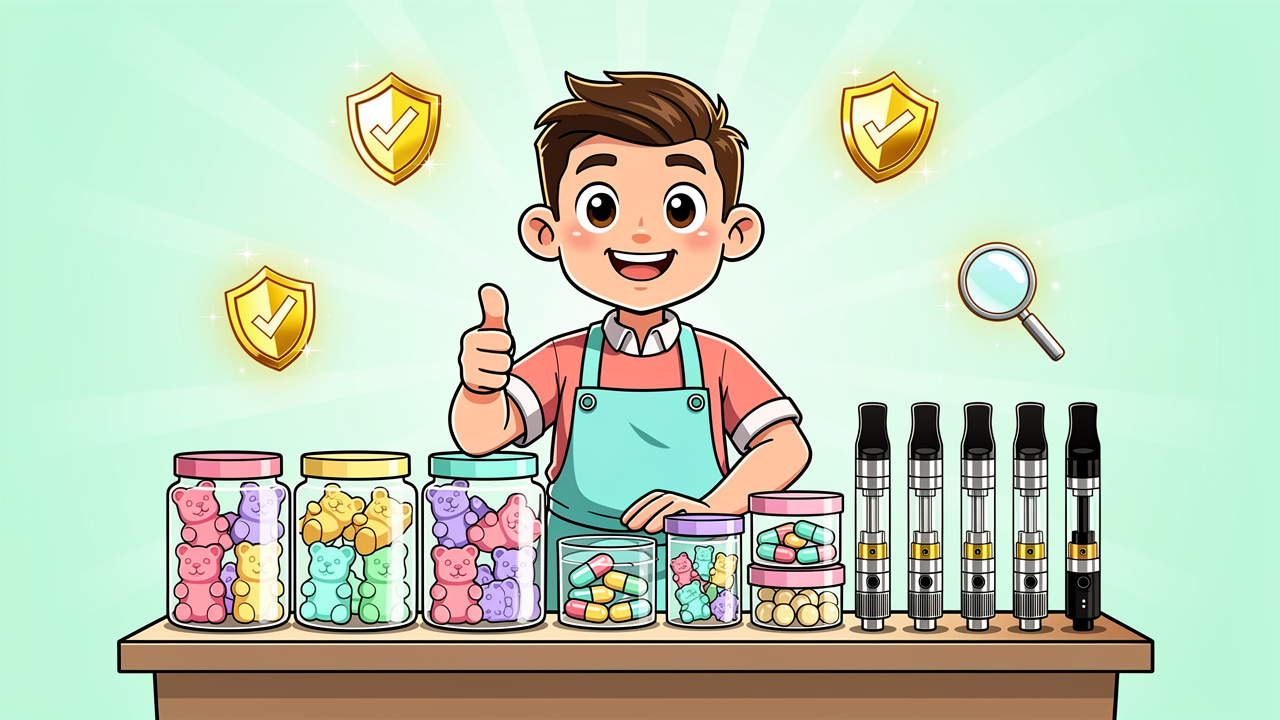
The right product makes an edible high vs vape high feel smooth rather than random. A clearly labelled, well made item helps you predict how strong the experience will be and how long it might last, whichever format you choose.
BudBuddies focuses on that predictability. Every edible and vape comes with clear THC information, third-party lab reports, and double potency verification, so the number on the label matches the feeling in real life. Orders travel in plain, smell proof packaging with tracked, next day options across the UK, which keeps both privacy-focused and experienced readers relaxed from checkout to doorstep.
Conclusion
Edibles and vapes give you two very different ways to enjoy the same plant, each with its own rhythm, feel, and ideal setting. Vapes fit quick, adjustable sessions and social time, while edibles suit longer, heavier relaxation and steady support. BudBuddies brings both sides together in one tidy, well explained range, so you can pick what matches your evening rather than guessing.
The more you understand these contrasts, the easier it becomes to design sessions that feel calm, clear, and under control. If you treat dose, timing, and setting with care, both an edible high and a vape high can be comfortable, repeatable parts of your routine.
Frequently Asked Questions
Question: Is An Edible High Stronger Than A Vape High?
Yes, many people find an edible high feels stronger than a vape high at the same milligram level. The reason is that the liver turns THC from edibles into 11-hydroxy-THC, which passes into the brain more easily and keeps working for longer.
This does not mean edibles are always better. It just means you should start with a lower dose than you might expect, especially if you are used to vaping only.
Question: Why Do I Feel Nothing From An Edible After An Hour?
Feeling nothing from an edible after an hour is common, because digestion often takes thirty. Metabolism, recent meals, and body weight all play a part.
The sensible approach is to wait the full ninety to one hundred and twenty minutes before you even think about more. Taking extra too soon is one of the fastest ways to overdo it with edibles.
Question: Can I Vape And Take An Edible At The Same Time?
Yes, many experienced consumers combine an edible with a vape, using the edible for a steady base and the vape for small top ups. This can give both long duration and fine control.
If you try this for the first time, keep both doses on the low side and leave plenty of time to see how they interact in your own body. Avoid adding alcohol or other drugs on top, so you can clearly read the effects.
Question: How Long Does A Vape High Last Compared To An Edible?
A vape high usually lasts around one to three hours, depending on product strength and how much you use. An edible high often lasts four to eight hours and sometimes longer at higher doses.
That duration difference is one of the clearest practical gaps between the two methods and a key reason many people keep both formats available for different types of plans.
Question: Which Is More Discreet — Edibles Or Vaping?
Edibles are more discreet than vaping for most people, because they create no vapour, no smell, and need no device. You can eat a gummy or capsule almost anywhere without drawing attention.
Vapes are still fairly subtle, but there is a visible cloud and a brief cannabis scent after each puff. For people who share a home or live in close quarters, that small difference can matter when deciding what to use.


