


Does Weed Smoke Set Off a Fire Alarm Indoors?
Introduction
Weed smoke can set off a fire alarm, and it happens more often than many people expect. If you are asking whether weed smoke sets off a fire alarm in a flat or hotel, the short answer is yes.
The alarm does not care what you smoke. It reacts to tiny particles in the air, so the question “does weed smoke set off a fire alarm?” comes down to how those particles reach the sensor. In this guide you will see how common detectors work, what really affects your risk, how to cut that risk, and which formats from BudBuddies fit indoor use best.
Stay with this page for a clear, calm walkthrough that helps you make smarter choices before your next session, while still respecting local laws and building rules.
How Do Fire Alarms Actually Detect Smoke?
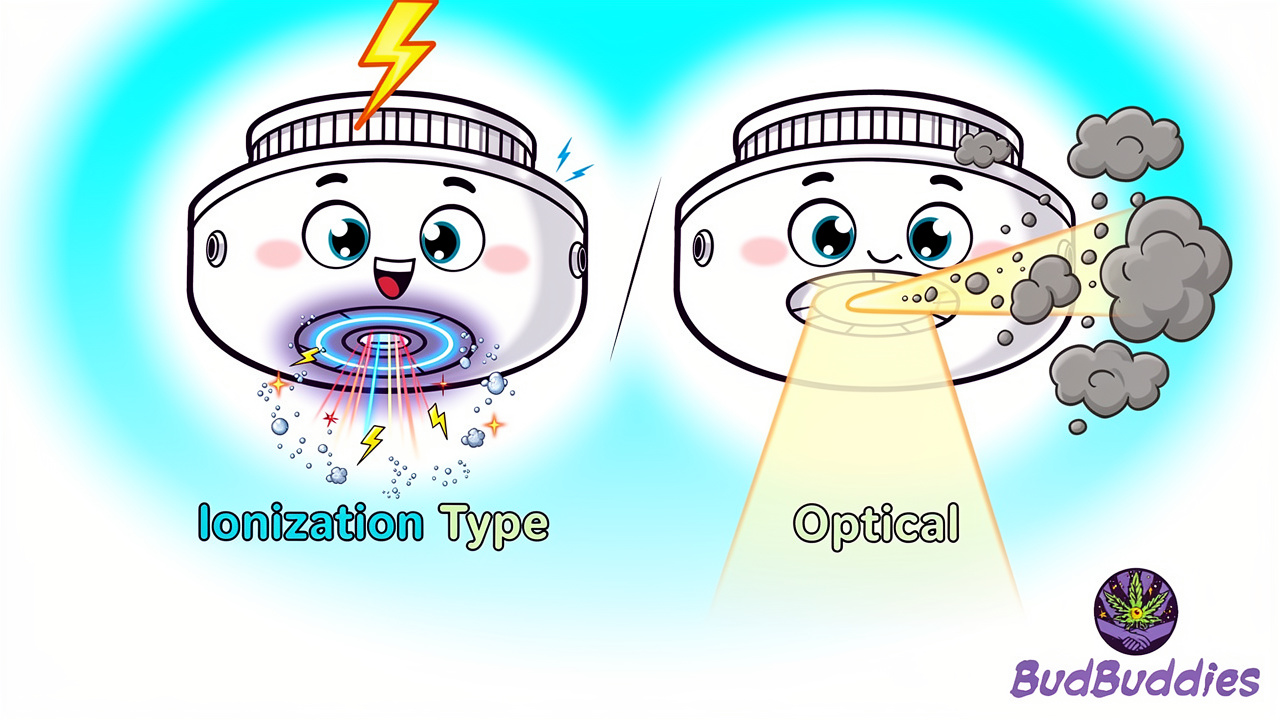
Fire alarms detect changes in the air, not the smell of weed or the type of rolling paper you use. That is why weed smoke can set off a fire alarm just like burnt toast or a candle that smoulders. The key point is that the detector reacts to solid and liquid particles floating in the air.
Most UK homes use two main kinds of smoke alarm:
Ionisation smoke alarms
These have a tiny radioactive source that creates an electrical current between two plates. When smoke enters, it disrupts that current and the unit starts to scream. Ionisation alarms react quickly to small, sharp smoke particles, so a heavy exhale close to the unit can trigger one.Optical (photoelectric) smoke alarms
These have a small light inside a chamber. In clean air, the light misses the sensor. When smoke drifts in, it scatters the light onto the sensor, which then sounds the alarm. Cannabis smoke has larger, hazier particles that hang in the air, which makes optical alarms very good at spotting it.
According to RoSPA, most serious house fires in the UK start when people are asleep, which is why smoke alarms are fitted in bedrooms and hallways. That also happens to be where many people ask themselves whether weed smoke sets off a fire alarm during a late session.
“A working smoke alarm provides a vital early warning and can save lives.” — National Fire Chiefs Council
Heat detectors work differently. They react to a sharp rise in temperature, not smoke, so weed smoke will not set off a heat detector on its own. Many kitchens use heat detectors so cooking steam does not trigger constant alarms. Some modern homes use multi-sensor alarms that mix optical and heat sensors in one unit, which can still react to a dense cloud of cannabis smoke.
Carbon monoxide detectors sit in a separate category again. They track a specific gas, not smoke particles, so normal amounts of weed smoke do not set off a carbon monoxide alarm.
Does The Type Of Alarm Change Your Risk?
The type of alarm in your ceiling makes a real difference to how easily weed smoke sets it off. Optical alarms are now very common in newer builds and rented flats, and cannabis smoke is exactly the kind of slow, hazy smoke they spot fast.
In many modern buildings, alarms are interlinked across rooms. That means one triggered unit can set off every alarm in the home at once. Guidance from the National Fire Chiefs Council highlights interlinked alarms as best practice, especially in Scotland and larger HMOs.
So, if you live in a newer flat or student place and wonder whether weed smoke sets off a fire alarm more easily there, the honest answer is yes — enhancing fire alarm systems with modern edge-detection technology has made newer units significantly more sensitive to slow-burning, hazy smoke. Newer, more sensitive systems lower the threshold, which makes your consumption method and ventilation choices matter even more.
Tip from the BudBuddies team: Before you light up, look around your room for small round discs on the ceiling. If there is more than one, or they are labelled as “interlinked”, treat the whole property as one system.
Yes, Weed Smoke Can Set Off A Fire Alarm — Here’s What Affects The Risk
Weed smoke can set off a fire alarm because the detector only sees particles, not product labels. Any thick cloud of smoke that reaches the sensing chamber can do it. So when you ask yourself “does weed smoke set off a fire alarm in this room?” you are really asking how that smoke behaves.
Several real-world factors decide whether the alarm actually goes off. Think of them as a quick checklist you run in your head before you light up. If many of these factors stack up, your chances rise sharply.
Here is how those factors usually play out:
Proximity to the alarm matters a lot. If you sit right under the detector and blow smoke upward, you feed dense particles straight into the unit. When you step to the far end of the room and angle your exhale towards a window, the same hit is far less intense by the time it reaches the sensor.
Room size changes the odds as well. A small bedroom or boxy bathroom fills with smoke much faster than a large open-plan lounge. In a cramped space you can reach an alarm’s trigger level from just a few strong hits, which makes the question “does weed smoke set off a fire alarm here?” more pressing.
Ventilation can rescue a sketchy setup. Open windows, a cross breeze or an extractor fan keep smoke moving out rather than building up. Without any airflow, even gentle smoking can load the air with enough particles to set off a sensitive optical alarm.
Quantity and pace of smoking drive risk up or down. A single joint with long breaks between hits is less intense than a group session where three people smoke hard for an hour. According to London Fire Brigade, many unwanted residential alarms come from a build-up of everyday smoke and steam rather than a single dramatic event.
Device sensitivity and age also play a part. Newer, mains-wired alarms in modern flats, hotels and student buildings often sit on higher sensitivity settings, and research into alcohol and smoke detection in institutional environments confirms that modern sensor arrays are deliberately calibrated to catch low-level smoke build-up early. Older battery units in private homes can be a little less twitchy, although you should never rely on that.
What about vaping? Vapour from a quality dry herb vaporiser or THC cartridge has far fewer solid particles than smoke. That means vaping is much less likely to set off a smoke alarm, but thick clouds in a tiny bathroom right under an optical detector can still cause trouble.
How To Reduce The Risk Of Setting Off A Fire Alarm When Consuming Cannabis
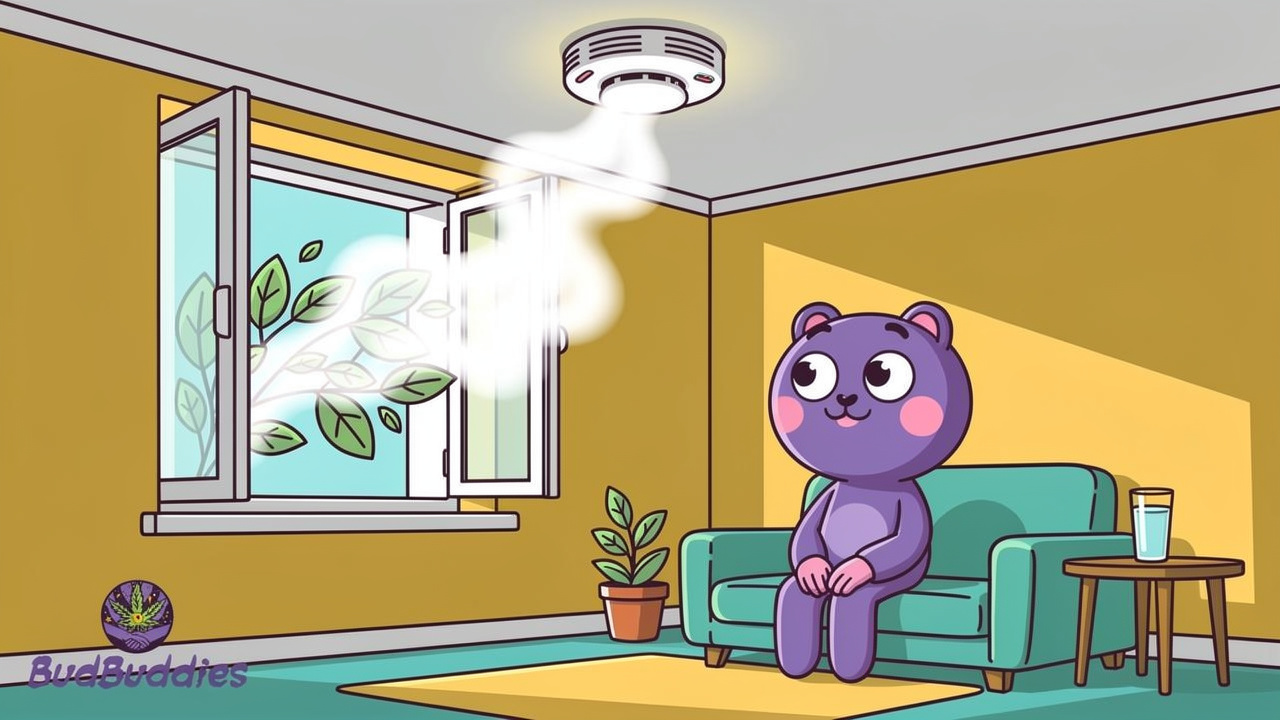
If you choose to consume indoors, you can greatly reduce the chance that weed smoke sets off a fire alarm. The goal is simple: fewer particles in the air and more distance between those particles and the detector.
Start by looking at your space. The smaller and stuffier the room, the more effort you need to put into airflow. This is where many people slip up, then wonder why a modest session triggered the hallway alarm.
“Working smoke alarms give you vital extra minutes to escape from a fire.” — UK fire services
These practical habits make a real difference:
Ventilate the room before you light anything. Open at least one window wide and, if you can, another in a nearby space to create a gentle through-draft — the influence of natural environmental factors like airflow has been shown to significantly reduce the likelihood of false alarm triggers in fire signalling systems. In kitchens or bathrooms, turn the extractor fan on a few minutes before you start so smoke has somewhere obvious to go.
Position yourself as far from the detector as possible. If the alarm sits in the middle of the ceiling, choose a spot by a window at the edge of the room. Angle your exhales towards the open air rather than the ceiling so each cloud thins out quickly on its way up.
Keep sessions shorter and less intense. Long back-to-back joints or big bong hits in a tight space are much more likely to reach alarm level. Shorter solo sessions with breaks between hits give smoke time to clear, especially when you already have decent ventilation running.
Use a smoke filter when you exhale. A simple sploof or carbon filter tube that you breathe through can strip out a lot of visible smoke. You still need ventilation, but this trick lowers the particle load in the room, which reduces the chance that weed smoke sets off a nearby fire alarm.
Avoid hotboxing any indoor room. Filling a bathroom, bedroom or car with dense smoke might feel fun in the moment, yet it almost guarantees an alarm in a modern building. Guidance from the UK Government shows that confined spaces with poor airflow are where many serious domestic fires start, so keeping those areas clear makes sense anyway.
A few more safety pointers:
Never remove batteries, cover detectors, or tamper with alarms to avoid setting them off.
Follow building rules in hotels, student accommodation and rented flats.
Where cannabis is illegal, be aware of the legal risks on top of fire safety.
Device choice also matters. Switching from combustion to vaping, or better yet to edibles or drinks, removes much of the risk at the source. BudBuddies focuses its range on options that suit this kind of low-profile, low-smoke lifestyle.
Which Cannabis Formats Are Safest Indoors?
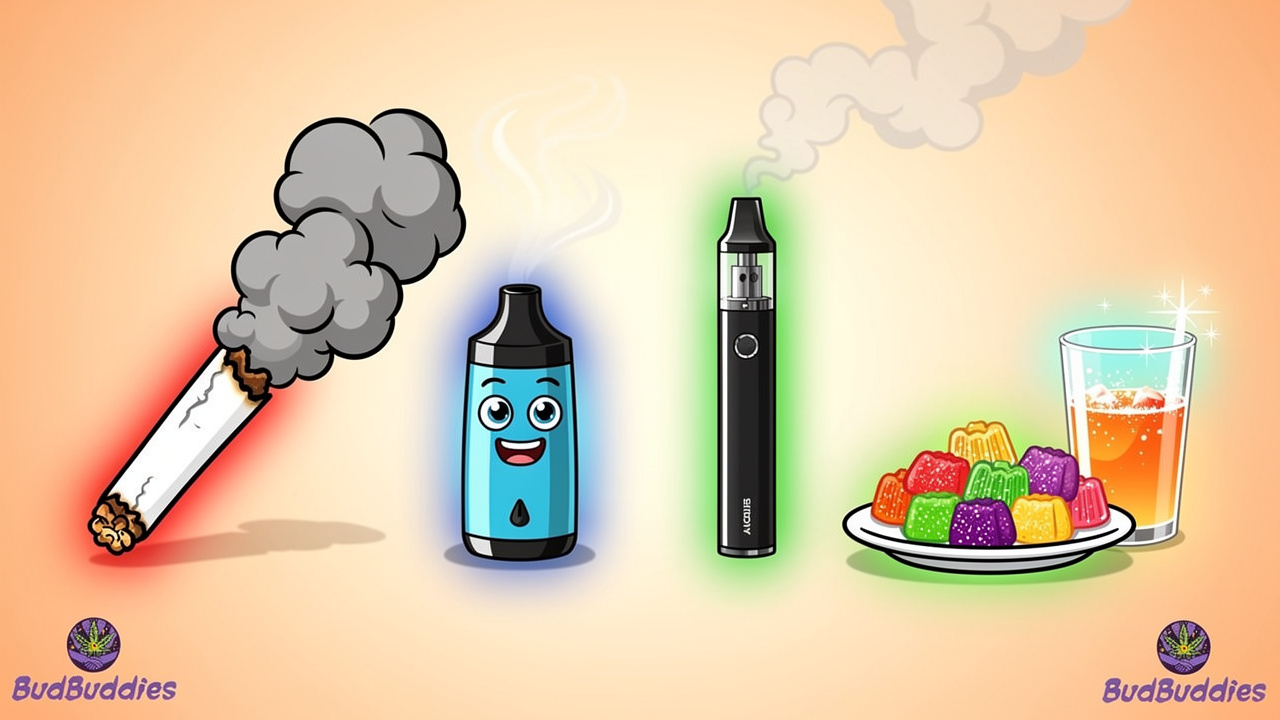
Different formats carry very different chances that weed smoke sets off a fire alarm in your place. If you live in a modern flat with interlinked alarms and curious neighbours, format choice might be the single biggest decision you make.
Put simply:
Edibles and drinks carry no alarm risk at all.
Vapes sit in the low-risk middle ground.
Traditional smoking sits at the top.
Once you see this clearly, it becomes much easier to line up your next order from BudBuddies with your living setup.
Here is a quick comparison:
| Format | Fire Alarm Risk | Odour Level | Typical Use Indoors |
|---|---|---|---|
| Joints, pipes, bongs | High | High | Needs strong ventilation |
| Dry herb vaporiser | Medium | Medium | Works with care |
| THC vape pens | Low | Very low | Suits most indoor spaces |
| Edibles, drinks, tinctures | None | None | Safest for alarms |
According to the National Fire Chiefs Council, working smoke alarms roughly double your chances of surviving a house fire, so you never want to defeat or cover them. A smarter move is to pick products that are naturally alarm friendly.
Traditional smoking of flower through joints, pipes or bongs creates thick clouds that hang in the air. If you love AAAA+ buds, treat them with respect indoors. Use a window, keep the session short, and remember how easily weed smoke sets off a fire alarm when you sit right underneath it.
Dry herb vaporisers heat flower more gently and create a thinner vapour. You still get that full-plant feel, yet with fewer particles for the alarm to sense. Many BudBuddies customers pair premium flower from budbuddies.cc with a desktop or portable vaporiser when they want a cleaner indoor experience.
THC vape cartridges and disposable pens sit another step down the risk ladder. They heat refined oil, so visible vapour is minimal, odour fades within 15–30 minutes, and you can fine-tune your puff size. BudBuddies highlights these pens as a neat choice for adults in flats and shared houses who want a calmer answer to the “does weed smoke set off a fire alarm here?” worry.
Edibles, THC-infused drinks and tinctures are in a league of their own for indoor safety. No smoke, no vapour, no scent, so zero chance of setting off any smoke alarm. BudBuddies keeps this side of the menu clear and easy to browse, from gummies to beverages, so you can pick a dose that fits your plans without thinking about detectors at all.
The Bottom Line

Weed smoke can set off a fire alarm, and the risk goes up in small, sealed rooms with modern, sensitive detectors. When you understand how ionisation and optical alarms react to particles, the question “does weed smoke set off a fire alarm in my place?” suddenly feels far less mysterious.
Your real levers are:
Ventilation
Distance from the detector
The format you choose
If you want fewer worries and more relaxed evenings, it makes sense to move towards lower-smoke options. BudBuddies helps here with a focused range of THC vapes, edibles and drinks at budbuddies.cc, all delivered discreetly across the UK so you can enjoy your session without listening for beeps.
Always stay within local laws and never compromise basic fire safety.
Frequently Asked Questions

Question 1: Can vaping weed set off a smoke alarm?
Vaping can set off a smoke alarm, but it is much less likely than smoking a joint. Vapour has far fewer particles for the sensor to spot. Low-temperature hits with small clouds in a ventilated room are the calmest approach. Thick clouds in a tiny bathroom, right under an optical alarm, still carry some risk.
Question 2: Do heat detectors pick up cannabis smoke?
Heat detectors do not react to cannabis smoke, because they track temperature, not particles. They only trigger when the air warms quickly or reaches a set level. Most bedrooms and hallways use smoke alarms instead, so you still need to think about how close you are to those.
Question 3: Will a carbon monoxide detector go off from weed smoke?
Carbon monoxide detectors normally do not react to weed smoke. They look for a specific gas, not general smoke particles, so a normal session will not trigger one. You may still have standard smoke alarms nearby though, and those can respond to dense cannabis smoke.
Question 4: What is the safest way to consume cannabis indoors without triggering alarms?
The safest way is to avoid smoke completely. Edibles, THC drinks and tinctures create no particles at all, so there is zero alarm risk. THC vape pens come next, as vapour is thin and fades fast, especially with a window open. You can explore smoke-free options with discreet, tracked delivery from BudBuddies at budbuddies.cc.
Question 5: Does cannabis smoke linger longer than cigarette smoke?
Cannabis smoke often feels heavier and can how to mask weed smell indoors. That lingering scent can draw attention even if the alarm stays quiet. Edibles and drinks remove this problem, while THC vapes from BudBuddies keep odour short-lived and far easier to manage indoors.

