


How to Spot Fake THC Edibles: A Simple Safety Guide
Introduction
Fake THC edibles are everywhere now, and they can turn a relaxed plan upside down in minutes.
Some do nothing at all, while others feel far stronger than anything you expected. That huge gap in strength is what catches people out.
When people ask how to spot fake THC edibles, the honest answer starts with simple checks. You look at the packaging, the edible itself, and whether there is real lab paperwork behind it. This guide from BudBuddies breaks those steps down so you can test any edible before you buy, from label clues to Certificates of Analysis and smarter choices about where you shop.
Keep reading to make fake edibles easier to spot in seconds and to keep your experience as calm and predictable as possible.
Why Fake THC Edibles Are More Dangerous Than You Might Think
Fake THC edibles are more dangerous than they look because you never truly know what has gone into them. Some packets hold plain sweets with no THC, while others hide very strong or unpredictable drugs — a pattern confirmed by Commercial Cannabis Product Testing research examining label fidelity across regulated markets. That wide range from harmless to risky is exactly why it helps to slow down and check.
At one end you lose money on weak or zero THC products; at the other, you face overwhelming doses that can feel frightening. Some fakes use synthetic cannabinoids that imitate THC far too strongly, and these are linked to serious poisonings. The European Monitoring Centre for Drugs and Drug Addiction reports that such substances account for a large share of medical emergencies among newer drugs in Europe.
You cannot tell by smell or sight whether a sweet holds natural extract or one of these lab‑made chemicals. Fake products tend to surface most often through Instagram DMs, encrypted messaging apps, and street contacts who change names often. Learning how to spot fake THC edibles before you buy keeps you away from that level of uncertainty.
It also helps to remember how THC edibles behave in the body:
Slower onset: Effects can take 30–120 minutes to appear.
Longer duration: A strong dose can last several hours.
Harder to “undo”: Once eaten, there is no quick way to reverse it.
“Start low and go slow” is widely shared public health advice on cannabis edibles, because people often take more while they are still waiting to feel the first dose.
With fake or badly dosed products, that careful approach becomes almost impossible, because you do not know how much THC you are really taking.
What Dodgy Packaging Actually Looks Like
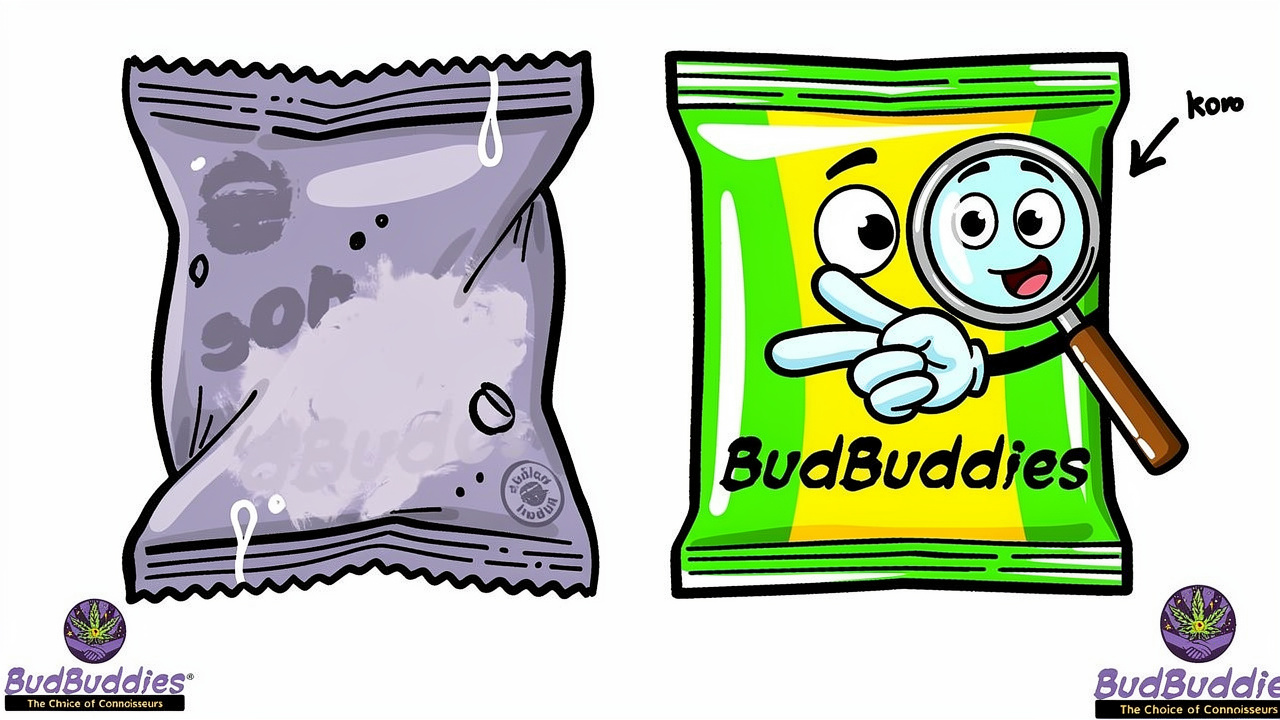
Dodgy packaging is usually the easiest clue that something is off before you even touch the edible. Once you know the red flags, a quick look at the packet can tell you a lot. This stage is a big part of how to spot fake THC edibles without putting anything in your mouth.
Common packaging red flags include:
Thin, flimsy plastic that feels cheap or easy to tear
Blurred logos or artwork, washed‑out colours, or badly cropped images
Packaging featuring cartoon art aimed at children is a well-documented red flag, with studies on correct recognition and appeal ratings of copycat cannabis edible packaging confirming that misleading designs frequently confuse consumers about what they are purchasing.
Spelling mistakes, clumsy grammar, or odd spacing on any label
Missing batch numbers or production dates
No per‑piece THC dosage, only one giant number on the front
No allergen information or incomplete ingredient list
A study in JAMA found that only 17 percent of tested cannabis edibles had THC levels that matched the label, which shows how often labelling goes wrong even in controlled settings. When a random bag from a street seller claims 1,000 mg in one tiny gummy, the chance of it matching the packet is very slim.
Trusted brands such as BudBuddies use original, grown‑up branding with clear milligram figures and full ingredient lists so nothing feels like a mystery. You should be able to read the label once and understand:
What the product is
How much THC is in each piece
What other ingredients are inside
Use this quick comparison when you scan the next packet:
| Packaging Red Flag | What Trustworthy Packaging Looks Like |
|---|---|
| Print looks fuzzy, colours bleed, and spelling mistakes jump out. | Print is sharp, colours match, and text reads like a proper label. |
BudBuddies sticks to the right‑hand column, so customers know exactly what they hold.
How to Check If the Product Itself Is Genuine
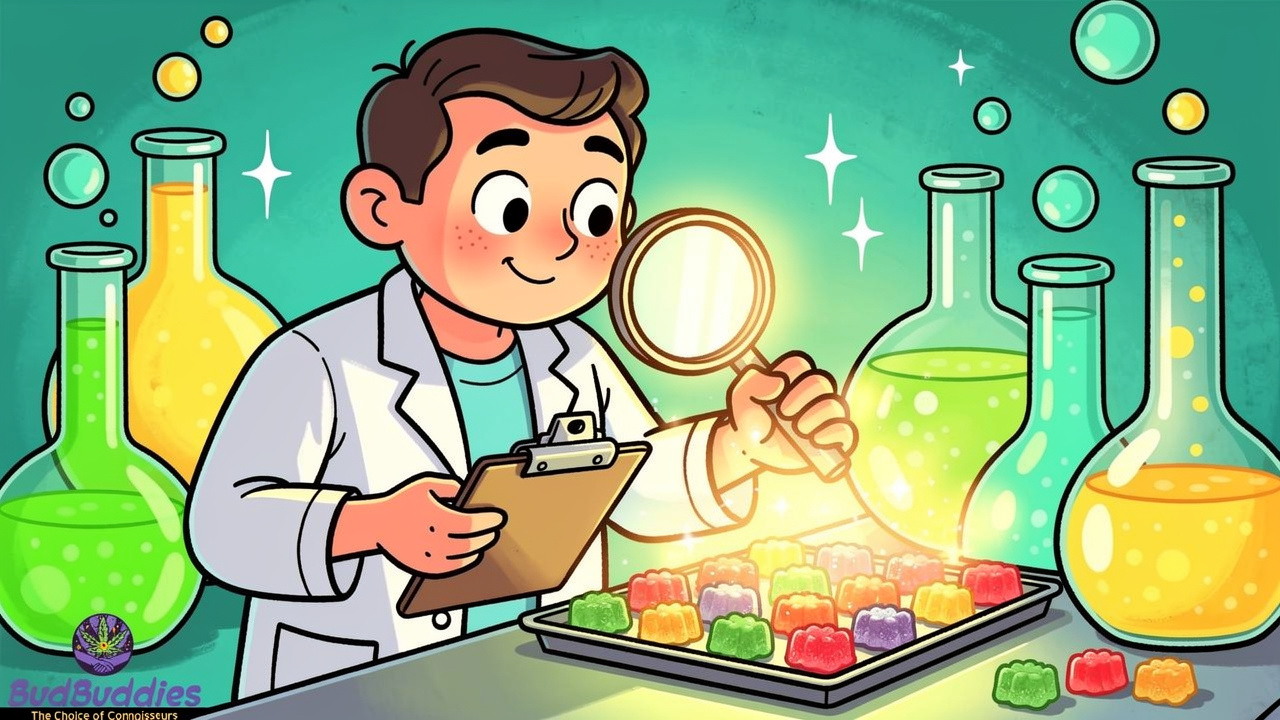
Checking the edible itself gives you a second safety net once the wrapper is off. A genuine product from a careful producer looks consistent, smells clean, and feels the same from piece to piece.
Work through these checks:
Appearance:
Gummy sweets should match each other in size, colour, and texture, with no random giant pieces or tiny slivers.
Chocolates should have a smooth surface without strange white marks or greasy streaks.
Brownies should look evenly baked rather than wet in some parts and dry in others.
Consistency:
If the batch looks like someone mixed different sweets from a corner‑shop tub, the chances of proper THC dosing are very low. Real cannabis edibles are made in controlled batches, not scooped together at random.Smell:
Quality edibles often carry a mild herbal or earthy note under the flavour. A harsh chemical scent, a strong solvent smell, or no scent at all in something that claims strong THC should put you on guard.
The NHS notes that strong cannabis can trigger anxiety, paranoia, and fast heart rate. If one sweet from a bag produces those effects while another barely registers, the mix is likely uneven.
That uneven pattern often means someone poured extract over finished sweets instead of binding it into the recipe. At BudBuddies, every batch of gummies, brownies, and chocolates follows calibrated recipes so cannabinoids spread evenly, then passes double potency checks before it goes on the site. That level of care is what you want to compare other products against when you judge how real they feel.
Certificates of Analysis The One Thing You Should Always Ask For
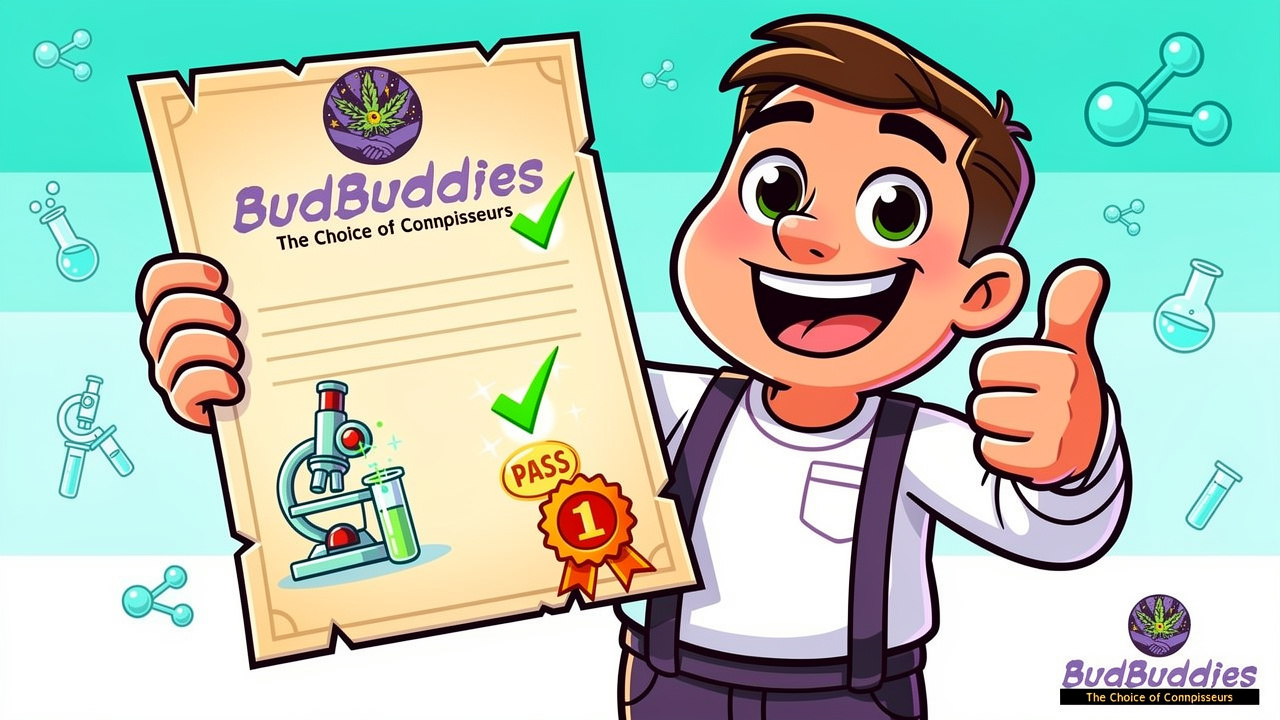
Certificates of Analysis, often shortened to COAs, are independent lab reports that confirm what is in your edible. If you want a solid answer to how to spot fake THC edibles, this paperwork is your strongest proof. A real COA links a specific batch to measured THC levels and shows that checks for contaminants came back clear.
On a genuine document you should see:
The producer name
The testing laboratory name and contact details
The sample name or number that matches your product
A table listing cannabinoids like THC and CBD, usually in milligrams
Separate lines for pesticides, heavy metals, mould, and residual solvents, normally marked as “pass” or “below detection limit”
When you match the batch code on the COA to the one printed on the packet, you know that report belongs to your specific product. If the numbers or names do not line up, treat that as a serious warning.
Sampling work by the US Food and Drug Administration on cannabinoid products has found many items contain far more or far less active compound than their labels suggest, which shows how unreliable untested products can be.
BudBuddies publishes COAs for every batch through the dedicated lab testing page at BudBuddies, and pulls them together in a wider Quality Assurance Hub at BudBuddies. Any supplier who refuses to share this level of detail or offers excuses when you ask for it deserves a firm no.
A simple rule of thumb: no COA, no purchase. If a seller cannot show independent testing, you have no reliable way to know what you are eating.
What a Fake or Missing COA Looks Like
Fake or missing COAs often reveal themselves once you slow down and check the basics of how to spot fake THC edibles. The same simple checks apply whether you scan a QR code on a packet or open a PDF a seller sends to you.
Watch out for:
Dead or misleading links: A QR code that leads to a dead page, a generic homepage, or a file with no mention of your product is a loud warning sign.
Suspicious laboratories: Look at the lab name and search for it yourself. Made‑up laboratories, copied logos, or companies with no search results all point towards fake paperwork.
Mismatched details: Compare batch numbers, test dates, and THC figures. If the numbers fail to match the packet or look far too neat and rounded, treat the COA as worthless — a concern reinforced by findings in commercial cannabis product testing showing widespread discrepancies between stated and actual cannabinoid content across regulated products.
A real COA should feel like a lab document, not a quick graphic whipped up to keep customers quiet. If something seems off, trust your instincts and walk away.
The Fastest Way to Avoid Fakes Where You Buy Matters Most
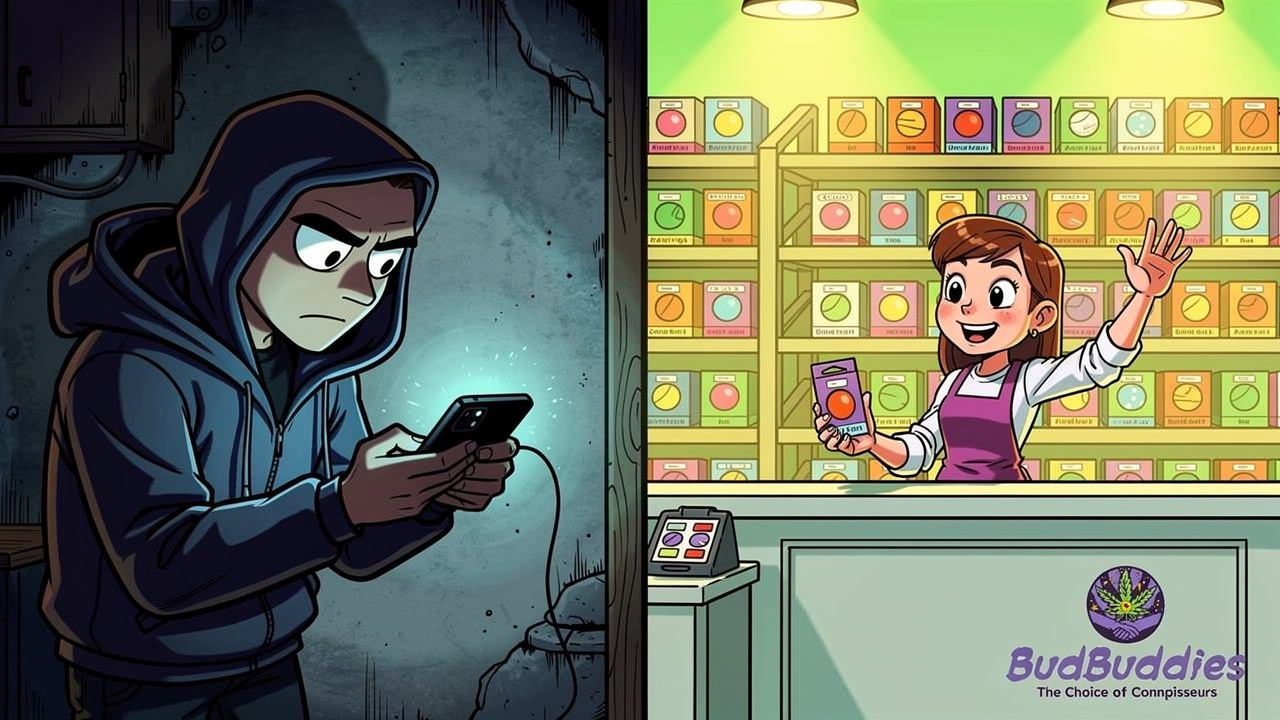
The fastest way to turn how to spot fake THC edibles into action is to be choosy about where you buy them. Source matters more than any single clue on a packet because trustworthy suppliers build their whole business on repeat customers and open information. If you remember just one part of how to spot fake THC edibles, remember this point.
Social media sellers and street contacts often move under new names, change numbers frequently, and rely on eye‑catching photos rather than solid details. You rarely see full ingredient lists, batch codes, or genuine customer reviews, and when something goes wrong there is no customer support to help you. Very cheap prices might look tempting, yet low cost often means corners cut on every safety step.
By contrast, a reliable supplier should:
Show clear product descriptions with per‑piece THC dosage
Publish independent COAs for each batch
Offer real customer support and clear contact details
Use discreet, traceable shipping rather than vague promises
BudBuddies takes this path, with a curated range of THC gummies, chocolates, brownies, drinks, capsules, and vegan options that all come with clear lab reports. Every product uses 100 percent cannabis‑derived THC, never synthetic substitutes, and each batch goes through double potency checks before it appears on BudBuddies. Orders arrive in plain, smell‑proof packaging with tracking from door to door, so privacy‑focused customers can step away from risky informal channels without giving up convenience.
When a supplier looks proud to share lab results, answer questions, and show you real photos of each product, you remove most of the guesswork around safety. That is the standard BudBuddies aims to set every time you browse the site.
The Bottom Line
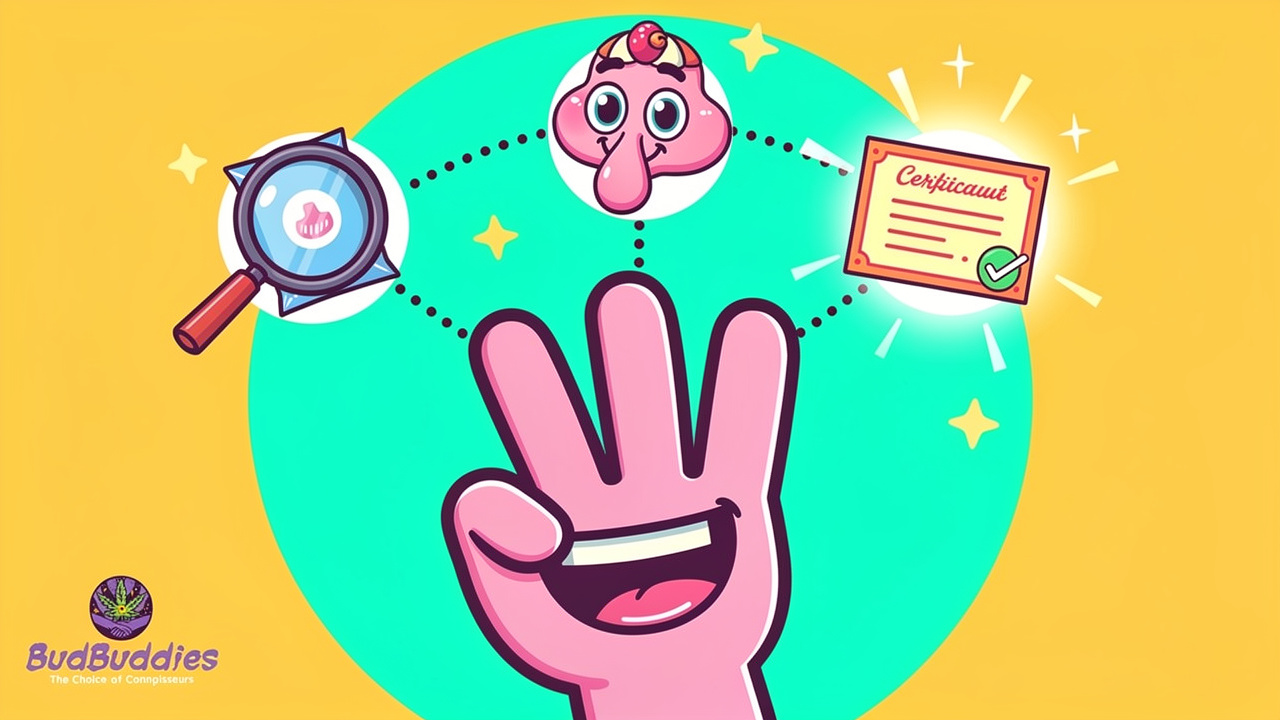
The simplest way to think about this topic is to stack three layers of checks on every edible you consider:
Study the packaging. Look for clear branding, correct spelling, batch numbers, and realistic THC figures.
Judge the product itself. Check size, texture, smell, and how consistent each piece looks.
Look for a proper Certificate of Analysis. Confirm that the COA links to your batch and comes from a real lab.
No single clue settles everything, yet when several warning signs appear together, walking away is the safest choice.
So, how to spot fake THC edibles in a practical way comes down to these habits, repeated every time. Choose suppliers like BudBuddies that publish COAs, use original, grown‑up branding, and ship with discreet tracked delivery, and most of the stress of checking each packet disappears before the box even reaches your letterbox.
Frequently Asked Questions
These answers cover common questions about fake THC edibles and BudBuddies products. You can skim straight to the point that matters most.
Question: Can you tell if a THC edible is fake just by looking at it?
Not always, because some fake or unsafe edibles look almost identical to real ones. You might spot clues such as spelling mistakes, poor print, odd smell, or uneven pieces, but they are not perfect tests. You cannot master how to spot fake THC edibles by sight alone, since only lab checks reveal cannabinoid content.
Question: What should I do if I think I have consumed a fake edible?
Stay calm and move to a safe place with a trusted person if possible. Sip water, rest, and avoid taking more of anything. If you feel chest pain, severe confusion, or think you might faint, seek medical help straight away and tell staff what you took and when. If you still have the packet, take it with you so medical teams can see what you were given.
Question: Are THC gummies more likely to be faked than other edibles?
Yes, THC gummies tend to be faked more often than other edible formats. They are cheap to make, easy to colour, and simple to dress in copycat sweet wrappers. Chocolates and brownies can be faked too, but obvious counterfeits most often show up as bright gummy packets pushed on social media or through friends of friends.
Question: How do I know if a COA is real?
A real COA links to your product and comes from a laboratory you can verify. Match the batch number and product name on the report to the ones on your packet. Then search the lab online and check it truly exists and offers cannabis testing, rather than just a logo. If anything feels off or the seller dodges questions, treat that as a sign not to buy.
Question: What makes BudBuddies edibles different from unverified sources?
BudBuddies edibles differ because every batch uses 100 percent cannabis‑derived THC with double potency checks. Independent COAs confirm cannabinoid content and screen for contaminants before products reach the shelves. Each order ships in plain, smell‑proof, tracked packaging, and you can browse the full tested range at BudBuddies.

