medical cannabis benefits uk
If you’re trying to work out what medical cannabis can actually do for you, the short answer is this: it’s shown real promise for drug-resistant epilepsy, multiple sclerosis spasticity, chronic pain, and chemotherapy-related nausea, when prescribed by a specialist and used under proper medical supervision. Medical cannabis benefits in the UK have been recognised since cannabis-based medicinal products were reclassified in 2018, opening a legal route for patients who hadn’t found relief through standard treatments.
This guide walks through who typically qualifies, what the documented benefits look like condition by condition, and how NHS and private prescription routes differ. We’ll also look at how a brand like BudBuddies fits into the picture, not as a replacement for a prescribed plan, but as a source of quality, lab-tested products that many people use alongside professional care. By the end, you should have a clear picture of where medical cannabis sits in UK healthcare and what to consider before exploring it further.
Key Takeaways
Medical cannabis has the strongest evidence for drug-resistant epilepsy, MS-related spasticity, chronic pain, and chemotherapy-induced nausea.
Prescriptions come through specialist consultants such as neurologists or oncologists, not through a GP alone.
Product quality and consistent dosing matter just as much as the cannabinoid itself.
BudBuddies’ lab-tested range can sit alongside a prescribed plan, offering consistency and privacy for everyday use.
Starting low and going slow, with your prescriber in the loop, keeps the process manageable and safer.
What Conditions Qualify for Medical Cannabis in the UK?

Medical cannabis in the UK is generally reserved for a specific set of conditions where standard treatments haven’t given patients enough relief. The main qualifying categories include drug-resistant epilepsy, spasticity linked to multiple sclerosis, chronic pain that hasn’t responded to conventional pain management, and nausea caused by chemotherapy. Specialists usually only consider cannabis-based medicinal products after a patient has already tried the recommended first-line treatments for their condition without adequate improvement. This step-by-step approach means medical cannabis isn’t treated as a first resort, but rather as an option once more familiar treatments have fallen short of expectations.
Which Conditions Have the Strongest Evidence?
Some conditions have a much clearer track record than others when it comes to medical cannabis benefits in the UK.
Epilepsy, particularly Dravet syndrome and Lennox-Gastaut syndrome, has the strongest evidence base, largely thanks to trial data behind the CBD-based product Epidyolex.
MS-related spasticity is well supported by clinical trial results for Sativex, a licensed cannabis-derived spray combining THC and CBD.
chronic pain relief and chemotherapy-related nausea show encouraging real-world results, though responses vary more from person to person than with epilepsy or spasticity.
What Are the Documented Benefits of Medical Cannabis?

The documented benefits of medical cannabis centre on pain relief, muscle relaxation, seizure reduction, and easing nausea, largely through its effect on the body’s endocannabinoid system. This is a network of receptors spread through the nervous system and immune system that helps regulate things like pain signals, muscle tone, and appetite. When cannabinoids such as THC and CBD interact with this system, they can dial down pain transmission, calm involuntary muscle spasms, and settle an unsettled stomach. The exact benefit someone experiences depends heavily on their condition, the product used, and how their body responds to cannabinoids individually.
Pain, Spasticity, and Sleep
Chronic pain and muscle spasticity are two of the most common reasons UK patients turn to medical cannabis, and the effects often stretch beyond the primary symptom. Cannabinoids appear to interrupt pain signals travelling through the nervous system, while also easing the involuntary muscle tightness that many MS patients live with daily. Many patients report a helpful knock-on effect too, sleeping more soundly once pain and muscle tension settle down. Some also find they can reduce their reliance on other medications once their symptoms are better managed.
Seizures, Nausea, and Appetite
For patients with treatment-resistant epilepsy, CBD-based products have shown genuinely meaningful reductions in seizure frequency, sometimes in patients who’d already tried several other anti-seizure medicines. For those going through chemotherapy, cannabis can help settle nausea and vomiting while also encouraging appetite, which matters when treatment already makes eating difficult. These two effects, less sickness and more appetite, often work together to support better nutrition and comfort during a genuinely hard stretch of treatment.
How Do You Get a Medical Cannabis Prescription in the UK?
Getting a medical cannabis prescription in the UK means going through a specialist consultant, such as a neurologist or oncologist, rather than a standard GP appointment. The specialist reviews your medical history, checks what treatments you’ve already tried, and decides whether cannabis-based medicine is appropriate for your specific condition. If your case fits the narrow criteria the NHS currently supports, you may access treatment through the health service; if not, private clinics offer a route that considers a wider range of conditions, generally at your own ongoing cost.
NHS Route vs Private Clinics
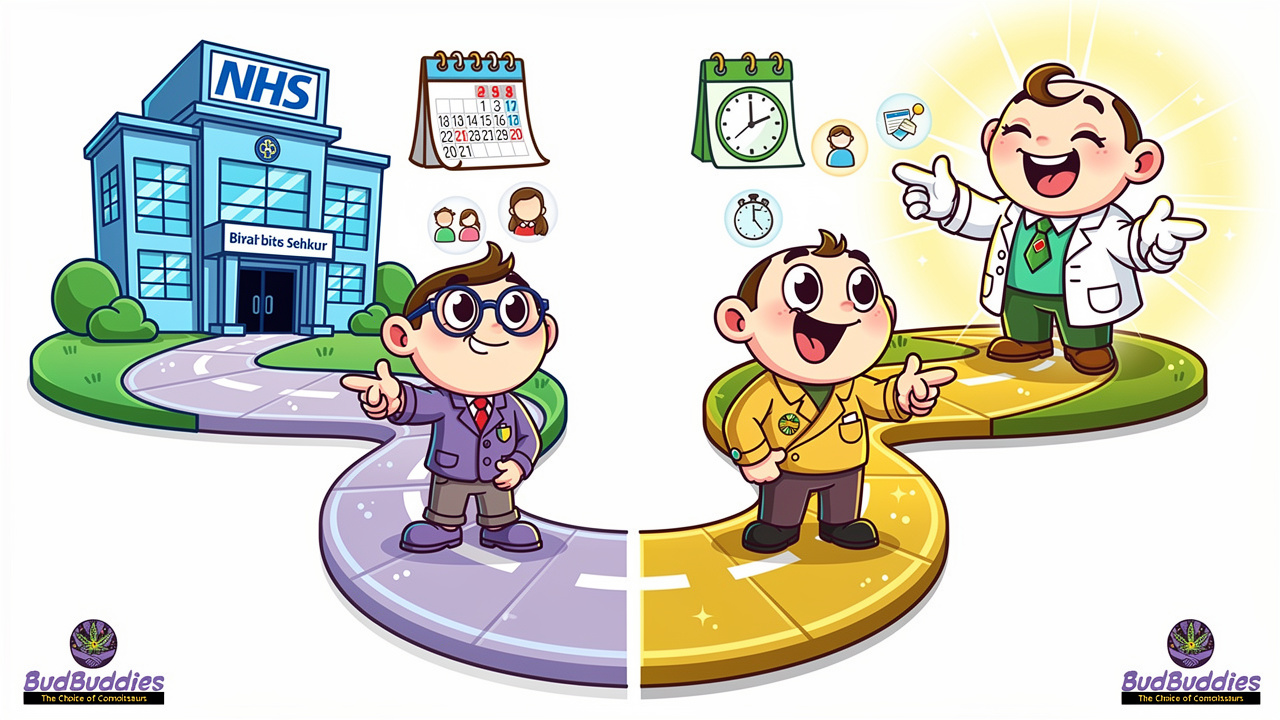
Deciding between the NHS and a private clinic often comes down to your condition and how quickly you need to start treatment.
| Factor | NHS Route | Private Clinics |
|---|---|---|
| Conditions covered | Mainly epilepsy and MS spasticity | Wider range of conditions considered |
| Waiting times | Can be lengthy, depends on specialist availability | Often faster, sometimes within weeks |
| Ongoing cost | Standard prescription charge | Monthly consultation and product costs |
How BudBuddies Supports Your Wider Wellness Routine
BudBuddies supports readers managing a wellness routine by offering a lab-tested, consistent range of cannabis products that many customers use alongside their existing care, never as a replacement for a prescribed treatment plan. The brand focuses on the details that matter most once someone already understands their own needs, things like accurate potency labelling, ingredient transparency, and a buying experience that feels calm and organised rather than chaotic. For readers who want predictable quality without guesswork, that kind of consistency makes everyday choices easier to trust.
Quality You Can Rely On

Consistency starts with how a product is tested and verified, and the brand builds its range around that principle.
Every product goes through double potency verification, so the THC or CBD percentage on the label matches what’s actually inside.
lab-tested cannabis products are available for products, giving buyers a clear view of purity and safety.
The range is 100% cannabis-derived, with no synthetic shortcuts, and includes guidance on cannabinoid ratios, from high-CBD options through to THC-dominant choices, so shoppers can match a product to what they’re looking for.
Privacy and Convenience
Privacy matters just as much as product quality for many customers, particularly those who’d rather keep their purchases to themselves.
Orders are packed in plain, unmarked outer packaging with heat-sealed inner bags, so nothing about the parcel gives away its contents.
Most orders dispatch within 24 hours, with tracked delivery and next-day options for orders placed before the 3pm cut-off.
Loyalty perks like BudPoints and BudCash, along with first-time buyer offers, help keep ongoing costs more manageable for regular shoppers.
What Should You Consider Before Starting Cannabis-Based Products?
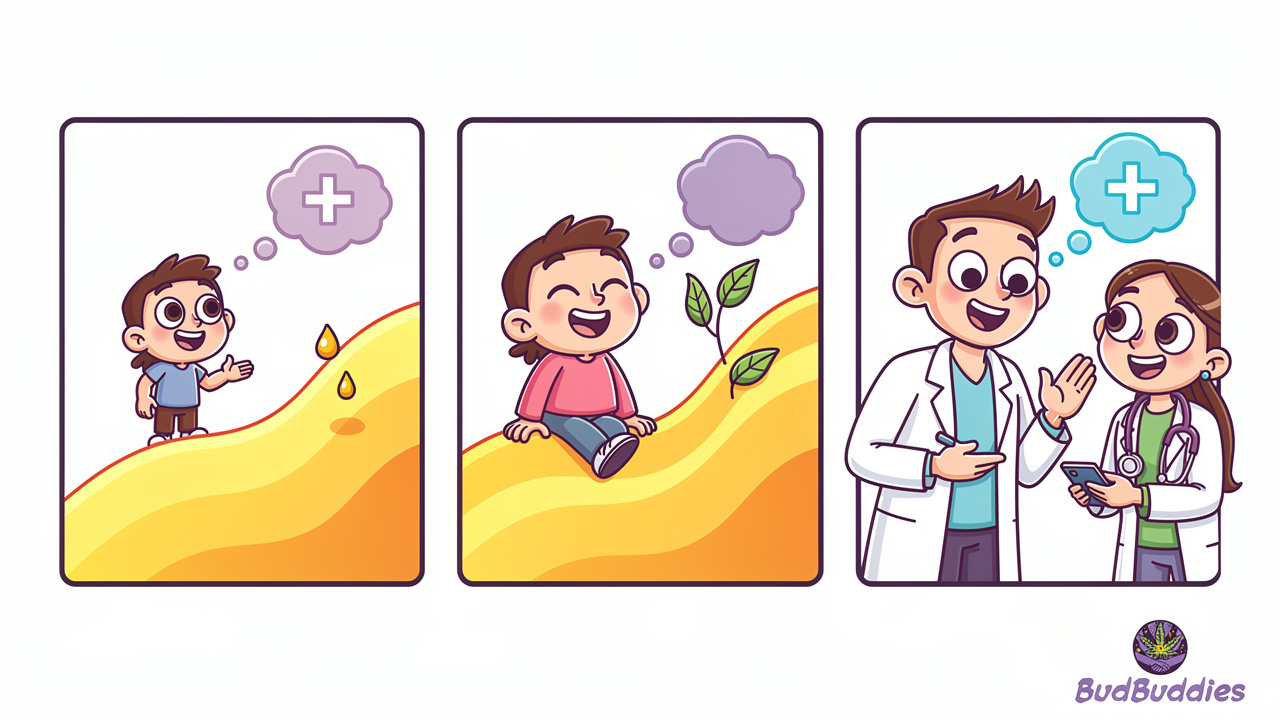
Before starting any cannabis-based product, the safest approach is to start low and go slow, giving your body time to show how it responds before increasing the amount you use. Everyone metabolises cannabinoids a little differently, so what works well for one person might feel too strong, or too mild, for another. Paying attention to how you feel after each dose, rather than rushing to a higher amount, gives you a much clearer picture of what actually suits you.
Start low, go slow, and keep your prescriber informed at every step — it’s the simplest way to find what works without unwanted surprises.
It’s also worth having an open conversation with your prescriber about anything else you’re using, including over-the-counter products, so they can flag any possible interaction with your current treatment plan. This kind of check-in keeps your overall routine joined up rather than fragmented, and it means any adjustments to your prescribed medicine happen with full information on the table.
The Takeaway
Medical cannabis benefits in the UK are clearest for drug-resistant epilepsy, MS spasticity, chronic pain, and chemotherapy-related nausea, with NHS and private routes offering different paths depending on your condition and circumstances. Getting there means working with a specialist, understanding which products fit your situation, and being patient with the process of finding the right dose.
For the everyday products that sit alongside that care, quality and privacy count for a lot. BudBuddies offers a lab-tested, clearly labelled range with discreet delivery, built for readers who want consistency without complication. Explore the range at budbuddies.cc when you’re ready to see what fits your routine.
Frequently Asked Questions
Can You Get Medical Cannabis on the NHS for Chronic Pain?
NHS provision for chronic pain is very limited compared with epilepsy or MS spasticity, since the evidence threshold for routine NHS funding is high. Most cannabis for pain management end up exploring private specialist clinics instead, where a wider range of conditions gets considered.
How Long Does It Take to Get a Medical Cannabis Prescription in the UK?
Private clinics can often arrange an initial consultation within days to a few weeks, depending on the specialist’s availability. NHS referral timelines vary considerably and depend heavily on specialist waiting lists in your local area.
What’s the Difference Between CBD Oil and Prescribed Medical Cannabis?
Prescribed medical cannabis meets pharmaceutical standards and is matched to a diagnosed condition by a specialist. CBD oil UK, including the CBD range from BudBuddies, sit in a separate, non-prescription category aimed at general wellbeing rather than treating a diagnosed illness.
Does Medical Cannabis Show Up on a Driving Test?
THC can affect driving ability and is subject to specific legal limits, regardless of whether it’s medically prescribed. Anyone using THC-containing products should understand their own response before getting behind the wheel.
Can Medical Cannabis Be Used Alongside Other Medications?
Cannabis can interact with certain medications through liver enzyme pathways, which may change how effectively those medications work. Always tell your prescribing clinician about any current medications so they can monitor for interactions properly.
How Do I Know Which Cannabis Product Suits My Needs?
The right product depends on the cannabinoid ratio, the method (flower, edible, or vape), and how long you want the effects to last. Its product guides and UK Reddit community offer practical dosing insight for newcomers working this out.