


what are dry herb vapes
If you have ever wondered what dry herb vapes are and why so many cannabis fans have switched to them, the short answer is this: they heat cannabis flower until it releases its active compounds as vapour, without ever setting the plant alight. That single difference, heat instead of flame, is what separates a dry herb vaporizer from a lighter and a rolling paper. Rather than burning flower at temperatures above 300°C, the device warms it gently using conduction, convection, or a mix of both, until cannabinoids and terpenes turn into an inhalable vapour. No smoke, no ash, no scorched plant matter, just a cleaner cloud of flavour and effect.
This guide breaks down what dry herb vapes are in plain English, covering how the technology works inside the chamber, why temperature settings change your experience, and how portable and desktop models compare. We also look at how vaping stacks up against smoking and share practical tips for picking your first device. BudBuddies has built a curated range around exactly these questions, so read on for the details that matter.
Key Takeaways
Dry herb vapes heat ground flower rather than burning it, which avoids combustion and the smoke that comes with it.
Three heating styles exist: conduction, convection, and hybrid, each shaping speed and flavour differently.
Your chosen temperature changes both the taste and the strength of the effect you feel.
Portable and desktop models suit different lifestyles, from pocket discretion to home performance.
The BudBuddies Elite Pro combines precise digital temperature control with hybrid heating for both dry herb and concentrates.
What Are Dry Herb Vapes?
Dry herb vapes are handheld or desktop devices built to heat ground cannabis flower to a set temperature, releasing cannabinoids and terpenes as vapour rather than smoke. The flower sits inside a small chamber, often called an oven, where a heating element brings it just short of the point where it would actually catch fire. That gap between heating and burning is the whole point of vaporisation, and it is what makes these devices behave so differently from a pipe or a joint.
This distinction matters because burning plant material at high heat creates smoking vs vaping cannabis loaded with tar and other unwanted byproducts, along with the loss of many delicate flavour compounds. A dry herb vaporizer skips that step entirely. You get a controlled, gradual release of the plant’s natural compounds, with no flame, no burnt taste, and far less waste left behind in the chamber once your session ends.
How Does a Dry Herb Vaporizer Work?
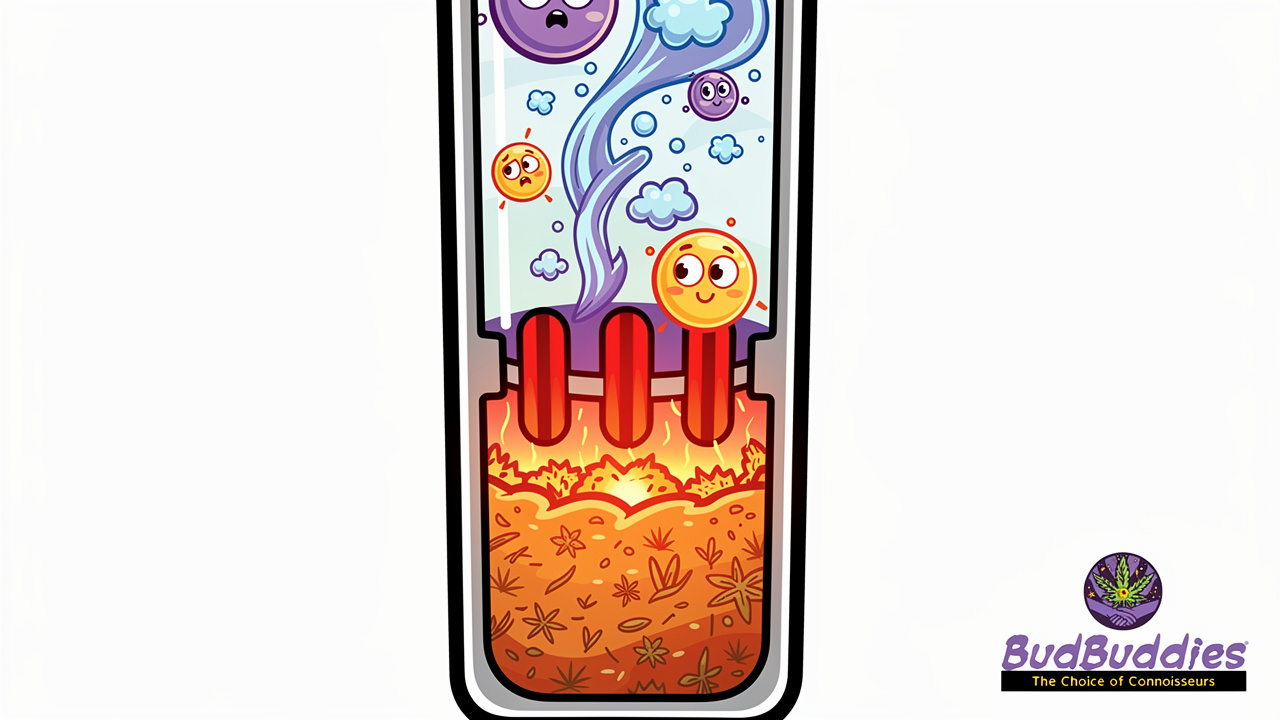
A dry herb vaporizer works by heating finely ground flower inside a sealed chamber until its cannabinoids and terpenes turn into vapour you draw through a mouthpiece, a process rooted in the chemical composition of isopropyl and similar volatile compounds that shift from liquid or solid states into vapour at specific temperatures. You load the ground herb into the chamber, choose your temperature on the display, and wait a short moment while the heating element does its job. Airflow then carries the vapour up through the mouthpiece as you inhale, and most devices let you adjust draw resistance to make each pull feel looser or denser. The whole process is gradual and repeatable, which gives you far more control over pacing than lighting flower with a flame ever could.
Conduction, Convection, and Hybrid Heating

Conduction heating works through direct contact, where the chamber wall touches the flower and warms it quickly, though it usually needs a gentle stir partway through to avoid patchy heating. Convection heating instead circulates hot air through the herb without direct contact, giving more even results and generally better flavour, though it can take a touch longer to get going. Hybrid systems combine both approaches, pairing the fast start of conduction with the steadier finish of convection, and this is the setup behind the BudBuddies Elite Pro’s heating chamber.
What Is Herb Vaporization?
Herb vaporization is the process where cannabinoids and terpenes turn from solid or liquid compounds into an inhalable vapour once they hit specific temperature points, well below the roughly 300°C needed for combustion. Because the flower never actually burns, the plant’s flavour and effect profile stay far more intact than they would through smoking. This is why vaping is often described as a gentler, more precise way to enjoy cannabis flower.
Dry Herb Vape Chambers and Temperature Settings
Dry herb vape chambers vary in material and size, and both factors shape how your session tastes and how long it lasts:
Ceramic chambers tend to hold heat evenly and give a clean taste.
Glass chambers let you see the herb and often deliver crisp flavour clarity.
Steel chambers are hard-wearing and simple to clean.
A larger chamber suits sharing or longer sessions, while a smaller one heats faster and wastes less flower if you only need a quick solo session. Temperature then decides what comes out of that chamber, since lower heat favours flavour and lighter effects while higher heat pulls out more cannabinoids for a fuller, heavier result.
Low, Medium, and High Temperature Ranges

Getting familiar with temperature ranges takes the guesswork out of each session and helps you match the setting to the mood you want.
Low, around 160 to 180°C, keeps flavour bright and delicate, producing a lighter, more uplifting feel that suits shorter, more frequent sessions.
Medium, around 180 to 210°C, balances taste with a fuller effect, making it the setting most people settle on day to day.
High, above 210°C, pulls maximum strength from the flower but risks scorching it, so most experienced users avoid pushing this far.
Devices like the BudBuddies Elite Pro offer best temperature to vape, which makes it easier to find and repeat your ideal setting session after session.
Dry Herb Vape vs Smoking: What’s the Difference?

The main difference between a dry herb vape and smoking comes down to combustion, since smoking burns flower at high heat and produces smoke loaded with tar and other unwanted byproducts, while vaping heats the same flower gently and produces clean vapour instead, a distinction supported by research comparing emissions from herbal and tobacco cigarettes. Smoking also destroys many of the terpenes responsible for a strain’s flavour, whereas vaporisation preserves far more of that natural taste because it never reaches burning point. On top of that, vaporisation tends to pull cannabinoids from the flower more efficiently, so many people find they need noticeably less herb to reach the same effect over time.
Key Benefits of Dry Herb Vaping
Switching from smoking to vaping brings a handful of practical upsides that build up the longer you use the method.
A smoother inhale with far less throat irritation, since there is no smoke or ash passing through your lungs, an outcome consistent with airway health findings in exhaled breath studies comparing vaping and smoking.
Stronger, truer flavour thanks to preserved terpenes, letting you actually taste the difference between strains.
Lower odour that clears quickly, which suits anyone who values a bit more privacy at home or on the move.
Better cost efficiency, since more effective extraction per gram means your flower stretches further across more sessions.
Portable vs Desktop Dry Herb Vaporizers

best portable dry herb vapes are compact, battery-powered devices built for discretion and life on the move, while desktop models plug into the mains and trade portability for thicker vapour and steadier performance during longer sessions. A portable suits someone who wants a quick, quiet session between errands or while travelling, whereas a desktop unit rewards people who mostly vape at home and want the biggest, smoothest clouds a device can produce, similar to the setup and heating process detailed in official desktop vaporizer instructions for use. Neither option is objectively better, since the right choice really depends on where and how often you plan to use it.
Choosing Between Portable and Desktop
If privacy and mobility matter most to you, look for a quietest dry herb vape with preset temperatures and a magnetic mouthpiece, since these small details make daily cleaning and discreet use far simpler. If you mostly vape at home with friends, a mains-powered desktop model gives you thicker, more consistent clouds and rarely leaves you waiting for a battery to recharge. For readers who want one device that does a bit of everything, BudBuddies offers the Elite Pro as a flagship option that bridges precision and portability, working equally well with dry herb and concentrates in a single chamber.
Tip: Match the device to the moment, not the other way around. A pocket-friendly portable for a quick solo break, a desktop for a long evening at home with friends.
Wrapping Up
Dry herb vapes give you a cleaner, more flavourful, and far more controlled way to enjoy cannabis flower than a lighter and rolling papers ever could. Once you understand how conduction, convection, and hybrid heating shape your session, and how temperature settings steer flavour and strength, choosing the right device stops feeling like guesswork.
The brand has put together a curated range of portable and desktop models, along with clear temperature guides, so you can pick a device that actually fits your routine. Every order ships in discreet, vacuum-sealed packaging with tracked delivery, so you can shop with confidence from browsing right through to your first session.
Frequently Asked Questions
How Long Does A Dry Herb Vaporizer Battery Last?
Compact portable models typically manage 2 to 4 sessions per charge, while larger premium units can stretch to 6 or 8 sessions or more before needing a top-up. Most newer devices use USB-C charging, which is worth checking for since it tends to mean faster, more convenient recharging between sessions.
Can You Use A Dry Herb Vape With Concentrates Too?
Yes, some dual-use devices handle both dry herb and concentrates within the same unit, often through a swappable chamber or insert. The BudBuddies Elite Pro is one example, reflecting growing demand for a single device that covers more than one consumption style.
How Often Should You Clean Your Dry Herb Vaporizer?
Brush out the chamber daily while it is still slightly warm, since residue lifts away far more easily at that stage than once it has cooled and hardened, a point echoed in comparisons of which cleans resin fastest among common alcohol strengths. Follow that with a vape pen cleaning guide using 91% or stronger isopropyl alcohol, and check screens and heating elements once a month for wear.
Why Does My Dry Herb Vape Taste Burnt?
A burnt taste usually means the temperature is set too high or the chamber needs cleaning, since built-up residue scorches on contact with fresh heat. Try lowering your temperature by 10 to 15°C and sticking to a cart taste burnt to bring the flavour back to normal.
Is A Dry Herb Vape Better Than A Pen-Style Vape?
Neither is strictly better, since dry herb vapes use whole ground flower while pen-style devices typically run on oils or pen-style vape cartridges. It really comes down to whether you prefer flower’s natural flavour or a cartridge’s convenience, and the platform stocks both types for readers who want to compare.
How Much Herb Do You Need Per Session?
A small chamber often needs no more than a pinch of finely ground flower to deliver a full session’s worth of vapour. Because vaporisation extracts cannabinoids more effectively than smoking, most people find they need noticeably less material to reach the same effect.

