


vaping temperature guide cannabis
Most people twist their vaporiser’s temperature dial without knowing what it actually changes. That guesswork often means missing out on flavour, wasting good cannabinoids, or ending up with a harsh, throat-catching hit instead of a smooth one. The dial isn’t just a power switch, it decides which cannabinoids and terpenes actually reach your lungs and in what strength.
This cannabis vaping temperature guide breaks that choice down properly, in plain English. We’ll cover the science behind cannabinoid and terpene boiling points, the three practical heat zones from a gentle 160°C session to a punchy 230°C one, and how strain type and personal tolerance should shape your starting point. Along the way, you’ll see how a precise device, such as the BudBuddies Elite Pro Vaporiser, turns this science into something you can dial in exactly, rather than guessing at a vague low, medium, or high switch.
By the end, finding the optimal cannabis vaping temperature for your own sessions should feel far less like trial and error, and a lot more like a habit you control.
Key Takeaways
THC, CBD, and the various terpenes each vaporise at their own distinct temperature, so the dial you choose decides which of them you actually taste and feel.
Lower temperatures favour flavour and a gentler pull, while higher temperatures favour strength and faster, more noticeable effects.
The 180°C to 200°C range is the balanced middle ground that suits most sessions and most strains.
Pushing past 230°C risks tipping into combustion, which brings harsh smoke and unwanted by-products rather than clean vapour.
Precise digital devices make it far easier to hit your target temperature exactly, instead of guessing at a rough setting.
What Happens When You Vape Cannabis At Different Temperatures?
Vaping cannabis at different temperatures changes which cannabinoids and terpenes actually turn into vapour, and that in turn shapes both the flavour and the strength of every draw. Vaporisation works by heating cannabis just enough to release these compounds as inhalable vapour, without setting the plant material alight the way a lighter or a match would.
Because every cannabinoid and terpene has its own boiling point, the number on your device’s screen effectively decides what comes out the other end. A lower setting releases only the compounds with the lowest boiling points, while pushing the dial up brings more compounds into play, layering in extra strength and, eventually, harsher flavour, a relationship outlined in detail in a cannabis vape temperature guide covering effects and flavor at each range.
Cannabinoid And Terpene Vaporisation Temperatures Explained
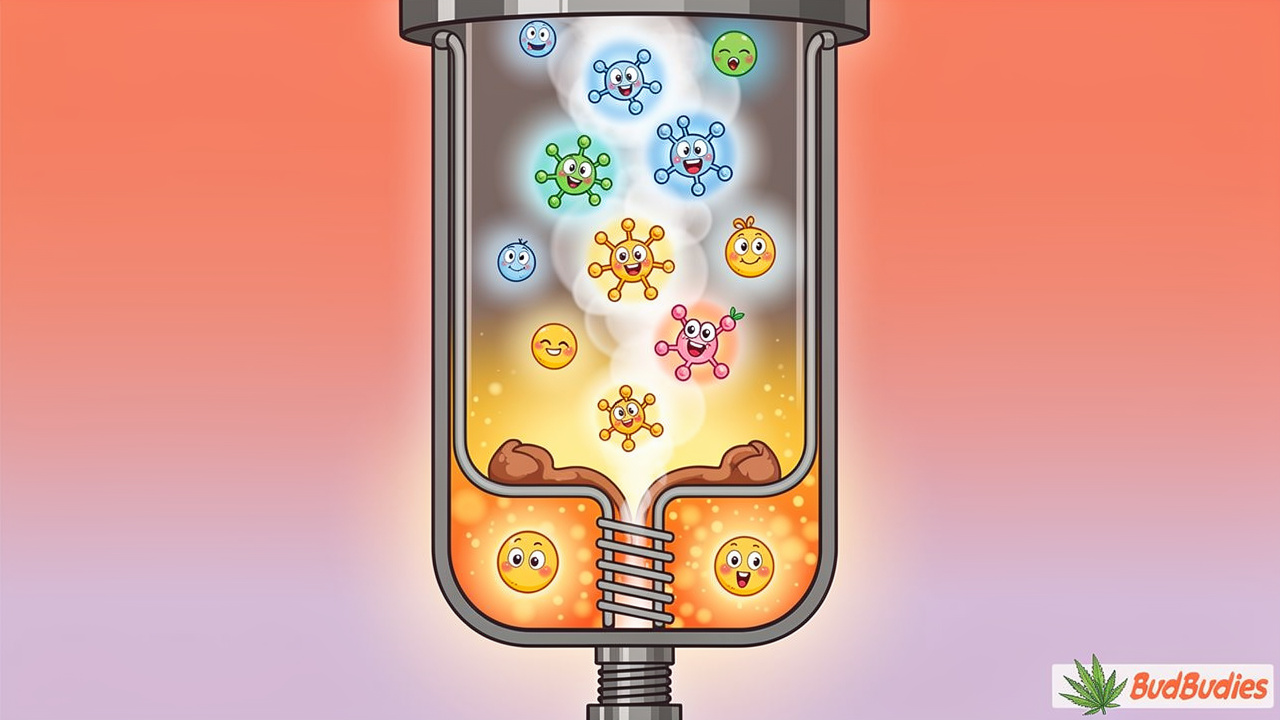
Cannabinoid and terpene vaporisation temperatures explain why the same dried flower can taste completely different, or feel completely different, depending purely on the heat you apply. Cannabis contains over 100 known cannabinoids and more than 200 terpenes, and each one turns to vapour at a slightly different point on the scale, which is exactly why a single “correct” temperature for vaping weed doesn’t really exist. THC, the compound most associated with cannabis’s psychoactive effects, converts to vapour at around 157°C, a figure supported by recent thermogravimetric analysis of cannabinoid boiling points, making it one of the earliest compounds to activate. CBD needs a touch more heat, typically 160°C to 180°C, while CBN, which forms naturally as THC ages, requires closer to 185°C. CBC sits at the top of the common cannabinoid range, needing roughly 220°C before it fully vaporises.
| Compound | Approximate Boiling Point |
|---|---|
| THC | ~157°C |
| CBD | 160°C–180°C |
| CBN | ~185°C |
| CBC | ~220°C |
| Myrcene | 166°C–168°C |
| Limonene | 176°C–177°C |
| Pinene | ~156°C |
| Linalool | ~198°C |
| Caryophyllene | ~160°C |
Why Terpenes Matter For The Entourage Effect
Terpenes matter for the entourage effect because they’re thought to work alongside cannabinoids to shape the overall feel of a session, not just the smell and taste. Most terpenes, including myrcene and limonene, boil off at lower temperatures than several key cannabinoids, so vaping too hot can strip away that supporting layer before you even notice it’s missing, leaving a flatter and less rounded experience behind.
The Best Temperature For Vaping Weed: Low, Medium, And High Explained

The best temperature for vaping weed sits somewhere across three practical zones, each trading flavour, vapour density, and strength differently depending on what you’re after:
Low settings protect taste at the cost of thinner clouds.
Medium settings strike a working balance between flavour and strength.
High settings chase strength while sacrificing some of the subtlety.
Thinking in these three bands, rather than one fixed number, gives you a simple starting framework you can adjust from session to session as your preferences and chosen strain change.
Low Temperature Vaping (160°C–180°C)
Low temperature vaping, roughly 160°C to 180°C, produces the smoothest and coolest vapour, with the clearest, most true-to-strain flavour and the least throat irritation. This range suits daytime sessions, anyone with sensitive lungs, and moments when you want to properly taste a premium curated flower rather than just feel its effects.
The trade-off is lighter, thinner clouds and less complete extraction from the plant material, which means sessions at this end of the scale often run longer, or need a touch more product, to reach the same overall effect as a hotter setting would.
Medium Temperature Vaping (180°C–200°C)
Medium temperature vaping, between 180°C and 200°C, is the practical sweet spot most sessions should start from, delivering thicker vapour, a faster onset, and a genuinely good mix of flavour and strength together. It suits social situations and general stress relief particularly well, and it’s the range where BudBuddies’ balanced hybrid strains tend to perform at their best.
Extracting cannabinoids efficiently at this range also leaves more of the strain’s compounds intact for a later, hotter pass, which stretches your material further and improves the overall value you get from every gram.
High Temperature Vaping (200°C–230°C)
High temperature vaping, from 200°C up to 230°C, activates a fuller spread of cannabinoids, including the higher-boiling CBC and CBN, producing denser clouds and effects that land faster and feel noticeably stronger. This zone suits consumers with higher tolerance or anyone prioritising potency over the finer points of flavour.
Flavour does flatten out here, and the vapour runs hotter on the throat, which some people find uncomfortable over a longer session. Watch for warning signs that you’ve gone too far, such as:
An acrid or burnt taste
Visible dark residue in the chamber
Real throat burn
Pushing past 230°C risks tipping into actual combustion and the unwanted toxins that come with it.
How Do You Choose The Right Vape Temperature For Your Strain And Goals?
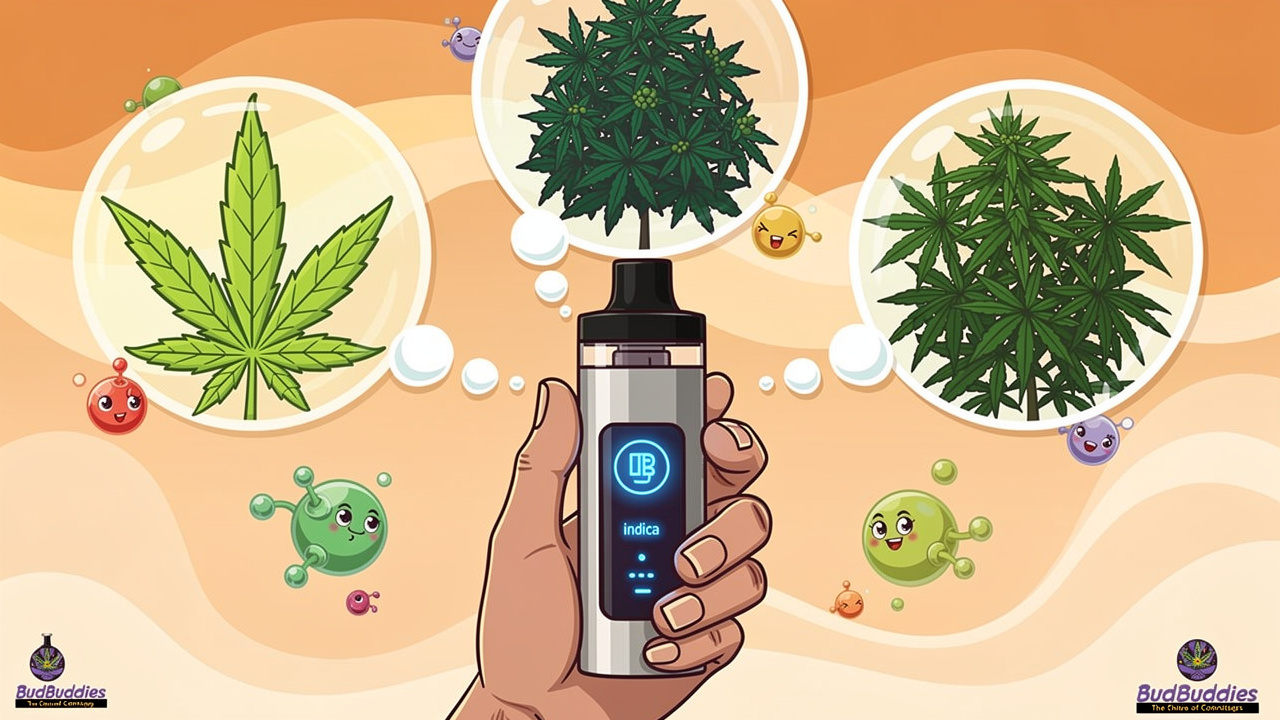
Choosing the right vape temperature for your strain and goals starts with matching the plant material in front of you to the heat zone that suits it, rather than picking a number at random. Sativa-leaning strains and terpene-rich strains generally reward lower-to-mid heat, since their aromatic compounds are often more delicate and worth protecting, while older flower or high-CBD material can usually handle higher heat without losing much, simply because there’s less delicate terpene content left to preserve in the first place. Tolerance plays a part too, since an experienced consumer chasing strong effects will naturally sit higher on the scale than someone easing into vaping for the first time.
A sensible approach is to start low, take two or three gentle draws, and pay attention to both taste and effect before nudging the dial up in small, five-degree steps.
This slow climb lets you find your own personal setting for each strain, rather than following one generic number that ignores how differently every batch of flower actually behaves.
Why Device Precision Changes The Result
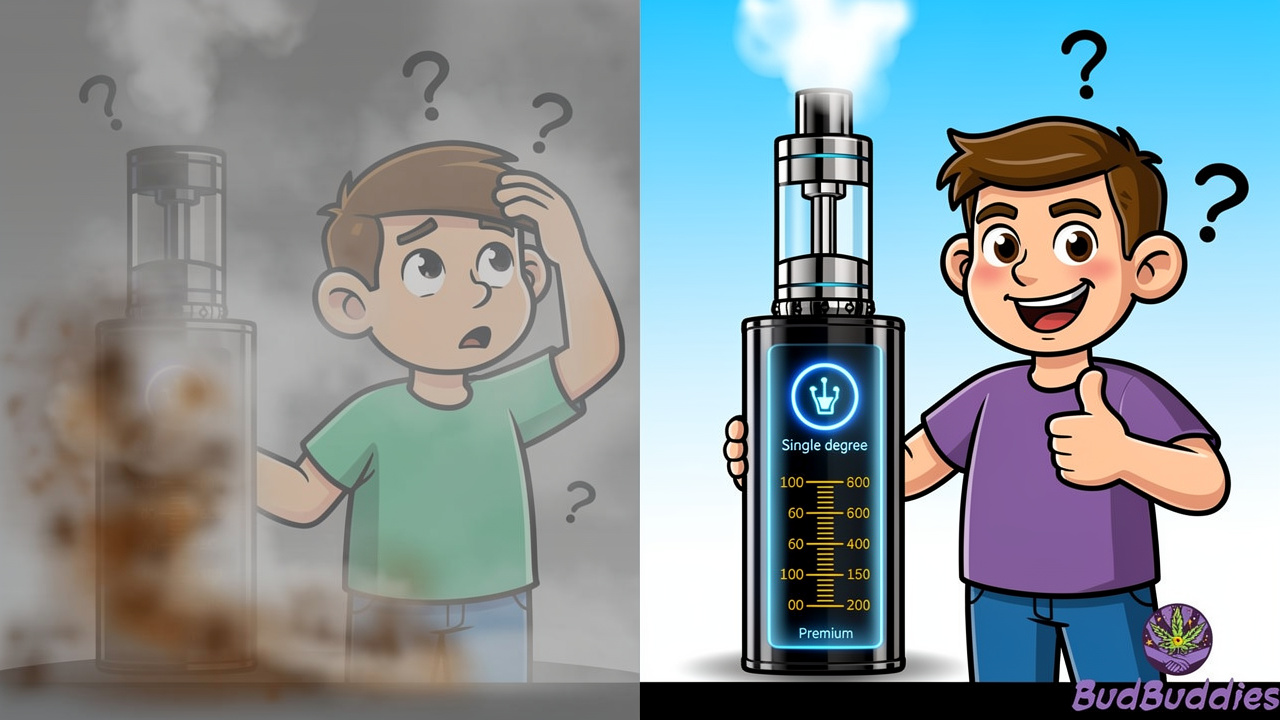
Device precision changes the result because a generic low, medium, or high dial can’t apply the exact boiling-point targets covered throughout this guide with any real accuracy. Many basic vaporisers round settings to broad bands, which means two sessions marked “medium” on different devices can land 15°C or more apart in practice, undoing a lot of the careful temperature matching described above, an issue also highlighted in independent vaporizer temperature guide comparisons of settings by effect.
The BudBuddies Elite Pro Vaporiser solves this with single-degree digital adjustment, a hybrid heating system that combines a quick conduction warm-up with steady convection heat, and haptic feedback that confirms every setting change without needing to check the screen. It works with both dry herb and concentrates, which is genuinely useful if you’re also exploring its live resin and concentrate range, generally best enjoyed somewhere between 160°C and 205°C.
The Bottom Line
Temperature is the main lever separating a flavour-forward session from a strength-focused one, and 180°C to 200°C remains the sensible default whenever you’re not sure where to start. Below that, you trade some strength for cleaner taste, and above it, you trade some subtlety for a faster, heavier hit, right up until 230°C, where combustion risk takes over.
Start low, adjust in small steps, and keep a mental note of what worked for each strain you try. BudBuddies’ curated flower, concentrate range, and the Elite Pro Vaporiser give you a practical way to put everything in this guide into practice, degree by degree, rather than leaving it to guesswork.
Frequently Asked Questions
Does A Higher Vaping Temperature Mean A Stronger High?
Generally, yes, since higher heat activates more cannabinoids, including CBN and CBC, which can make effects feel stronger and arrive faster. That said, strength also depends heavily on the strain’s own cannabinoid content, so a weaker strain vaped hot still won’t outperform a naturally potent one vaped at a lower setting.
What Temperature Should Beginners Start At?
A mid-range setting around 185°C to 190°C gives beginners a balanced first experience, with reasonable flavour and clear enough effects to judge how you respond. From there, adjust in small five-degree steps on future sessions once you know whether you prefer more flavour or more strength.
Why Does My Vape Taste Burnt Even Below 230°C?
An uneven grind, an overpacked chamber, or a poorly calibrated device can all create localised hot spots well before the actual set temperature reaches combustion levels. Check your grind consistency and clean the chamber thoroughly before assuming the temperature setting itself is genuinely too high.
Can You Vape Concentrates At The Same Temperature As Flower?
Not quite, since concentrates like live resin generally suit a slightly different window, roughly 160°C to 205°C rather than flower’s broader range. Within that, 160°C to 180°C acts as the specific “flavour zone” for concentrates, preserving their more delicate terpene profile.
How Do I Know If My Device Is Showing The Real Temperature?
cheaper devices often display a set temperature that doesn’t match the actual heat reaching the chamber, which throws off every setting you try. Precision devices with genuine single-degree digital control, like the BudBuddies Elite Pro, remove much of this guesswork.
Should I Change Temperature Partway Through A Session?
You can, and many consumers start low to enjoy the flavour first, then raise the temperature later in the session to draw out any remaining cannabinoids from the material. It’s entirely optional and comes down to personal preference rather than any fixed rule.

