Can Weed Help IBS Symptoms? A Clear, Cautious Guide
Introduction
Living with irritable bowel syndrome (IBS) can feel like sharing a flat with a moody housemate who never gives notice. One day things are calm, the next there is cramping, rushing to the loo, bloating, and plans ruined. When nothing seems to settle it for long, it is natural to wonder whether anything different might help. That is where the question can weed help IBS symptoms starts to appear more and more.
If you have asked yourself whether cannabis can ease the pain, spasms, or anxious build‑up around a flare, you are far from alone. The short answer is that weed may help manage some IBS symptoms, especially pain, cramping, loose bowels, and anxiety‑linked flare‑ups. It is not a cure, it does not work the same way for everyone, and the details of how you use it matter a lot.
The link is not just anecdote. Your body has its own endocannabinoid system that helps balance mood, pain, appetite, and digestion. Cannabis taps into that system, which is why so many people ask if weed can help IBS symptoms in a more targeted way than standard painkillers.
Tip: Speak with a healthcare professional before adding cannabis to your IBS routine, especially if you already take prescribed medicine or have other conditions.
In this guide you will see how cannabis interacts with the gut, which cannabinoids matter most, how different product types compare, and how to start in a cautious, informed way. Along the way, you will see where BudBuddies’ carefully chosen range can fit into a calm, controlled plan rather than a random experiment with your stomach.
Why Cannabis And The Gut Are More Connected Than You Might Think
To understand why people even ask “can weed help IBS symptoms”, it helps to know what the endocannabinoid system actually is. In simple terms, it is a cell‑signalling network spread through your brain, nerves, immune cells, and gut. Its job is to help your body stay in balance, including how you digest food and feel pain.
Two key parts of this system are CB1 and CB2 receptors. Many people think of them only in the brain, but they are also found all along the gastrointestinal tract. They sit in the nerves that control gut movement, in the smooth muscle of the bowel wall, and in immune cells that live in the lining of the intestines.
In the gut, this system helps control how fast food moves through:
When signalling is calm and steady, motility is steady as well.
When signalling is disrupted, the gut may race ahead with loose, urgent stools, or slow down with constipation.
That is why people look at this system when they ask if weed can help IBS symptoms linked to bowel speed.
The same network is involved in how your gut handles irritation. CB2 receptors on immune cells help regulate inflammation along the gut lining. While IBS is not classed as an inflammatory disease, low‑grade irritation seems to matter for some people, so this part of the system is taken seriously.
Another important role is in visceral hypersensitivity – how strongly your internal organs send pain messages to your brain. In IBS, those messages are often louder than average. The endocannabinoid system helps tune those signals up or down, working closely with the gut‑brain axis, the two‑way chat between your digestive system and your mind.
Some researchers talk about clinical endocannabinoid deficiency, the idea that a poorly functioning system might sit in the background of conditions like IBS. It is still a theory, not a proven fact, but it gives one more reason people wonder if weed can help IBS symptoms. Because cannabis compounds can interact directly with CB1 and CB2 receptors, they can influence the same gut processes that tend to misbehave in IBS.
Tip: If you notice your IBS flares more when you are stressed, sleep‑deprived, or run‑down, that is your gut‑brain axis in action.
How Cannabis May Help With Specific IBS Symptoms
IBS is not one single experience. For some, it is mostly pain and bloating. For others, it is sudden diarrhoea, stubborn constipation, or a stressful swing between both. When asking can weed help IBS symptoms, it is useful to break things down by what you actually feel day to day.
Pain, Cramping, And Gut Motility

Abdominal pain is one of the hardest parts of IBS. THC, one of the main cannabinoids in cannabis, binds to CB1 receptors in both the gut and the brain. This can reduce how intensely pain messages reach your awareness, so the same spasm may feel duller and more manageable. That is one way weed may help IBS symptoms linked to sharp or aching pain.
Both THC and CBD also have gentle muscle‑relaxant effects. In IBS, the bowel often squeezes too strongly or at the wrong time. By calming those contractions, cannabinoids may ease the gripping, twisting cramps that so many people describe. When the muscles soften a little, it can also reduce that gassy, tight feeling that makes trousers suddenly feel two sizes too small.
Cannabis can also influence how fast things move through. THC activation of CB1 receptors in the gut tends to slow motility, which can be helpful for IBS‑D when rushing to the toilet rules every outing. At the same time, too much THC could slow things so far that constipation worsens for IBS‑C. High THC doses may slow the gut too much — the right dose matters depending on your IBS subtype.
Anxiety, Stress, And The Gut-Brain Connection
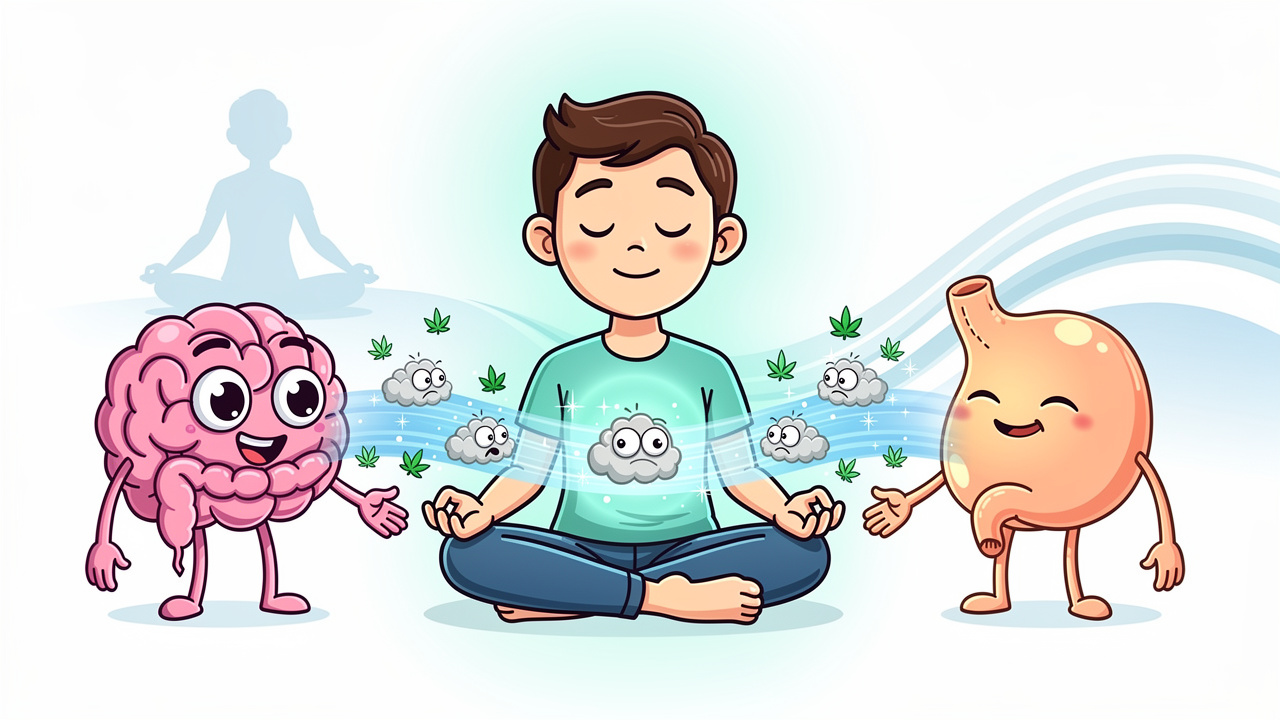
Stress and anxiety sit at the centre of IBS for many people. The gut‑brain axis means that a tense mind can speed up the bowel, increase sensitivity, and trigger a flare even when food is unchanged. This is one of the main reasons people ask whether weed can help IBS symptoms – they feel the emotional build‑up first, then the stomach trouble.
CBD is known for its anxiolytic effects. In everyday terms, it can help take the edge off racing thoughts, physical tension, and that wired‑but‑tired state. When your nervous system is calmer, the gut often follows, because fewer stress signals race down that gut‑brain pathway. Lower doses of THC can also feel relaxing for some people, helping to break the cycle where fear of a flare becomes the trigger for one.
On top of this, CBD seems to have anti‑inflammatory and antioxidant actions in the gut lining. While IBS is not an inflammatory bowel disease, low‑level irritation is being studied more closely. So when people ask can weed help IBS symptoms beyond pain alone, CBD’s combined influence on mood and gut comfort is one of the most promising areas. Cannabis is best thought of as a complementary tool that can sit alongside diet changes, stress management, and any guidance you receive from a health professional.
Tip: Many people pair CBD with simple practices like breathing exercises, gentle yoga, or short walks; together they can calm both mind and gut during a flare.
THC, CBD, And The Entourage Effect — Which Works Best For IBS?
When you look for a straight answer to “can weed help IBS symptoms”, it is tempting to search for one perfect cannabinoid. In reality, there is no single “best” option. What works well for you depends on your symptoms, how sensitive you are, and how you want to feel during the day.
THC is the cannabinoid most closely linked with pain relief and slower bowel movements. It can take the sting out of cramps, help with nausea, and ease the sudden urgency that comes with IBS‑D. For some, a gentle THC buzz also improves mood and appetite. The flip side is that higher doses can cause dizziness, racing thoughts, or a heavy, foggy feeling that does not suit everyone.
CBD is non‑intoxicating, so it will not make you feel high. Its strengths sit in calming anxiety, smoothing stress responses, and quietly supporting gut comfort in the background. That makes it easier to use through the day, including at work or when you need a clear head. If you are mainly asking can weed help IBS symptoms such as ongoing discomfort, bloating, and stress‑related flares, CBD‑led options are often a sensible first step.
In simple terms:
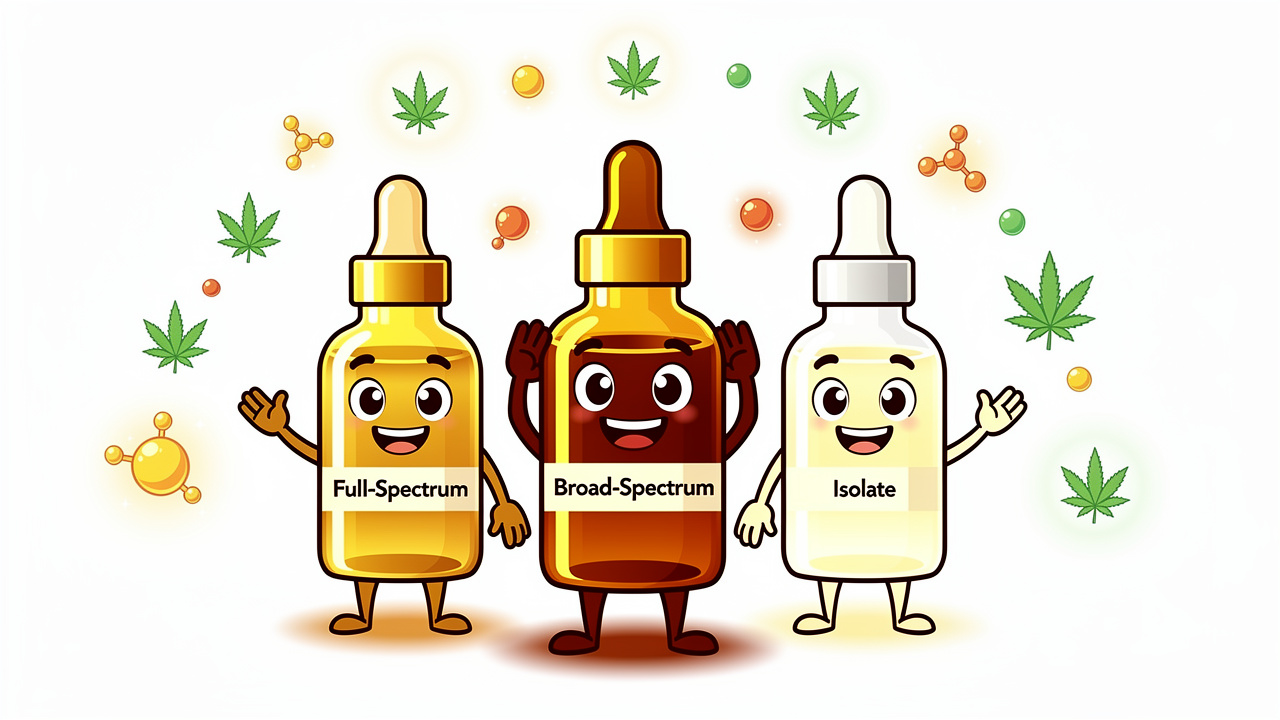
There is also the entourage effect. This is the idea that cannabinoids and aromatic compounds called terpenes work better together than in isolation. A full‑spectrum product that contains CBD, small amounts of THC, and natural terpenes can feel broader and more balanced than a single compound on its own. Many people who wonder whether weed can help IBS symptoms notice more rounded effects when they use this kind of product.
At BudBuddies, you can choose from full‑spectrum, broad‑spectrum, and isolate CBD oils. Full‑spectrum brings the biggest entourage effect. Broad‑spectrum removes detectable THC but keeps other helpful compounds. Isolate offers pure CBD if you prefer to keep things very simple. All BudBuddies oils and flowers are lab‑tested, clearly labelled with cannabinoid percentages and terpene details, and backed by Certificates of Analysis, so you know exactly what you are putting in your body.
For more experienced users, BudBuddies also curates AAAA+ cannabis flowers, including soothing Indica options such as Blue Cheese, often chosen for evening relaxation and body comfort. If your main concern is whether weed can help IBS symptoms while still feeling in control, starting with a high‑CBD, low‑THC product from budbuddies.cc is usually the calmest way to explore.
Choosing Your Consumption Method And Starting Safely
Once you understand why cannabis might help, the next question is how to use it in a way that feels measured rather than risky. Different methods change how fast it works, how long it lasts, and how easy it is to judge the dose. This is where the start low, go slow approach really matters, especially when testing whether weed can help IBS symptoms for you personally.
With inhalation through vaping, cannabinoids reach your bloodstream within minutes. That fast onset makes vaping helpful for sudden cramps, sharp pain, or a wave of nausea that arrives out of nowhere. The effects usually fade within one to three hours, so it is easier to adjust up or down in small steps. BudBuddies offers carefully selected THC vape cartridges for those who like fast‑acting support and want a clean, smooth inhale rather than a harsh smoke.
Edibles and capsules work very differently. They travel through your digestive system and are processed by your liver before you feel anything. That means a slower onset, often between half an hour and two hours, but the relief can last four to eight hours or more. This makes them well suited to background IBS symptoms and all‑day management. BudBuddies’ precision‑dosed capsules and gummy edibles are designed so you know exactly how many milligrams you are taking, which is important when your gut is already temperamental. Start with 2.5mg–5mg of THC in an edible and wait at least 90 minutes before considering more.
Oils and tinctures taken under the tongue sit somewhere in the middle. A few drops held under your tongue are absorbed through the lining of your mouth, leading to effects in around fifteen to forty‑five minutes and lasting three to five hours. BudBuddies full‑spectrum and broad‑spectrum CBD oils work especially well this way, giving you flexible dosing and a smoother curve than vaping, without the long delay of edibles. If you are still testing whether weed can help IBS symptoms, this method often gives clear, easy‑to‑track feedback.
Whichever method you choose, increasing slowly is the safest rule. Keeping a simple note of:
what you took and how much
when you took it
what you ate that day
how your IBS behaved over the next few hours
can help you spot patterns instead of guessing. For anyone who wants to handle IBS quietly, BudBuddies sends every order in multi‑layer, odour‑proof, unbranded packaging. There are no logos on the outside, and parcels are compact and discreet, so your cannabis routine stays between you and your letterbox.
Conclusion
So, can weed help IBS symptoms in a meaningful way? For many people, the answer is yes, especially around pain, cramping, stress‑driven flare‑ups, and bowel urgency. By working with the same endocannabinoid system that helps regulate digestion and mood, cannabis can nudge several IBS triggers at once.
The key is matching the right cannabinoid, method, and dose to your body. CBD is often a sensible starting point, with full‑spectrum products adding extra depth through the entourage effect. THC can offer stronger, more immediate relief when used with care, particularly for IBS‑D and sharp cramps.
If you are ready to explore this in a calm, informed way, BudBuddies offers lab‑tested CBD oils, precisely dosed edibles, premium flower, and vape options, all described in clear plain English and delivered with complete discretion. Take your time, listen to your body, and explore the BudBuddies range at budbuddies.cc to find what feels right for you.
FAQs
Does Weed Help With IBS Bloating?
Weed may ease IBS bloating for some people by relaxing tight intestinal muscles and gently slowing overactive motility. CBD in particular can support a calmer gut and reduce stress, which often makes bloating worse. The only way to know if weed can help IBS symptoms like bloating for you is to start low, track, and review.
Is CBD Or THC Better For IBS?
CBD suits daily IBS management because it calms anxiety, supports gut comfort, and does not make you feel high. THC is stronger for sharp pain, cramping, and diarrhoea‑heavy IBS. Many people who wonder if weed can help IBS symptoms find that a CBD‑led product with a little THC offers the best balance.
How Much Cannabis Should I Take For IBS?
There is no single perfect dose that works for everyone. A sensible place to begin is a few milligrams of CBD or 2.5mg–5mg of THC if you are using edibles. Wait at least ninety minutes, note how you feel, and only increase slowly. This steady approach makes it easier to judge whether weed can help IBS symptoms without overwhelming your system.
Can Edibles Help With IBS Symptoms?
Yes, edibles and capsules can be very helpful because their effects last for several hours, covering long working days or evenings out. They are especially useful when you want steady background support rather than rapid spikes. BudBuddies’ precision‑dosed edibles let you fine‑tune your intake, so you can see more clearly if weed can help IBS symptoms over a full day.