difference between smoking and vaping cannabis
Working out the difference between smoking and vaping cannabis gets confusing fast, especially when every product page uses slightly different terms. Both methods send cannabinoids into your bloodstream through your lungs, but they get there in very different ways, and that changes how the effects actually feel.
Smoking burns cannabis at high heat, releasing a rush of compounds within seconds. Vaping heats cannabis gently instead, without ever setting it alight, which produces a smoother, more gradual hit. That single distinction, combustion versus controlled heating, shapes almost everything else about the experience: the flavour you taste, how many cannabinoids and terpenes survive the process, and how intense each session feels.
This guide breaks down exactly what happens with each method, compares the hardware involved, and helps you decide which one fits your priorities, whether that’s flavour, discretion, or simply feeling more in control. BudBuddies stocks both formats, lab-tested and ready to compare, so working out your preference doesn’t have to involve any guesswork.
Key Takeaways
Here’s the short version if you’re skimming before your next order.
Smoking burns cannabis at high heat, while vaping warms it gently enough to avoid combustion entirely.
Vaping generally preserves more terpenes and cannabinoids than smoking, since nothing is destroyed by fire.
Both methods produce effects within minutes, though vaping often feels smoother and more gradual than a joint.
Vaping whole flower and vaping oil cartridges give noticeably different experiences, worth comparing side by side.
BudBuddies stocks lab-tested flower, cartridges, and vaporisers, so you can try both methods with confidence.
What Is the Difference Between Smoking and Vaping Cannabis?
The difference between smoking and vaping cannabis comes down to heat and combustion, and that single factor changes almost everything about the experience, especially the effects. Smoking sets cannabis flower alight, burning it at temperatures beyond 400°C, which creates smoke loaded with cannabinoids, tar, and combustion by-products all at once. Vaping instead warms cannabis, whether flower or oil, to somewhere between roughly 160°C and 220°C, low enough to avoid burning the plant material entirely. Because nothing catches fire, vapour carries a cleaner mix of cannabinoids and terpenes straight to your lungs, without the ash or acrid smoke that smoking produces. In terms of effects, smoked cannabis tends to hit fast and hard, while vaped cannabis often feels smoother and a touch more gradual, even though both reach your bloodstream within minutes. Once you understand this core distinction, every other comparison between smoking and vaping starts to make far more sense.
Smoking Cannabis: The Combustion Process
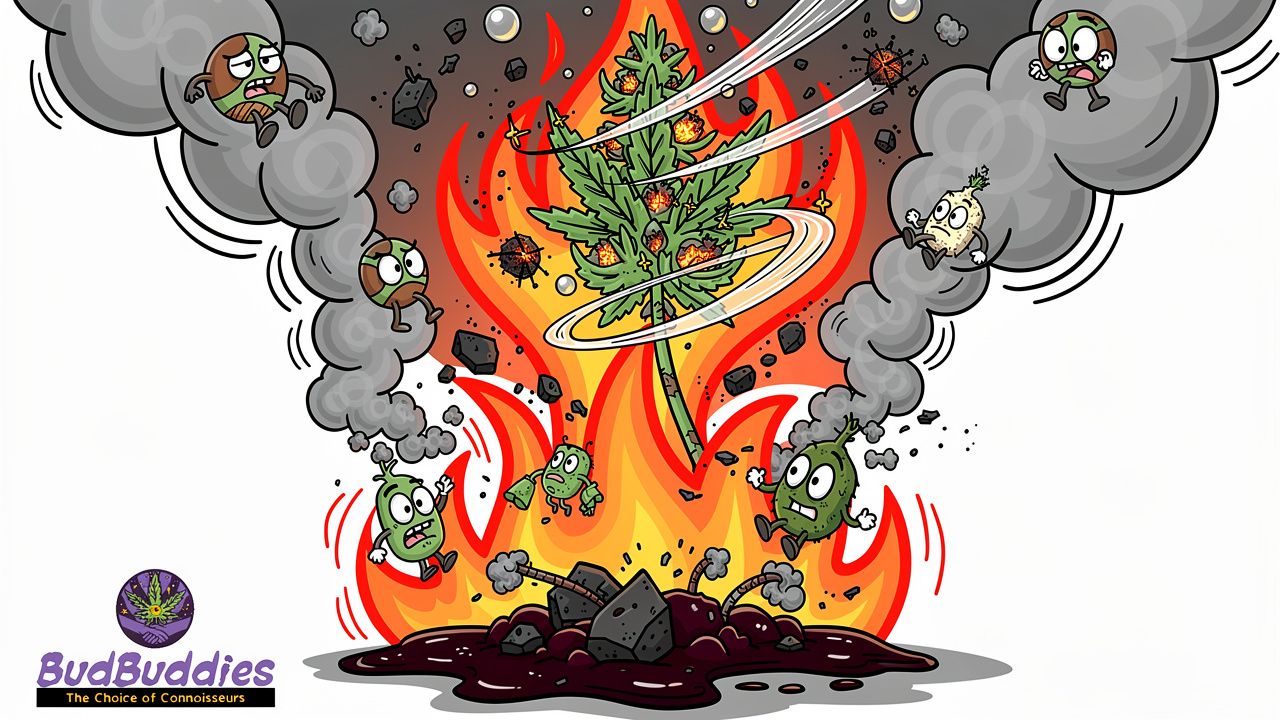
Smoking cannabis means setting the flower alight with a lighter, usually through a joint, pipe, or bong, so the plant burns rather than simply warms. That burn creates smoke carrying cannabinoids and terpenes, but also tar, carbon monoxide, and other combustion by-products. The intense heat destroys many delicate terpenes, which is why smoked cannabis often tastes harsher than the strain’s true flavour.
Vaping Cannabis: Heating Without Burning
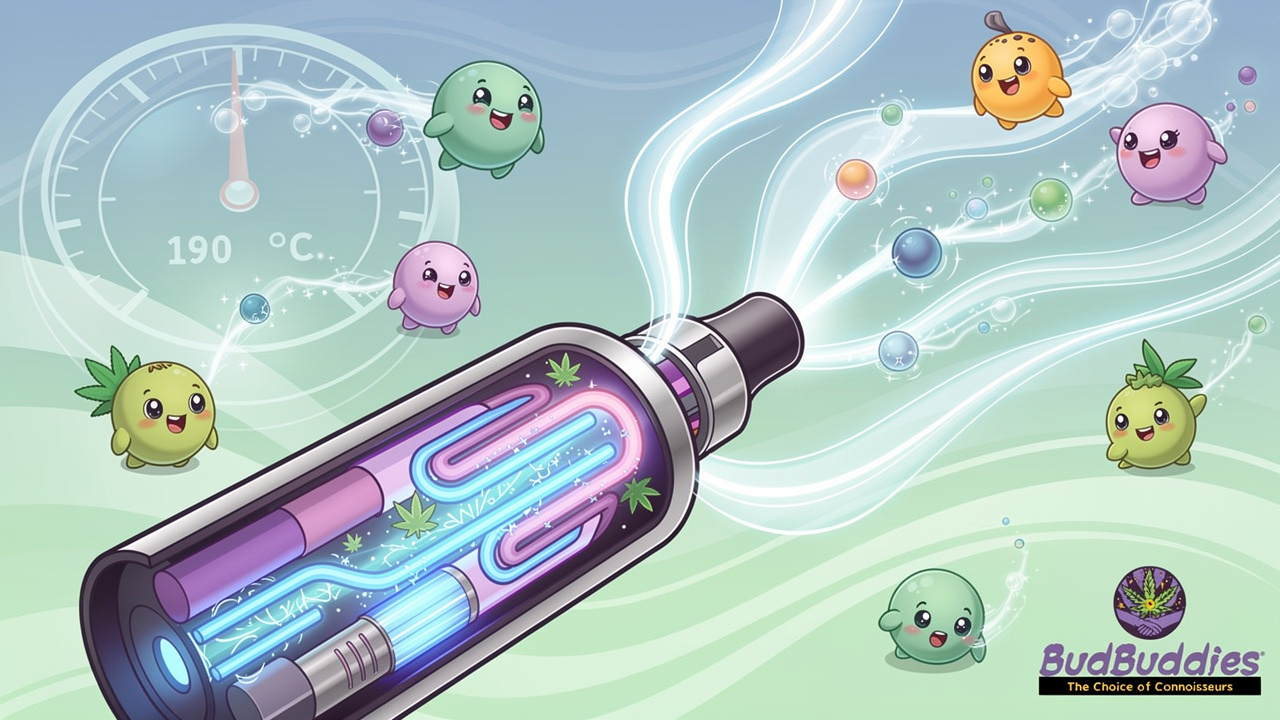
Vaping works differently. A device heats cannabis flower or oil to a controlled temperature, usually between 160°C and 220°C, just high enough to release cannabinoids and terpenes as vapour without igniting the plant. Because there’s no flame, there’s no smoke or tar involved. BudBuddies’ dry herb vaporisers and THC vape cartridges both use this gentler process, which is why vaping is generally seen as a cleaner way to inhale cannabis.
How Do Smoking, Vaping, and Other Methods Compare?
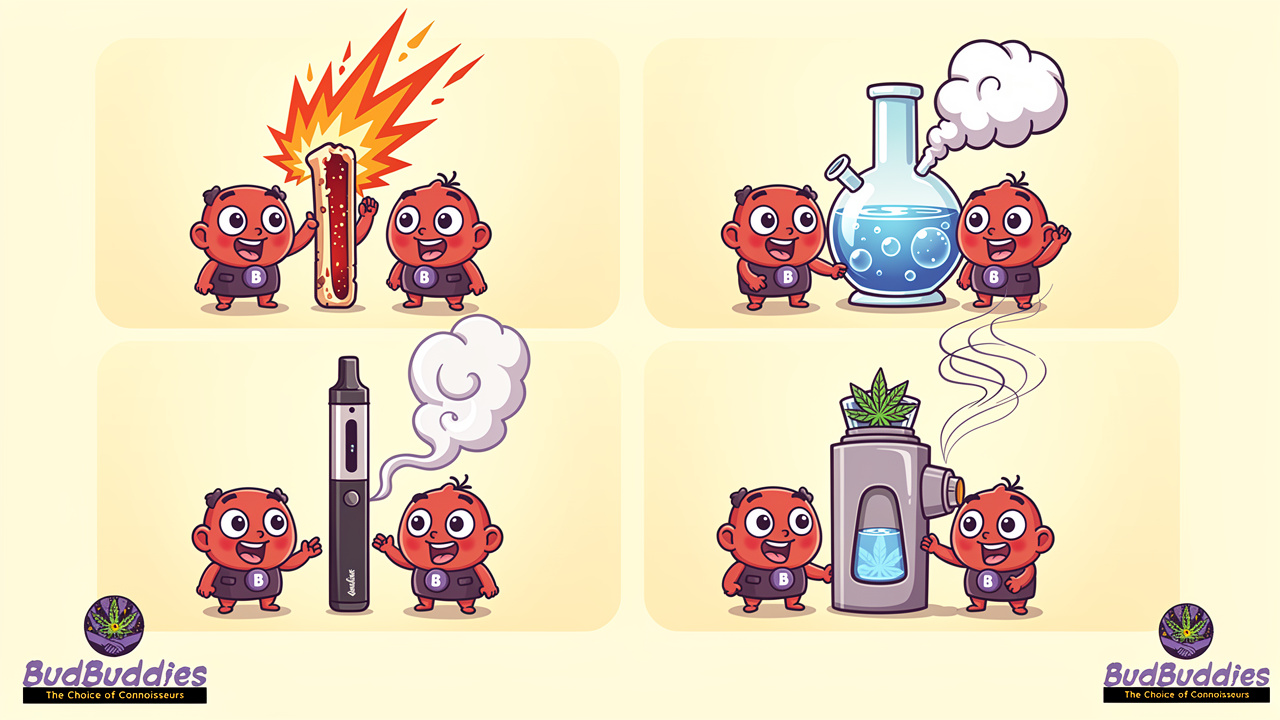
Smoking, vaping, pipes, bongs, and vape pens all deliver cannabis through inhalation, but the route each takes is quite different once you look closely. Pipes and bongs are still smoking tools at heart, since both rely on burning flower, even though a bong’s water chamber cools and filters the smoke before it reaches your lungs. That filtration softens the harshness slightly, but it doesn’t remove tar or stop combustion from destroying terpenes. vape pens, cartridges, and dry herb vaporisers take a completely different route, heating cannabis just enough to produce vapour and skipping the burning stage altogether. The result is a noticeably cleaner draw, less throat irritation, and a flavour profile that stays closer to the strain’s natural character. Whichever tool you’re comparing, one difference between smoking and vaping cannabis stays constant: does it burn the plant, or simply warm it?
| Method | Heating Type | Typical Feel |
|---|---|---|
| Joint or Pipe | Combustion | Fast, intense hit |
| Bong | Combustion, water-cooled | Smoother pull, still harsh |
| Vape Pen or Cartridge | Vaporisation | Clean, controlled draw |
| Dry Herb Vaporiser | Vaporisation | Full flavour, no smoke |
Pipes and Bongs vs Vape Devices
Bongs pull smoke through water before it reaches you, cooling it and catching some ash, but the flower inside is still combusting at high heat. Pipes offer no filtration at all, giving an even harsher hit. Vape pens and starter kits skip the flame completely, warming flower or oil instead, which means smoother sessions with far less coughing and no ash to clean up.
Why Does Vaping Preserve More Cannabinoids and Terpenes?
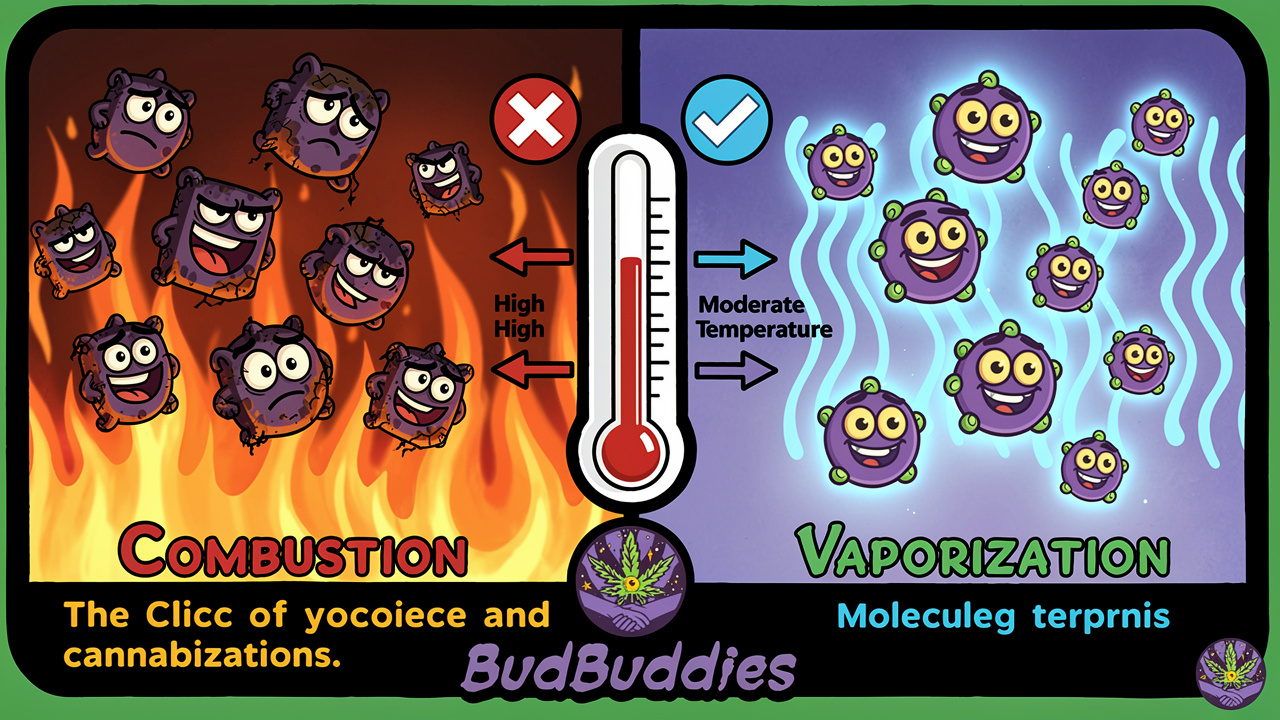
Vaping preserves more cannabinoids and terpenes than smoking because it never reaches the temperature needed to burn them away. Combustion happens above 400°C, hot enough to destroy fragile terpenes almost instantly and degrade some cannabinoids before you even inhale. Vaping stays well below that threshold, typically between 160°C and 220°C, which is enough to release THC, CBD, and aromatic aromatic terpenes into vapour without torching them in the process. This is one of the clearer differences between smoking and vaping cannabis, since it means a bigger share of the plant’s original chemistry actually reaches your lungs rather than going up in smoke. Precise temperature settings on many vaporising temperature guide add another layer of control, since THC begins vaporising around 157°C while CBD activates closer to 170°C, letting you lean towards one cannabinoid or a fuller-spectrum effect depending on where you set the dial. Smoking offers none of that nuance, since combustion releases every compound at once, in whatever ratio the flame happens to produce.
Flower Vaping vs Vape Cartridges
Vaping whole flower keeps a fuller compound profile intact, giving a more layered, strain-true effect that mirrors smoking, minus the smoke. Cartridges use extracted oil instead, such as live resin, live rosin, offering more consistent potency and simpler dosing. The platform lists THC strength clearly on every cartridge, so you always know roughly what you’re getting before you inhale.
What Effects Should You Expect From Vaping vs Smoking a Joint?
Both vaping and smoking a joint deliver effects quickly, usually within a few minutes, since cannabinoids absorb straight through your lungs into the bloodstream. Smoking a joint often produces a more immediate, sharper hit, partly because combustion releases everything at once and partly because many smokers inhale more sharply out of habit. Vaping tends to feel a touch more gradual, with effects building smoothly over the first several minutes rather than arriving all at once.
The overall duration stays fairly similar between the two, generally two to four hours depending on dosage and tolerance. Where they differ most is the texture of the high itself. Smoked cannabis is often described as heavier or more body-focused, while vaped cannabis tends to feel cleaner and more alert, likely because more terpenes survive the process and contribute to what’s often called the entourage effect.
Is Vaping More Cost-Efficient Than Smoking Over Time?
Vaping tends to work out cheaper over time because it uses cannabis more efficiently. Since vaping preserves more cannabinoids per gram, you typically need less flower or oil to reach the same effect a joint would need, so your stash lasts longer session after session. This efficiency gap is one practical difference between smoking and vaping cannabis that’s easy to overlook until you compare a month of receipts.
The catch is the upfront cost of a device, though this evens out quickly for regular users. The brand’s starter kits bundle hardware and cartridges together, which usually works out cheaper than buying each piece separately, making it easier for value-conscious shoppers to try vaping without overspending on their first attempt.
Which Method Should You Choose: Smoking or Vaping?
If you’re new to cannabis, a disposable vape pen is often the simplest starting point, since there’s no setup, no temperature dial, and nothing to learn beyond inhaling. Flower lovers who don’t want to give up the ritual of rolling or packing a bowl might prefer a dry herb vaporiser instead, which still uses whole flower but skips the flame.
Here’s how the two audiences typically break down:
Privacy-focused consumers usually lean towards vaping, since it produces far less smell and no lingering smoke.
Value-conscious shoppers often reach the same conclusion once they factor in how much less product vaping uses over time.
Ritual-focused smokers who enjoy rolling or packing a bowl may prefer a dry herb vaporiser as a middle ground.
First-time users tend to favour disposable vape pens for their simplicity.
There’s no single right answer here, only the option that suits your habits and priorities best.
The Takeaway
The difference between smoking and vaping cannabis really boils down to one thing, whether the plant burns or simply warms. That single choice ripples outward into flavour, efficiency, harshness, and how the effects actually feel, from the sharper hit of a joint to the smoother, more gradual pull of a vape.
Neither method is wrong, and plenty of consumers happily use both depending on the moment. If you’re ready to compare the two for yourself, BudBuddies’ range of flower, THC cartridges, and dry herb vaporisers gives you a straightforward, lab-tested way to find out which one actually suits you.
Frequently Asked Questions
Does Vaping Cannabis Smell As Strong As Smoking?
Vaping produces far less odour than smoking, and whatever smell does linger fades within minutes rather than hanging around on clothes and furniture for hours. Discreet, smell-proof packaging on delivery adds a further layer of privacy on top of vaping’s naturally lower smell profile.
Can You Vape Cannabis Flower, Or Do You Need Oil?
You can vape either one. Dry herb vaporisers heat whole flower directly, while cartridges use extracted oil such as live resin or distillate. The platform stocks both formats, so you can compare styles and see which one actually suits your preferences.
Is Vaping Cannabis Better For Your Lungs Than Smoking?
Vaping avoids combustion, so it skips the tar and carbon monoxide that smoking produces, which generally means less throat irritation and coughing. Device quality still matters though, which is why choosing lab-tested products with verified cannabinoid content and purity is worth prioritising.
Choosing a lab-tested product with clearly verified cannabinoid content and purity is worth prioritising over price alone.
How Long Do The Effects Of Vaping Last Compared To Smoking?
Both usually last around two to four hours, though vaping can occasionally feel slightly longer-lasting for some users. Individual factors like your tolerance, dosage, and even what you’ve eaten that day all influence how long the effects actually stick around.
What Temperature Is Best For Vaping Cannabis?
THC typically vaporises around 157°C, while CBD activates closer to 170°C, so the ideal setting depends on what you’re after. adjustable vape devices let you fine-tune between the two, balancing flavour, strength, and smoothness to suit your preference.
Do Vape Cartridges Contain The Same Cannabinoids As Flower?
Cartridges use extracted oil, such as live resin, live rosin, distillate, or CO₂ oil, rather than raw flower, but they still contain THC and other cannabinoids at clearly listed potencies. Reputable retailers lab-test every cartridge for cannabinoid content and purity before it reaches you.