


Best Humidity for Weed Storage (And How to Get It Right)
Buds that turn crumbly and harsh, or worse, start smelling musty, usually point to one overlooked problem: the wrong humidity in storage. Getting the best humidity for weed storage right protects flavour, strength, and safety, yet plenty of people never check it at all. A jar left on a warm windowsill, or packed into a plastic bag, can quietly ruin flower that cost real money.
The trouble is that humidity works both ways. Too little moisture strips the trichomes, the tiny resin heads that hold most of the cannabinoids and terpenes. Too much moisture invites mould, mildew, and a damp smell that no one wants to discover halfway through rolling up.
The target most growers and curers rely on sits between 58% and 62% relative humidity, a range that keeps buds soft and aromatic without inviting fungal growth. This guide from BudBuddies walks through why that range matters and what goes wrong outside it. It also covers exactly which jars, packs, and habits keep flower fresh from the first gram to the last. Read on to see how a few small changes protect every purchase you make.
Key Takeaways
The best humidity for weed storage sits between 58% and 62% relative humidity, preserving moisture and cannabinoids without risking mould.
Humidity that’s too low turns trichomes brittle and strips flavour, while humidity that’s too high breeds mould and mildew.
Airtight glass jars, Mylar bags, and calibrated two-way humidity packs are the most reliable tools for holding that range.
Simple habits, like avoiding the fridge and keeping containers sealed in a cool, dark spot, make the biggest long-term difference.
What Is the Best Humidity for Weed Storage?

The best humidity for weed storage sits between 58% and 62% relative humidity, a range confirmed as the industry default for cured cannabis in guides comparing best RH for cured flower. Within this band, buds hold enough moisture to stay soft and fragrant, yet stay dry enough that mould and mildew can’t take hold. Cannabis constantly exchanges moisture with the air around it, which is exactly why the storage environment matters as much as the bud itself.
BudBuddies stocks humidity control packs calibrated specifically to this range, so buds settle at the correct level automatically rather than through guesswork. Pairing one of these packs with an airtight jar removes most of the risk, since the pack quietly corrects small swings before they become a problem.
What Happens When Humidity Is Wrong?
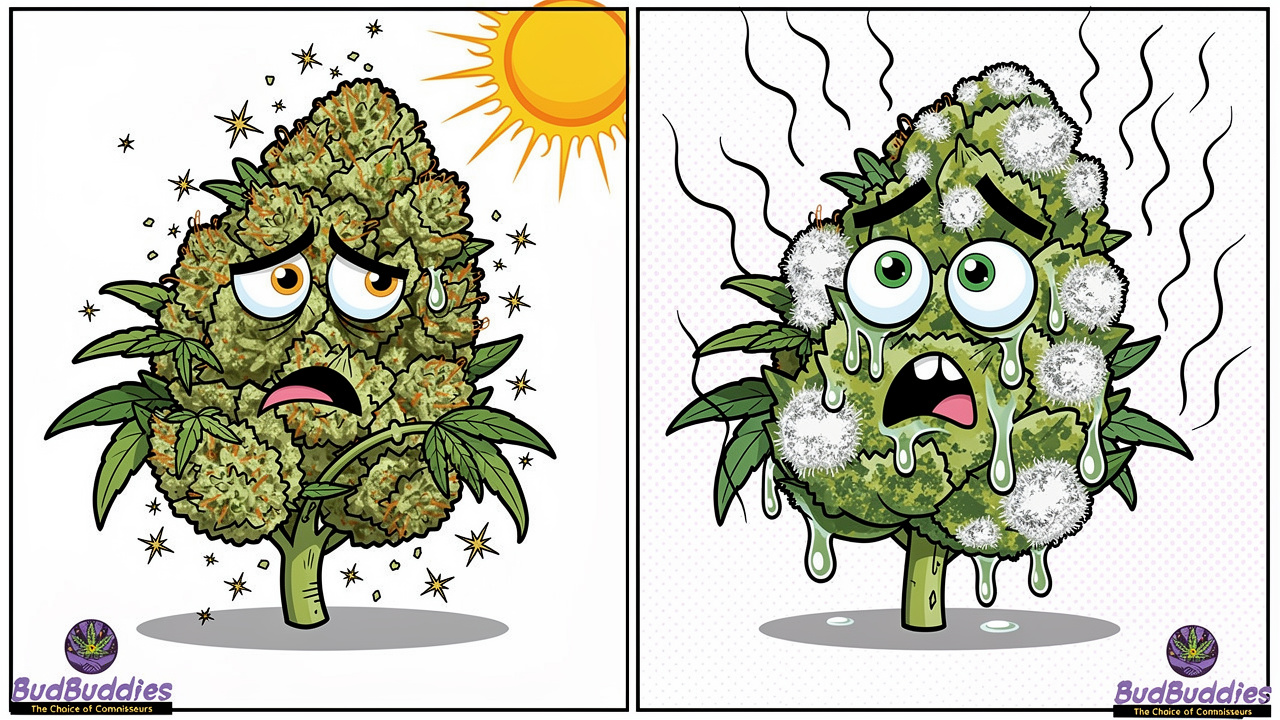
Humidity problems tend to show up in one of two ways, and both quietly damage the flower over time:
Too dry: the air inside a jar strips moisture from buds, and the flower turns crumbly and harsh.
Too damp: trapped moisture gives mould and mildew everything they need to spread through dense buds.
Either extreme chips away at potency, flavour, and, in the case of mould, safety itself, echoing peer-reviewed findings that elevated humidity significantly decreases cannabinoid concentrations in cannabis flower.
Too Dry Buds Lose Potency Fast
Trichomes are the tiny, hair-like crystals covering each bud, and they hold most of the plant’s THC, CBD, and other cannabinoids. When humidity drops too low, these delicate structures turn brittle and start to crumble or snap off entirely, taking a chunk of the bud’s strength with them.
Terpenes, the aromatic oils responsible for a strain’s smell and taste, are just as sensitive to dry conditions. As they break down, the smoke or vapour turns flatter and harsher, even if the bud still looks fine from the outside.
Too Humid Buds Risk Mould and Mildew
Dense, tightly packed buds trap moisture inside their structure, and once relative humidity climbs much past 62%, that trapped moisture becomes a breeding ground for mould and mildew. Fungal growth can spread through a jar within days, especially somewhere warm.
A musty or damp smell is usually the first warning sign, often appearing before any visible mould does. Beyond ruining flavour, mouldy cannabis carries a genuine health risk if it’s smoked or consumed, so a jar showing these signs is best thrown out rather than salvaged.
How Do You Keep Weed at the Right Humidity?

Keeping cannabis inside the 58 to 62% window comes down to two things, a target range widely discussed in buying guides on humidity packs for weed jars, the right container and a reliable way to hold humidity steady inside it. An airtight, opaque jar blocks light and slows air exchange, while a calibrated humidity pack corrects small swings automatically. Skipping either one, or reaching for the fridge or a plastic bag instead, is one of the fastest ways to undo good curing.
Choose the Right Storage Container
Glass jars with a UV-blocking or opaque finish are the best everyday option, since they seal tightly and stop light from breaking down cannabinoids over time. BudBuddies stocks jars built for exactly this purpose, alongside food-safe, non-reactive materials that won’t taint flavour.
For bulk storage or travel, Mylar bags and metal tins offer strong protection and stay fully light-blocking. Plastic containers are worth avoiding altogether, since they build up static that strips trichomes from the bud and rarely seal well enough to hold humidity steady.
Use Calibrated Humidity Packs

Two-way humidity packs release moisture when a jar runs dry and absorb it when things get too damp, holding the internal environment at a steady 58 to 62%, a distinction covered in detail in comparisons of 58% vs 62% Boveda packs for different curing needs. Replace a pack once it feels hard or crystallised, usually every few months, and steer clear of uncalibrated or homemade alternatives that can easily overcorrect.
Avoid Common Storage Mistakes
Never store cannabis in the fridge, since the temperature swings cause condensation that invites mould rather than preventing it.
Keep jars sealed when not in use.
Store them in a cool, dark spot away from radiators, direct sun, or a steamy kitchen windowsill.
How Do You Rehydrate Dry or Over-Cured Weed?
Buds that have already dried out past the ideal range aren’t necessarily ruined. Adding a calibrated humidity pack to the jar is the safest fix, since it releases moisture gradually and stops once the air inside reaches equilibrium. Avoid DIY fixes such as fruit peel or a damp paper towel, since these are hard to control. They often push humidity too high, trading one problem for a worse one.
Tip: Let a humidity pack work gradually rather than reaching for quick fixes. Slow correction protects the bud far better than any improvised trick.
Monitor With a Hygrometer
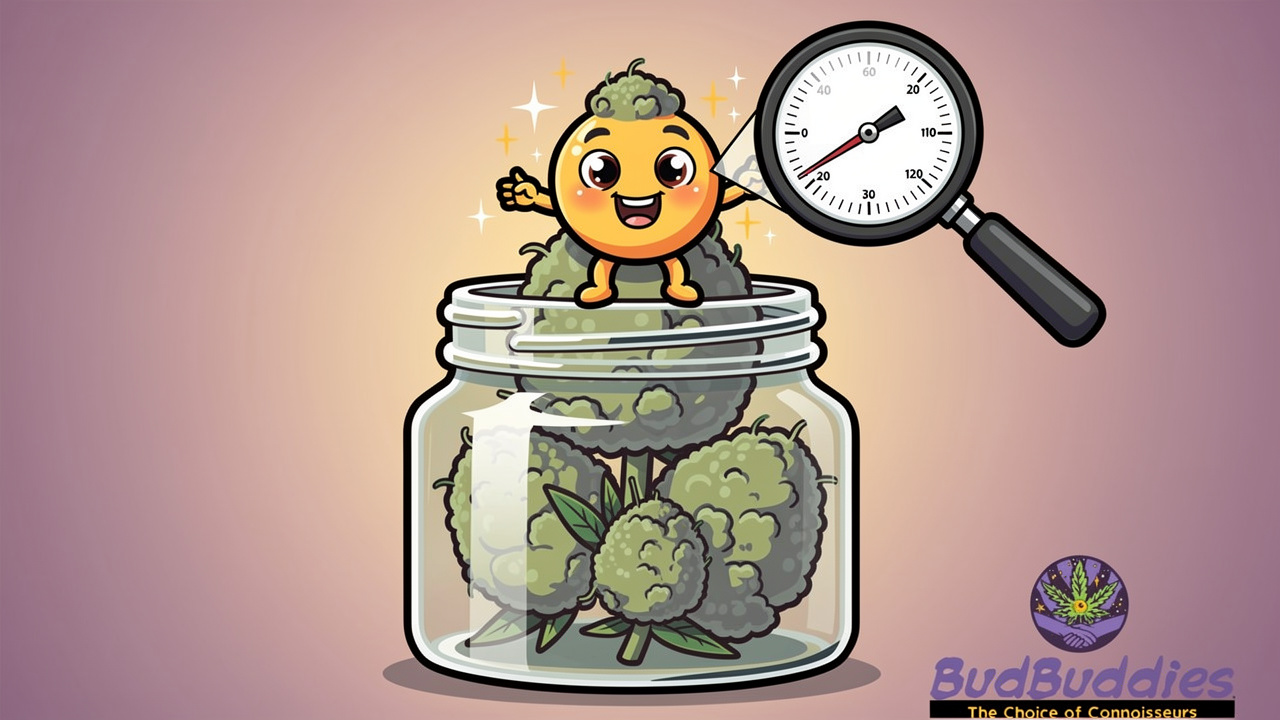
A small hygrometer placed inside the jar shows the exact humidity level at a glance, taking the guesswork out of storage. Checking it every week or two is usually enough, though it’s worth looking more often during seasonal changes, when indoor heating or cooler air can shift humidity without warning.
Wrapping Up
Getting the best humidity for weed storage right isn’t complicated once the basics click into place. Staying inside that 58 to 62% window protects the trichomes, terpenes, and overall quality that make good flower worth buying in the first place, whatever strain or format is sitting in the jar.
Pairing well-cured flower from BudBuddies with an airtight jar and a calibrated humidity pack from budbuddies.cc is the simplest way to keep every gram tasting and smoking the way it should. A few small habits now save a lot of disappointment later.
Frequently Asked Questions
Here are quick answers to the questions readers ask most often about humidity and cannabis storage.
Does Temperature Affect Humidity in a Storage Jar?
Yes, heat raises the humidity inside a sealed jar and speeds up cannabinoid breakdown, even if the pack is calibrated correctly. Keep jars somewhere stable between 15°C and 20°C, away from direct sunlight or heating vents, to help the humidity pack do its job properly.
Can You Use Silica Gel Packs Instead of Humidity Packs for Weed?
Silica gel only pulls moisture out of the air; it can’t add moisture back in. Using it in place of a calibrated humidity pack risks drying buds out past the ideal range, rather than holding them steady at 58 to 62%.
How Often Should You Check Your Weed’s Humidity?
A quick check every one to two weeks is usually enough for jars stored in a stable spot. During seasonal changes, such as when central heating switches on, check more often, since indoor air can shift humidity faster than expected.
Does Grinding Weed Affect Its Humidity or Freshness?
Grinding exposes far more surface area to the air, which speeds up both moisture loss and terpene evaporation. Buds stay fresher for longer whole, so it’s best to grind only what’s needed shortly before use rather than in advance.
Is It Normal for Humidity Packs to Change Shape Over Time?
Yes, a humidity pack that feels hard, crystallised, or unusually stiff has typically reached the end of its useful life. Replace it at that point, since a spent pack can no longer release or absorb moisture to keep humidity steady.
What’s the Best Place in the House to Store Weed?
A cupboard, drawer, or wardrobe away from heat and light works best, since these spots stay cool and dark with fairly stable humidity. Avoid kitchens, bathrooms, and windowsills, where steam, cooking heat, and sunlight all cause unwanted swings.

