


Cannabis and Dissertation Stress: A Student’s Guide
Introduction
Cannabis and dissertation stress sit side by side for many students facing long deadlines and heavy expectations. When workload peaks, some people reach for cannabis to ease the pressure, while others worry it might harm focus and motivation.
The short answer is this. Cannabis can ease tension and help with sleep, but the type, timing, and dose decide whether it quietly supports you or quietly works against you. This guide explains how cannabis interacts with stress, why THC and CBD feel so different, and how to use products thoughtfully during dissertation season.
You will also see how BudBuddies fits in, from calm CBD oils to discreet edibles and strain-specific flowers. The aim is not to tell you whether to use cannabis, but to give you clear information so you can plan your own approach with confidence.
Why Dissertation Season Hits Differently
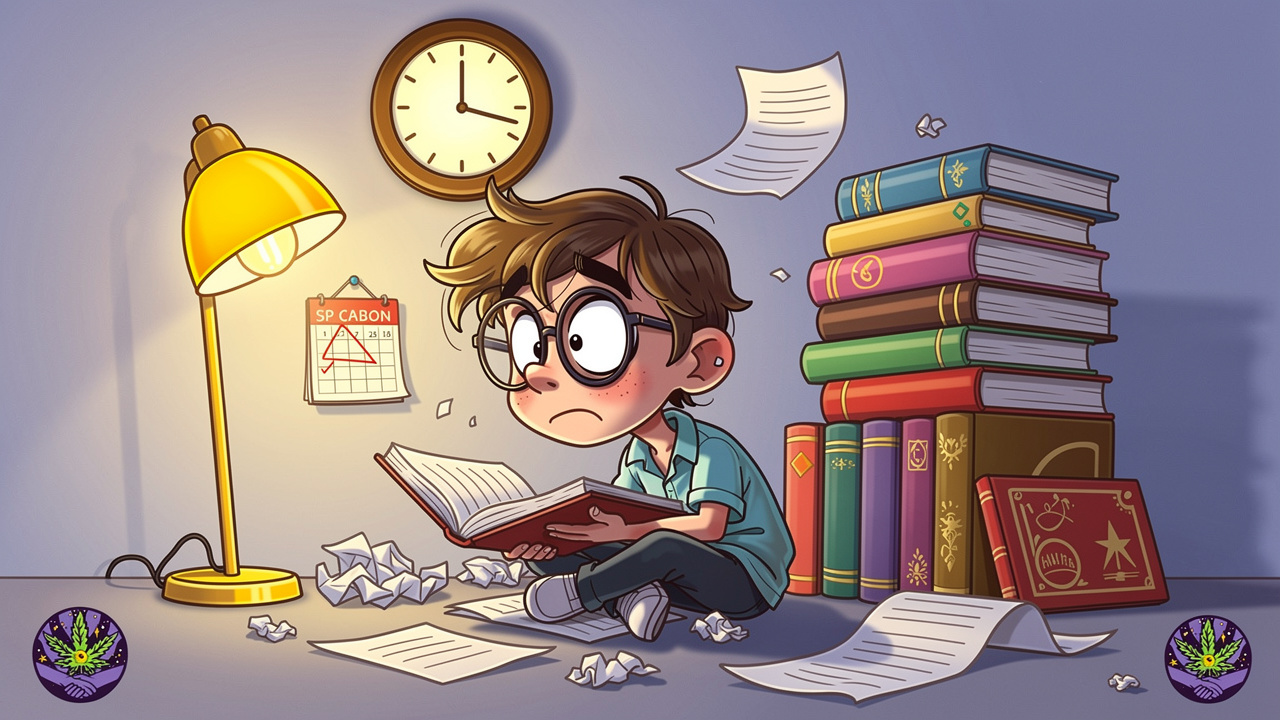
Dissertation season hits differently because it blends long timelines, high stakes, and a lot of solo work into one project. Unlike normal essays, a dissertation stretches across months, with few firm checkpoints and plenty of room for doubt to creep in. That mix can make stress feel constant rather than occasional.
Many UK students describe this time as a blur of late nights, shifting sleep patterns, and constant background worry. According to NHS, around one in four adults experiences a mental health problem each year, and sustained academic pressure can push those risks higher for students. When you add money worries, part-time jobs, and family expectations, it is easy to see why stress climbs.
Common dissertation stress symptoms show up in both mind and body. People often notice racing thoughts, a shorter temper, and feeling “on edge” even during breaks. Physically, tight shoulders, headaches, and a sore jaw from clenching are frequent companions to long laptop sessions. Over time, these signs chip away at focus and energy.
“Stress is what happens when something you care about is at stake.”
– Kelly McGonigal, health psychologist
Here is where it gets tricky.
Many students start to struggle with concentration and find it harder to move from reading to actual writing. That leads to longer days for the same amount of progress, which raises frustration and keeps the stress loop spinning.
Sleep often turns patchy, with late-night working, early waking, or both. Research summarised by Sleep Foundation reports that more than half of university students experience poor sleep quality, which reduces memory and mood the next day.
Social life can shrink as deadlines grow closer. That isolation removes normal outlets that would usually ease pressure, so worries feel louder and more intense than they might at other times of the year.
If stress starts to affect your appetite, sleep, or ability to function day to day, it is worth speaking to your GP or university support services as well as adjusting study habits.
At this point, cannabis and dissertation stress often end up linked. Some students look for a way to unwind at night, others hope cannabis will quiet anxious thoughts enough to sit down and write. Understanding what different products actually do is the next step.
How Cannabis Interacts With Stress – And Why The Type You Choose Matters
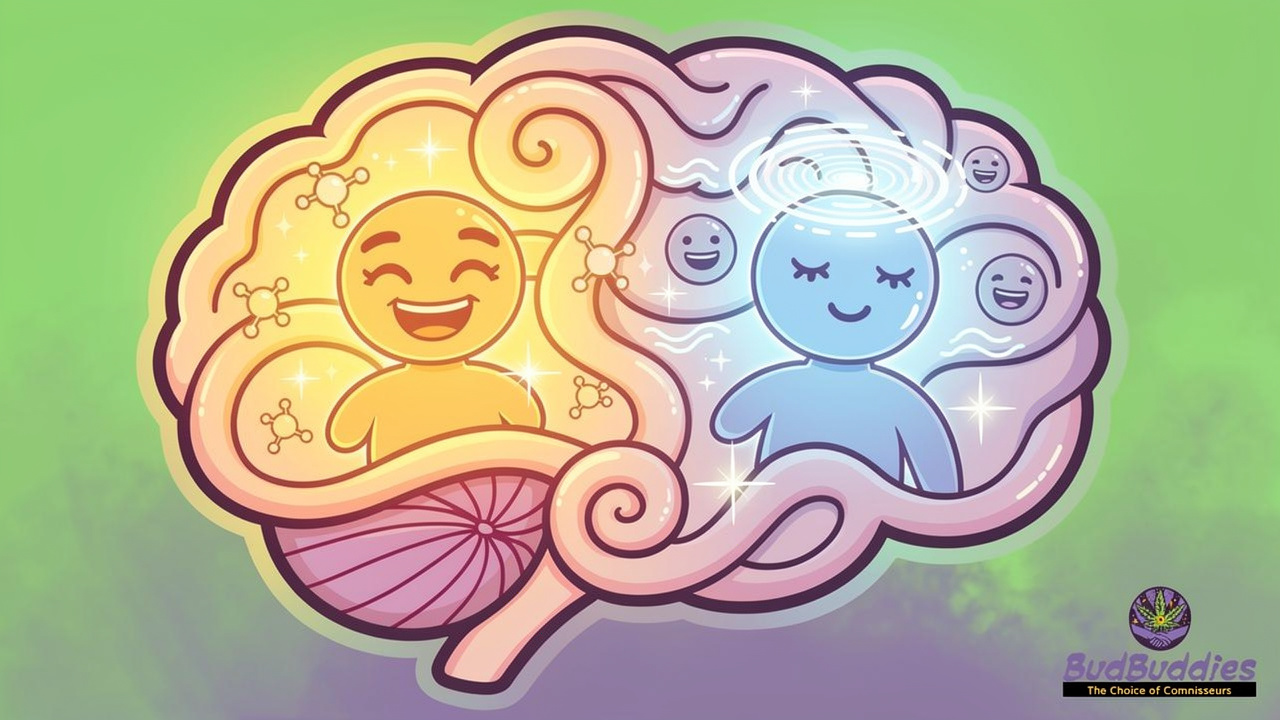
Cannabis interacts with stress through the body’s endocannabinoid system, a network that helps manage mood, sleep, and the stress response. THC and CBD work very differently inside that system, which is why the same plant can either calm you or leave you more anxious. For anyone balancing cannabis and dissertation stress, this difference matters a lot.
THC is the part of cannabis that produces a noticeable high. It binds strongly to CB1 receptors in the brain, which can bring warmth, relaxation, and a softer view of your worries at low doses. According to National Institute on Drug Abuse, THC can impair attention, memory, and decision making while the effects last, especially at higher doses. That is exactly what you rely on when writing, editing, and referencing.
CBD works in a gentler way. It does not cause a high and does not blunt thinking when used at normal doses. Research reviewed in Frontiers in Pharmacology suggests CBD has promising anti-anxiety effects, likely through its influence on serotonin receptors and stress circuits in the brain. Many people describe CBD as taking the edge off worry while leaving them clear enough to study or attend a supervision meeting.
So here is the key point. High-THC products during active study hours often make work slower, more scattered, or more forgetful. CBD-rich products, or THC in very small evening amounts, fit far better with a focused dissertation routine. BudBuddies leans into this by offering clear strength ranges and lab reports so you always know what you are taking.
Terpenes add another layer. These are the aromatic compounds that give strains their scent and much of their effect. Myrcene is associated with heavy relaxation and body softness, linalool with calm and a lavender-like softness, and beta-caryophyllene with grounded, steady mood. Modern research shows that cannabinoids and terpenes work together in what scientists call the entourage effect, which is why full-plant products can feel more rounded than isolated compounds.
If you live with an existing mental health condition or take medication, it is wise to discuss any change in cannabis use with a medical professional first, especially when stress is already high.
Indica, Sativa, Hybrid – Does It Still Matter?
Indica, Sativa, and Hybrid labels still give a loose hint of how flower might feel, but they are not the full story for stress. Indica-leaning strains are often linked with heavier body calm, while Sativa-leaning ones feel brighter and more head-focused. Hybrids sit somewhere between the two.
In practice, terpene profiles and cannabinoid ratios explain effects more reliably. A high-CBD, low-THC strain such as ACDC, with a CBD:THC balance around 20:1, feels very different from a strong THC Hybrid even if both share the same label. Cannatonic and Master Kush, for example, each carry calmer profiles thanks to CBD and soothing terpenes like myrcene and linalool.
BudBuddies makes this easier by listing full terpene data, potency, and flavour notes on strain pages. That way you can pick products for evening relaxation, daytime calm, or gentle focus rather than guessing from a simple Indica or Sativa tag.
Practical Tips For Using Cannabis Thoughtfully During Your Dissertation
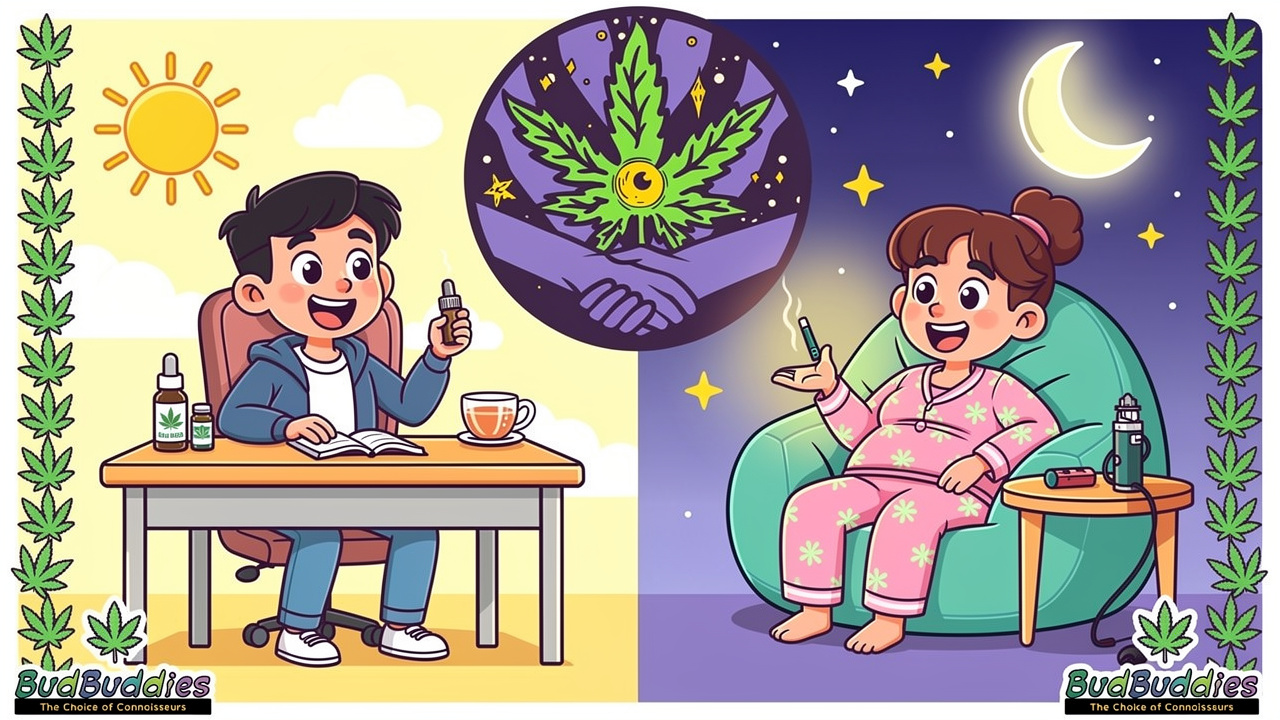
Practical tips for using cannabis during your dissertation help you protect focus while still getting some relief from pressure. The goal is to let cannabis support rest and recovery without quietly eating into your sharpest work hours. When you line up cannabis and dissertation stress in a planned way, you give yourself a better chance of steady progress.
A simple rule helps many students. Keep THC-heavy products for evenings and clear rest periods, and keep daytime for CBD or going without. That way, any slower reaction times, changed judgement, or heavy body feel land when work is already finished. For those who want support while they study, CBD oil or gummies from BudBuddies often suit better than a vape full of strong flower.
Another useful habit is the “start low, go slow” approach. Begin with a small amount of any new product and use the same dose for several sessions before increasing. A tiny handwritten note on strain, dose, timing, and how you felt the next morning can quickly show patterns. Over a couple of weeks, this helps you find a personal sweet spot instead of guessing each time.
It is also sensible to check your university drug policies and local laws so that any use you choose fits within the rules of your course and accommodation.
Now for some practical ideas you can use straight away.
Separate work and wind-down time clearly. Choose fixed study blocks, for example using the Pomodoro technique, and wait until your last work block finishes before THC use. This reduces the risk of “just one toke” turning into an unplanned night off from your methods chapter. It also keeps your brain fresh for referencing and editing.
Keep the basics in place even when deadlines loom. Light exercise, such as a 20-minute walk, reduces stress hormones and supports sleep, which helps more than an extra hour staring at the screen. Research shared by Sleep Foundation links poor sleep with weaker memory and mood, so protecting rest matters as much as picking the right strain.
Combine cannabis with other calming tools rather than relying on it alone. Short breathing exercises, a chat with a friend, or a set time to step away from your desk each evening all make a difference. When cannabis sits alongside these habits rather than replacing them, it is less likely to slide into something you feel you cannot work without.
“Almost everything will work again if you unplug it for a few minutes, including you.”
– Anne Lamott, writer
Handled this way, cannabis and dissertation stress can sit in the same life without pulling in opposite directions. The more honest you are with yourself about what is helping and what is quietly getting in the way, the more control you keep.
Which BudBuddies Products Work Best For Dissertation Stress?
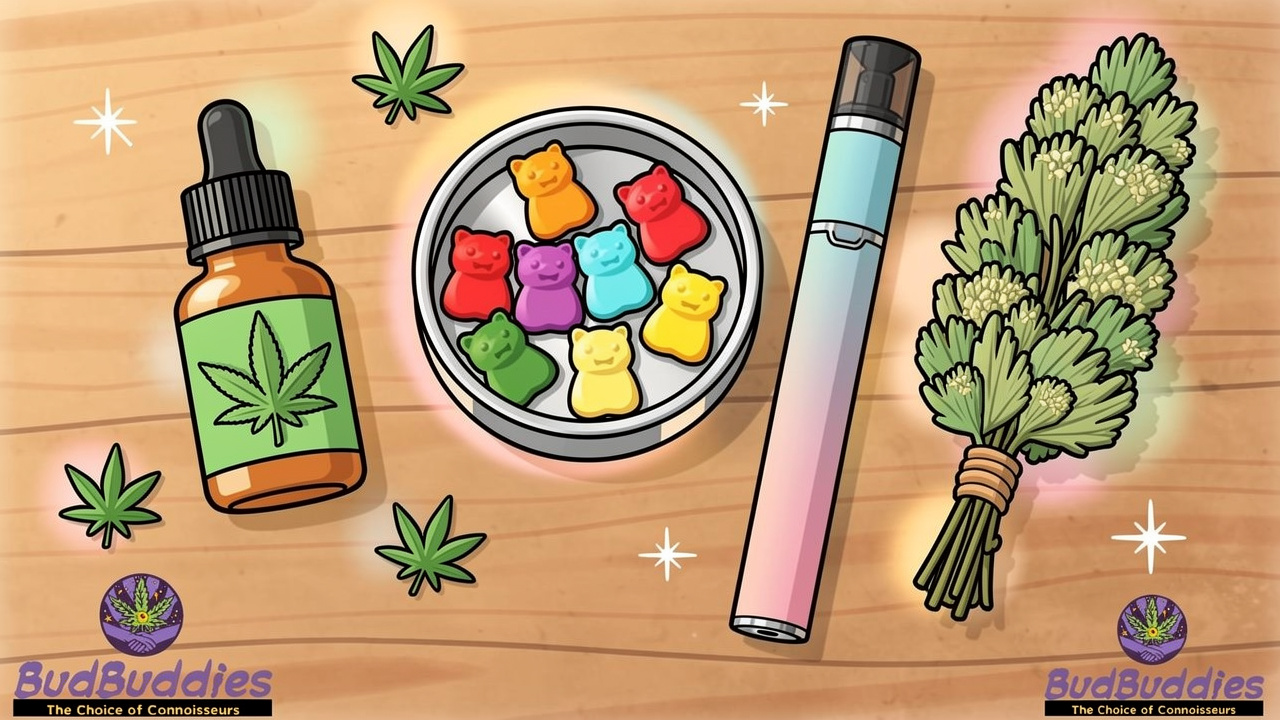
BudBuddies offers a range of products that fit neatly around dissertation life, from gentle daytime calm to deep evening relaxation. This section links common stress patterns with product types, so you can line up cannabis and dissertation stress in a thoughtful, student-friendly way. Everything on budbuddies.cc is lab tested, strain specific, and shipped in discreet packaging that looks like normal post.
Here is how the main formats stack up for this busy season.
CBD oils from BudBuddies suit adults who want steady calm without a high. A small dose under the tongue in the morning or evening can support a more even mood and smoother sleep. Because strength and milligrams per drop are clearly shown, it is simple to adjust up or down in tiny steps. Many students use oil as a base layer and add other formats only when pressure peaks.
CBD edibles, such as gummies and capsules, work well for background tension across a long study day. They take longer to start, often around an hour, but then cover several hours with a gentle, stable effect. BudBuddies labels each gummy with exact content, so beginners can start with low amounts and build only if needed. For people who dislike the taste of oil, this format feels simple and discreet.
THC vapes and flowers fit better for experienced users who already know how THC affects their focus and mood. A few puffs of an Indica or Hybrid vape from BudBuddies in the evening can close the book on a stressful day and help the body drop tension before bed. Because inhaled formats act quickly, they give clear feedback on dose, which is handy when you want to keep nights restful but still wake up clear.
High-CBD, low-THC strains such as ACDC and Cannatonic bridge the gap between CBD-only products and classic THC flower. These options, stocked by BudBuddies with full terpene profiles and Certificates of Analysis, suit anxious newcomers who still like the ritual of grinding and rolling. Terpenes like myrcene, linalool, and beta-caryophyllene support a calmer effect curve that feels kinder during stressful months.
Beyond products, BudBuddies also thinks about the practical side of student life. Orders placed before the 3 pm cut-off go out the same day with Royal Mail tracking, and orders over £50 qualify for free next-day delivery. Plain outer packaging with vacuum-sealed inner bags protects your privacy in shared halls or family homes. On top of that, student budgets stretch further with first-time buyer discounts, cashback points, bundle deals on 14 g and 28 g options, and the BudCash referral programme for regulars.
The Bottom Line
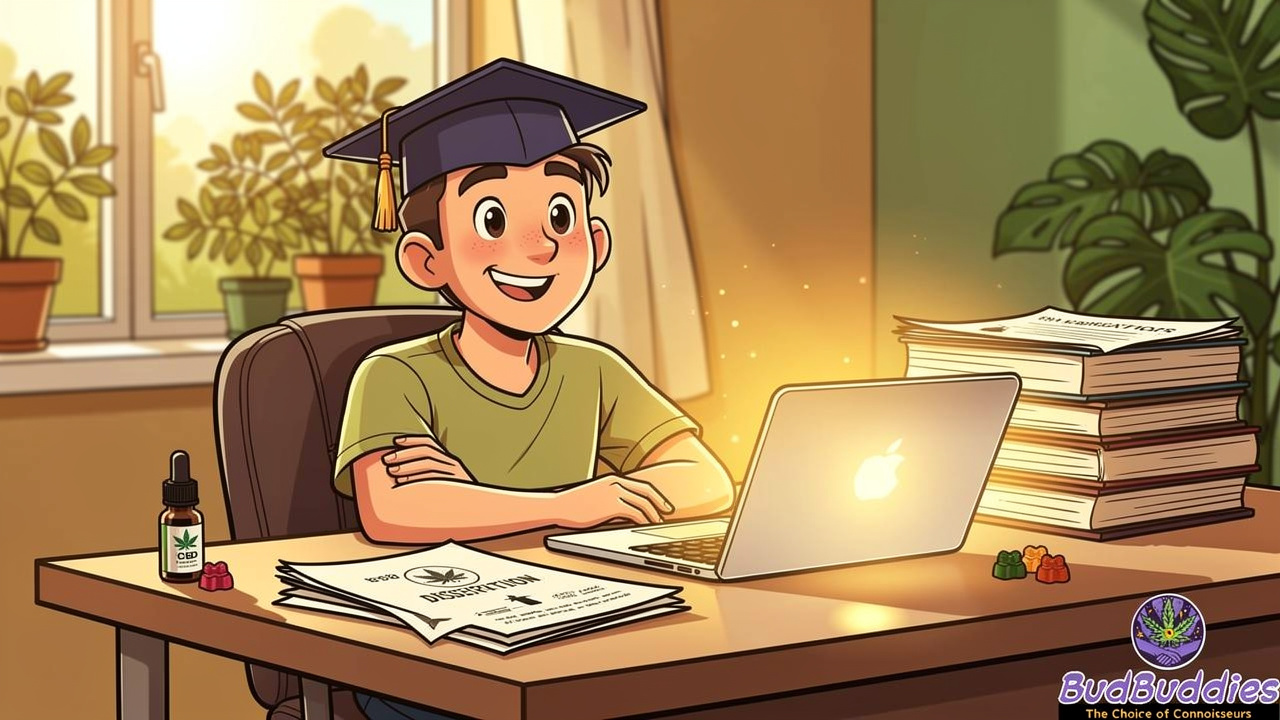
The bottom line is simple. Cannabis can support stress management during dissertation season when you treat it as a careful tool instead of a quick escape. The right product, at the right time, in the right amount, can soften anxiety and help you rest without taking the steering wheel away from your studies.
Handled without a plan, cannabis and dissertation stress can feed each other in unhelpful ways, especially if strong THC creeps into daytime work. Keeping THC use to clear rest periods, leaning on CBD when you need to stay sharp, and backing everything up with sleep, food, movement, and support is a far safer route. If you notice cannabis use climbing or replacing other coping strategies, it is worth stepping back and talking to a health professional.
If you want to explore this area with clear guidance, BudBuddies offers strain-specific flowers, CBD oils, edibles, and vapes with honest lab data and straight-talking product pages. Discreet delivery, student-friendly value, and a support team ready to answer questions at budbuddies.cc help you make calm, confident choices while you focus on finishing your dissertation.
Frequently Asked Questions
Question: Can CBD help with dissertation anxiety without affecting my concentration?
CBD can ease dissertation anxiety for many people without blurring concentration. It is non-intoxicating, and research from Frontiers in Pharmacology links CBD with reduced anxiety in several studies. A low-dose CBD oil or gummy from BudBuddies is a sensible starting point, adjusted slowly over a few days using the start low, go slow idea described above.
Question: Is it a bad idea to use cannabis while actually writing my dissertation?
Using THC-heavy cannabis while writing is usually a bad idea because it weakens short-term memory and focus. That makes it harder to hold arguments in your head and spot errors. Keep THC for evening wind-down, and use CBD products if you want stress support during daytime work.
Question: What is the “start low, go slow” approach and why does it matter?
Start low, go slow means beginning with a very small dose and increasing only in tiny steps over several sessions. This approach reduces the chance of feeling overwhelmed, anxious, or too sedated, especially with strong THC products. The BudBuddies support team can suggest gentle starting points for each format.
Question: How quickly do different cannabis product formats take effect?
Onset time depends on format:
CBD oil held under the tongue usually starts in 15 to 45 minutes.
Edibles and gummies often take 60 to 90 minutes.
Vapes tend to feel near-immediate.
Match this to your need, from sudden spikes of stress to all-day background tension, and check BudBuddies product pages for extra format guidance.
Question: How does BudBuddies keep my order private if I live in shared accommodation?
BudBuddies ships every order in plain outer packaging with no logos or product names visible. Inside, products sit in vacuum-sealed, odour-proof bags so nothing smells through. Real-time Royal Mail tracking lets you know exactly when a parcel will arrive, which helps when you share a letterbox with others.

