


Weed and GERD: How Cannabis Affects Acid Reflux
Heartburn creeping in halfway through a smoke session leaves plenty of cannabis fans wondering what on earth is going on. The question of weed and GERD (gastro-oesophageal reflux disease, better known as acid reflux) comes up more than you’d think, and for good reason, because cannabis can genuinely go either way. Some people find it settles a fussy stomach, while others find it sets off a burning chest and sour taste within the hour. This article breaks down how cannabis interacts with the digestive system, why THC and CBD behave so differently in the gut, which consumption methods carry more risk, and how to use cannabis more carefully if reflux is a worry for you.
BudBuddies, a UK supplier known for clearly labelled, lab-tested cannabis products, comes up a few times along the way as a practical option for anyone wanting to experiment with a bit more confidence. By the end, you should have a much clearer picture of where you personally fit into the weed and GERD conversation.
Key Takeaways
THC can relax the lower oesophageal sphincter, the valve muscle that normally keeps stomach acid where it belongs, which may trigger or worsen reflux for some people.
CBD is generally seen as the gentler cannabinoid for digestive comfort, since it doesn’t appear to relax that same muscle.
How you consume cannabis matters just as much as what you consume, with smoking carrying more risk than tinctures or low-dose edibles.
Starting low and slow with lab-tested products, like the ranges at BudBuddies, reduces the chance of an unpleasant surprise.
What Is GERD and How Does Cannabis Come Into the Picture?
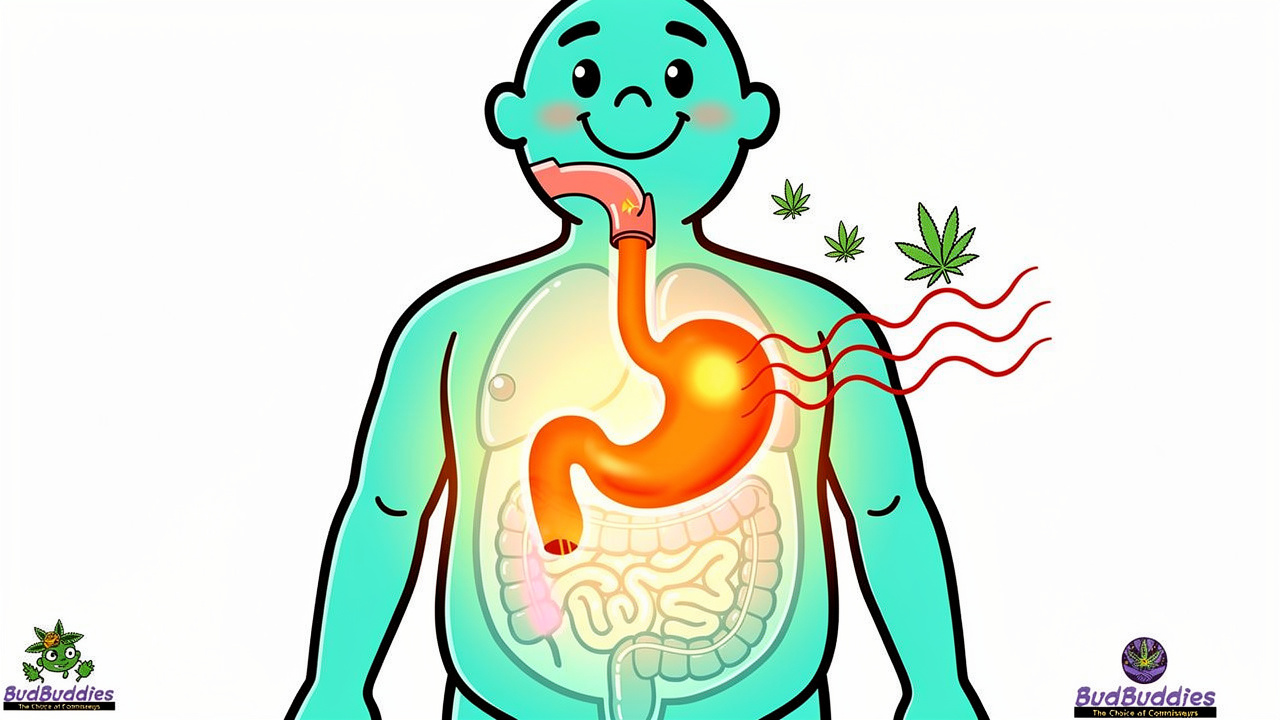
GERD is a chronic condition where stomach acid or bile flows backwards into the food pipe, causing heartburn, regurgitation, chest discomfort, and sometimes a chronic cough or a sour taste in the mouth. It happens when the lower oesophageal sphincter, a ring of muscle that acts as a one-way valve between the stomach and the oesophagus, weakens or relaxes when it shouldn’t. For many adults, it’s managed daily through diet, lifestyle changes, and medication such as proton pump inhibitors.
Cannabis consumers ask about weed and GERD because THC interacts with cannabinoid receptors found throughout the gut, a mechanism explored in a systematic review and meta-analysis on inhalational exposure and gastroesophageal disease risk, including in the very muscle that keeps acid contained. This means the plant that some people use to settle their stomach could, in theory, be nudging that same valve open. Understanding this overlap is the starting point for using cannabis sensibly if reflux is already part of your life.
Does Weed Help or Worsen Acid Reflux?

The honest answer is that weed and GERD have a genuinely mixed relationship, and both outcomes are backed by real physiology rather than pure guesswork. THC binds to CB1 receptors that sit in the smooth muscle of the gut, and this binding can cause the lower oesophageal sphincter to relax more often or for longer than it should, which is the exact mechanism that lets stomach acid travel upward. THC also slows gastric emptying, meaning food and acid sit in the stomach for longer, giving reflux more opportunity to occur, particularly if you then lie down or bend over. On top of that, THC is well known for sparking appetite, and a big meal eaten under the influence of the munchies puts extra pressure on that same valve.
Yet plenty of people report the opposite experience, finding that cannabis actually calms their symptoms rather than triggering them. This isn’t a contradiction so much as a reflection of cannabis doing several things at once, some helpful and some less so, and the balance tips differently for each person depending on dose, tolerance, and what else is going on with their digestion. Stress is a well-documented reflux trigger, and if cannabis helps someone unwind after a difficult day, that relaxation may outweigh any direct effect on the sphincter. In short, there’s no single verdict on weed and GERD that applies to everyone, which is exactly why the details below matter so much.
How THC Affects the Lower Oesophageal Sphincter
CB1 receptors sit in high numbers throughout the gut, including the muscle wall of the oesophagus, and THC binding to these receptors is linked to more frequent relaxation of the valve that should be keeping acid down. Layer on top of that the appetite-boosting effect of THC, and overeating becomes a second, entirely separate route to the same uncomfortable outcome.
Why Some People Report Relief
Cannabis has genuine anti-nausea and pain-relieving properties, which can make the burning discomfort of reflux feel more bearable even if the reflux itself hasn’t gone away. Its anti-inflammatory qualities and its knack for easing stress may also lower the flare-ups that come from tension and anxiety, giving some users a real, if indirect, sense of relief.
THC vs CBD: Which Is Gentler on Your Gut?

THC and CBD behave differently once they reach the gut, and that difference matters enormously for anyone weighing up weed and GERD. THC is the compound most closely tied to sphincter relaxation and appetite stimulation, a distinction covered in depth in a clinical overview of cannabis for GERD symptoms, while CBD does not appear to carry the same risk, making it a more cautious starting point for people prone to reflux. CBD’s calming and anti-inflammatory properties may even offer some digestive comfort on their own, without the same trade-off.
This is where product choice starts to matter in practice rather than just in theory. BudBuddies stocks CBD-dominant oils, capsules, and flower alongside balanced THC to CBD formulations, giving reflux-conscious shoppers a genuine choice between a fully non-intoxicating option and a moderate one where CBD takes some of the edge off THC’s effects. For anyone new to this, working from the gentler end of that range first is generally the sensible move.
Which Consumption Method Is Best for GERD Sufferers?
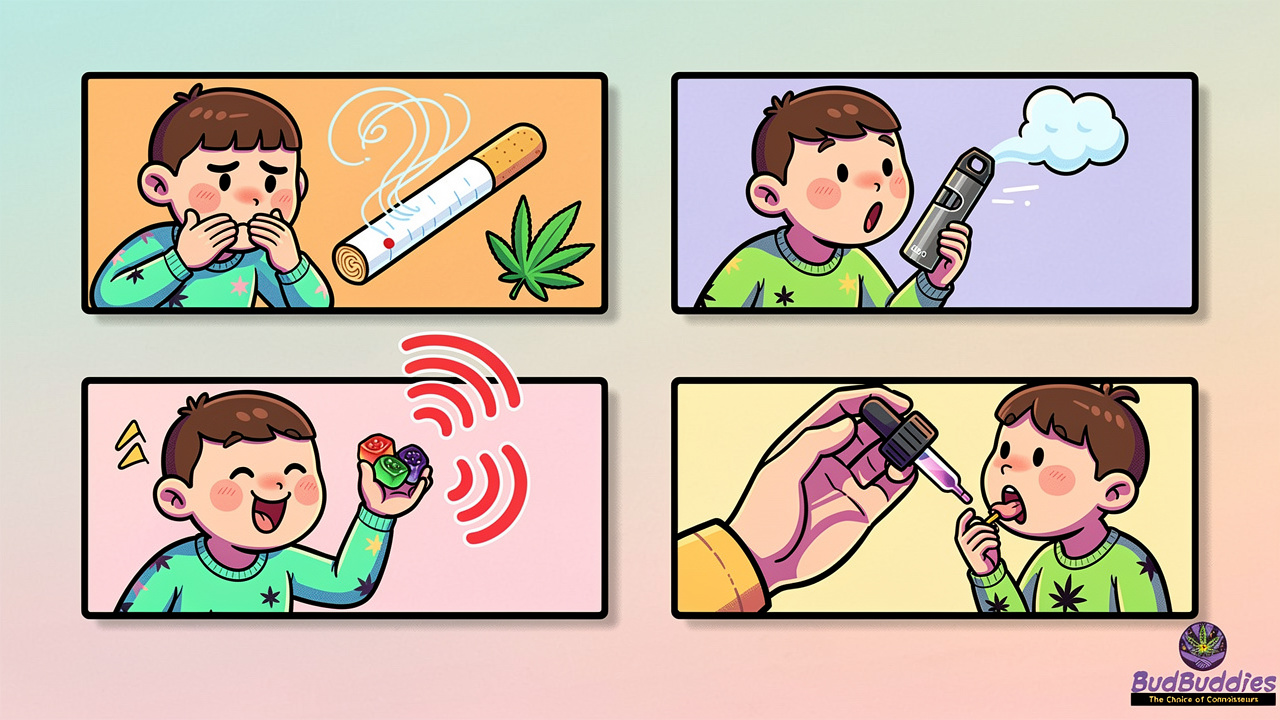
Method of consumption changes the risk picture almost as much as the cannabinoid ratio itself does, so it deserves just as much attention when you’re thinking through weed and GERD.
Smoking dried flower brings coughing into the mix, and coughing raises pressure in the abdomen in a way that can force acid straight up into the oesophagus, on top of the throat irritation that smoke itself can cause.
Vaping avoids some of the combustion by-products of smoking, but it still delivers THC quickly and still involves inhaling something warm, so it doesn’t remove the underlying digestive concern.
Edibles take a different route entirely, since THC is processed through the gut and liver before it reaches the bloodstream, which delays the effects but can also make them stronger and longer-lasting, and the sugar or fat in some edibles can trigger reflux quite separately from the cannabis itself.
Sublingual tinctures sit in a useful middle ground, absorbed largely through the mouth rather than the gut, offering faster and more predictable dosing without the coughing risk of smoke.
For anyone managing reflux, this format-by-format thinking is often more useful than fixating on strain names alone.
Smoking, Vaping and Edibles Compared
Smoking tends to bring the fastest onset alongside the highest risk of coughing and throat irritation, making it the format most likely to aggravate reflux. Vaping is a touch gentler on the throat but still involves inhalation and rapid THC uptake, while edibles delay the effects for an hour or more and carry their own risk through fat, sugar, and the temptation to overconsume before the first dose kicks in.
Why Tinctures and Low-Dose Options Suit Sensitive Stomachs
Tinctures taken under the tongue offer more predictable dosing than edibles and skip the combustion risk of smoking entirely, which suits anyone trying to keep their reflux under control. The platform builds its ranges around a start low, go slow philosophy, with doses as small as 1 to 2.5mg THC available for those who want to test the water before going any further.
How to Use Cannabis More Cautiously If You Have GERD

If reflux is already part of your life, a few small habits go a long way towards keeping cannabis from making things worse:
Avoid using cannabis right before lying down, since gravity is doing you a favour by keeping acid where it belongs, and lying flat removes that advantage almost immediately.
Keep an eye on what you eat afterwards too, since THC-driven cravings often point towards fatty, spicy, or acidic food, which researchers have identified as a lifestyle factor linked to GERD complications, all classic reflux triggers regardless of the cannabis itself.
Time your consumption between meals rather than right before or after a large one.
Keep a simple note of what you used and how you felt afterwards, to help you spot your own personal patterns fairly quickly.
Product quality matters just as much as the habits around it, since inconsistent potency or unclear labelling makes it far harder to work out what actually caused a flare-up. Every product on BudBuddies carries a Certificate of Analysis alongside clear cannabinoid percentages and dosing guidance, which makes it much easier to dose carefully and track how your body responds over time.
Anyone taking regular reflux medication should have a quick word with a pharmacist or doctor before combining it with cannabis, simply to rule out any unwanted interaction.
In Summary
The link between weed and GERD isn’t a simple yes or no, and the honest picture is that THC can relax the very muscle that’s supposed to keep acid down, while CBD tends to offer a gentler, more predictable path for anyone prone to reflux. Consumption method adds another layer entirely, with smoking sitting at the riskier end and tinctures or carefully dosed edibles offering more control.
The safest approach is the same one that works for cannabis in general: start with a low dose, choose a format that suits your digestion, and pay attention to how your own body reacts rather than following someone else’s experience. BudBuddies’ lab-tested range, clear labelling, and low-dose options give reflux-conscious shoppers a sensible, well-organised place to begin that process with a bit more confidence.
Frequently Asked Questions
These are some of the most common questions people searching for answers on weed and GERD tend to ask, covering CBD use, timing, consumption method, and medication interactions in plain terms.
Can you use CBD oil for acid reflux without triggering symptoms?
CBD doesn’t appear to relax the lower oesophageal sphincter the way THC does, which makes it a gentler option for reflux-prone users. Its calming and anti-inflammatory properties may help too, though it isn’t a guaranteed fix. Starting with a low dose of a CBD oil or capsule, such as those from the brand’s own range, is a sensible first step.
Does weed cause heartburn the next day?
It’s more likely with edibles, since they’re processed slowly through the gut and liver, and the effects can linger far longer than smoking or vaping. Food choices and portion size after use also play a big part, so a heavy, spicy meal is often more to blame than the cannabis itself.
Is it better to smoke or eat cannabis if you have GERD?
Neither is risk-free, but they cause problems in different ways. Smoking brings coughing and throat irritation, both of which can push acid upward, while edibles delay onset and often contain fat or sugar that can independently trigger reflux, separate from the cannabinoids involved.
Can cannabis interact with GERD medication like PPIs?
It’s possible, and interactions vary from person to person depending on dose, frequency, and overall health. Anyone taking proton pump inhibitors or similar medication should check with a doctor or pharmacist before combining them with cannabis, rather than assuming it’s automatically fine.
How much THC is too much for someone with reflux?
There’s no universal cut-off point, since sensitivity varies hugely from one person to the next. Starting around 2.5 to 5mg THC and adjusting slowly based on how you feel is a far safer approach than guessing at a higher dose from the outset.
What strains or products should I avoid if I have acid reflux?
High-THC concentrates and other fast-acting, high-strength formats tend to carry the most risk for reflux-prone users. CBD-dominant flower and balanced THC to CBD formulations, like those found on BudBuddies, offer a gentler starting point while you work out what suits your own digestion best.

