


What Is Kief? Potency, Uses, Storage and Safety
Introduction
If you have ever opened your grinder and seen a layer of golden dust, you have already met kief. Many people search what is kief the first time they spot that powder and realise it feels stronger than normal crumbs of flower.
That confusion can make things awkward. You know it looks valuable, but you might not know how strong it is, how to use it, or how to store it without wasting it.
Kief is the concentrated collection of resin glands from cannabis flower, rich in cannabinoids and terpenes, and far stronger than the bud it falls from. In this guide we explain exactly what is kief, how it forms, how potent it is, how to collect it, different ways to use it, and how to keep it fresh, with clear pointers to BudBuddies flower at budbuddies.cc whenever it genuinely helps.
So if you are curious about that glittering layer in your grinder, keep reading and turn it into something special.
What Is Kief and Where Does It Come From?
Kief is the fine, powdery layer of trichomes that falls from cannabis flower and it forms directly on the buds. When people ask what is kief, the short answer is that it is almost pure resin from the plant, separated from the green material. Those tiny crystals hold most of the THC, CBD and aromatic terpenes that shape flavour and effects.
On a well grown BudBuddies bud you will see a frosty, almost sugary coating that glitters under light. Those sparkling points are trichomes, which the plant produces to protect itself from insects, drying winds and harsh sunlight. When those trichomes break off and collect together, they become the sandy, sticky powder known as kief.
Because kief is mainly trichome heads with very little plant fibre, it feels soft and powdery between your fingers and can look off white, golden or light brown. Lighter, creamier colour usually points to purer kief with fewer bits of leaf. According to Leafly, trichome rich flower also tends to test higher for THC, which explains why kief feels so strong — a finding supported by electrostatic separator of cannabis trichome research exploring innovative separation approaches.
The Three Types of Trichomes on Cannabis
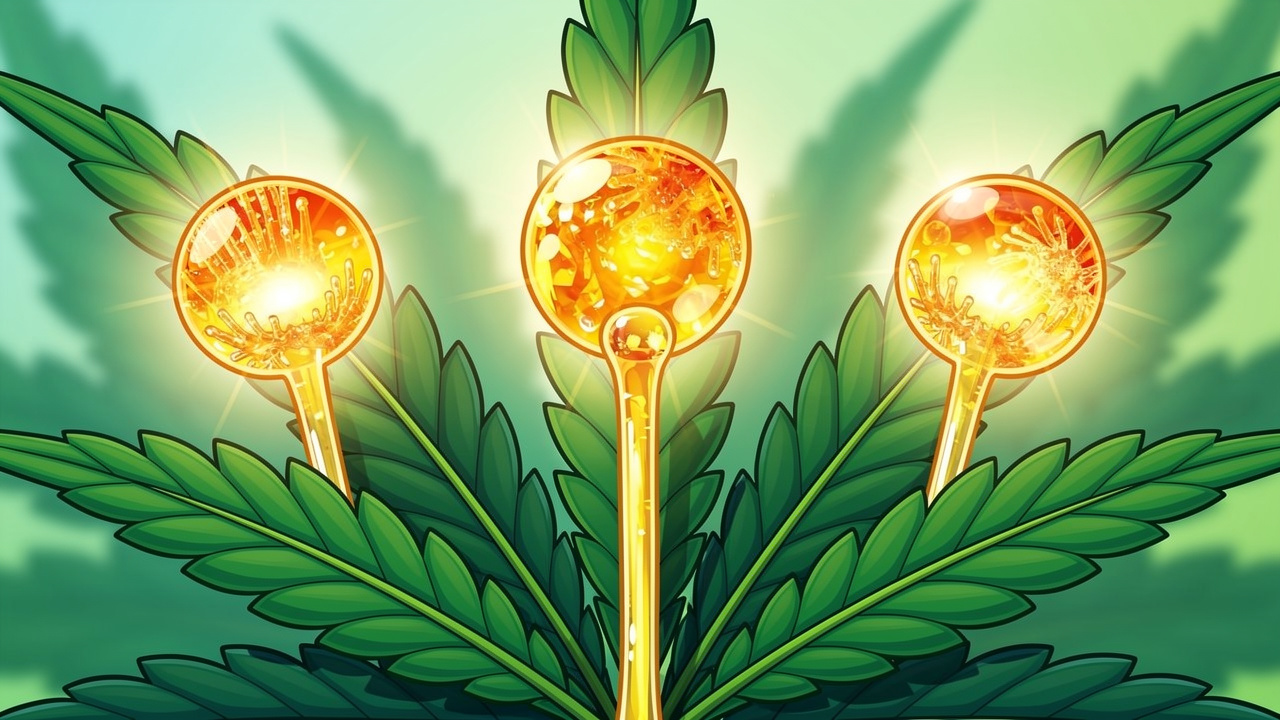
To really understand what is kief, it helps to know the three main trichome types that cover cannabis.
Bulbous trichomes are the tiniest dots on the plant surface and you normally need magnification to see them. They sit across stems, leaves and buds, but they hold only a small amount of resin each, so they matter less for kief because they are so small and thinly spread.
Capitate sessile trichomes are a step up in size, with a small stalk and a rounded head. They appear more often on sugar leaves and the outer parts of buds. They do contribute to kief, but they are still not the main source of rich resin.
Capitate stalked trichomes are the classic mushroom shaped structures you notice on close up photos of BudBuddies flower. They have a clear stalk with a fat, glassy head that is full of cannabinoids and terpenes. These are the trichomes that matter most for kief collectors.
How Potent Is Kief Compared to Regular Cannabis Flower?
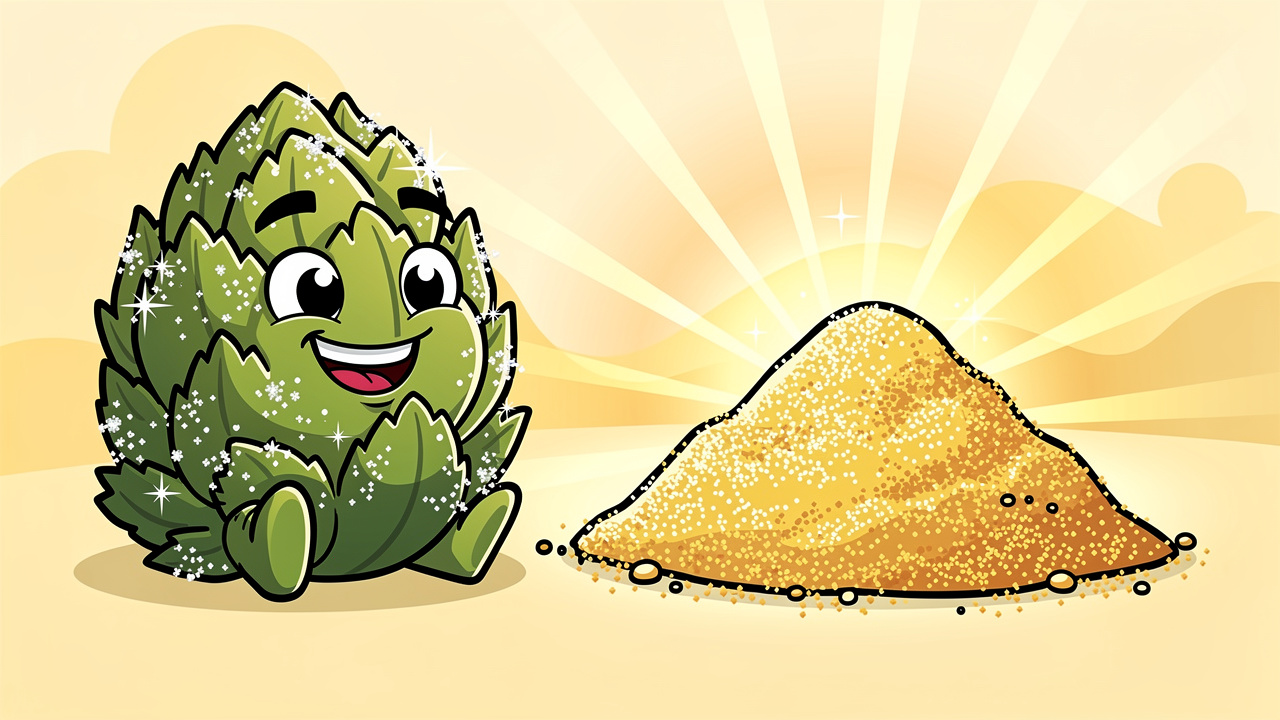
Kief is much stronger than regular cannabis flower because it is almost pure trichomes rather than leafy plant material. Most good flower sits around 15 to 25 per cent THC, while kief often reaches 40 to 60 per cent or more. That means a pinch of kief can feel like a whole bowl of bud.
According to Healthline, many solventless concentrates fall in the 40 to 70 per cent THC range, and kief comfortably sits in that bracket. The full terpene profile from the original strain comes along for the ride, so the character of the high still mirrors the bud it came from. An indica heavy strain will still feel slow and heavy in kief form, while a citrusy sativa will stay bright and chatty.
Public health agencies such as Health Canada often repeat a simple rule for stronger cannabis products: “Start low and go slow.”
Several factors shape how strong any batch of kief feels:
Source strain quality matters because higher THC genetics simply put more cannabinoids into each trichome. That is why BudBuddies AAAA plus flower at budbuddies.cc is such a good base for kief, as the dense frost layer already hints at strength.
Growing conditions influence trichome coverage, and research in the Journal of Cannabis Research notes that light, nutrition and stress levels all change resin output. Healthier plants with good lighting usually show a thicker crystal coat.
Separation purity affects both taste and power, since leafy fragments dilute the trichome content. Cleaner sifting removes more green, so the percentage of cannabinoids goes up and harshness drops.
Freshness plays a role because THC slowly breaks down when exposed to heat and air, forming more sedating compounds like CBN. Studies summarised on PubChem describe this gradual change, which is why fresh kief often feels brighter and stronger than an old jar forgotten in a warm drawer.
How Is Kief Collected?
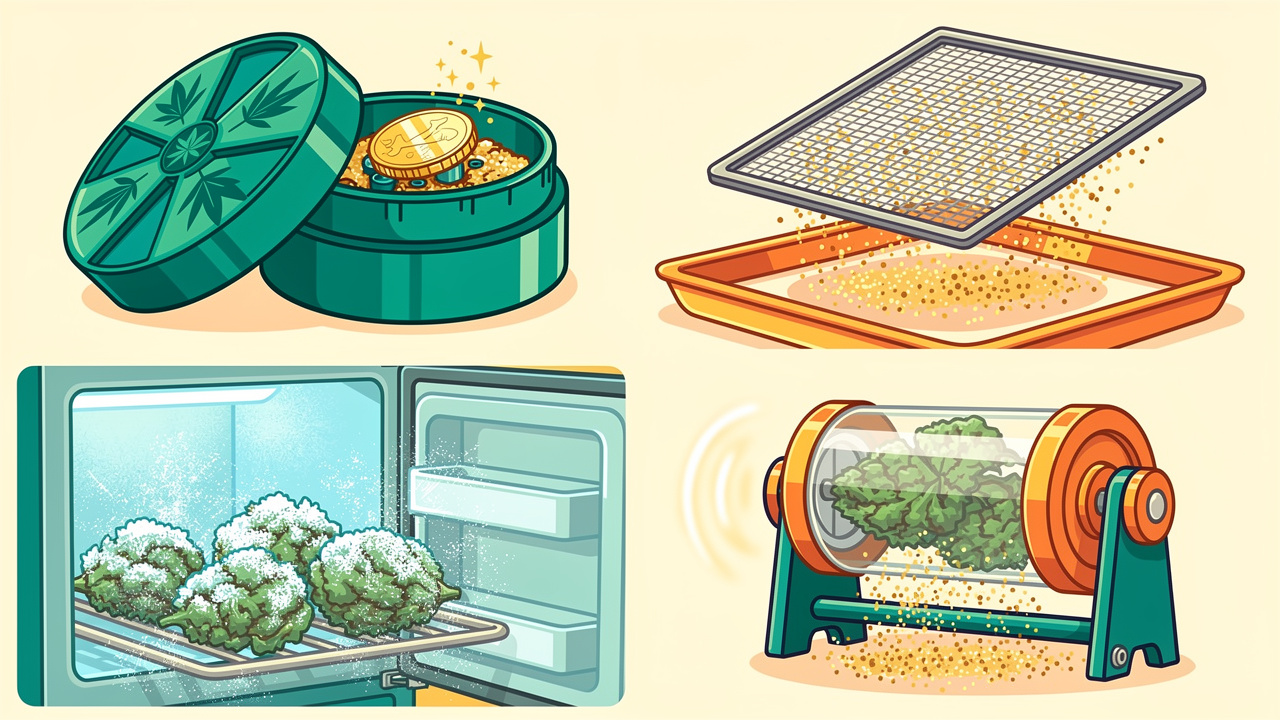
Kief collection happens whenever trichomes separate from cannabis flowers and you can guide this process with a few simple tools. The easiest method is already built into most four piece grinders, where a fine screen allows trichomes to fall into a lower chamber. Over time, regular grinding of BudBuddies flower naturally builds a layer of kief without extra effort.
Inside that grinder, the screen holds back bigger bits of leaf while letting the tiny resin heads drop through. Many UK smokers add a clean coin to the middle section so it gently taps the ground flower as they twist. This simple trick, which you will often see mentioned in the r/BudBuddiesUK community, knocks extra trichomes loose and speeds up collection.
For larger amounts of kief, people turn to more deliberate methods, and advanced processing techniques such as combined extraction and spray-freeze-drying illustrate how far cannabis separation science has evolved beyond basic sifting.
Dry sifting uses flat screens where you gently move dried buds or trim across a mesh surface. The rubbing motion frees trichomes so they fall through, and running material across finer screens in stages can give very clean, pale kief. This approach suits people who buy ounce specials or trim packs from BudBuddies and want to make the most of every gram.
Cold temperature methods work with the fact that trichomes snap off more easily when very cold. Some people briefly chill buds in a freezer before sifting, or shake material with ice in special bags. According to NIDA, colder trichomes break with less pressure, which can improve yield.
Mechanical drum tumblers scale this idea up for commercial producers by spinning cannabis in a rotating barrel lined with mesh. The gentle tumbling frees vast numbers of trichomes that drop into a collection tray, ready for further refinement.
Across all these methods, the cleanest kief usually looks sandy, light and slightly sticky, with very few green flecks.
How to Use Kief Five Practical Methods
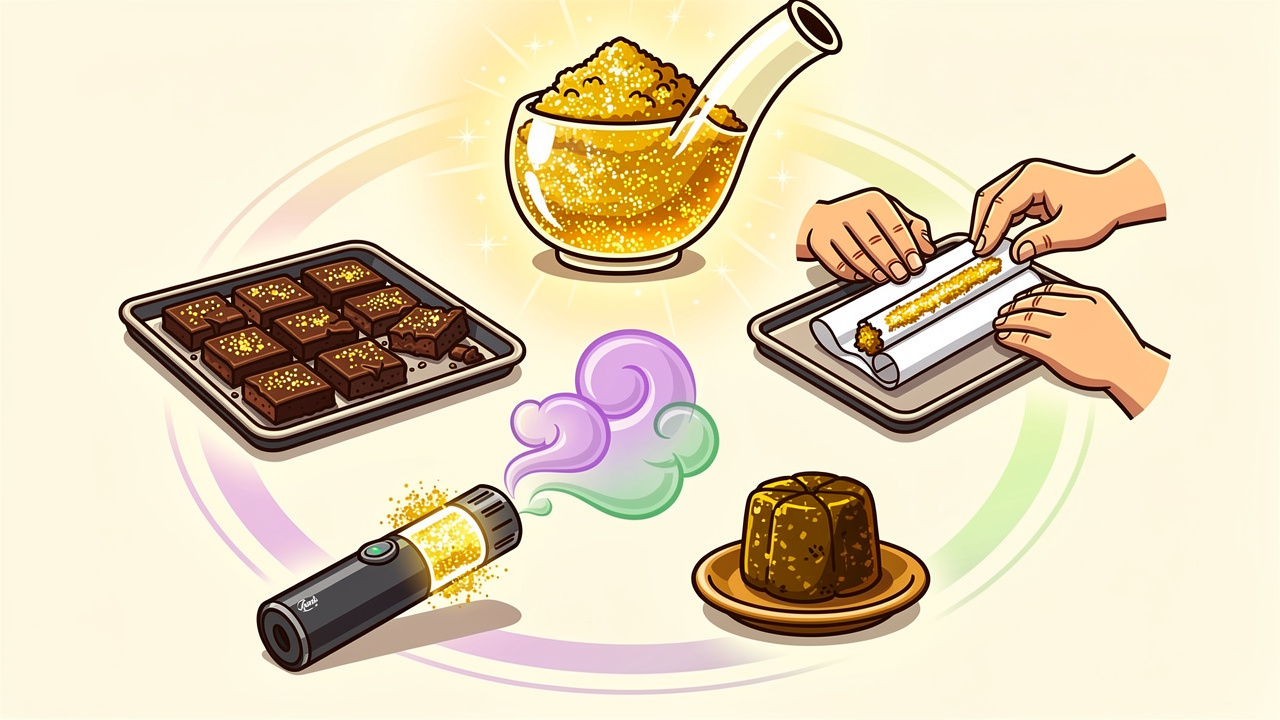
Using kief can take several different forms and the five most practical methods cover smoking, vaping and edibles. Each one has its own feel, but they all share one rule: start small, as the step up from flower to kief catches many people off guard.
At BudBuddies we always lean on a start low, go slow mindset, and that applies even more strongly once concentrates appear. The good news is that you already know a lot about how your kief will behave if you began with lab tested, strain specific BudBuddies flower, because the cannabinoid and terpene profile stays the same, only the strength changes.
Here are five ways to put kief to work:
Crowning a bowl with kief kept for special moments adds an extra layer of strength and flavour. You pack your pipe or bong with ground flower, then sprinkle a light dusting of kief on top. The top layer glows and melts into the bud as you burn it, which many people feel turns an ordinary bowl into something richer.
Adding kief to a joint or spliff keeps the smoke familiar but much more intense. Some people mix a pinch through their ground BudBuddies flower so every pull feels slightly stronger. Others create a stripe of kief down the middle before rolling, which can make the centre of the joint feel noticeably heavier.
Pressing kief into hash gives a cleaner, easier to handle block that stores well. With steady pressure and gentle warmth, the trichome heads burst and fuse into a solid piece that you can crumble into a pipe or vape. Home pollen presses make this process tidy, and many fans enjoy the smoother, deeper flavour that comes with pressed resin.
Vapourising kief in a dry herb device works well when you sprinkle it over a layer of ground flower. Pure kief on its own can melt into screens and clog them, so that thin flower base helps hold everything in place. Concentrate style vapourisers that handle loose material are another choice, and many people enjoy the clean taste that comes without any smoke at all.
Cooking with kief in butter or oil creates strong, long lasting edibles with much less plant taste than flower infusions. You first warm the kief gently to activate the THC, then stir it through melted butter or your preferred fat. Because kief is already concentrated, small amounts go a long way, and clear BudBuddies lab reports make it easier to estimate how strong your homemade brownies or gummies might feel.
Across all these methods:
Give each dose plenty of time to settle before adding more.
Be extra cautious with edibles, as their effects can take an hour or more to appear and often last longer than smoking or vaping.
Kief Vs. Other Cannabis Concentrates How Does It Compare?
Kief sits in a handy middle ground between simple flower and more intense cannabis concentrates such as rosin or butane based extracts. When people type what is kief and compare it with other formats, they often want to know whether it is mild, mid range or extreme. In truth it feels like the natural next step up from strong bud.
Here is a quick comparison for context, based on ranges often quoted by sources like Leafly and Healthline.
| Product | Typical THC Range | Production Method | Texture or Form |
|---|---|---|---|
| Dried Flower | 15 to 25 per cent | Grow, dry and cure | Firm buds |
| Kief | 40 to 60 per cent | Mechanical sifting | Fine powder |
| Pressed Hash | 40 to 60 per cent | Pressed kief or water sieving | Solid, pliable pieces |
| Bubble Hash | 50 to 70 per cent | Ice water separation | Grainy to sticky blobs |
| Rosin | 60 to 80 per cent | Heat and pressure | Sappy or waxy sheets |
| BHO style extracts | 70 to 90 per cent | Solvent based extraction | Shatter, wax or oil |
The big advantage of kief is simplicity. No solvents, no heavy equipment, just mechanical separation of the same trichomes you already see on BudBuddies AAAA plus buds — a process grounded in the same principles covered in electrostatic separator of cannabis trichome research published in the Journal of Cannabis Research. That also means you keep a broad spectrum of cannabinoids and terpenes rather than a narrow slice.
Quality still starts with the flower. Rich, frosty strains from budbuddies.cc give denser, more fragrant kief than thin, underwhelming buds. If you treat BudBuddies as your curated base for flower and concentrates, your grinder naturally becomes a steady source of high grade kief as you work through each pouch.
The Right Way to Store Kief and Keep It Fresh
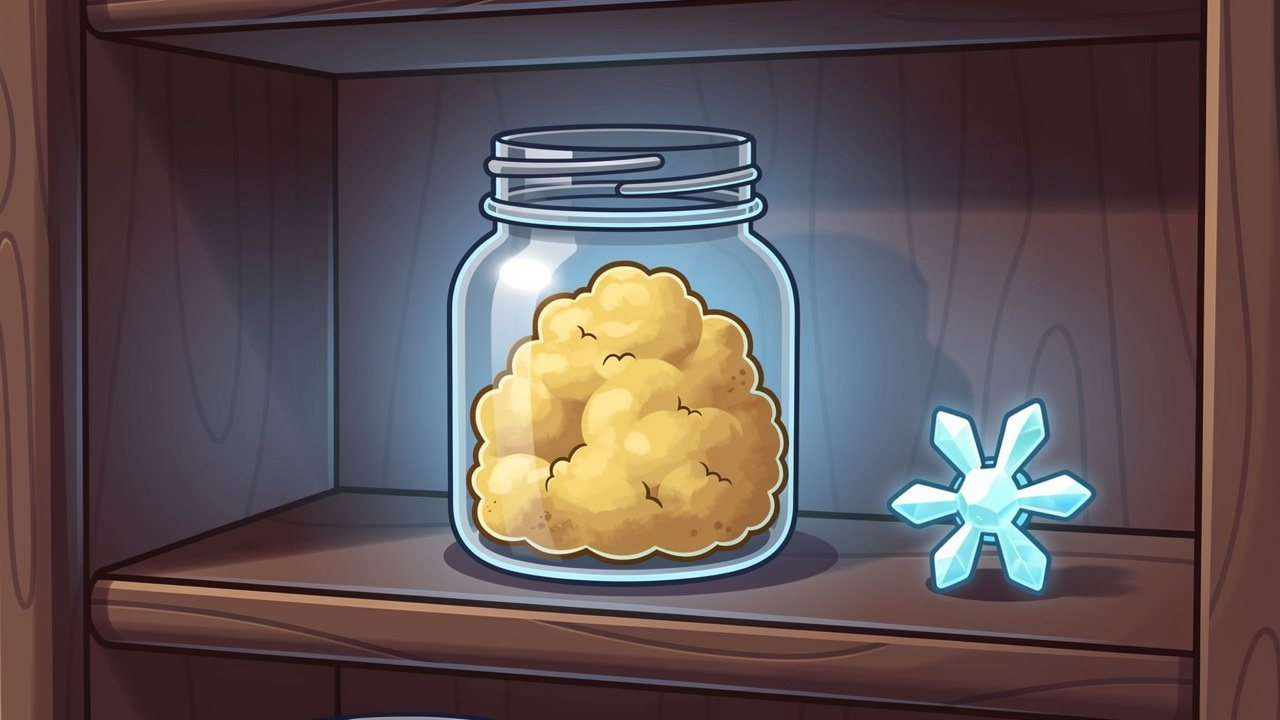
Storing kief the right way protects its flavour and strength for months at a time. The main threats are light, heat, moisture and air, which all slowly damage cannabinoids and terpenes. THC in particular breaks down more quickly when exposed to warm, bright, open conditions, as shown in stability work highlighted on PubChem.
To keep your kief in good condition:
Use a small, airtight glass jar kept in a cool, dark cupboard. Glass avoids the static cling you often get with plastic pots, so less kief sticks to the sides. Open the lid only when you need to, so fresh air does not rush in and out.
For long stays, some people store sealed jars in the fridge or freezer, which can slow changes even more. Just let the container come back towards room temperature before opening so moisture from the air does not form tiny droplets on the kief.
Handled like this, well dried kief can stay flavourful and strong for a long time.
The Final Word on Kief
Kief is one of cannabis’s simplest concentrates, and when someone asks what is kief the real answer is that it is the purest part of the plant collected in one place. Those loose trichomes carry the same flavours and effects as your favourite strains, only in a much stronger format.
Handle it with respect, store it well, and that soft golden pile becomes a reliable way to deepen bowls, joints, vapes and edibles. If you want kief that truly reflects its source, start with premium, lab tested BudBuddies flower at budbuddies.cc and let your grinder quietly do the rest.
Frequently Asked Questions
Question 1 Can You Smoke Kief on Its Own?
Yes, you can smoke pure kief, but it behaves differently from normal flower. It burns fast, can melt, and may waste vapour if packed loosely. Most people mix kief with ground cannabis instead, which helps it burn more evenly and keeps the experience easier to control.
Question 2 What Colour Should Good Kief Be?
Good kief usually looks pale gold, cream or light tan rather than dark green. That lighter shade shows there are more trichome heads and fewer bits of leaf. Greener kief still works, but it often tastes harsher and feels slightly less smooth on the throat.
Question 3 Does Kief Expire?
Kief does not suddenly go off, but it slowly loses strength if stored badly. Heat, light and air all speed up THC breakdown into more sedating compounds. Kept in an airtight glass jar in a cool, dark place, most people find kief stays tasty and potent for many months.
Question 4 Is Kief Stronger Than Hash?
Kief is not always stronger than hash, because hash is actually made from compressed kief. Careful pressing and sieving can create hash that matches or even beats loose kief for potency. The real difference lies in format, with hash forming solid pieces that are easier to handle and store.
Question 5 How Long Does It Take to Collect Enough Kief to Use?
The time needed depends on how often you grind and how frosty your flower is. With a four piece grinder and regular BudBuddies sessions, many people see a usable layer within two to four weeks. High grade, trichome heavy strains naturally build that golden stash faster.

