


Weed and Tinnitus: Does Cannabis Help or Worsen Ringing Ears?
Ringing ears can turn quiet moments into something harder to enjoy, and for many people living with tinnitus, cannabis has become an obvious question mark. Search online and you will find one person swearing weed calmed their ears down, and another saying it made the ringing louder. That kind of conflicting chatter leaves genuine tinnitus sufferers stuck, unsure whether trying cannabis is worth the risk or the reward. This is exactly why the topic of weed and tinnitus deserves an honest, clear look rather than another vague opinion piece.
The truth is there is no single answer that fits everyone. How cannabis affects tinnitus depends on the person, the cannabinoid involved, the dose, and even the underlying cause of the ringing itself. This article walks through how cannabis might ease tinnitus, how it might worsen it, what current research actually shows, and how to explore cannabis products thoughtfully if you decide to try. Along the way, we will look at where BudBuddies fits into that cautious, informed approach, particularly through lab-tested products and clear dosing guidance.
Key Takeaways
The link between weed and tinnitus differs for everyone, so there is no universal outcome to expect.
CBD is generally seen as the lower-risk starting point for anyone curious but cautious.
THC may help some people relax but can worsen anxiety or heart rate in others, sometimes making ringing feel louder.
Starting low, tracking your symptoms, and choosing lab-tested products matters more than following someone else’s experience.
Cannabis should be treated as a complementary tool for stress and sleep, never as a guaranteed cure.
What Is the Link Between Weed and Tinnitus?

Weed and tinnitus have a genuinely mixed relationship, and no single study settles the question either way. Tinnitus itself is the perception of ringing, buzzing, or humming in the ears when no outside sound exists, and research into a phenome-wide comorbidity atlas has explored how age-related hearing loss, speech-in-noise deficits, and tinnitus overlap and interact. As cannabis products have become more visible through CBD’s growing popularity, tinnitus sufferers have naturally started wondering whether cannabinoids might quieten the noise, or make it worse.
The honest answer changes from person to person. Someone’s endocannabinoid system the network of receptors throughout the brain and body that respond to cannabinoids, reacts differently depending on genetics, tolerance, and even mood on the day. The root cause of tinnitus matters too, since stress-related ringing may respond very differently to cannabis than tinnitus caused by hearing damage or nerve changes. Dosage plays a role as well, with small and large amounts sometimes producing opposite effects entirely.
How Might Cannabis Help Ease Tinnitus?
Cannabis may ease tinnitus mainly by calming the anxiety and restlessness that make ringing feel louder, rather than by changing the sound itself. Many people who say cannabis helps are not claiming the noise has stopped, they are saying it bothers them less. That distinction matters, because tinnitus distress and tinnitus loudness are separate things, and calming cannabinoids like CBD tend to ease distress rather than silence the sound. Relaxation and mild distraction can also push the ringing into the background, in a similar way to how sound therapy machines work by giving the brain something else to focus on. Strain choice plays into this too, with calmer, indica-leaning options generally preferred over more stimulating ones.
Anxiety, Sleep, and Muscle Tension

Three mechanisms come up again and again in reports from tinnitus sufferers who try cannabis:
The anxiety-tinnitus loop CBD’s calming effect may quieten the worry that makes ringing feel more intense than it really is.
Poor sleep night-time quiet often makes tinnitus more noticeable, and sedating indica strains may help some people fall asleep faster and stay asleep longer.
Jaw and neck tension particularly for somatic tinnitus linked to TMJ issues, where cannabis’s muscle-relaxing properties may bring some noticeable ease.
Can Cannabis Make Tinnitus Worse?

The link between weed and tinnitus can turn negative for some people, mainly through THC’s effect on heart rate and anxiety. THC can raise heart rate and shift blood pressure, and because some tinnitus is linked to blood flow near the ear, this may make ringing feel more noticeable, at least for a while. THC can also trigger anxiety in sensitive users, especially at higher doses, and since anxiety worsens tinnitus severity, this can backfire quickly.
Early research adds a note of caution too, with a review of cannabis, cannabinoids and tinnitus research noting that animal studies on cannabinoid receptor activity found activating certain receptors appeared to worsen noise-induced tinnitus, while blocking them seemed to calm things down. This does not prove the same happens in humans, but it may explain why some people notice their ringing grow louder rather than quieter after using cannabis.
THC vs CBD: Does the Type of Cannabis Matter for Tinnitus?

THC and CBD play very different roles in weed and tinnitus discussions, and the type of cannabis matters more than most people expect. THC is the psychoactive compound behind the high, and it is also linked to raised heart rate and anxiety, the same factors that can intensify ringing in sensitive users. This makes THC the cannabinoid most likely to worsen symptoms, particularly at higher doses or with stimulating sativa strains.
CBD sits at the other end of the spectrum. It produces no high and is widely valued for calming effects without THC’s cardiovascular stimulation. Many cautious users start with CBD-dominant or CBD-only products for this reason, treating it as a gentler way to test their body’s response before considering anything THC-based.
Choosing Cannabis Products Thoughtfully With BudBuddies
Choosing cannabis products thoughtfully matters most when weed and tinnitus questions get personal, and this is where BudBuddies’ approach to quality and transparency becomes genuinely useful. Every product is presented with clear cannabinoid strength and terpene detail, so you are never guessing what you are actually buying. The CBD range gives cautious explorers a calm, non-intoxicating starting point, while indica-leaning strains and precisely dosed edibles or capsules suit anyone wanting a gentler, more measured introduction to THC. Rather than browsing an overwhelming catalogue, the curated selection makes it easier to pick something suited to relaxation rather than stimulation.
Why Lab Testing and Terpene Data Matter Here
Lab testing and terpene data matter here because predictable, consistent products make it far easier to judge whether cannabis is actually helping or hurting your tinnitus.
Every batch sold is independently tested for cannabinoid content and purity, with results available so you know exactly what you are consuming.
Terpene profiles are listed clearly too, and calming terpenes like myrcene and linalool tend to suit tinnitus-curious customers better than more stimulating ones like terpinolene and guaiol.
Discreet, tracked delivery and a knowledgeable support team mean you can explore privately and ask questions before committing to anything.
Practical Tips for Trying Cannabis and Tracking Your Tinnitus
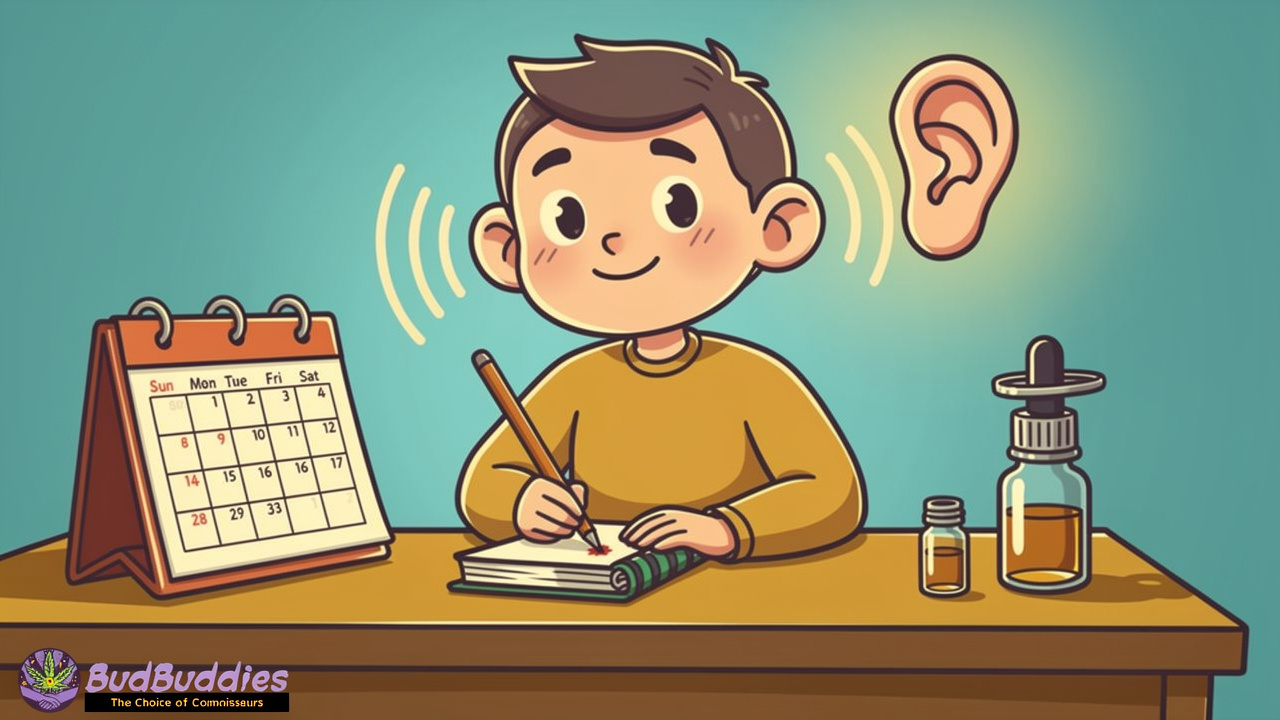
If you decide to try cannabis for tinnitus, start with the lowest possible dose and give it time before increasing. Keep a simple symptom journal noting the strain, dose, time of day, and how your ringing felt afterwards. This personal record is far more useful than anyone else’s experience, since responses to weed and tinnitus vary so much from person to person.
Choosing a non-combustion format also helps, since edibles, capsules, and oils allow for steadier, more measurable dosing than smoking or vaping. Avoid combining cannabis with alcohol or heavy caffeine while you are tracking results, as this makes it harder to isolate what is actually affecting your symptoms. If your tinnitus becomes noticeably worse, stop and reassess rather than pushing through in hope of improvement.
Tip: Track your response over several sessions, not just one. A single good or bad experience rarely tells the full story.
Final Thoughts
Weed and tinnitus do not have a single, settled relationship, and probably never will, given how differently people’s bodies respond. Some find real relief through calmer sleep and less anxiety, others notice no change at all, and a smaller group finds their ringing gets louder. None of this makes cannabis a cure, and it should not replace established approaches like sound therapy or speaking with an audiologist.
A cautious, CBD-first approach, paired with careful tracking, remains the sensible way to explore this for yourself. BudBuddies’ lab-tested range and knowledgeable support team are there if you want personalised guidance while you figure out what works, without any pressure to rush the process.
Frequently Asked Questions
Does Smoking Weed Affect Tinnitus Differently Than Other Methods?
Yes, smoking or vaping gives fast, intense effects that can feel harder to control, sometimes making anxiety-related tinnitus more noticeable during the peak. Edibles, oils, and capsules offer steadier, more predictable dosing, making them easier for tracking how your tinnitus responds over time.
Can Quitting Cannabis Reduce Tinnitus Symptoms?
Some users who notice their tinnitus worsening with cannabis find it eases again after stopping, which suggests a genuine personal sensitivity rather than coincidence. Since responses vary so widely, tracking your own experience matters more than relying on anyone else’s story.
Is CBD Oil Better Than THC for Tinnitus Relief?
When it comes to weed and tinnitus, CBD is generally the lower-risk starting point, since it is calming and does not carry THC’s stimulating, anxiety-inducing effects. That said, some people find balanced THC:CBD ratios helpful once they understand their tolerance.
How Long Does It Take to Notice if Cannabis Is Helping or Worsening Tinnitus?
It is best to track effects over several sessions rather than judging from one use, since onset time varies by format. Flower and vapes act within minutes, while edibles can take 30 minutes to two hours to take full effect.
Are Certain Cannabis Strains Better for Tinnitus Than Others?
Indica-leaning strains are often chosen for relaxation and sleep, which suits tinnitus that worsens with stress or poor rest. Sativa-dominant strains tend to feel more stimulating and may not suit anyone prone to anxiety-related symptom flare-ups.
Does Tinnitus Caused by Loud Noise Respond Differently to Cannabis Than Other Types?
Cannabis may ease stress-related tinnitus more effectively than tinnitus caused by physical ear damage or hearing loss, since it targets distress rather than the underlying cause. The root cause of your tinnitus plays a big part in whether cannabis helps at all.

