


What Humidity Should Cannabis Be Stored At? The Ideal Range
Not knowing the right humidity for storing cannabis is a quiet way to ruin good flower. Buds left in the wrong conditions can turn mouldy, harsh, or lose their punch before you’ve even had the chance to enjoy them properly. So what humidity should cannabis be stored at? The short answer is a relative humidity of 55% to 65%, with 58% to 62% widely seen as the sweet spot for most flower.
This article walks through exactly why that range matters, what goes wrong when you drift outside it, and the difference between the humidity in your room and the humidity inside your jar. We’ll also cover practical ways to keep your stash steady, from humidity packs to container choice, so your cannabis stays fresh from the first session to the last. At BudBuddies, we send out flower that’s already properly cured, so getting this part right from day one is much easier.
Key Takeaways
The ideal range for storing cannabis is 55% to 65% relative humidity, with 58% to 62% as the target sweet spot.
Too much moisture risks mould and mildew; too little dries out trichomes and weakens flavour and strength.
Ambient room humidity and container humidity are different things, and it’s the container that actually matters.
Two-way humidity packs are the simplest fix, holding a stable level without any daily effort on your part.
Temperature and light play a supporting role, so keep containers cool, dark, and undisturbed.
What Humidity Should Cannabis Be Stored At?
Cannabis should be stored at a relative humidity of between 55% and 65%, with most growers and testers pointing to 58% to 62% as the ideal window for keeping flower fresh. This range keeps the buds firm and fragrant without pushing moisture levels high enough to invite mould. It sits at the middle ground where cannabinoids and terpenes the compounds responsible for strength and flavour, stay intact rather than breaking down through either rot or brittleness, a balance echoed in cannabis science research on the variability of total THC found in dried flower, which shows how sensitive cannabinoid concentrations are to environmental and storage conditions.
That said, personal taste and consumption method can shift things slightly:
People who mainly vaporise their cannabis sometimes prefer it a touch drier, closer to 54%, since less moisture can mean a smoother draw.
Bud density plays a part too, as tighter, denser buds hold moisture differently to looser, fluffier ones.
Staying somewhere within the 55 to 65% band, though, is the safest bet for almost anyone.
Why Does Humidity Matter So Much for Cannabis?
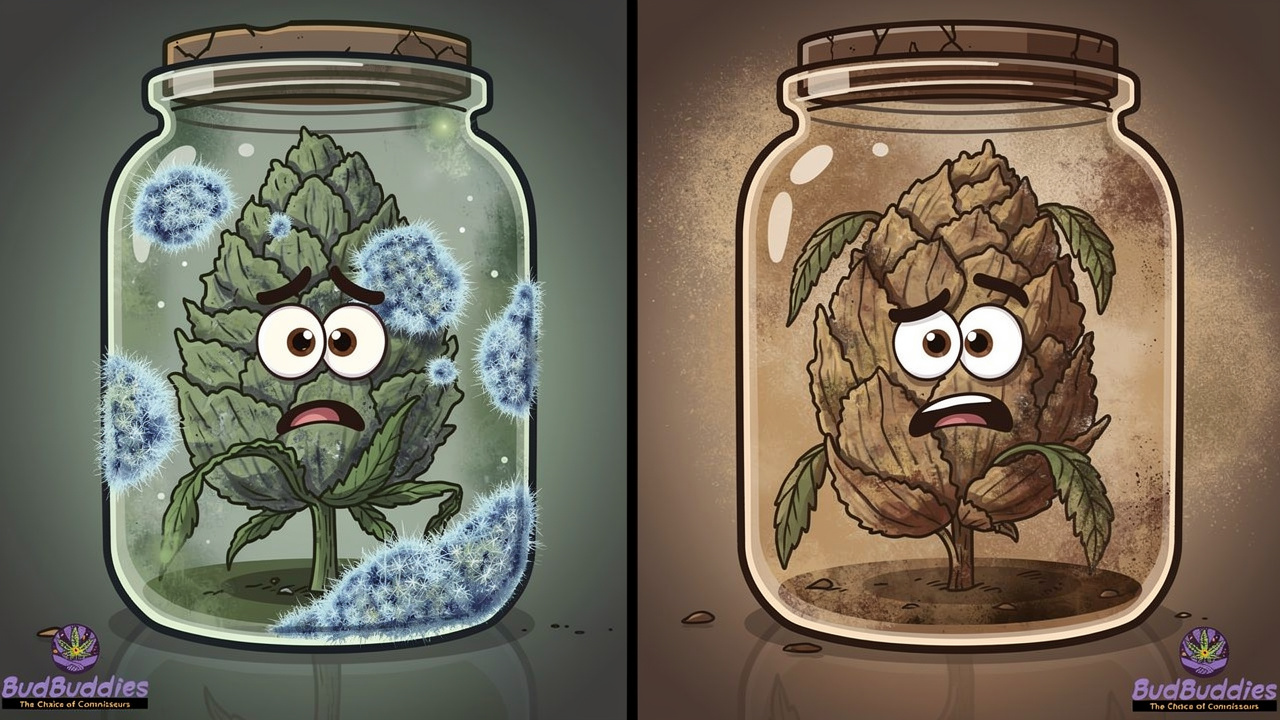
Humidity matters because it directly controls whether cannabis stays fresh, safe, and full of flavour, or slowly turns into something you’d rather not smoke. Get it wrong in either direction and the effects show up fast, sometimes within days rather than weeks. Too much moisture in the air around your buds creates the exact conditions that mould and mildew need to take hold, while too little dries out the delicate resin glands that carry most of the aroma and strength. Both problems are avoidable, but only if you understand what’s actually happening inside that jar or bag, which is why the next two sections break each risk down properly.
The Risks of Too Much Moisture
Excess moisture in a storage container is a safety concern first and a quality concern second. Once relative humidity climbs above roughly 65%, conditions become ideal for mould spores to grow on and inside the buds, and inhaling that mould can cause real respiratory problems, not just an unpleasant taste. It’s not something you want to gamble on, especially with flower you’re planning to smoke or vape regularly.
Beyond the health side, overly damp buds also behave badly in practice. They tend to burn unevenly, produce a harsh and musty smoke, and can feel spongy or heavy rather than light and crisp. None of that makes for an enjoyable session, which is exactly why keeping humidity below that 65% ceiling matters so much.
The Risks of Too Little Moisture
Cannabis stored below around 55% relative humidity starts to lose quality in a very different way. This aligns with cannabis research showing that seed and plant moisture levels directly affect viability and structural integrity, as a study on the impact of seed moisture and temperature on hemp seed germination demonstrates how sensitive cannabis plant material is to moisture fluctuations, and the trichomes the tiny crystal-like structures on the surface of the bud that hold most of the essential oils, dry out and become brittle as a result. Once that happens, they snap off easily during handling or grinding, and since those trichomes carry the cannabinoids and terpenes, losing them means losing both strength and flavour.
Dry cannabis also smokes or vapes noticeably harsher than properly hydrated flower, often burning hotter and faster in the process. That combination of a rougher hit and a weaker effect is precisely why letting humidity drop too low undoes a lot of the quality you paid for in the first place.
Ambient Humidity vs Container Humidity: What’s the Difference?
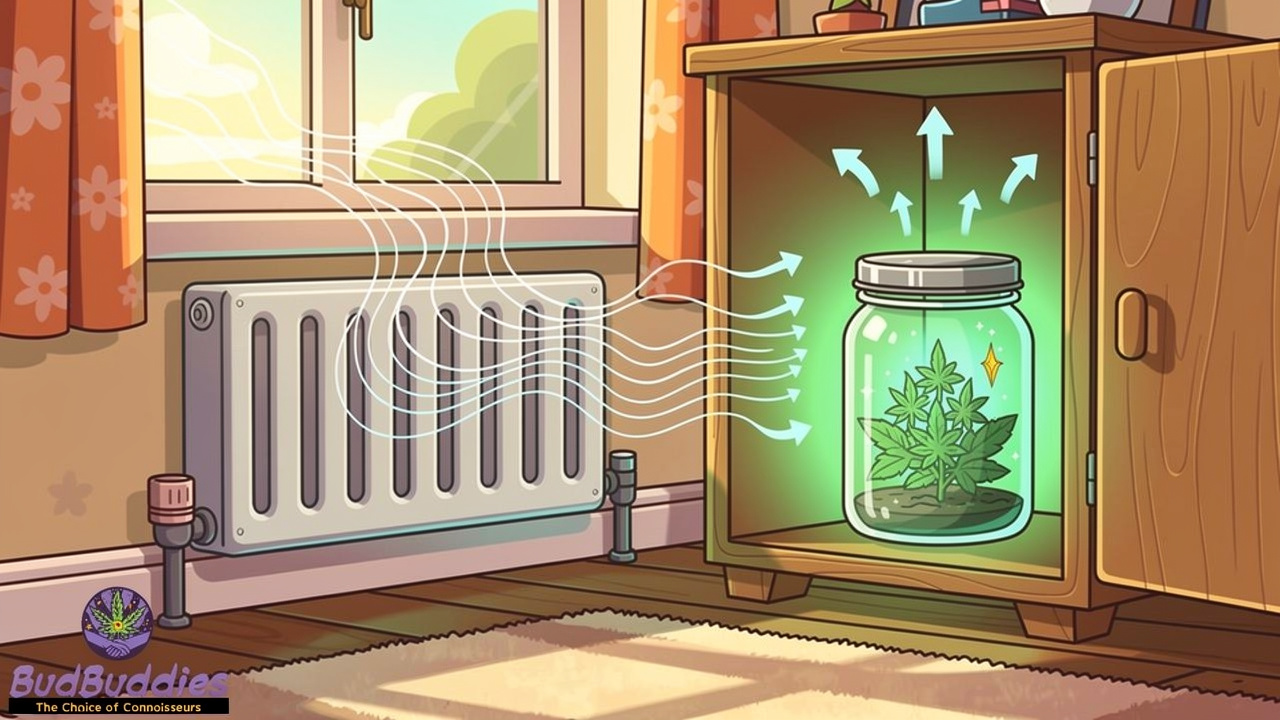
Ambient humidity is the moisture level of the air around you, whether that’s your bedroom, a kitchen cupboard, or the boot of your car, while container humidity is the moisture level specifically inside the sealed jar or bag holding your cannabis. These two numbers are rarely the same, and mixing them up is one of the most common storage mistakes people make. Understanding the split matters because it changes where you should actually focus your effort.
In UK homes, ambient humidity swings a fair amount depending on the season and how the property is heated or cooled. Central heating in winter and air conditioning in summer both strip moisture from indoor air, often pushing ambient levels down to somewhere between 20% and 30%, well below what cannabis needs. Every time a container is opened in that kind of air, even briefly, the flower inside loses a small amount of moisture to its surroundings.
The practical fix isn’t trying to control the humidity of an entire room, which is nearly impossible for most people anyway. It’s about managing the small, sealed microclimate inside the jar itself. Get that part right and the wider conditions in your home become far less relevant to how your cannabis actually performs over time.
How Can You Maintain the Right Humidity at Home?
Maintaining the right humidity at home comes down to three things working together:
A stable pack inside the container.
A container that seals and blocks light properly.
A storage spot that stays cool and undisturbed.
None of this requires constant attention once it’s set up correctly, which is part of why it works so well for people who don’t want storage to become a chore. The sections below cover each piece in turn, starting with the tool that does most of the actual work.
Why Two-Way Humidity Packs Work
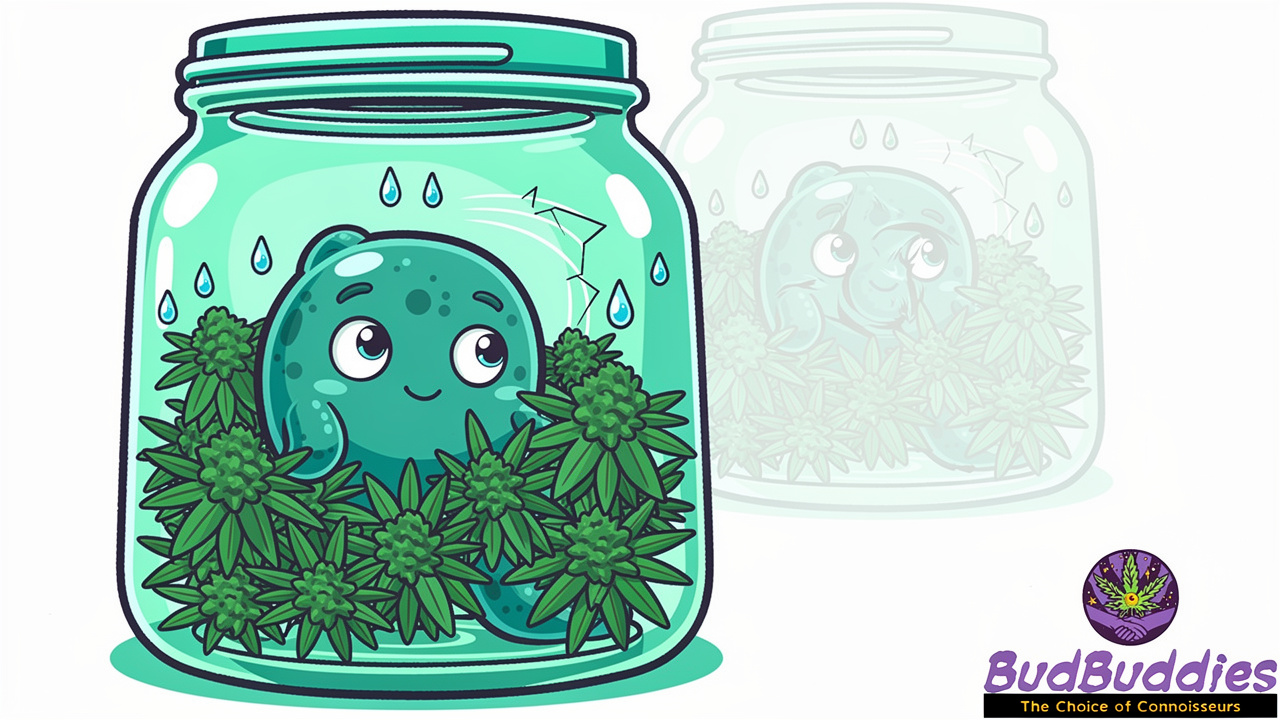
Two-way humidity packs use naturally occurring salt solutions that are engineered to hold onto moisture at a very specific, stable level. If the air inside the container gets too damp, the pack absorbs the extra moisture, and if it gets too dry, the pack releases moisture back into the space. That constant back and forth is what keeps the internal reading steady without any input from you.
BudBuddies stocks Boveda-style humidity control packs calibrated to sit within that 58% to 62% range, matching the sweet spot most flower needs. Over time, though, these packs do wear out, so it’s worth replacing them every few months or as soon as one starts to feel rigid or hard, since that’s a clear sign it’s stopped regulating properly.
Tip: A soft, pliable humidity pack is doing its job correctly. Once it feels stiff or crunchy, it’s time for a replacement.
Choosing the Right Container
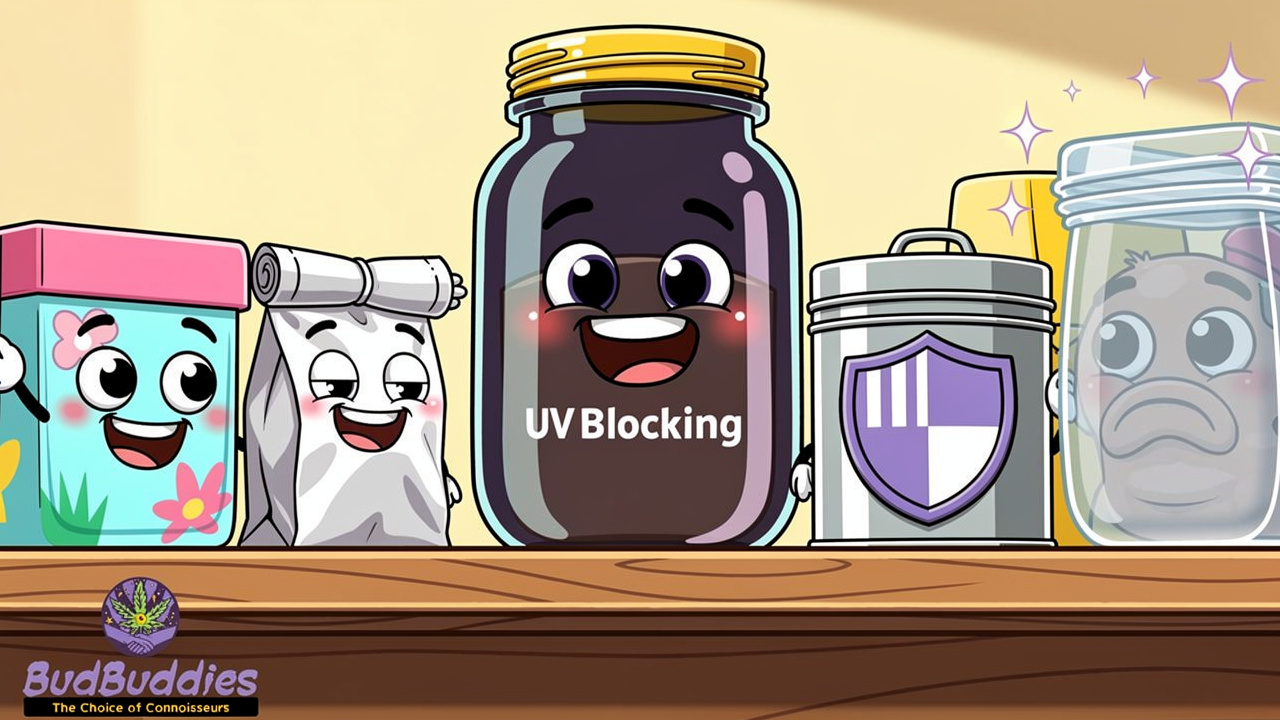
The container itself matters almost as much as what goes inside it.
Glass jars are a solid everyday choice, particularly darker or UV-blocking glass that keeps light out.
Mylar bags suit bulk storage.
Metal tins hold up well for travel thanks to their durability.
Plastic is worth avoiding altogether, since it builds up static that strips trichomes straight off the bud.
The platform stocks UV-blocking, airtight, food-safe jars specifically designed to pair with humidity packs for exactly this reason.
Where to Store Your Container
Once you’ve got the right jar and pack combination, where you actually keep it still counts. Cupboards, drawers, and wardrobes work well, since they stay cool, dark, and away from temperature swings, ideally somewhere close to 15 to 20°C. Avoid spots near radiators or windows, where heat and light can undo all the good work your humidity pack is doing. Because the flower arrives already well-cured, it can go straight into a setup like this without needing any initial drying or moisture correction first.
Wrapping Up
Getting humidity right for cannabis storage isn’t complicated once you know the target: keep buds somewhere between 55% and 65% relative humidity, with 58% to 62% as the number most flower thrives at. Consistency matters more than chasing an exact figure, so a stable setup that holds steady week after week will always beat one that swings between too wet and too dry.
If you’d rather not think about any of this too hard, pairing well-cured BudBuddies flower with the right jar and a properly calibrated humidity pack from budbuddies.cc takes most of the guesswork out of it. Your flower arrives in good condition already, and the right storage accessories simply help protect that quality for as long as it takes you to work through it.
Frequently Asked Questions
Can You Use a Fridge or Freezer to Store Cannabis?
No, refrigeration causes condensation to form on the buds once they’re removed, which raises mould risk considerably. Cold temperatures can also damage delicate cannabinoids and terpenes over time. A cool, dark cupboard at room temperature is a far better choice than any fridge or freezer.
How Often Should You Replace a Humidity Pack?
Replace a humidity pack every few months, or sooner if it starts to feel rigid or hard to the touch. That firmness signals the salt solution inside has stopped working properly and can no longer regulate moisture. A soft, pliable pack is doing its job correctly.
Can You Rehydrate Cannabis That Has Dried Out?
Yes, placing over-dried buds in a sealed container alongside a two-way humidity pack gradually restores lost moisture. The pack releases moisture into the dry air until the internal humidity reaches its calibrated level. It won’t happen instantly, but flower does recover noticeably within a few days.
Does Opening the Container Often Affect Humidity?
Yes, frequent opening disturbs the stable internal balance your humidity pack has worked to maintain. Each time the jar opens, some moisture escapes into the drier ambient air around it. Taking out only what you need and resealing quickly helps limit that disruption.
What’s the Difference Between Bud Rot and Powdery Mildew?
Bud rot develops inside the bud, causing brown, mushy decay that’s often only visible once you break the flower apart. Powdery mildew instead forms on the surface, showing up as a white, dusty coating. Both are linked to excess humidity and poor air circulation during storage.


