


vaping vs smoking cannabis health
If you’re weighing up vaping vs smoking cannabis health effects, the short answer is that vaping is generally the gentler option because it avoids burning plant material altogether. Smoking creates smoke through combustion, which produces tar, carbon monoxide and other by-products that irritate the lungs and throat. Vaping heats cannabis at a much lower temperature, releasing the same active compounds without the burnt residue.
That doesn’t mean smoking is dangerous for everyone or that vaping carries zero risk. Both methods have trade-offs worth understanding before you choose, from respiratory comfort to how efficiently your cannabis gets used. This article walks through the actual chemistry, the respiratory research, toxin exposure, cannabinoid efficiency and what years of regular use might look like for each method. By the end, you’ll have a clear, practical picture instead of guesswork, plus a look at how BudBuddies supports whichever path suits your lifestyle.
Whether you’re new to cannabis or you’ve smoked for years and are curious about switching, this comparison gives you the facts in plain English.
Key Takeaways
Vaping avoids combustion entirely, so it skips tar, carbon monoxide, and many of the carcinogens created when cannabis burns.
Smoking tends to irritate the lungs and throat more than vaping does, especially with regular use over time.
Vaping delivers cannabinoids more efficiently, meaning you typically need less cannabis to feel the same effects.
Neither method is completely risk-free, so device quality, temperature control and moderation still matter.
BudBuddies offers lab-tested flower and vapes, so you can choose the format that suits you with confidence.
What Actually Happens When You Vape vs Smoke Cannabis?
The core difference between vaping and smoking cannabis comes down to temperature and whether combustion takes place at all. Smoking burns cannabis flower at temperatures between roughly 400°C and 900°C, which ignites the plant material and produces smoke loaded with cannabinoids alongside tar, carbon monoxide and various other burnt by-products. Vaping works on a completely different principle, cannabis vaporiser temperature guide to somewhere between 160°C and 220°C, hot enough to turn cannabinoids and terpenes into vapour but well below the point where the plant actually catches fire.
This gap in temperature explains almost every health difference discussed further on. Because vaping never reaches combustion, it simply doesn’t create the burnt residues that smoking always produces, no matter how carefully you roll or pack a joint. Understanding this one mechanical distinction makes the rest of the vaping vs smoking cannabis health comparison much easier to follow.
Is Vaping Better for Your Lungs Than Smoking Cannabis?
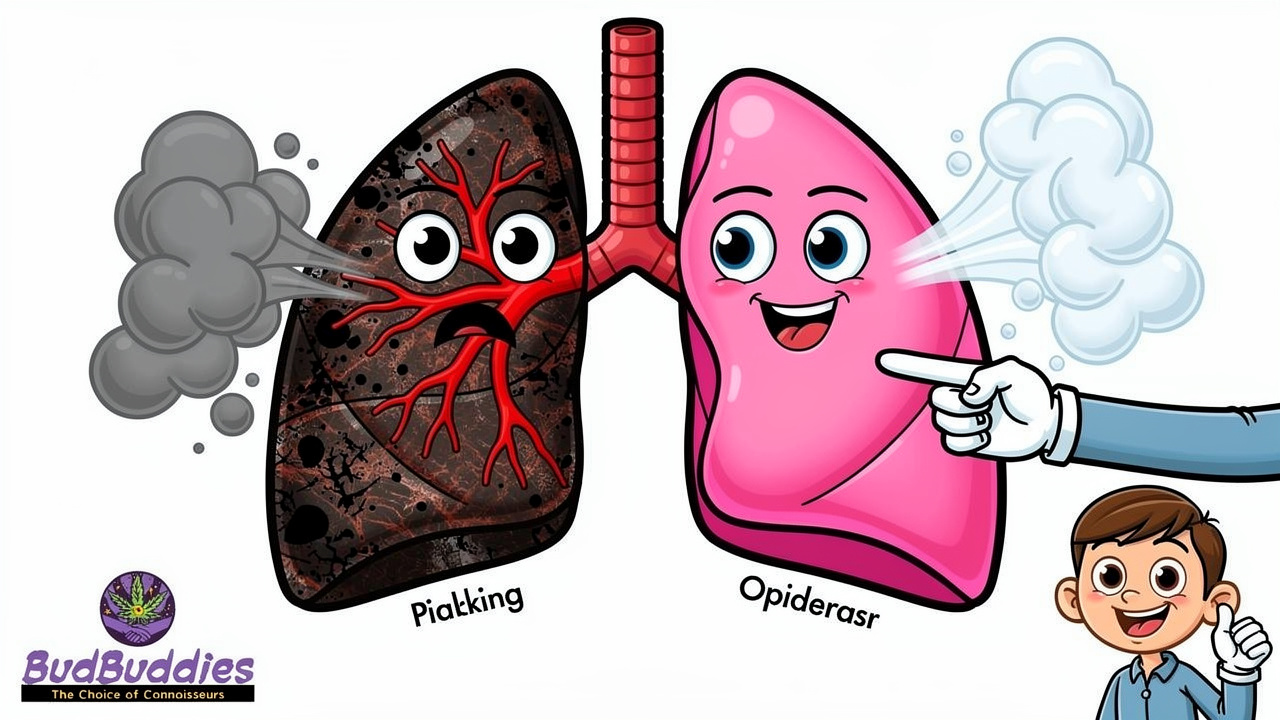
Vaping tends to be easier on your lungs than smoking cannabis because it removes the tar and combustion by-products that irritate airway tissue over time. Smoking cannabis regularly is linked to symptoms such as long-term effects of cannabis, increased mucus, wheezing and bronchitis-like irritation, largely because burnt plant matter deposits tar directly onto sensitive lung tissue with every inhale. Over months and years, this repeated irritation can reduce lung function and leave the airways more reactive, similar to patterns seen in long-term tobacco smokers, even though cannabis and tobacco affect the body differently in other respects.
Vaping, by contrast, has been associated with markedly fewer respiratory symptoms in people who switch from smoking, including less coughing and reduced throat irritation, a pattern supported by exhaled breath condensate research on airway health, largely because there’s no burning plant matter to inhale in the first place. That said, vaping isn’t entirely without respiratory considerations:
Some users notice mild throat irritation or coughing, particularly at higher device temperatures.
Researchers are still building a fuller picture of what decades of regular vaping might mean for lung health.
The direction of the evidence is clear, though, with vaping consistently producing gentler outcomes for the airways than smoking does.
Throat and Mouth Irritation: What’s the Difference?
Hot smoke tends to dry out the mouth and irritate the throat more than cooler vapour does, which is why many smokers report hoarseness or a persistent scratchy throat. Vaping produces a noticeably cooler experience, so throat discomfort and dry mouth are usually milder and less frequent. If you do notice irritation while vaping, dialling the temperature down a little often solves the problem within a few sessions.
Vaping Cannabis Tar and Toxins: How Much Does Vaping Really Reduce?
Vaping cuts out a long list of harmful compounds that smoking always produces, simply because there’s no fire involved. When cannabis combusts, it releases tar, carbon monoxide, benzene and polycyclic aromatic hydrocarbons (PAHs), several of which are recognised as carcinogenic in other contexts, a toxicant comparison detailed in a Swiss aerosol assessment of cannabis inhalation methods. None of these are meaningfully created during vaping, since the plant material never reaches ignition point, which is the single biggest reason vaping cannabis tar and toxin exposure is so much lower than with smoking.
That said, vaping isn’t automatically toxin-free just because it avoids combustion. The materials inside a device, its heating element, and how well temperature is controlled can all influence what ends up in the vapour you inhale. This is exactly why sourcing lab-tested cannabis products and well-built devices matters, since poor-quality hardware or unregulated cartridges can reintroduce risks that proper vaping is designed to avoid.
Smoking Versus Vaping Weed: Which Delivers Cannabinoids More Efficiently?
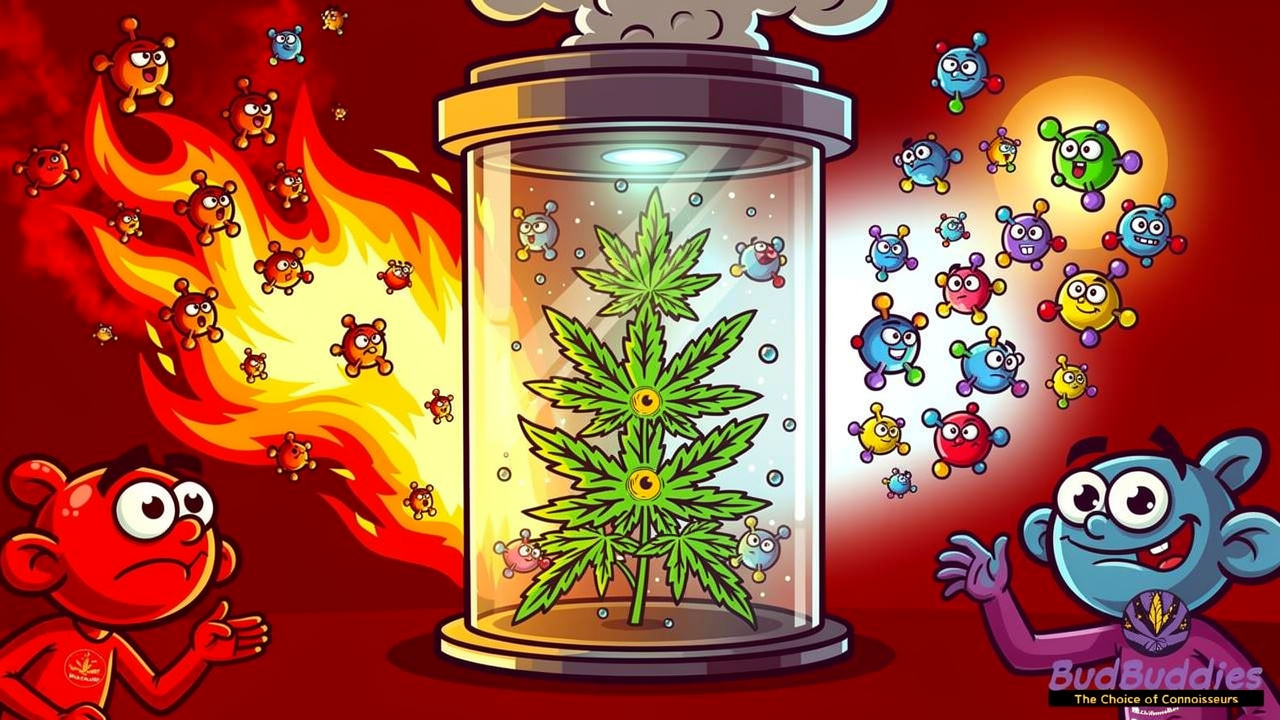
Vaping delivers cannabinoids far more efficiently than smoking, which means less of your cannabis goes to waste as it’s consumed. When cannabis burns, a significant share of its cannabinoids are destroyed by the intense heat before you ever inhale them, a loss quantified in a review of cannabis vaporisation products and devices suggesting smoking wastes 50% or more of what’s actually available in the flower. Vaping avoids this destruction almost entirely because its lower, controlled temperatures release cannabinoids as vapour rather than burning them away, so a much higher percentage reaches you with each inhale.
This efficiency gap has real, practical benefits beyond the chemistry. Because vaping wastes less, you typically need a smaller amount of flower or concentrate to reach the same effect, which supports more consistent dosing and better value over time. For anyone comparing smoking versus vaping weed purely on cost and predictability, vaping usually comes out ahead simply because so little goes up in smoke.
Long-Term Effects: Vaping vs Smoking Cannabis Over Years of Use
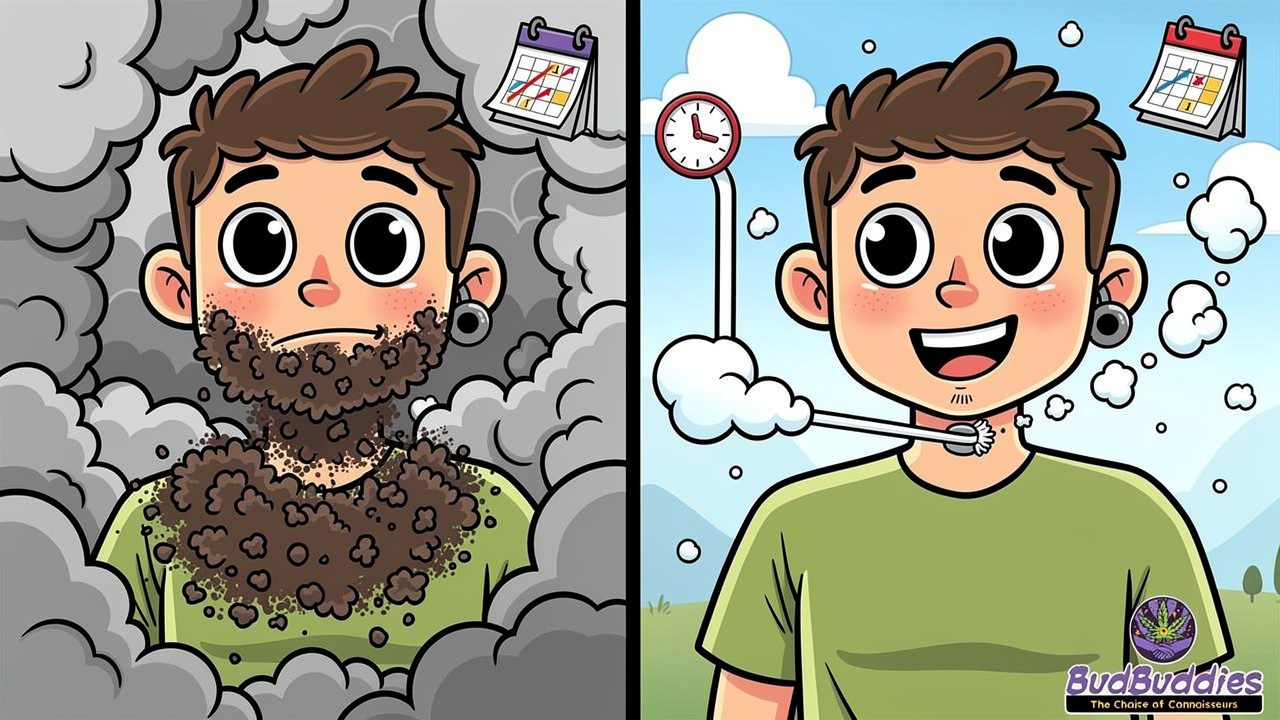
Over years of regular use, smoking cannabis tends to accumulate more respiratory strain than vaping does, largely because the tar and irritants from combustion build up with every session. Long-term smokers commonly report persistent cough, increased phlegm and reduced airway function, patterns that mirror what’s documented in long-term tobacco research even though cannabis smoke and tobacco smoke aren’t identical in composition. Vaping removes much of this cumulative burden by skipping combustion altogether, though researchers are still gathering long-term data since vaping is a comparatively newer method than smoking.
Cardiovascular strain also differs somewhat between the two. Carbon monoxide from smoking can affect how efficiently blood carries oxygen around the body, adding a layer of stress that vaping avoids entirely since no carbon monoxide is produced. It’s worth remembering that cannabinoids themselves, regardless of delivery method, can still raise heart rate temporarily, so this effect isn’t unique to smoking and applies to vaping too.
Choosing the Right Method for You With BudBuddies
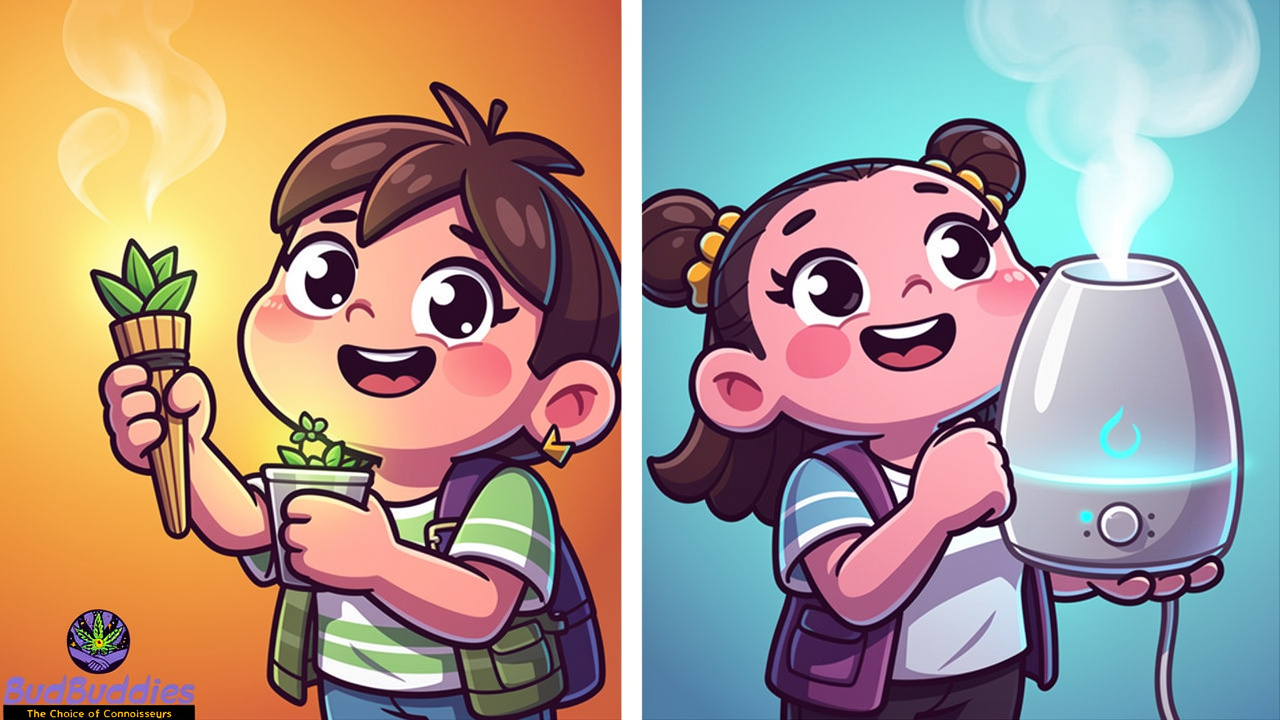
Choosing between vaping and smoking cannabis often comes down to personal priorities like onset speed, flavour, discretion and how much control you want over dosing. BudBuddies stocks best cannabis flower UK for those who enjoy the traditional ritual, alongside herb vapes and THC cartridges in live resin, live rosin and distillate for anyone leaning toward vaporisation, so both routes are covered to the same quality standard. Flower typically gives a fuller terpene profile and familiar effects within minutes, while a best cannabis vaporizers usually kicks in within two to five minutes and often lasts a comparable two to four hours, giving you a similarly quick, controllable experience without the smoke.
If you do choose to vape, a little device knowledge goes a long way toward comfort and safety:
Keep vape pen cleaning guide within the recommended range.
Clean or replace coils regularly.
Avoid more than around ten consecutive puffs before letting the device cool.
These simple habits help prevent harsh, overheated hits. The platform’s customer support team is available to help with strain selection, device compatibility and any technical questions, whichever format you land on.
The Takeaway
Weighing up vaping vs smoking cannabis health effects, the evidence consistently points toward vaping as the gentler choice, mainly because it skips the tar, carbon monoxide and carcinogenic by-products that combustion always creates. Smoking still works perfectly well for plenty of people and offers a familiar ritual and full-bodied flavour, so this isn’t about declaring one method wrong, more about matching the method to your own health priorities and lifestyle.
Whichever way you lean, quality matters more than the method itself. BudBuddies’ lab-tested flower, herb vapes and cartridge range give you a straightforward way to explore either path, backed by clear guidance and discreet weed delivery, so you can make the choice that genuinely suits you.
Frequently Asked Questions
Does Vaping Cannabis Smell As Strong As Smoking It?
No, vapour dissipates far more quickly than smoke and doesn’t cling to clothing, furniture or car interiors the way smoke does. You might notice a faint, short-lived scent right after vaping, but it clears within minutes rather than lingering for hours like smoke typically does.
Can Vaping Cannabis Still Cause a Cough?
Yes, mild coughing or throat irritation can still happen, particularly at higher device temperatures or with heavy, repeated use in a short space of time. Lowering the temperature setting and taking slower, smaller draws usually reduces this within a few sessions of adjusting.
Is Vaping Cannabis Flower Different From Vaping Cannabis Oil?
Yes, vaping dried flower preserves the plant’s full terpene and cannabinoid profile for a more complex flavour and effect, while oil cartridges offer steadier potency and simpler, more predictable dosing. The platform stocks both formats, so you can pick based on whether you prefer flavour complexity or consistency.
Does the Type of Vape Device Affect Health Outcomes?
Yes, device quality, temperature accuracy and coil condition all influence vapour quality and how comfortable each session feels. Worn coils or poorly regulated heat can produce harsher, less clean vapour, which is why guidance on wattage and vape coil lifespan is provided for a smoother experience.
How Much Less Cannabis Do You Need When Vaping Compared to Smoking?
Vaping typically requires noticeably less cannabis than smoking to achieve the same effect, since combustion destroys a large share of cannabinoids before they’re ever inhaled. Over time, that efficiency adds up to real savings, making vaping a genuinely cost-conscious choice for regular consumers.


