


risks of smoking cannabis
Lighting up feels like second nature to many cannabis users, but few stop to ask what that smoke actually does to the body. The risks of smoking cannabis go well beyond a stained lighter or a lingering smell. They touch your lungs, your heart, and even your mood, and regular use raises the stakes further. Burning cannabis creates tar, carbon monoxide, and dozens of chemical by-products that your airways were never built to handle, whether you smoke daily or only at weekends. This guide breaks down what regular smoking does to your respiratory system, your heart, and your mental health, plus how cannabis smoke affects people nearby. We also cover the practical side, including which formats remove combustion from the picture entirely. BudBuddies exists to help UK cannabis consumers make clearer, calmer choices, and that starts with knowing exactly what you are inhaling. Read on to see where the genuine risks sit, and where safer options make sense.
Key Takeaways
Combustion, not cannabis itself, creates most of the tar, carbon monoxide, and chemical by-products released when you light up.
Regular smoking is linked to chronic bronchitis, airway irritation, and a higher chance of respiratory infections over time.
Cannabis smoke contains many of the same carcinogens found in tobacco smoke, including benzene and nitrosamines.
THC raises heart rate and blood pressure shortly after smoking, which matters more if you already have heart concerns.
Smoke-free formats such as edibles, THC drinks, and vapes remove combustion risks entirely, giving you far more control.
What Happens When You Smoke Cannabis?
Smoking cannabis means setting the dried flower alight and breathing in the resulting smoke, and that burning step is where most of the harm begins. When cannabis combusts at high heat, it releases tar, carbon monoxide, and more than 100 other chemical compounds, many of which only form during burning rather than existing in the raw plant. This is why the risks of smoking cannabis often come from combustion itself rather than from cannabinoids like cannabinoids like THC or CBD. Whether you use a joint, a pipe, or a bong, the same basic chemistry applies, heat meeting plant matter always produces smoke, and smoke always carries some cost to your airways.
Deep inhalation and breath-holding, common habits among cannabis smokers, stretch out how long these compounds sit in the lungs. Holding smoke in for longer does not make the high stronger; it simply increases exposure to tar and irritants, which is one reason smoking carries more respiratory risk than vaping or edibles or edibles.
What Are the Respiratory Risks of Smoking Cannabis?
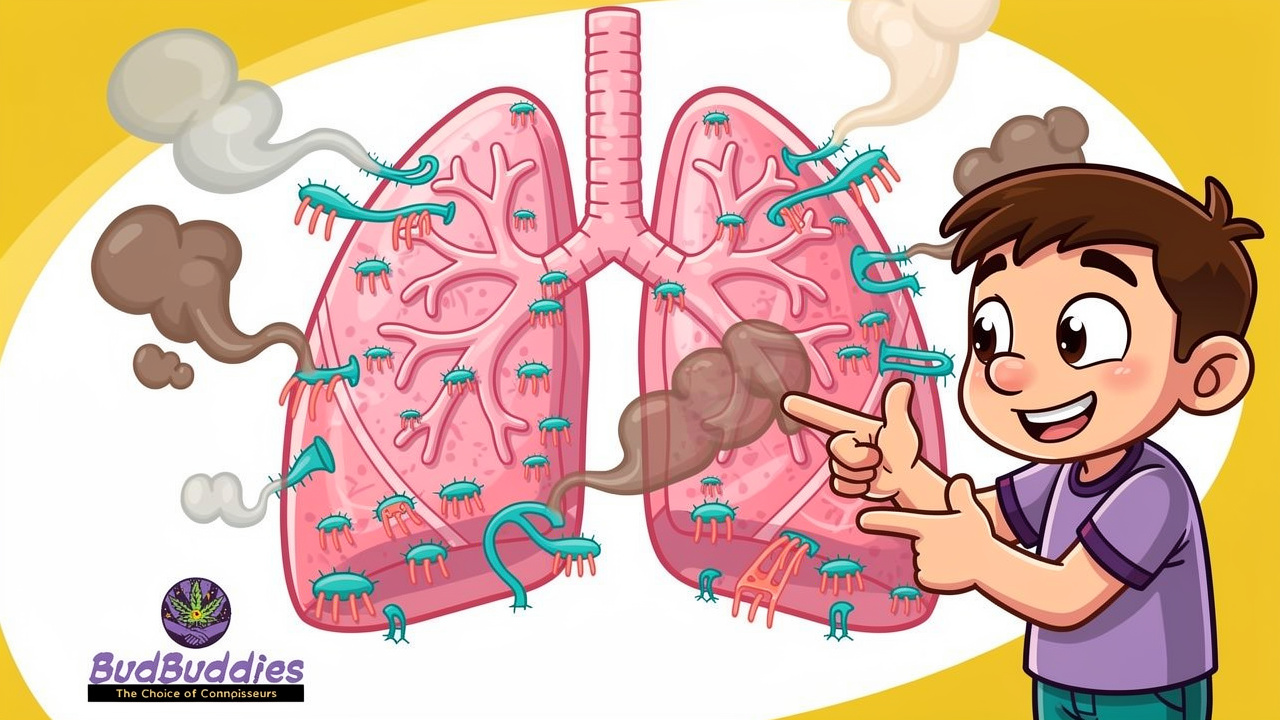
The main respiratory risks of smoking cannabis are chronic bronchitis, ongoing cough, and a reduced ability to clear the airways properly, all of which build up with repeated use. Regular smokers often report:
A persistent cough, especially in the morning
Extra phlegm and chest congestion
Wheezing, particularly straight after smoking
These symptoms tend to track closely with how often and how deeply someone inhales. Cannabis smoke irritates the delicate lining of the airways, and over time this can damage the tiny hair-like structures called cilia that normally sweep mucus and debris out of the lungs. When that clearance system stops working well, mucus and irritants build up instead of being cleared, which raises the chance of infection and leaves the chest feeling tight or congested.
Some regular smokers develop long-term effects of cannabis that closely resemble those seen in tobacco smokers, even when they have never touched a cigarette, and this overlap is one reason doctors treat cannabis smoke with the same caution as tobacco smoke. None of this means every smoker will develop lasting lung disease, but it does mean the respiratory system bears the brunt of repeated exposure, which is worth knowing before you settle into a daily habit.
Does Smoking Cannabis Cause Lung Cancer?
Cannabis smoke shares many of the same carcinogens found in tobacco smoke, including benzene, nitrosamines, and polycyclic aromatic hydrocarbons, and research on inhaled cannabis and airway disease has examined how these compounds affect long-term lung health. This overlap is why cannabis smoke and lung cancer risk are often discussed together, even though the picture is genuinely more complicated than with tobacco.
Research into a direct causal link between smoking cannabis and lung cancer remains inconsistent, partly because so many smokers also use tobacco, which makes it hard to isolate cannabis as the sole cause. Some studies suggest a raised risk, others find no clear connection, and long-term cannabis-only smokers are still a fairly small group to study. What is not in doubt is that regular exposure to carcinogenic compounds carries some level of risk, regardless of whether a definitive cancer link is ever confirmed.
How Does Smoking Cannabis Affect Your Heart?
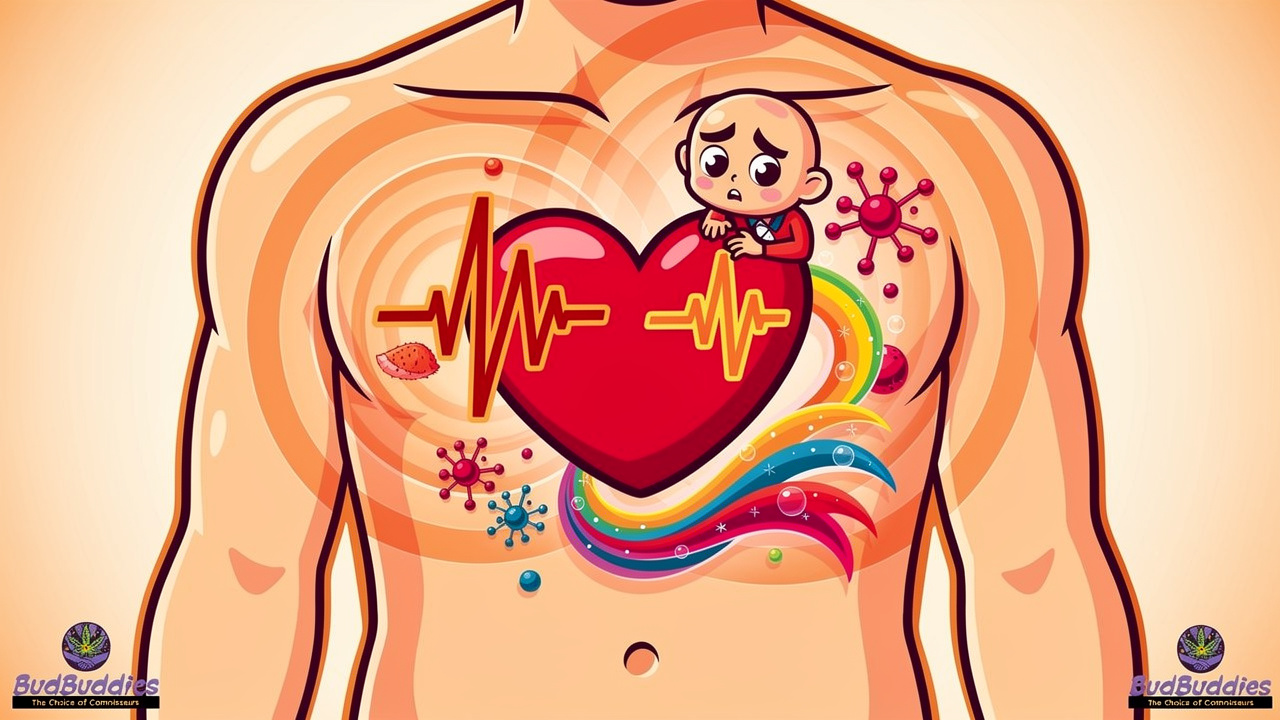
Smoking cannabis raises heart rate and blood pressure within minutes, an effect driven by THC’s impact on the nervous system, and a recent review on cannabis and cardiovascular disease outlines how these acute changes can affect people with existing heart conditions. For most healthy adults this is a short-lived, manageable response, but it still places a temporary strain on the cardiovascular system that some people underestimate.
For anyone with an existing heart condition, high blood pressure, or a history of arrhythmia, that same spike can be more serious. The combination of a faster heartbeat and carbon monoxide from the smoke, which reduces how much oxygen reaches your tissues, means the heart works harder while getting less oxygen to do it. People managing cardiovascular conditions are generally advised to treat smoked cannabis with more caution than other formats, given how quickly these effects appear after inhaling.
What Are the Mental Health and Dependency Risks?
Regular smoking can bring on anxiety, paranoia, and, in people who are more vulnerable, symptoms that resemble psychosis, particularly with high-strength products. These effects tend to show up more in new users and in those already prone to anxiety, though frequency and potency both play a part in how intense they feel.
Dependency is another genuine consideration:
Around 9% of cannabis users develop what is clinically known as cannabis use disorder, a pattern of difficulty cutting back despite wanting to, and recent national data on trends in the prevalence of cannabis use disorders shows how these rates have shifted among US adults in recent years.
That figure rises to roughly 17% among people who start using in their teenage years, a pattern consistent with broader teen drug use statistics showing that earlier initiation is linked to higher rates of later dependency.
Regular smokers may also notice mild withdrawal symptoms, such as irritability or disrupted sleep, when they take a break.
This is worth knowing if you are trying to moderate your own use.
Is Secondhand Cannabis Smoke Dangerous?
Secondhand cannabis smoke exposes anyone nearby to many of the same irritants and combustion by-products as the person smoking, just at a lower concentration. This matters most in enclosed spaces, where smoke lingers and settles into soft furnishings, clothing, and the air that others breathe in without any choice in the matter.
Children are especially worth thinking about here, since their airways are smaller and still developing. Regularly smoking around others at home means they share in some of the respiratory exposure without any of the decision-making, so ventilation and smoke-free spaces are worth considering if you live with people who do not smoke.
How Can You Reduce the Risks of Smoking Cannabis?

You can meaningfully lower the risks of smoking cannabis by switching to smoke-free formats, choosing tested products, and adjusting how you smoke if you continue to do so. Moving away from combustion altogether removes tar and carbon monoxide from the equation completely, which is the single biggest change you can make if respiratory health is a concern.
For anyone who prefers to keep smoking flower, choosing lab-tested products cuts down exposure to contaminants such as mould, pesticides, and heavy metals, all of which can add extra strain to already irritated airways. Beyond format, a few small habit changes help too:
Avoid mixing cannabis with tobacco, since that combination adds nicotine dependency on top of existing respiratory harm.
Take shallower inhales rather than long, held breaths, since breath-holding increases exposure time without adding to the effects you are after.
Reduce how often you smoke, even modestly, to give your airways more time to recover between sessions, which supports the lung’s natural clearing process over the long run.
Smoke-Free Alternatives Worth Considering
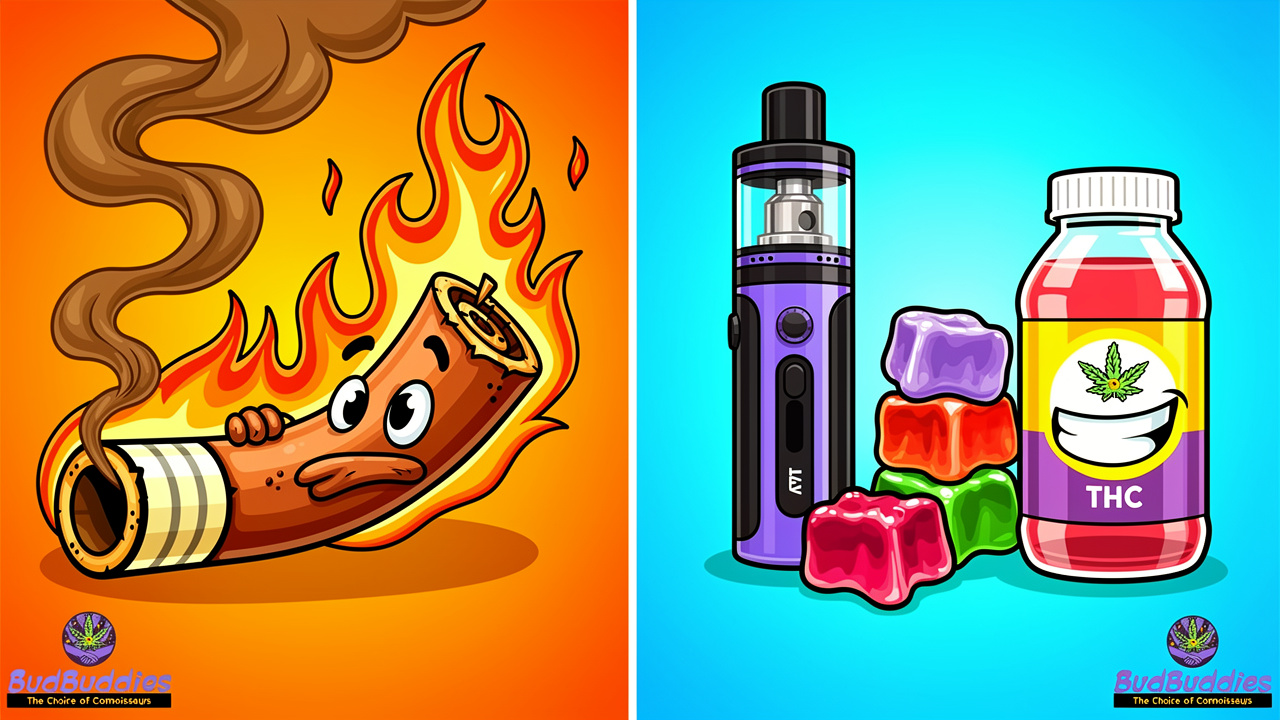
BudBuddies stocks a full range of smoke-free formats, including THC drinks, edibles like gummies and baked goods, THC vape cartridges, and CBD oils, giving you a genuine alternative to lighting up. Each product page sets out clear THC and CBD content alongside terpene profiles, so you can pick a format and strength that matches your comfort level rather than guessing.
For those who still prefer flower, the range is independently independently lab-tested, with results checked for mould, pesticides, and heavy metals before anything reaches your door. That combination, tested quality plus genuine smoke-free choice, means you are never limited to a single way of enjoying cannabis, whatever your reasons for wanting to cut down on smoke.
The Takeaway
The risks of smoking cannabis come mostly from combustion itself, not from cannabis as a plant, and that distinction matters when you are deciding how to use it. Chronic bronchitis, airway irritation, raised heart rate, and mental health effects are all documented consequences of regular smoking, and they sit alongside genuine cancer concerns tied to the carcinogens in cannabis smoke.
Format choice is where you have the most control. Smoke-free options remove respiratory risk from the picture entirely, while tested flower reduces the contaminant exposure that comes with unregulated products. Whatever your risk tolerance, it is worth browsing the wider BudBuddies range to see which format fits your lifestyle, your health, and how you actually want to feel.
Frequently Asked Questions
Can Smoking Cannabis Damage Your Lungs Even If You Don’t Smoke Every Day?
Yes, even occasional smoking exposes your airways to tar and irritants, since the harm comes from combustion rather than from daily habits alone. How deeply you inhale and how long you hold the smoke both affect how much damage builds up, so lighter or infrequent use still carries some respiratory cost over time.
Is Vaping Cannabis Safer Than Smoking It?
Vaping heats cannabis without burning it, which cuts out most of the tar and carbon monoxide produced by combustion. It is not entirely risk-free, but it meaningfully reduces exposure to harmful by-products compared with smoking. The brand’s THC vape cartridges offer a tested, smoke-free way to explore this format.
Does Mixing Cannabis With Tobacco Increase Health Risks?
Yes, combining cannabis with tobacco adds nicotine’s addictive potential on top of the respiratory exposure from smoke. This mixture increases total harm to your lungs compared with smoking cannabis alone, since you are inhaling two sets of combustion by-products rather than one.
How Long Do The Effects Of Smoking Cannabis Last Compared To Edibles?
Smoking brings effects on almost immediately, usually lasting one to three hours in total. Edibles take longer take longer to kick in, often 30 minutes to two hours, but last considerably longer, typically four to eight hours. This difference is worth weighing when comparing formats through the platform’s product guides.
Can Smoking Cannabis Affect Your Sense Of Smell Or Taste?
Yes, repeated smoke exposure can dull both smell and taste in heavy, regular smokers, largely due to ongoing irritation of the nasal and oral tissues. This effect usually improves once you cut back on smoking or switch to a smoke-free format for a while.

